Graduate students often struggle to envision careers outside of the academic world. A partnership between Promega Ibérica and the Universidad Autónoma de Madrid (UAM) is helping change that for students in UAM’s Cellular Dynamics and Biomolecules master’s degree program.
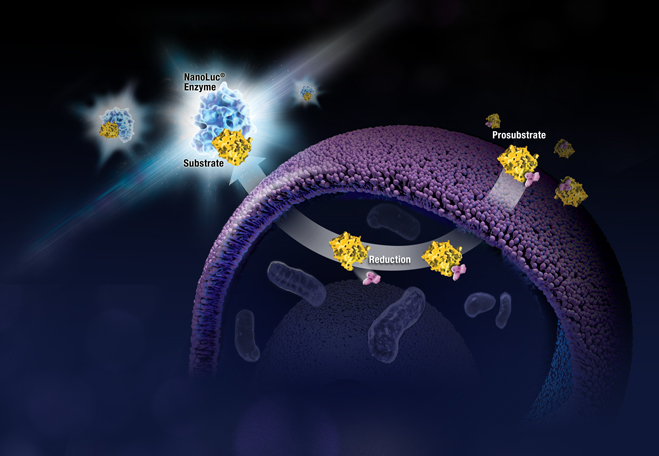
You are studying the effects of a compound(s) on your cells. You want to know how the compound affects cell health over a period of hours, or even days. Real-time assays allow you to monitor cell viability, cytotoxicity and apoptosis continuously, to detect changes over time.
Why use a real-time assay? A real-time assay enables you to repeatedly measure specific events or conditions over time from the same sample or plate well. Repeated measurement is possible because the cells are not harmed by real-time assay reagents. Real-time assays allow you to collect data without lysing the cells.
Advantages of Real-Time Measurement Real-time assays allow you to:
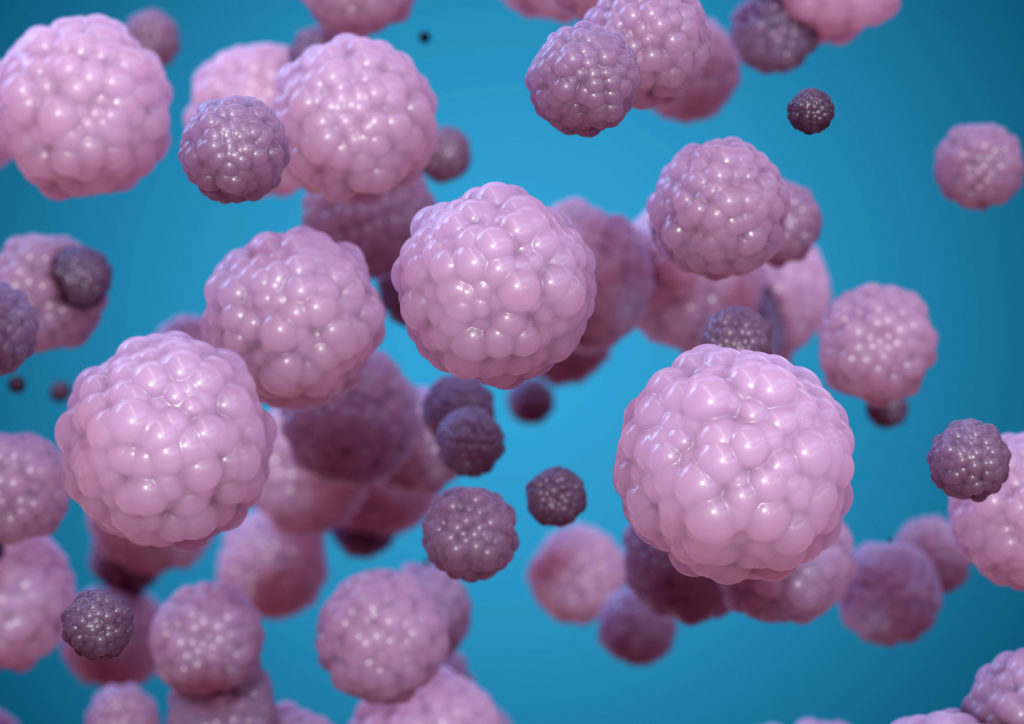
We’re entering the third year of the global COVID-19 pandemic, and it’s far from over. There has been considerable progress with SARS-CoV-2 vaccine development, with most of the focus on mRNA vaccines and adenoviral vector vaccines. Meanwhile, novel vaccine delivery systems are being tested among efforts to develop a “pan-coronavirus” vaccine that is effective against multiple variants. One such example is ferritin nanoparticle technology developed by researchers at the Walter Reed Army Institute of Research and their collaborators. Encouraging results from nonhuman primate studies, using several SARS-CoV-2 antigens, were published in 2021 (1–3).
The current surge in COVID-19 cases that began last month is largely due to the Omicron variant in the US, according to data from the US Centers for Disease Control and Prevention (CDC). At present, we still don’t know enough about this variant, but it’s clear that its rapid spread is forcing us to re-examine what we know about SARS-CoV-2 (4). As the virus continues to mutate, new variants will continue to emerge and spread. Although current vaccines can provide protection against multiple variants, breakthrough infections are a concern. Vaccination is still the best option to reduce the risk of infection, hospitalization, and death compared to unvaccinated people.
It’s clear that vaccines are only part of an effective response to fighting the pandemic. Along with continued vaccine development efforts, attention must also be given to antiviral drug development for people already infected with COVID-19. Due to the lengthy process for new drug development, early efforts focused on repurposing existing drugs.
In the past decade, there has been a sharp rise in studies using spheroids as cell models for basic research and drug discovery. Spheroids are self-organized aggregation of cells that form a spherical mass, and they have become widely popular because they are much more physiologically relevant compared to flat 2D cell cultures.
In spheroids, the inner cells have less access to nutrients and oxygen compared to the outer layer, forming a natural gradient. As a result, metabolite concentration and cellular state such as proliferation and differentiation, can be very different at the periphery compared to the inner core. This phenomenon, known as “heterogeneity”, makes 3D tumor spheroids much more representative of actual tumors in the human body.
While you can rely on Taylor Swift and Adele to help heal emotional heartbreak, unfortunately treating a physically “broken” heart, a heart damaged by fibrosis, is a much more complicated process than putting on your favorite sad songs and wallowing in your feelings. In a recent study published in Science, researchers developed a therapeutic approach to treat damaged hearts in mice through the removal of scar tissue using genetically engineered immune cells (CAR T cells) and the mRNA technology used in the mRNA coronavirus vaccines.
Research in animal models shows physical exercise can induce changes in the brain. In humans, studies also revealed changes in brain physiology and function resulting from physical exercise, including increased hippocampal and cognitive performance (1). Several studies in mice and rats also demonstrated that exercise can improve learning and memory and decrease neuroinflammation in models of Alzheimer’s disease and other neurodegenerative pathologies (2); these benefits are tied to increased plasticity and decreased inflammation in the hippocampus in mice (2). If regular time pounding the pavement does improve brain function, what is the underlying molecular biology of exercise-induced neuroprotection? Can we identify the cellular pathways and components involved? Can we detect important components in blood plasma? And, is the benefit of these components transferrable between organisms? De Miguel and colleagues set out to answer these questions and describe their results in a recent study published in Nature.
Earlier this year, I had an opportunity to attend a virtual talk presented by leading climate scientist and communicator Dr. Katharine Hayhoe. She began by asking the audience to send in one word that describes how they feel when thinking about climate change. The responses popped up live in a word cloud on Hayhoe’s shared screen:
Anxious
Frozen
ARGHH!
Those words also describe how I felt when I realized the conclusion to my seriesof blogs on the 2021 Nobel Prizes would address the topic of climate change.
This blog was written by guest writers Paraj Mandrekar (Technical Services Scientist 3) and Michelle Mandrekar, (Research Scientist 4).
Here are some designer’s notes comparing the Maxwell® RSC Blood DNA and the Maxwell® RSC simplyRNA kit chemistries for nucleic acid extraction.
The Maxwell RSC Blood DNA Kit and Maxwell RSC simplyRNA Blood Kit were both developed from the same non-silica-based purification chemistry and use the same underlying paramagnetic particle. This chemistry is characterized by an extreme binding capacity (the capacity of nucleic acid that can be bound on the particle), leading to both chemistries being capable of isolating large amounts of nucleic acid volumes and then eluting into relatively small volumes (50 µL). It is not unusual with either chemistry to have isolates that exceed 100 ng/µL. Although the chemistries have several similarities, there are some important distinctions between how the two chemistries were designed that influence which kit you choose for your nucleic acid extraction.
Many of the traits characteristic to human pregnancy are unique. In contrast to other mammals, human pregnancy and labor last longer, and humans are more prone to complications, including infertility, preeclampsia and preterm birth. Research recently published in eLife Sciencesby Vincent Lynch, PhD, and colleagues explores the history of gene expression in the human uterus, how it differs from other mammals and how changes in expression may be implicated in our susceptibility to disease.
This study is part of the emerging field of evolutionary medicine, where researchers apply modern evolutionary theory to help us understand the mechanisms behind human health and disease. By studying the history of gene expression, researchers and physicians can illuminate the pathways through which evolution has guided the development of modern tissues and organ systems, and how these systems may differ in one species versus the next.
Understanding how a compound or drug affects cellular pathways often requires measuring kinetic changes over an extended period of time—from several hours to days. Live-cell kinetic cell-based assays that measure cell viability, cytotoxicity, apoptosis and other cellular pathways are great for collecting real-time data. You don’t necessarily need expensive equipment to run these types of assays. In the videos below, Dr. Sarah Mahan, a research scientist at Promega, demonstrates how you can easily get great 24-hour or multi-day kinetic data using a GloMax® Microplate Reader.
XWe use cookies and similar technologies to make our website work, run analytics, improve our website, and show you personalized content and advertising. Some of these cookies are essential for our website to work. For others, we won’t set them unless you accept them. To learn more about our approach to Privacy we invite you to Read More
By clicking “Accept All”, you consent to the use of ALL the cookies. However you may visit Cookie Settings to provide a controlled consent.
We use cookies and similar technologies to make our website work, run analytics, improve our website, and show you personalized content and advertising. Some of these cookies are essential for our website to work. For others, we won’t set them unless you accept them. To find out more about cookies and how to manage cookies, read our Cookie Policy.
If you are located in the EEA, the United Kingdom, or Switzerland, you can change your settings at any time by clicking Manage Cookie Consent in the footer of our website.
Necessary cookies are absolutely essential for the website to function properly. These cookies ensure basic functionalities and security features of the website, anonymously.
Cookie
Duration
Description
cookielawinfo-checbox-analytics
11 months
This cookie is set by GDPR Cookie Consent plugin. The cookie is used to store the user consent for the cookies in the category "Analytics".
cookielawinfo-checbox-functional
11 months
The cookie is set by GDPR cookie consent to record the user consent for the cookies in the category "Functional".
cookielawinfo-checbox-others
11 months
This cookie is set by GDPR Cookie Consent plugin. The cookie is used to store the user consent for the cookies in the category "Other.
cookielawinfo-checkbox-advertisement
1 year
The cookie is set by GDPR cookie consent to record the user consent for the cookies in the category "Advertisement".
cookielawinfo-checkbox-necessary
11 months
This cookie is set by GDPR Cookie Consent plugin. The cookies is used to store the user consent for the cookies in the category "Necessary".
cookielawinfo-checkbox-performance
11 months
This cookie is set by GDPR Cookie Consent plugin. The cookie is used to store the user consent for the cookies in the category "Performance".
gdpr_status
6 months 2 days
This cookie is set by the provider Media.net. This cookie is used to check the status whether the user has accepted the cookie consent box. It also helps in not showing the cookie consent box upon re-entry to the website.
lang
This cookie is used to store the language preferences of a user to serve up content in that stored language the next time user visit the website.
viewed_cookie_policy
11 months
The cookie is set by the GDPR Cookie Consent plugin and is used to store whether or not user has consented to the use of cookies. It does not store any personal data.
Analytical cookies are used to understand how visitors interact with the website. These cookies help provide information on metrics the number of visitors, bounce rate, traffic source, etc.
Cookie
Duration
Description
SC_ANALYTICS_GLOBAL_COOKIE
10 years
This cookie is associated with Sitecore content and personalization. This cookie is used to identify the repeat visit from a single user. Sitecore will send a persistent session cookie to the web client.
vuid
2 years
This domain of this cookie is owned by Vimeo. This cookie is used by vimeo to collect tracking information. It sets a unique ID to embed videos to the website.
WMF-Last-Access
1 month 18 hours 24 minutes
This cookie is used to calculate unique devices accessing the website.
_ga
2 years
This cookie is installed by Google Analytics. The cookie is used to calculate visitor, session, campaign data and keep track of site usage for the site's analytics report. The cookies store information anonymously and assign a randomly generated number to identify unique visitors.
_gid
1 day
This cookie is installed by Google Analytics. The cookie is used to store information of how visitors use a website and helps in creating an analytics report of how the website is doing. The data collected including the number visitors, the source where they have come from, and the pages visted in an anonymous form.
Advertisement cookies are used to provide visitors with relevant ads and marketing campaigns. These cookies track visitors across websites and collect information to provide customized ads.
Cookie
Duration
Description
IDE
1 year 24 days
Used by Google DoubleClick and stores information about how the user uses the website and any other advertisement before visiting the website. This is used to present users with ads that are relevant to them according to the user profile.
test_cookie
15 minutes
This cookie is set by doubleclick.net. The purpose of the cookie is to determine if the user's browser supports cookies.
VISITOR_INFO1_LIVE
5 months 27 days
This cookie is set by Youtube. Used to track the information of the embedded YouTube videos on a website.
Performance cookies are used to understand and analyze the key performance indexes of the website which helps in delivering a better user experience for the visitors.
Cookie
Duration
Description
YSC
session
This cookies is set by Youtube and is used to track the views of embedded videos.
_gat_UA-62336821-1
1 minute
This is a pattern type cookie set by Google Analytics, where the pattern element on the name contains the unique identity number of the account or website it relates to. It appears to be a variation of the _gat cookie which is used to limit the amount of data recorded by Google on high traffic volume websites.