COVID-19 Intranasal Vaccines Revisited: Can They Reduce Breakthrough Infections?

COVID-19 cases are now being identified primarily among unvaccinated individuals, according to data from the US Centers for Disease Control and Prevention (CDC). However, there has been increasing concern about so-called breakthrough infections among fully vaccinated individuals, particularly after the emergence of the SARS-CoV-2 Delta variant.

COVID-19, sars-cov-2

What is a breakthrough infection? The CDC defines it as โ€œthe infection of a fully vaccinated person.โ€ The key finding remains that people with breakthrough infections are still far less likely to experience severe COVID-19 symptoms, in contrast with unvaccinated people; hence the importance of vaccination.

Continue reading “COVID-19 Intranasal Vaccines Revisited: Can They Reduce Breakthrough Infections?”


Finding the Latest Science News While On the Go

Todayโ€™s guest blog was written in collaboration with Melissa Martin, a former global marketing intern with Promega. She is a senior at the University of Wisconsin-Madison where she is double majoring in zoology and life sciences communication, with a certificate in environmental studies.

Have you ever found yourself wondering what the newest advancements were on genetically engineering plants or using artificial intelligence in biotechnology but didnโ€™t know where to start looking? You most likely know the basic science behind the headlines, but a general web search may lead to dramatized articles that focus more on getting attention than being accurate. Or you might find a scholarly article that will offer in-depth, peer-reviewed information but may require more time to read than you are willing to give.

Continue reading “Finding the Latest Science News While On the Go”

The Latest Addition to the Lab: A Review of the Spectrum Compact CE System

When it comes to acquiring new equipment, choosing the right instrument for your lab can be dauntingโ€•you want to make a worthwhile investment that will go the distance, both in longevity and overall capacity. In a perfect world, the instruments available to you would have been thoroughly tested and reviewed, especially as they compare to one another, making your job that much easier.

In the case of benchtop capillary electrophoresis (CE) instruments, researchers Nastasja Burgardt and Melanie Weissenberger have done just that. Their article, titled โ€œFirst experiences with the Spectrum Compact CE Systemโ€, appeared in the International Journal of Legal Medicine and offered a comprehensive review of the performance of the recently released Spectrum Compact CE System in a forensic genetics laboratory setting.

Continue reading “The Latest Addition to the Lab: A Review of the Spectrum Compact CE System”

Using Databases to Find Scholarly Sources

Todayโ€™s guest blog was written in collaboration with Melissa Martin, a former global marketing intern with Promega. She is a senior at the University of Wisconsin-Madison where she is double majoring in zoology and life sciences communication, with a certificate in environmental studies.

Peer-reviewed papers are considered the most technical and in-depth way to learn about research and scientific advances. As a student or scientist, you will not only want to read scholarly articles to learn about what others are doing in your field but also to expand your knowledge and learn about scientific advances in completely new areas of study. With countless disciplines of science covering wide-ranging topics such as cell biology, physical chemistry or human behavior, it can be overwhelming to do a general search and find articles and journals that will have the topics relevant to your interests.

Young woman searching databases for findingscholarly articles.
Continue reading “Using Databases to Find Scholarly Sources”

Resume vs. CV โ€” What Is the Difference?

Todayโ€™s guest blog is written by Sophie Mancha, a former global marketing intern with Promega. She is in her 4th year as a PhD candidate in the Biomedical Engineering Department at the University of Wisconsin-Madison, studying pancreatic cancer.

Whether you are applying for a scholarship or trying to land a position in a research lab, there are plenty of decisions to make. Arguably, the most critical consideration is what documents to include to showcase that you are the right person for the job. Specifically, should you be preparing a curriculum vitae (CV) or a resume? What exactly is the difference?

Continue reading “Resume vs. CV โ€” What Is the Difference?”

Feeling Festive with Ion Channels

The tight embrace of welcoming hugs, the cozy warmth of a crackling fireplace, the brisk chill of afternoon walks in snowy woodsโ€”these are some of the feelings that, for me, make the winter holidays one of the best times of the year. This season, Iโ€™m also choosing to be thankful for the biology that makes these sensations possible.

This yearโ€™s Nobel Prize in Physiology and Medicine went to two scientists who discovered the receptors that allow us to sense touch and temperature. Joining other sensory mechanisms recognized by the Nobel committee, these discoveries add to our knowledge of how we interact with the world around us.

Continue reading “Feeling Festive with Ion Channels”

Writing Successful Grants: Putting It Into Words

This blog is part four of a four-part series on grant writing inspired by resources published by the National Institutes of Health (NIH) and others. 

After a long and arduous journey, you have finally arrived at the last stage of your quest to create the worldโ€™s most inspiring grant proposal: writing it all down.  

One of the most challenging parts of putting together a grant proposal is simply writing it. You must write to build the reviewersโ€™ confidence in you and demonstrate your contributions to your field, effectively illustrating your qualities as a researcher and your capacity to achieve your goals.

Continue reading “Writing Successful Grants: Putting It Into Words”

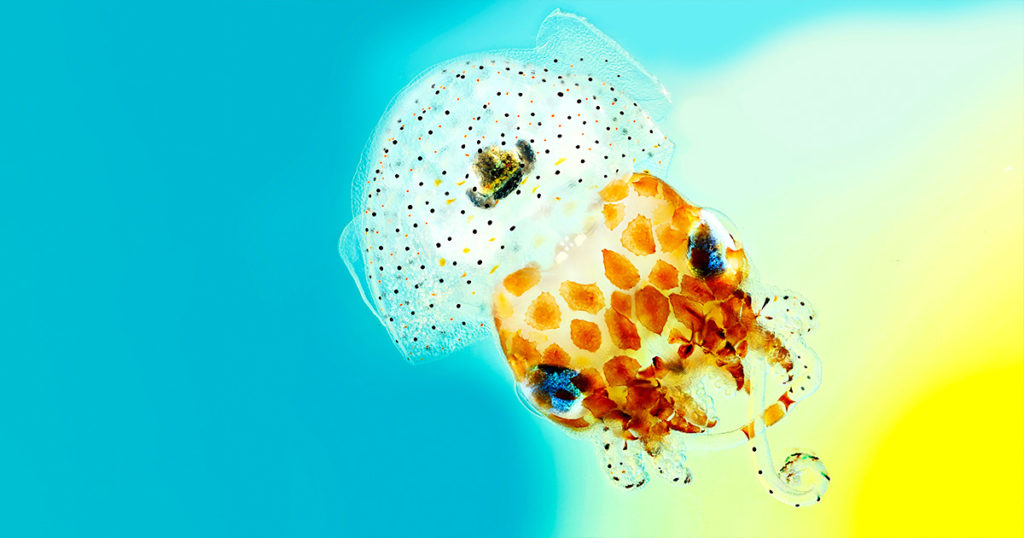
There’s a Microbiome In My Tank!

Imagine a scenarioโ€”youโ€™re studying the developmental biology of a species of squid. The squid donโ€™t reproduce in captivity, so females carrying fertilized eggs are collected from the wild and rehomed in your labโ€™s aquariums. Youโ€™ve monitored all the normal aquarium conditionsโ€”pH, temperature, salinityโ€”ensuring the animalโ€™s new home mimics its natural environment.

But then, for no reason apparent to you, the clutch of eggs doesnโ€™t develop and doesnโ€™t hatch, derailing your research program until next year when you can collect more adult squid from the wild. What went wrong?

Continue reading “There’s a Microbiome In My Tank!”

An Ambitious Endeavor: The Human Proteoform Project

On November 15, 2021, Science Advances announced the launch of The Human Proteoform Project. The ambitious project, led by the Consortium for Top-Down Proteomics, aims to address a critical next step in disease research. This means developing new technologies to outline a complete set of protein forms based on the ~20,000 genes in the human genome.

Continue reading “An Ambitious Endeavor: The Human Proteoform Project”

Writing Successful Grants: Consider Your Audience

This blog is part three of a four-part series on grant writing inspired by resources published by the National Institutes of Health (NIH) and others.  

You have thoughtfully designed your research and carefully crafted a foolproof budget proposal. Now you come upon the dreaded review committee. But fear not! There are ways to enchant the mysterious reviewer, to reveal their wants and needs and win them to your cause.  

professionals at a workshop; writing successful grants requires understanding your audience

In this blog, we will discuss why considering your audience should be one of your foremost priorities in applying for a grant. You should identify your reviewers and capture their interest through a well-organized and compelling story. If you can effectively frame the intent of your research and successfully communicate how it will benefit your field of study, your chances of completing your quest โ€“ or securing funding โ€“ can improve ยญdrastically.

Continue reading “Writing Successful Grants: Consider Your Audience”