Scientific progress is iterative. Small advances and bits and pieces of knowledge are accumulated over time with each advance depending on the body of work that has preceded it. Being able to replicate the work from one step to another in this march of science is critical, and it is not easy. We all recognize that a well-documented procedure goes a long way toward enabling reproducibility, but the procedure is not the only hurdle to reproducibility, and it’s not even the main one.
Many of the reagents researchers use are derived from or produced by living organisms. A decade ago, in 2015, an analysis of preclinical research estimated that irreproducibility costs the U.S. around $28 billion a year. When the authors traced the causes, the largest single category wasn’t study design or data analysis. It was biological reagents and reference materials (1).
When Bill Linton first developed the idea of a company that supports scientists in the 1970s, his question was: “What can we do to make your work easier?” The answer he kept getting was the same: researchers wished they could buy reliable restriction enzymes instead of purifying their own for every experiment. It would reduce variability and enable them to focus on the interesting biological questions rather than the requisite protein isolations needed to ask those questions.
Biotechnology and life science research have come a long way since then. We now take reliable, commercially available restriction enzymes for granted. Still, Promega keeps asking Bill’s original question: What can we do to make your work easier? The answers to that question have led to ground-breaking luciferase reporter technology, add-mix-measure assays for everything from cell viability to P450 activity to NADP/H detection, and standardized thaw-and-use primary cell lines for bioassays.
Today’s Difficult Reagent: Primary Antibodies
Among the most difficult reagents to work with and standardize are antibodies. If you are generating polyclonal primary antibodies that are not commercially available to study your target protein, you first need to find an animal with clean pre-immune serum. Usually that serum is evaluated by Western blot, which itself is an inherently fussy technique. And polyclonal antibodies are just that—polyclonal. What is generated after exposure to your antigen is a mixture of antibodies, and the composition of the mixture can change over time as the animal’s immune response matures. This gives you batch-to-batch variability and can make reproducibility more difficult. Commercially produced polyclonal antibodies are subject to the same exact issues. In August 2026, a news article in Nature reported that a metascientist had released a database of more than 18,000 questionable validation images across the catalogs of 15 antibody suppliers. All reflect the antibodies may not be performing like the scientists expect (Garisto 2026). Additionally, production of antibodies requires animal resources. High-quality, application validated antibodies are expensive as well. Using primary antibodies to study proteins is a significant pain point for the bench scientist.
It’s Not Just the Antibodies. It’s the Western Blots Too.
Tagged proteins or high-abundance exogenous expression of a target protein will not always reflect the endogenous protein behavior, localization or function. Large tags can interfere with folding and function; over expression of a protein can produce false protein interactions. Your results could be showing you artifacts resulting from a situation in your cells that is simply not biologically relevant.
If you are studying your target proteins (and other molecules) using Western blotting, post-translational modifications such as phosphorylation, ubiquitination, and cleavage shifts can complicate the interpretation of your results. Multiple bands on a blot can be hard to understand—is the protein cleaved? Is there cross-reactivity with your antibody to another protein? Is your sample degraded?
Compounding these difficulties is the fact that quantifying anything on a Western blot is difficult. Antibody saturation, membrane transfer efficiency and exposure variability are all things that contribute to variability in the amount of “signal” you are trying to quantify. And, as with all biological samples, the preparation of the sample can affect the results you get. Variability can be introduced by lysis buffers, extraction efficiency, and the expertise of the scientist during the sample prep stage before you ever get to a blot. Finally, Western blots are a time and labor-intensive technique often requiring overnight incubations in cold rooms and multiple, time-sensitive washing steps.
So, back to that question first asked in 1978: What can we do to make your work easier?
HiBiT Technology: Endogenous Biology without Antibodies or Western Blots
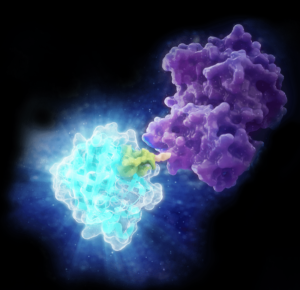
The Promega HiBiT tag is a small, 11 amino acid peptide tag, that gives you a way to tag your protein of interest with minimal tag interference (Lee 2024). HiBiT binds with high affinity to another larger subunit, LgBiT. When bound together, the resulting complex has luciferase activity and will produce a bioluminescent signal in the presence of a furimazine substrate. The HiBiT protein tagging system works in lytic, extracellular and intracellular live-cell applications. And, no antibodies are required!
Detect Low-Abundance Proteins and Quantify Them in Biologically Relevant Systems
HiBiT detection is simple. There is no blocking, washing, or multiple step antibody incubation required. Just add the Nano-Glo® HiBiT Detection Reagent to your cells, wait 10 minutes, and read the luminescent output. No overnights in the cold room.
If you are studying a low abundance protein, the last thing you want to do is interfere with its normal function and interactions. HiBiT solves these problems. HiBiT is small, and it’s amenable to CRISPR knock-ins that are more likely to reflect endogenous expression levels. Further, the knock-ins do not require a plasmid donor, like knock-ins of larger reporters do.
The HiBiT assay is bioluminescent, so it is more sensitive than a fluorophore like GFP, allowing you to detect extremely low levels of protein. Quantitation of low levels of proteins is also fully enabled, with a linear signal over 7 logs that has been detected at less than 1 amol (4). This sensitivity of detection and linear signal enables quantitation that a Western blot cannot match and allows you to use HiBiT detection in primary cells without cloning.
Flexible Applications to Answer the Questions You Want to Ask
What about applications that require fluorescence or isolated protein?
As the HiBiT tag started being used by researchers, we heard feedback that “an antibody-based HiBiT detection option would their work even easier”. This is what led us to pursue and identify a high-quality Anti-HiBiT mAb, and it took us a long time/failed attempts to find a good one because, it turns out, an 11 amino acid peptide isn’t the most antigenic thing in the world.
The HiBiT system, combined with the Anti-HiBiT Monoclonal Antibody enables fluorescence-based applications like FACS, immunofluorescence or immune precipitation. Anti-HiBiT Magne® Beads allow protein enrichment of HiBiT tagged proteins and complexes from mammalian, yeast and bacterial cells.
Can I follow my protein in real time?
If you are looking for real-time measurements, you can get them with the HiBiT System. It is possible to monitor the same plate of live cells in real time. If you have access to a bioluminescence imager, such as the GloMax® Galaxy Bioluminescence Imager, you can even follow the localization of your protein in the cell. Trying to study the kinetics of targeted protein degradation? You can do it with HiBiT. You can study receptor dynamics, to learn more about receptor trafficking and regulation. The possibilities enable you to ask the questions you need to ask to understand your biological system.
Summary
When it comes to making your work with primary antibodies easier, HiBiT Technology is one answer. It’s a system that minimizes the disruption of the cellular environment as you interrogate a pathway, drug candidate or other process. It eliminates the batch-to-batch variability of primary antibodies, and it removes labor-intensive, time-consuming work that goes into protein analysis techniques like Western blots. At the same time, with the addition of the monoclonal antibody, HiBiT gives you the flexibility to use it in antibody-based applications when they are required.
HiBiT Technology is one-way Promega makes your work easier. There are many others ranging from NanoLuc® Reporters to automated medium- and high-throughput nucleic acid purification. Keep telling us what you need, and we will keep working to help you focus on the questions you want to answer.
Learn more today about how HiBiT Technology can make your work easier.
References
- Freedman, L.P. (2015) The Economics of Reproducibility in Preclinical Research | PLOS Biology
- Garisto, D. (2026) More than 18,000 questionable images found in antibody catalogues of 15 companies. Nature
- Lee, J. (2024) HiBiT: A Tiny Tag Expanding Endogenous Protein Detection. Promega Notes.
- Schwinn, M.K. et al. (2017) CRISPR-Mediated Tagging of Endogenous Proteins with a Luminescent Peptide. ACS Chem. Biol.
This article was drafted by a human writer and reviewed and edited by humans.



Michele Arduengo, PhD
Latest posts by Michele Arduengo, PhD (see all)
- What Can We Do to Make Your Work Easier? Addressing the Challenges of Working with Primary Antibodies - September 15, 2026
- From Chromosomes to the Brain: How HaloTag Is Expanding What We Can See - August 25, 2026
- A Historic Milestone for PROTAC Research: What Vepdegestrant’s FDA Decision Means for Drug Discovery - May 6, 2026