Our second installment of the Promega qPCR Grant Recipient blog series highlights Dr. Laura Leighton, a trained molecular biologist and postdoctoral researcher at the Australian Institute for Bioengineering and Nanotechnology. Leighton’s scientific journey features a passion for molecular biology and problem-solving. Her path has been illuminated by mentorship, relationships with fellow scientists and a commitment to creativity in overcoming challenges. Here, we explore her scientific journey, reflect on research lessons and foreshadow her plans for the Promega qPCR grant funds.
Dr. Laura Leighton grew up in a rural area in Far North Queensland, Australia, where she spent her early life exploring critters on the family farm. Her upbringing was infused with a deep connection to the environment, from raising tadpoles in wading pools to observing wildlife and witnessing food grow firsthand. Observing the biology around her ultimately piqued her interest in science from a young age. She then began her academic journey in 2011 at the University of Queensland, Australia. She studied biology while participating in a program for future researchers, which led her to undergraduate research work in several research labs. She dabbled in many research avenues in order to narrow in on her scientific interests all while adding different research tools to her repertoire.
After serving as a research assistant in Dr. Timothy Bredy’s lab, she decided to continue work in this lab and pursue a PhD in molecular biology. During her PhD, Leighton worked on several projects from cephalopod mRNA interference to neurological wiring in mice. The common thread in these projects is Leighton’s passion for the puzzles of molecular biology:
“I also love molecular engineering and the modularity of molecular parts. There’s something really special about stringing together sequence in a DNA editor, then seeing it come to life in a cell,” she says.
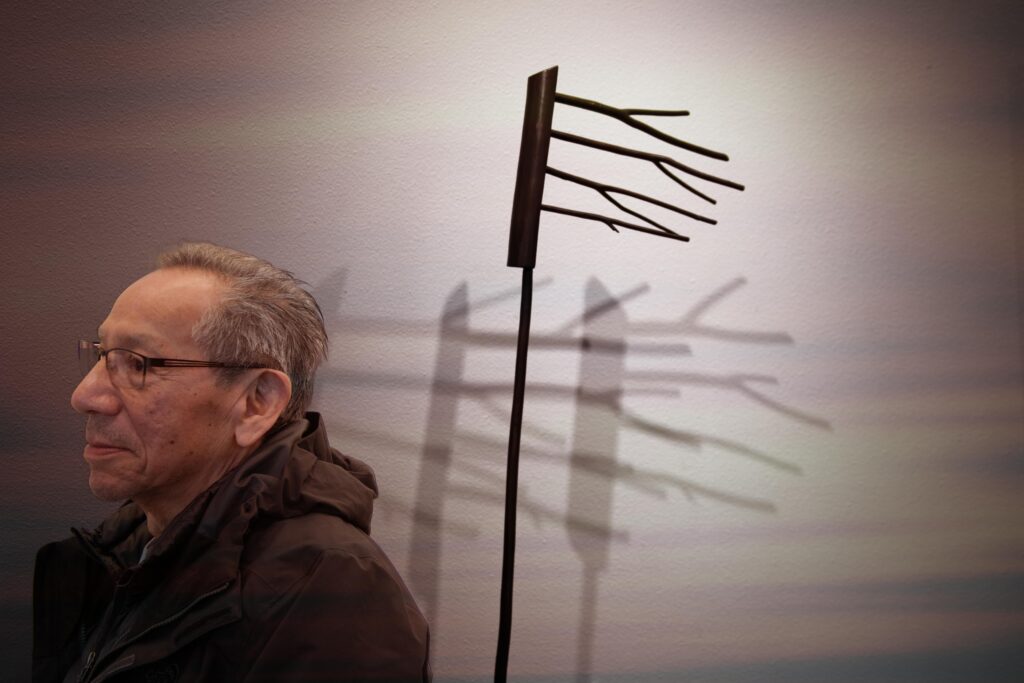
Truman Lowe, Ho-Chunk artist and mentor, pictured with Headdress (1989)
Outside the BioPharmaceutical Technology Center, the wind snakes through the tall prairie grasses, drying slowly in the crisp September air. The walking paths through the woods are turning orange with fallen leaves, and the resident sandhill cranes, a fixture of summer at Promega Madison, will soon be heading to their winter home in southern Florida.
Inside the BTC, the Promega Fall Art Showcase is honoring the life of Truman Lowe, an acclaimed Ho-Chunk artist whose sculptural works evoke a powerful connection with nature. For decades, Lowe was a professor in the Department of Art at the University of Wisconsin-Madison where he was an exceptional mentor to young artists. He was known for encouraging artists to fearlessly delve into their artistic voice and equipping them with the necessary tools to navigate the art world. The Fall Art Showcase honors his legacy by exhibiting his art alongside pieces by several former students.
Truman Lowe: Visionary Artist, Mentor and Teacher
Truman Lowe was born on the Ho-Chunk Nation of Wisconsin reservation in 1944. He recounted a childhood of drawing with rocks on the Black River and creating crafts like baskets and beadwork with his parents. Though he loved art from an early age, Lowe says that he never thought of art as a profession until he was studying for his undergraduate art degree at the University of Wisconsin-LaCrosse. There, he became fascinated with Michelangelo, who inspired him to realize that art could be “a profession as well as a passion.”1
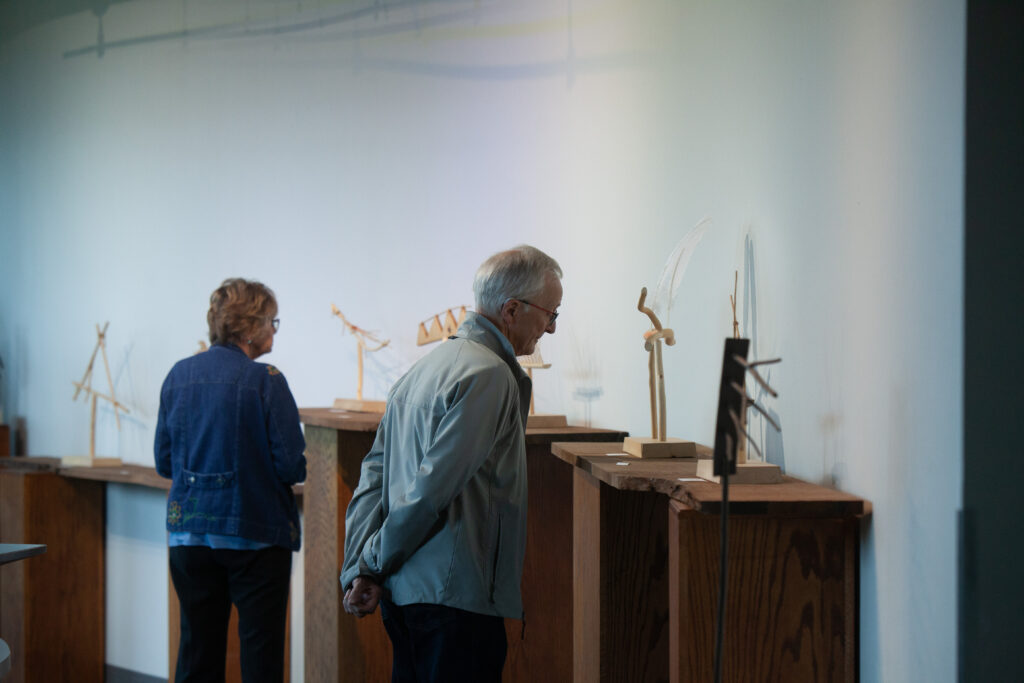
Visitors to the Promega Fall Art Show can see sculptures by Truman Lowe alongside works by several of his students.
After earning a graduate degree and moving through several teaching positions at the high school and university level, Lowe accepted a position as Native American studies coordinator and assistant professor of art at UW-Madison in 1975. This began a 45-year tenure in the department of art, where he fostered a deep understanding and appreciation for Native American art and culture among his students. He also served as a curator of contemporary art at the National Museum of the American Indian.
Lowe is known for large, site-specific installations that use natural materials including wood, stone and metal. His works push creative boundaries and exhibit a unique blend of versatility, precision and emotional depth. Lowe’s sculptures have been exhibited around the world, from museums including the Metropolitan Museum of Art to embassies in Bolivia and Cameroon. A sculpture titled Effigy: Bird Form was displayed on the White House grounds during the Clinton administration and was recently reinstalled atop Observatory Hill at UW-Madison, close to the former site of Native American effigy mounds.
Lowe, who died in 2019, was a beloved mentor to many students over his long tenure at UW-Madison. A university-published obituary quotes John Hitchcock, professor and Associate Dean at UW-Madison, saying, “Truman encouraged us to stay strong as artists and to our vision as makers.” The widespread love of Lowe will be on display at the Promega Fall Art Showcase, where six of his former students will be exhibiting alongside Lowe’s own works.
Promega Fall Art Showcase
The Fall Art Showcase opened on September 19 with a symposium featuring guest speakers Patricia marroquin Norby and Jo Ortel. Norby is the Associate Curator of Native American Art at the metropolitan Museum of Art, and the first person of Indigenous descent hired for a full-time curatorial position in the museum’s 150-year history. Jo Ortel is an author, art historian and Professor Emerita of Art History of Beloit College. Ortel is also the author of a notable biography of Truman Lowe titled “Woodland Reflections: The Art of Truman Lowe.”
The Promega Culinary Team collaborated with Chef Elena Terry of the culinary organization Wild Bearies to offer traditional Ho-Chunk food at the reception. Chef Terry provided recipes and connected the team with indigenous purveyors to source ingredients. Promega also collaborated with Little Eagle Arts Foundation to include pieces of Ho-Chunk culture into the event.
The Fall Art Showcase runs through December 29 and is open to the public Monday through Friday 8:00 am – 4:00 pm at the Promega BioPharmaceutical Technology Center. For more information, visit https://www.promega-artshow.com/
1As quoted in Woodland Reflections: The Art of Truman Lowe by Jo Ortel
In today’s world of social networking, LinkedIn has emerged as the clear winner for professionals in all industries. With its powerful networking capabilities and innovative career development features, LinkedIn has revolutionized how individuals connect, collaborate and advance their careers.
In this blog you will hear from some of Promega’s interns as they share valuable advice for early career scientists looking to expand their network, establish meaningful connections and propel their career forward.
As an early career scientist, you may have already realized that the key to a successful career is not just an impressive resume or CV, but a strong professional network. In today’s interconnected digital age, there is no better platform to build this network than LinkedIn. With more than 930 million users worldwide, LinkedIn is a powerful tool for connecting with professionals in your industry, exploring job opportunities, and building your personal brand.
In this blog, I’ll cover everything you need to know to establish a strong presence on LinkedIn and achieve your professional goals.
Creating a Strong Profile
Your profile can either make or break your success on LinkedIn. A well-crafted profile has the potential to create lasting impressions and open doors to new career and networking opportunities. Below are a few tips to help you create a profile that is sure to impress potential connections and employers:
Antimicrobial resistance (AMR) threatens the effective prevention and treatment of an ever-increasing range of infections. It’s a leading mortality factor worldwide, but the newly discovered antibiotic, clovibactin, may offer a pivotal solution. It effectively kills drug-resistant bacterial pathogens without detectable resistance—even multidrug-resistant “superbugs.”
Each year, the International Symposium for Human Identification (ISHI) covers a variety of the latest topics in DNA forensics through sessions, workshops and poster presentations. While last year’s meeting largely focused on using investigative genetic genealogy (IGG) and developments in DNA databases, another topic that garnered widespread interest was current efforts being taken to mobilize DNA analysis labs.
However, the mobile lab was more recently employed in a new DVI context: identifying victims of the conflict in Ukraine. On the last day of ISHI 33, Dr. Hubac presented on the unique challenges posed when identifying victims of war, and the tools, protocols and system that made the mobile lab uniquely suited for this purpose.
Mitogen-activated protein kinases (MAPKs) are a large family of proteins that regulate diverse cellular functions in eukaryotes, including gene expression, proliferation, differentiation and apoptosis (1). MAPK signaling pathways typically include three sequentially activated kinases, and these pathways are triggered in response to extracellular stimuli, such as cytokines, mitogens, growth factors and oxidative stress (1). Ultimately, the signal is transmitted to the nucleus, with the activation of a specific transcription factor that modulates the expression of one or more genes.
Among MAPK pathways, the RAS-RAF-MEK-ERK signaling pathway has been studied extensively. Mutations in RAS family proteins and resultant dysregulation of the signaling pathway are implicated in a variety of cancers. Therefore, this pathway is a popular target for anticancer drug development.
Dr. Agustín Moreira-Saporiti is a postdoctoral researcher at the Marine Biological Laboratory and is studying flowering processes in marine seagrass
Marine seagrasses are submerged flowering plants that form essential underwater meadows, fostering diverse ecosystems and providing a habitat for marine life. Our first Promega qPCR Grant winner and marine ecologist, Dr. Agustín Moreira-Saporiti, plans to continue adding to a fascinating body of work aimed at understanding flowering in marine seagrasses.
Dr. Moreira-Saporiti began his journey into marine plant ecology at the University of Vigo, Spain, where he earned a bachelor’s degree in marine sciences. He then went on to complete a master’s degree at the University of Bremen (Germany) where his thesis focused the ecology of seagrasses in Zanzibar, Tanzania. His passion for marine botany led him down a deeper exploration of marine plants, unraveling the intricate web of ecosystem processes within seagrasses.
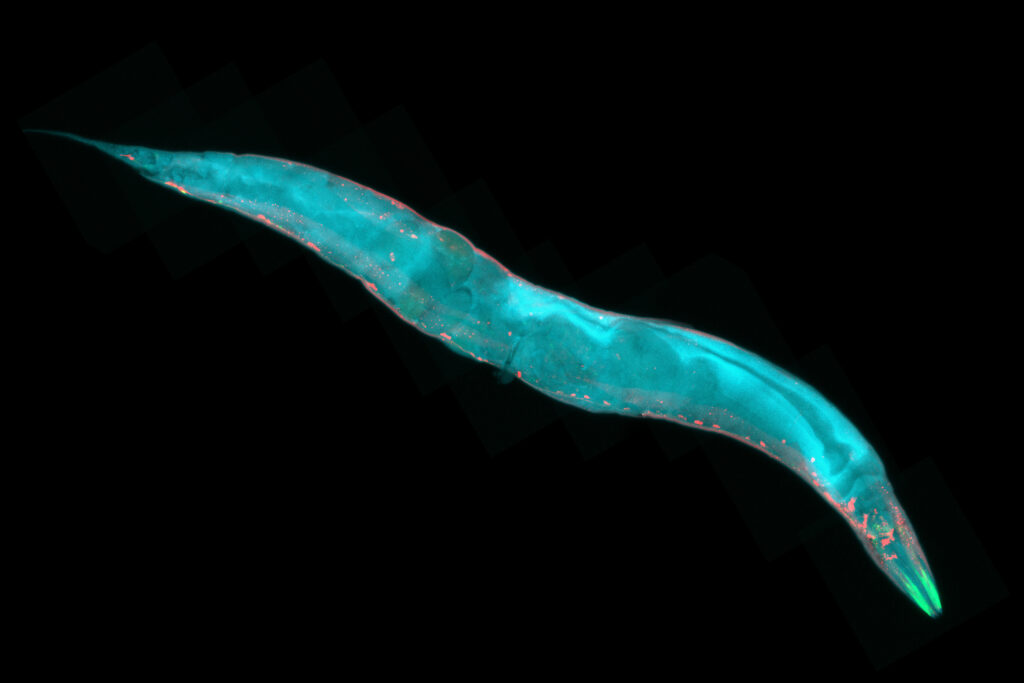
If you could, would you enter a suspended metabolic state for the chance to reawaken 46,000 years from now, as you are today? For one nematode discovered in Siberian permafrost, the answer is a resounding “yes”. A study published in late July of this year details recent research that expands on a paper published in 2018 wherein scientists announced that they successfully reanimated a small but resilient nematode, or roundworm, who remained alive for tens of thousands of years in a state called cryptobiosis after being frozen in extreme Arctic soil conditions.
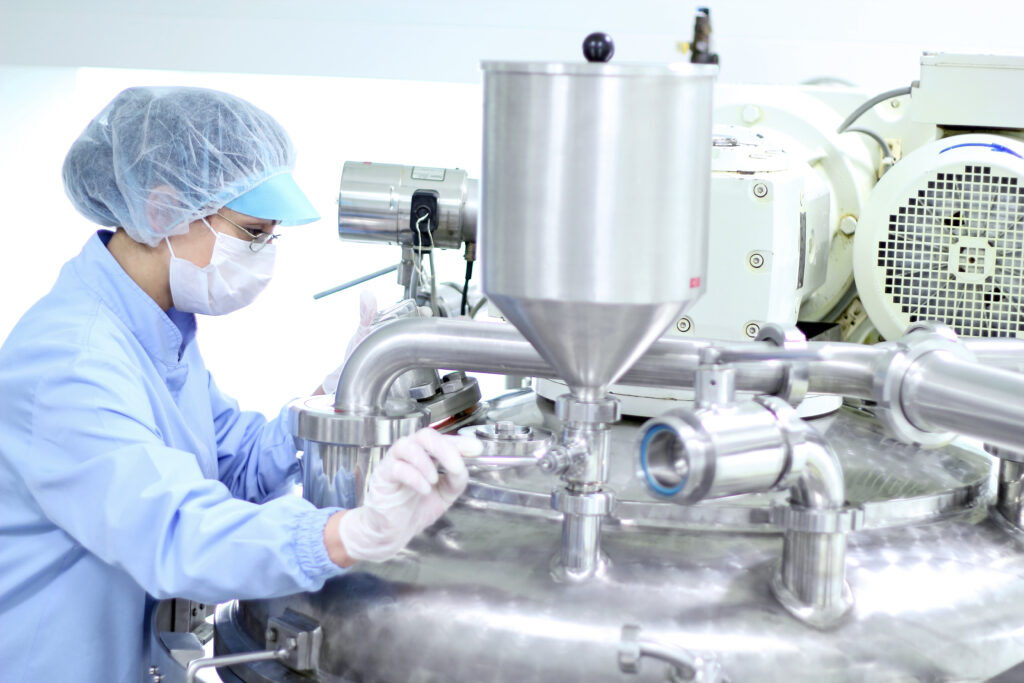
Loss of life and serious illness from contamination of manufactured products that are consumed as food or used in medical procedures illustrate the need to prevent contamination events rather than merely detect them after the fact. High-profile news stories have described contamination events in compounding pharmacies (1), food processing and packaging plants (2) and medical device manufacturers (3). Although contamination in manufacturing settings can be physical, chemical, or biological, this article will focus environmental monitoring to determine the quality of a manufacturing facility with respect to microbial contamination.
To ensure that the products they produce and package are manufactured in a high-quality, contaminant-free environment, many industries are required to establish routine environmental monitoring programs. Samples are collected from all potential sources of contamination in the production environment including air, surfaces, water supplies and people. Routine monitoring is essential to detect trends such as increases in potential pathogens over time or the appearance of new species that have not been seen before so that contamination events can be prevented.
Because environmental monitoring requires identification to the level of the species, most environmental monitoring programs will collect samples and then send them off to a facility to be sequenced for genomic identification of any microbial species. Such genotypic analysis involves DNA sequencing of ribosomal RNA (rRNA) genes to determine the taxonomic classification of bacteria and fungi. In this method, informative sections of the rRNA genes are amplified by PCR; the PCR products sequenced; the sequence is compared to reference libraries; and the results interpreted to make a species-level identification for a given microbial isolate.
XWe use cookies and similar technologies to make our website work, run analytics, improve our website, and show you personalized content and advertising. Some of these cookies are essential for our website to work. For others, we won’t set them unless you accept them. To learn more about our approach to Privacy we invite you to Read More
By clicking “Accept All”, you consent to the use of ALL the cookies. However you may visit Cookie Settings to provide a controlled consent.
We use cookies and similar technologies to make our website work, run analytics, improve our website, and show you personalized content and advertising. Some of these cookies are essential for our website to work. For others, we won’t set them unless you accept them. To find out more about cookies and how to manage cookies, read our Cookie Policy.
If you are located in the EEA, the United Kingdom, or Switzerland, you can change your settings at any time by clicking Manage Cookie Consent in the footer of our website.
Necessary cookies are absolutely essential for the website to function properly. These cookies ensure basic functionalities and security features of the website, anonymously.
Cookie
Duration
Description
cookielawinfo-checbox-analytics
11 months
This cookie is set by GDPR Cookie Consent plugin. The cookie is used to store the user consent for the cookies in the category "Analytics".
cookielawinfo-checbox-functional
11 months
The cookie is set by GDPR cookie consent to record the user consent for the cookies in the category "Functional".
cookielawinfo-checbox-others
11 months
This cookie is set by GDPR Cookie Consent plugin. The cookie is used to store the user consent for the cookies in the category "Other.
cookielawinfo-checkbox-advertisement
1 year
The cookie is set by GDPR cookie consent to record the user consent for the cookies in the category "Advertisement".
cookielawinfo-checkbox-necessary
11 months
This cookie is set by GDPR Cookie Consent plugin. The cookies is used to store the user consent for the cookies in the category "Necessary".
cookielawinfo-checkbox-performance
11 months
This cookie is set by GDPR Cookie Consent plugin. The cookie is used to store the user consent for the cookies in the category "Performance".
gdpr_status
6 months 2 days
This cookie is set by the provider Media.net. This cookie is used to check the status whether the user has accepted the cookie consent box. It also helps in not showing the cookie consent box upon re-entry to the website.
lang
This cookie is used to store the language preferences of a user to serve up content in that stored language the next time user visit the website.
viewed_cookie_policy
11 months
The cookie is set by the GDPR Cookie Consent plugin and is used to store whether or not user has consented to the use of cookies. It does not store any personal data.
Analytical cookies are used to understand how visitors interact with the website. These cookies help provide information on metrics the number of visitors, bounce rate, traffic source, etc.
Cookie
Duration
Description
SC_ANALYTICS_GLOBAL_COOKIE
10 years
This cookie is associated with Sitecore content and personalization. This cookie is used to identify the repeat visit from a single user. Sitecore will send a persistent session cookie to the web client.
vuid
2 years
This domain of this cookie is owned by Vimeo. This cookie is used by vimeo to collect tracking information. It sets a unique ID to embed videos to the website.
WMF-Last-Access
1 month 18 hours 24 minutes
This cookie is used to calculate unique devices accessing the website.
_ga
2 years
This cookie is installed by Google Analytics. The cookie is used to calculate visitor, session, campaign data and keep track of site usage for the site's analytics report. The cookies store information anonymously and assign a randomly generated number to identify unique visitors.
_gid
1 day
This cookie is installed by Google Analytics. The cookie is used to store information of how visitors use a website and helps in creating an analytics report of how the website is doing. The data collected including the number visitors, the source where they have come from, and the pages visted in an anonymous form.
Advertisement cookies are used to provide visitors with relevant ads and marketing campaigns. These cookies track visitors across websites and collect information to provide customized ads.
Cookie
Duration
Description
IDE
1 year 24 days
Used by Google DoubleClick and stores information about how the user uses the website and any other advertisement before visiting the website. This is used to present users with ads that are relevant to them according to the user profile.
test_cookie
15 minutes
This cookie is set by doubleclick.net. The purpose of the cookie is to determine if the user's browser supports cookies.
VISITOR_INFO1_LIVE
5 months 27 days
This cookie is set by Youtube. Used to track the information of the embedded YouTube videos on a website.
Performance cookies are used to understand and analyze the key performance indexes of the website which helps in delivering a better user experience for the visitors.
Cookie
Duration
Description
YSC
session
This cookies is set by Youtube and is used to track the views of embedded videos.
_gat_UA-62336821-1
1 minute
This is a pattern type cookie set by Google Analytics, where the pattern element on the name contains the unique identity number of the account or website it relates to. It appears to be a variation of the _gat cookie which is used to limit the amount of data recorded by Google on high traffic volume websites.