How To Make Medicine on Mars

Today NASAโ€™s InSight lander will touch down on Mars. InSight, which launched on May 5, is NASAโ€™s first Mars landing since the Curiosity rover in 2012. The lander will begin a two-year mission to study Marsโ€™ deep interior, gathering data that will help scientists understand the formation of rocky planets, including Earth.

NASA's InSight lander approaching Mars.
Image credit: NASA/JPL-Caltech

While every spacecraft that reaches Mars offers more knowledge of the Red Planet, a lot of the excitement is fueled by hopes that someday these missions will bring humans to Mars and enable us to start colonies there. While this goal seems very distant, tremendous progress is being made. Scientists around the globe are making incremental discoveries that will lead to the advances necessary to make colonization of Mars a reality.

I had the pleasure of meeting one team of scientists doing just thisโ€”eight high school students from iGEM Team Navarra BG. I met the team and their advisors at the 2018 iGEM Giant Jamboree, where they presented their synthetic biology project, BioGalaxy, as part of the iGEM competition. The problem they aimed to solve is key to helping humans stay on Mars for an extended period of timeโ€”how do you take everything you need when there isnโ€™t enough room on the spacecraft? Continue reading “How To Make Medicine on Mars”

Dear Tech Serv, Thank You!

Itโ€™s that time of year again. Time to be thankful and show gratitude for those special people in your life. The undergrad who does the dishes, the labmate who shares their buffers when yours runs out, the collaborator that sends you data on a Saturdayโ€ฆ Take a moment this week to say thank you, or send them an email to show your appreciation.

Today, we want to thank our Technical Services team. They work hard to help researchers choose the right assay for their needs, understand results and troubleshoot technical problems. They strive to provide the best service for those in need. Many on the receiving end have sent thankful messages:

โ€œI deeply appreciate the help you have been and the email you just sent. I think with the information here, I may have sorted out an issue that has plagued our lab for the past few months.โ€

โ€œCannot tell you how grateful I amโ€“you’ve been a tremendous help.โ€

โ€œYou are super sharp and caught critical errors in my protocol (the calculation andย dilution errors you referenced below). While few of my colleagues run kinase assays, I did consult 6 of them, and none caught the errors you did. You’re clearly an expert and I truly appreciate how you’ve tailored everything for my ‘beginner’ level.โ€

โ€œWow, I cannot thank you enough! You have NO idea how helpful this is! You guys are absolutely great.โ€

Hereโ€™s one heart-warming story we had to share in which Tech Serv helped a group of students turn frowns into smiles.

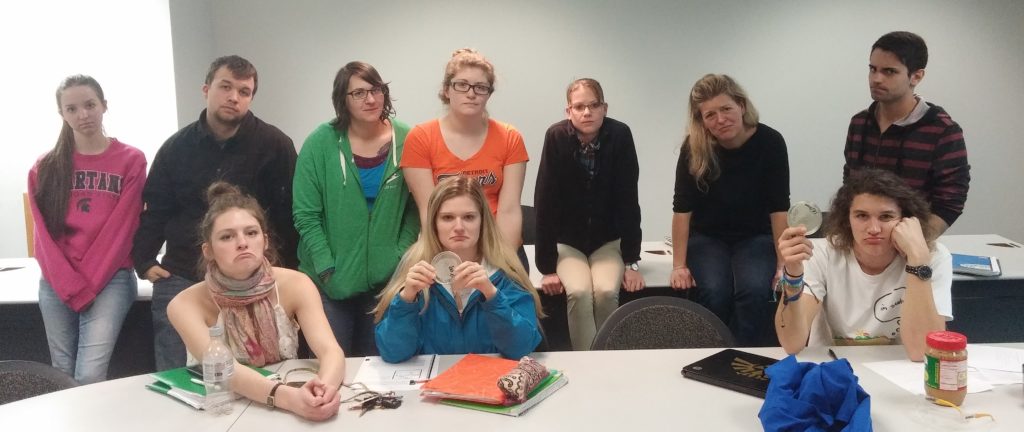
In April, Tech Serv received a message from a professor from a university in Michigan regarding an issue with the pGEM Vector System. He was teaching a cell and molecular biology course and his students were unable to generate any colonies. โ€œI have a very disappointed group of seniors on my hands. Please see the photo attached. All those sad faces trying to exude how hard they’ve worked with nothing to show for it. Any insight would be greatly appreciated,โ€ he wrote.

โ€œI understand the frustation of a kit that is not working, the students look so sad!โ€ replied the Tech Serv team. Turns out, the cells may have been past expiration or subjected to repeated freeze thaws that caused the cells to lose competence. Tech Serv sent them a replacement kit with a photo of the team for encouragement.
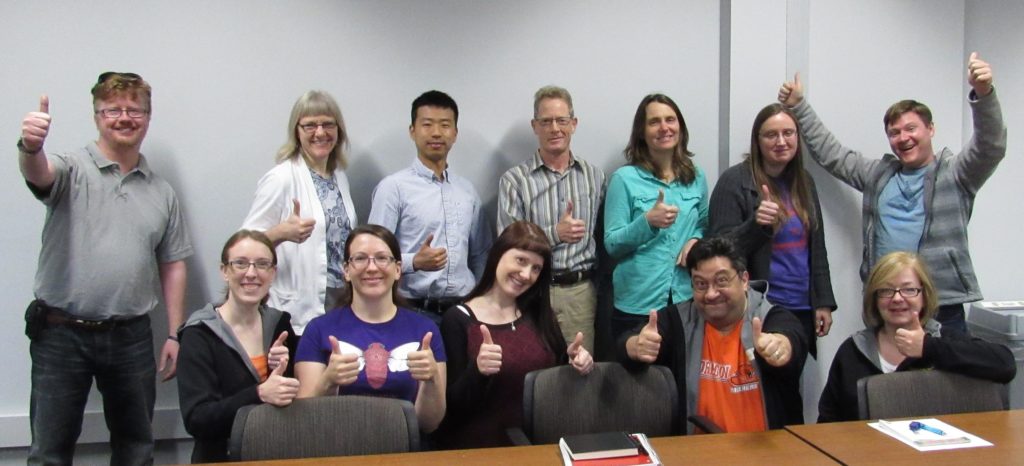
โ€œWe greatly appreciate you replacing what we have and aim to turn those frowns into happy faces before graduation,โ€ the professor replied.

Two weeks later, they got their colonies and wrote back: โ€œIt worked very well! We were able to make the most of this and they experienced a very good exercise in troubleshooting. I would say the group would view all that happened as a success. Thank you, we will continue to order from Promega as you’ve always proven to be a very client-friendly company!โ€

Nothing brings more happiness to the Tech Serv team than your success, so donโ€™t hesitate to contact them with any questions you may have. Theyโ€™re here to help.

Thanks, Tech Serv!
The Five Steps to miRNA Profiling

MicroRNAs (miRNAs) are small, non-coding RNAs that play a role in regulating cancer by acting as both tumor suppressors and oncogenes. Ranging in size from 18โ€“25 nucleotides, miRNAs function in feedback mechanisms to regulate many cellular processes including cell proliferation, apoptosis, cell signaling and tumorigenesis (1).

Not surprisingly, dysregulation of miRNA expression can have serious repercussions. For example, miRNAs are dysregulated in almost all human cancersย (1). Because of the potential to influence cancer growth and development, there is growing interest in miRNA profiling to identify possible biomarkers for cancer diagnosis or prognosis, as well as potential therapeutic targets (1).

Growing interest in miRNAs as both biomarkers of disease and therapeutic targets drives the need for fast and effective methods for miRNA profiling. Profiling miRNA targets follows a relatively simple workflow: sample selection, RNA extraction, RNA QC and quantitation, RNA profiling and data analysis (2,3). So what happens at each step?

Five steps of miRNA profiling
The Five Steps of miRNA Profiling

Continue reading “The Five Steps to miRNA Profiling”

Could Your Appendix Predispose You to Parkinsonโ€™s Disease?

Image of span of vagal nerve, humans.
The vagal nerve could serve as conduit for transit of alpha-synuclein from appendix to brain.

Since about 2000 weโ€™ve learned a lot about the bacteria in our guts. Weโ€™ve learned that the right bacterial communities in our gastrointestinal system can make us feel better, think better and even help avoid obesity (1). My colleague Isobel has previously blogged about how certain gut bacteria can improve immunotherapy outcomes.

Conversely, the wrong bacteria in our guts can have negative consequences on health and cognition.

Along the way weโ€™ve learned that gut bacterial flora can be influenced by what we eat, certain medications like antibiotics, and even stressful events. We now know that fermented foods like yogurt, sauerkraut, kombucha and that horrible-smelling stuff (kimchi) that another colleague eats are happy food for the good gut bacteria.

And you might guess that fried foods, saturated fats and certain carbohydrates can support the growth of gut bacteria that are doing us no favors when present in large quantities in our gastrointestinal system. Continue reading “Could Your Appendix Predispose You to Parkinsonโ€™s Disease?”

In a Perfect World, Bacteria Wins

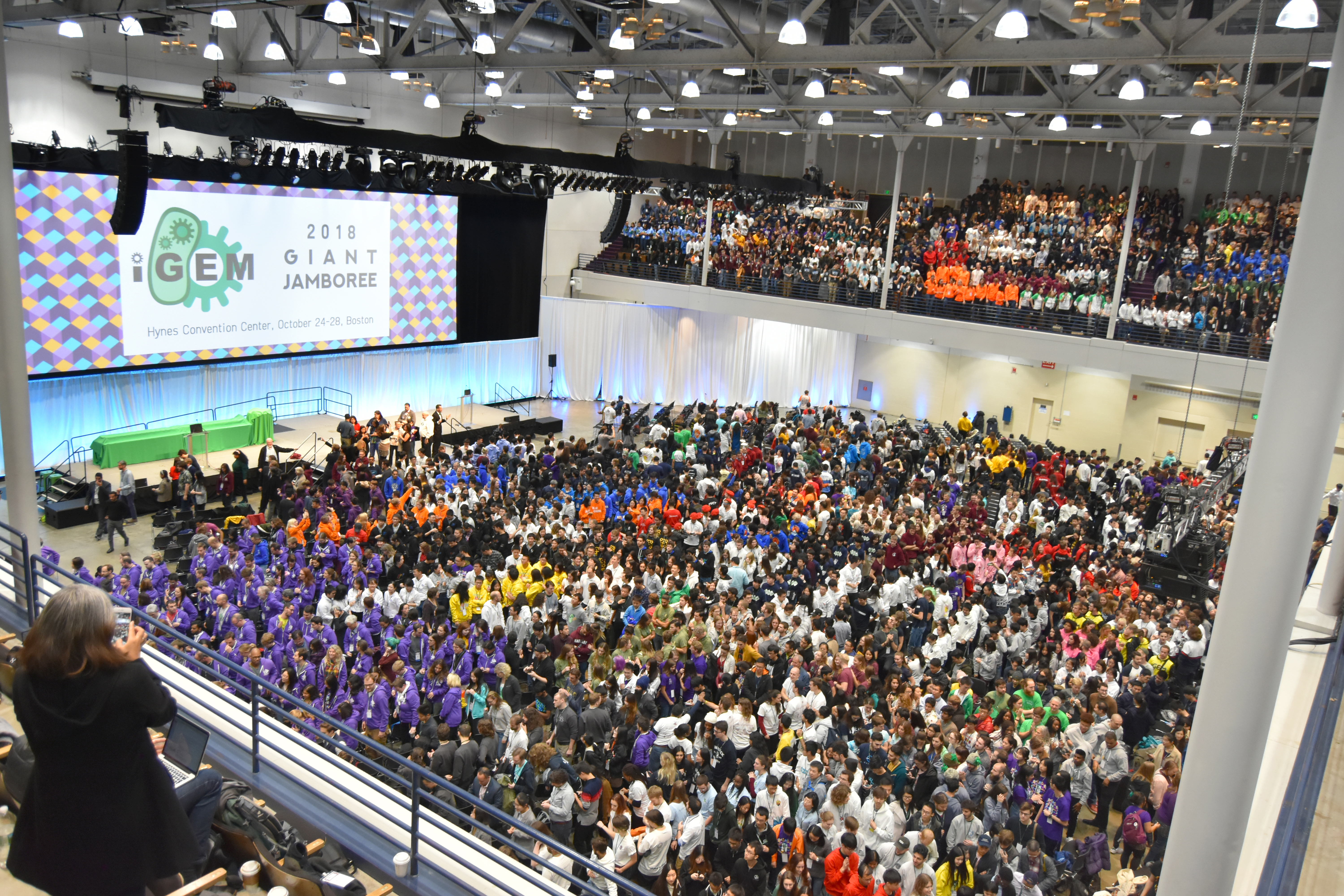
iGEM 2018 from aboveLast month, several of my Promega colleagues and I attended the 2018 iGEM Giant Jamboree in Boston, MA. This annual event is the culmination of the International Genetically Engineered Machines competition, in which 350+ teams of high school, undergraduate and graduate students use synthetic biology to solve a problem they see in the world.

The iGEM Giant Jamboree is the closest I have ever come to a scientific utopia. For four days, several thousand students from 45 countries come together to share their experiences and discuss ways that science can change the world. They present impressive projects with real-world applications including human diagnostics and alternative energy. Collaboration and open science are among the core tenets of iGEM, and itโ€™s not unusual to see three or more countries represented on the Collaborators slide at the end of a presentation. Each project also contains a public engagement component, which many teams fulfill with educational programs or partnerships with underrepresented communities. Continue reading “In a Perfect World, Bacteria Wins”

An Ode to Packaging Engineers

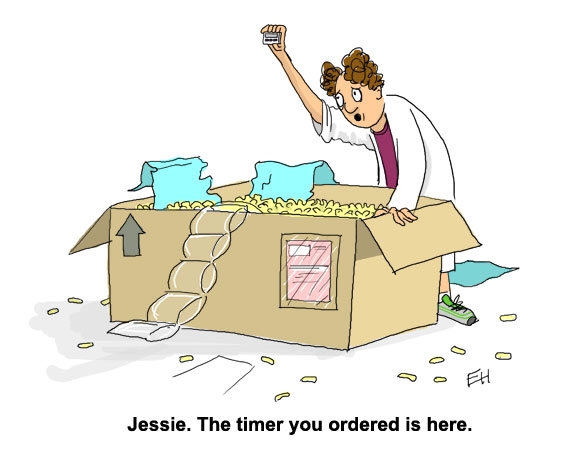
Comic by Ed Himelblau.

In my second or third year as a graduate student, I had to ship some microfluidic masters to a collaborator in Kenya. The masters were extremely fragile and took me several days in a cleanroom gown to make. I was horrified at having to send them on a perilous journey overseas, and somewhat flabbergasted that they made it to Nairobi whole and well. And yet, every day thousands of delicate items zoom around the world and arrive at their destinations in one piece. How?

A couple months ago, I visited the lab where our packaging engineers (yes, that’s a thing) do their work. Here’s what I learned. Continue reading “An Ode to Packaging Engineers”

Hey, iGEMers! We’re talking to you!

The 2018 iGEM Giant Jamboree is upon us! This Wednesday, October 24th, thousands of you will flood into Boston, weighed down by posters and presentation materials, but energized by the excitement of a non-stop science-packed conference. Promega will also be attending, with a booth full of helpful giveaways and staff standing by to answer all your questions about science, Promega or future careers. As you make your final plans for the Jamboree, here are a few helpful tips for making the most of this incredible opportunity.

Continue reading “Hey, iGEMers! We’re talking to you!”

How Can a ADCC Reporter Bioassay Help You Save Time and Reduce Variability?

Fc receptor-mediated antibody-dependent cell-mediated cytotoxicity (ADCC) is an important mechanism of action (MOA) by which antibodies target diseased cells for elimination. Traditional methods for measuring ADCC require primary donor peripheral blood mononuclear cells (PBMCs) or purified natural killer (NK) cells that express Fc receptors on the cell surface. However, primary cultures of PBMCs and NK cells introduce variability, high background, and can be tedious to prepare. Using a commercially available ADCC reporter bioassay can overcome many of the limitations of these primary cell assays.

Our ADCC and ADCP Reporter Bioassays are biologically relevant, MOA-based assays that can be used to measure the potency and stability of antibodies and other biologics that specifically bind and activate Fcฮณ receptors. The ADCC Reporter Bioassays use an alternative readout from traditional primary cell-based assays: the FcฮณR and NFAT-mediated activation of luciferase activity in the effector cells. Primary cells are replaced with a Jurkat cell line stably expressing human FcฮณR variant and NFAT-induced luciferase.

The thaw-and-use cell format of the ADCC Reporter Bioassay saves time and labor of primary cell assays, while reducing variability. While a primary cell assay can take 1-2 weeks from culturing cells to results, ADCC reporter bioassay can be performed in 3โ€“24 hours. The bioassays include all of the required reagents and are easily amenable to high-throughput workflows, enabling you to have precisely the right throughput for your workflow needs.

Check out the full Promega portfolio of Fc effector reporter bioassays to discover the best tool for your research and read more about how these assays

My City Flooded, and Thereโ€™s More to Come

It seemed like the rain was never going to stop. It started in the morning, and when I left work around 5pm, it was still coming down hard. I took my normal route home through a back country road. As I turned right onto Fitchrona Road, a long line of cars came into view. Thereโ€™s usually some congestion leading to the stop sign ahead. Except today, something was different. About 20 yards of the road ahead was submerged in water. Continue reading “My City Flooded, and Thereโ€™s More to Come”

Moving Towards Zero Hunger, One Genome at a Time

Farmer and a pile of cassava bulbs.

Have you ever thought about plant viruses? Unless youโ€™re a farmer or avid gardener, probably not. And yet, for many people the battle against agricultural viruses never ends. Plant viruses cause billions of dollars in damage every year and leave millions of people food insecure (1โ€“2), making viruses a major barrier to meeting the United Nationsโ€™ global sustainable development goal of Zero Hunger by 2030.

At the University of Western Australia, Senior Research Fellow Dr. Laura Boykin is using genomics and supercomputing to tackle the problem of viral plant diseases. In a recent study, Dr. Boykin and her colleagues used genome sequencing to inform disease management in cassava crops. For this work, they used the MinION, a miniature, portable sequencer made by Oxford Nanopore Technologies, to fully sequence the genomes of viruses infecting cassava plants.

Cassava (Manihot esculenta) is one of the 5 most important calorie sources worldwide (3). Over 800 million people rely on cassava for food and/or income (4). Cassava is susceptible to a group of viruses called begomoviruses, which are transmitted by whiteflies. Resistant cassava varieties are available. However, these resistant plants are usually only protected against a small number of begomoviruses, so proper deployment of these plants means farmers must know both whether their plants are infected and, if so, the strain of virus thatโ€™s causing the infection.

Continue reading “Moving Towards Zero Hunger, One Genome at a Time”