The Bacteria that are Good for Us

Chains of Streptococci

Salmonella. Streptococcus. Shigella. The most well-known bacteria are those that cause disease. Our relationship with them is one of combat. With good reason, we look for ways to avoid encountering them and to eliminate them when we do meet.

But not all bacteria are bad for us. Of course we have known for years that we are colonized by harmless bacteria, but recently, studies on the human microbiome have revealed many surprising things about these bacterial tenants. Studies are showing that the teeming multitudes of organisms living in and on the human body are not just harmless bystanders, but complex, interrelated communities that can have profound effects on our health.

Three studies published in Scienceย in 2018 add more to the growing body of microbiome surprises, showing that certain gut bacteria are not only good for us, but may even be required for the effectiveness of some anti-cancer immunotherapies.

Continue reading “The Bacteria that are Good for Us”

The Making of a Vaccine: Preparation for Flu Season

At the time that I’m writing this, I still haven’t succumbed to the “yuck” that’s been knocking out my co-workers one-by-one since November. Those of us who are still healthy were discussing how we fortify our immune systems in preparation for the flu season. All of the suggestions were pretty typicalโ€”orange juice, Vitamin C supplements, and of course, the the annual flu shot.

For all of the agencies responsible for the production of the seasonal influenza vaccine, preparation for flu season begins long before the rest of us are stocking up on Emergen-C. Continue reading “The Making of a Vaccine: Preparation for Flu Season”

Deck the Halls…and Cubes…and Desks

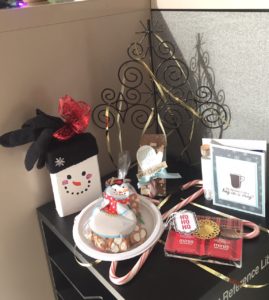
Every year around the beginning of December, a magical transformation begins in Promega offices in Madison and around the world. In Madison, even as our own Promega cookie elf is busily baking the last of her Holiday treats, employees are donning their own elf hats and bedecking our halls and cubes with their own form of Holiday magic.
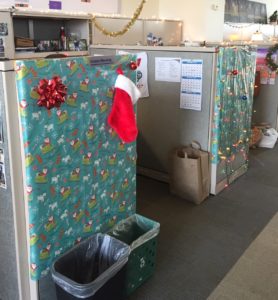

Different teams put different spins on their decorating; from an all-out coordinated effort, to individualized decorations that reflect the personality of the decorator . It is fun to see how different areas get into the Holiday spirit. Continue reading “Deck the Halls…and Cubes…and Desks”

Promega Partnering with UC-Davis Drought-Resistant Rice Project

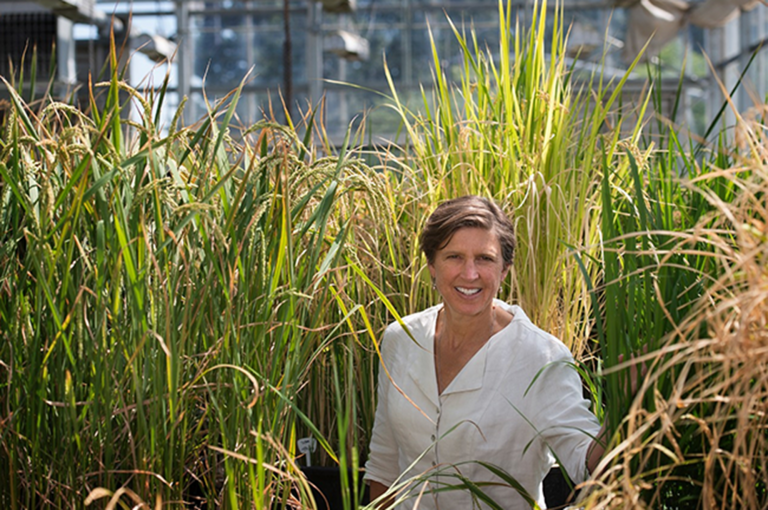
The Foundation for Food and Agriculture Research (FFAR) announced on November 30 that they are awarding $1M to a project based at the University of California, Davis, to study protein kinases of rice plants. The team is led by Dr. Pamela Ronald, a leading expert in plant genetics who has engineered disease- and flood-resistant rice. This project aims to address the growing agricultural problem of water scarcity by gaining a better understanding of the role kinases play in enabling drought-resistance. Promega will be supporting this research by providing NanoBRET™ products to help characterize kinase inhibitors.

Principal Investigator Pamela Ronald, Ph.D. Photo Credit: Deanne Fitzmaurice

The research team will begin by screening over 1,000 human kinase inhibitors to determine which ones do interact with the plant kinome and, if applicable, which kinase(s) they inhibit. Once the compound library has been established, the team will assess the inhibitors’ phenotypic effects on rice to identify kinases that, when inhibited, positively impact root growth and development. The long-term goal is to use these findings to engineer drought-resistant rice.

Continue reading “Promega Partnering with UC-Davis Drought-Resistant Rice Project”

Secrets of the Promega Cookie Elf

Working at a manufacturing company like Promega means quite a few people here spend their days obsessing (rightly so) over things like bulk production, product finishing and quality assurance. As the holiday season approaches, however, many Promega Madison employees also begin obsessing (rightly so) over some extremely important manufacturing going on in Elaine Yorkโ€™s Wisconsin kitchen.

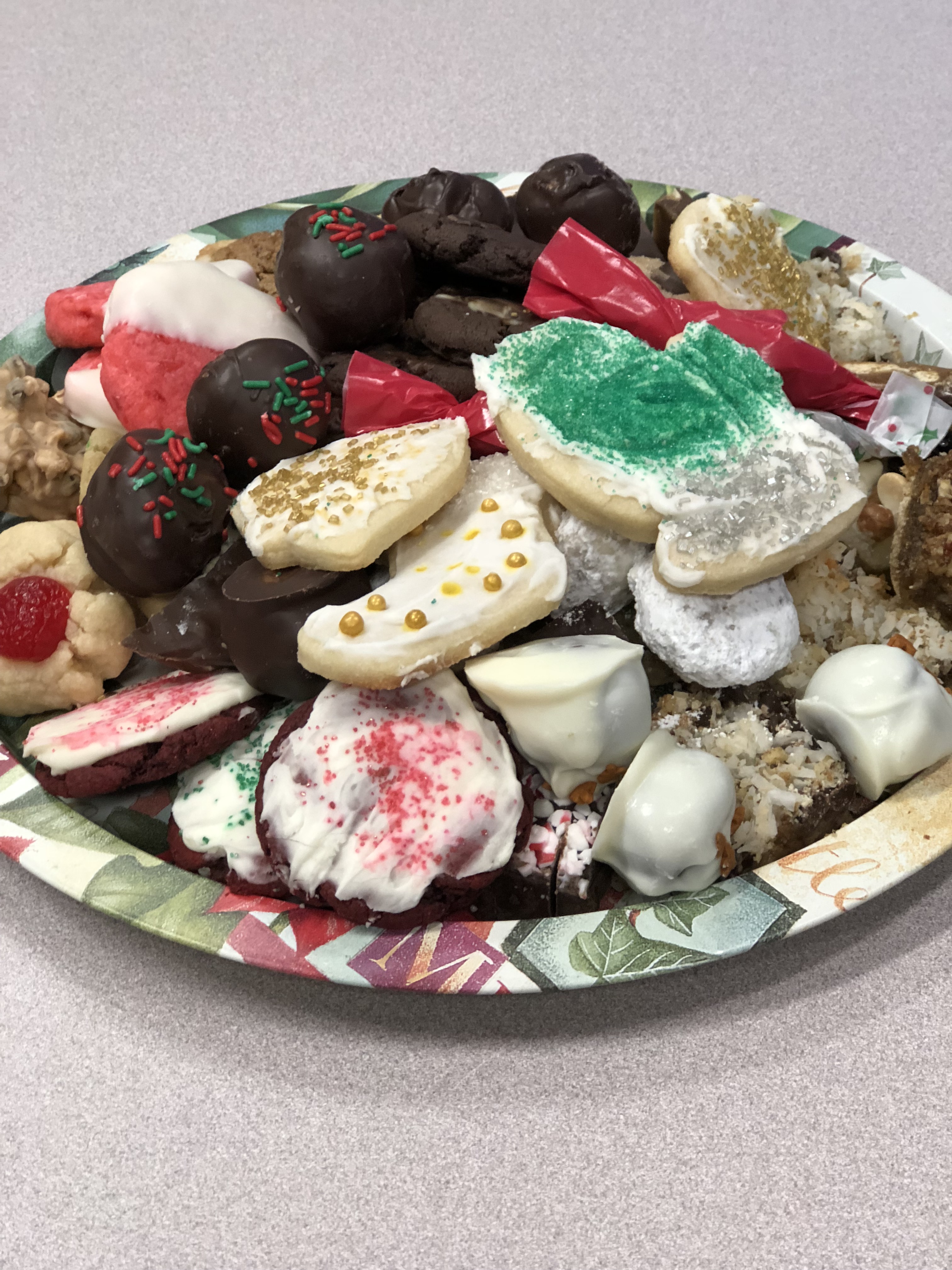
Elaine is married to Chuck York, Vice President of Manufacturing Operations at Promega. Each Christmas, she bakes thousands (yes, thousand with an โ€œsโ€) of made-from-scratch Christmas cookies of every variety, artfully arranged on around 50 platters, which Chuck then brings to work to share with his lucky coworkers.

Today was that wonderful day at Promega!

โ€œI enjoy doing it and he enjoys giving them,โ€ says Elaine, an avid baker who has been creating delectable treats for over 40 years. Continue reading “Secrets of the Promega Cookie Elf”

Shining Stars: Cool NanoLucยฎ Plasmid Constructs Available Through the Addgene Repository

Researchers having been sharing plasmids ever since there were plasmids to share. Back when I was in the lab, if you read a paper and saw an interesting construct you wished to use, you could either make it yourself or you could โ€œclone by phoneโ€.  One of my professors was excellent at phone cloning with labs around the world and had specific strategies and tactics for getting the plasmids he wanted. Addgene makes this so much easier to share your constructs from lab to lab. Promega supports the Addgene mission statement: Accelerate research and discovery by improving access to useful research materials and information.  Many of our technology platforms like HaloTagยฎ Fusion Protein, codon-optimized Firefly luciferase genes (e.g., luc2), and NanoLucยฎ Luciferase are present in the repository. We encourage people to go to Addgene to get new innovative tools. Afterall, isnโ€™t science better when we share?

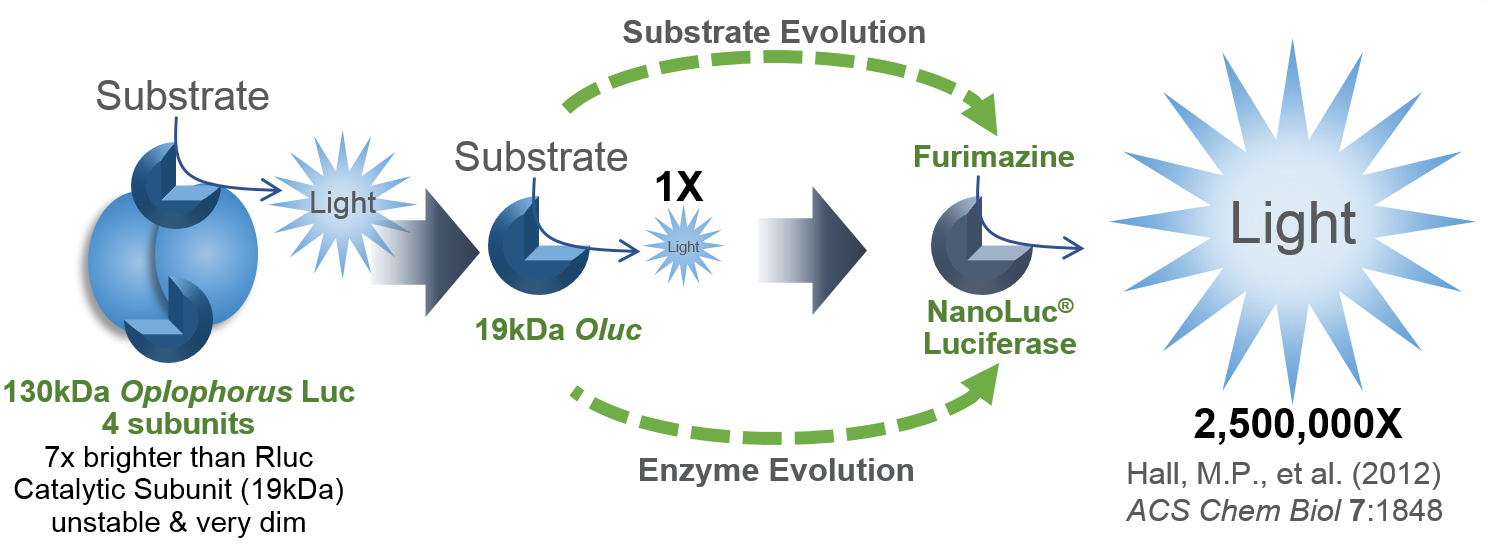
Iโ€™d like to focus on some tools in the Addgene collection based on NanoLucยฎ Luciferase (NLuc).  The creation of NanoLucยฎ Luciferase and the optimal substrate furimazine is a good story (1).  From a deep sea shrimp to a compact powerhouse of bioluminescence, NLuc is 100-fold brighter than our more common luciferases like firefly (FLuc) and Renilla (RLuc) luciferase.  This is important not so much for how bright you can make a reaction but for how sensitive you can make a reaction.  NLuc requires 100-fold less protein to produce the same amount of light from a Fluc or RLuc reaction.  NLuc lets you work at physiological concentrations.  NLuc is bright enough to detect endogenous tagged genes generated through the CRISPR/Cas9 knock-in.  NLuc is very inviting for endogenous tagging as it is only 19kDa.  An example is the CRISPaint-NLuc construct (Plasmid #67178) for use in the system outlined in Schmid-Burgk, J.L. et al (2).

Two applications of NanoLucยฎ Technology have caught my attention through coupling the luciferase with fluorescent proteins to make better imaging reporters and biosensors. Continue reading “Shining Stars: Cool NanoLucยฎ Plasmid Constructs Available Through the Addgene Repository”

Glycosyltransferases: Whatโ€™s New in GT Assays?

In his 2014 blog, โ€œWhy We Care About Glycosyltransferasesโ€ Michael Curtin, Promega Global Product Manager for Cell Signaling, wrote:

โ€œGlycobiology is the study of carbohydrates and their role in biology. Glycans, defined as โ€˜compounds consisting of a large number of monosaccharides linked glycosidicallyโ€™ are present in all living cells; They coat cell membranes and are integral components of cell walls. They play diverse roles, including critical functions in cell signaling, molecular recognition, immunity and inflammation. They are the cell-surface molecules that define the ABO blood groups and must be taken into consideration to ensure successful blood transfusions.

The process by which a sugar moiety is attached to a biological compound is referred to as glycosylation. Protein glycosylation is a form of post-translational modification, which is important for many biological processes and often serves as an analog switch that modulates protein activity. The class of enzymes responsible for transferring the sugar moiety onto proteins is called a glycosyltransferase (GT).โ€

Continue reading “Glycosyltransferases: Whatโ€™s New in GT Assays?”

The Battle for the Wall Outlet

student studying
Studying in the almost empty library at the beginning of the semester.

You check the clock. The time is 3:36 am and youโ€™re barely a third of the way through the material on the 11:00 am cumulative exam. Stirring the film that has formed on top of your now-ice-cold latte, you contemplate leaving the library and heading home to a warm bed. After all, you know that the custodial staff comes around with a vacuum at 4:00 am and, like a cat, you just canโ€™t handle the vacuum at this time of day.

You take another minute and reluctantly come to the conclusion that you should get back to work. As you pull your computer onto your lap once more, you hear the terrifying beep of a low battery signal. The battery is on 5% and you know very well thereโ€™s not a free outlet in a 2-mile radius. Without an outlet, your time in the library has come to an end.

This tiny little beep has led to my own personal defeat on multiple occasions, particularly during finals season. Continue reading “The Battle for the Wall Outlet”

Luciferase Immunoprecipitation System Assay (LIPS): Expression of Luciferase Antigen using TNT Transcription/Translation Kit

NanoLuc dual reporters
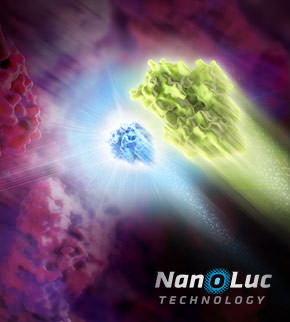
Illustration showing NanoLuc and firefly luciferase reporters.

The luciferase immunoprecipitation system (LIPS) assay is a liquid phase immunoassay allowing high-throughput serological screening of antigen-specific antibodies. The immunoassay involves quantitating serum antibodies by measuring luminescence emitted by the reporter enzyme Renilla luciferase (Rluc) fused to an antigen of interest. The Rluc-antigen fusion protein is recognized by antigen-specific antibodies, and antigen-antibody complexes are captured by protein A/G beads that recognize the Fc region of the IgG antibody (1).

In a recent publication (2), this assay was used to assess the presence of autoantibodies against ATP4A and ATP4B subunits of parietal cells H+, K+-ATPase in patients with atrophic body gastritis and in controls. Continue reading “Luciferase Immunoprecipitation System Assay (LIPS): Expression of Luciferase Antigen using TNT Transcription/Translation Kit”

Choosing a Better Path for Your NGS Workflow

Imagine you are traveling in your car and must pass through a mountain range to get to your destination. Youโ€™ve been following a set of directions when you realize you have a decision to make. Will you stay on your current route, which is many miles shorter but contains a long tunnel that cuts straight through the mountains and obstructs your view? Or will you switch to a longer, more scenic route that bypasses the tunnel ahead and gets you to your destination a bit later than you wanted?

Choosing which route to take illustrates a clear trade-off that has to be consideredโ€”which is more valuable, speed or understanding? Yes, the tunnel gets you from one place to another faster. But what are you missing as a result? Is it worth a little extra time to see the majestic landscape that you are passing through?

Considering this trade-off is especially critical for researchers working with human DNA purified from formalin-fixed paraffin-embedded (FFPE) or circulating cell-free DNA (ccfDNA) samples for next-generation sequencing (NGS). These sample types present a few challenges when performing NGS. FFPE samples are prone to degradation, while ccfDNA samples are susceptible to gDNA contamination, and both offer a very limited amount of starting material to work with.

Continue reading “Choosing a Better Path for Your NGS Workflow”