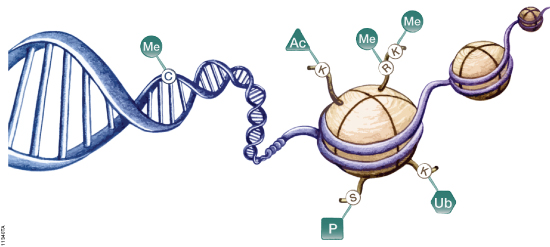
DNA is organized by protein:DNA complexes called nucleosomes in eukaryotes. Nucleosomes are composed of 147 base pairs of DNA wrapped around a histone octamer containing two copies of each core histone protein. Histone proteins play significant roles in many nuclear processes including transcription, DNA damage repair and heterochromatin formation. Histone proteins are extensively and dynamically post-translationally modified, and these post-translational modifications (PTMs) are thought to comprise a specific combinatorial PTM profile of a histone that dictates its specific function. Abnormal regulations of PTM may lead to developmental disorders and disease development such as cancer.
By US Environmental Protection Agency [Public domain], via Wikimedia Commons
February 11 is the International Day of Women and Girls in Science, a reminder that there is still a gender gap in science. Despite the obstacles that women need to overcome, their contributions to field of science have benefited not only their fellow researchers but also their fellow humans. From treatments for diseases to new discoveries that opened up entire fields, women have advanced knowledge across the spectrum of science. Below is a sampling of the achievements of just a few women in science. What other living female scientist or inventor might you add?
Hate malaria? You can thank Tu Youyou for discovering artemisinin and dihydroartemisinin, compounds that are used to treat the tropical disease and save numerous lives. Her discovery was so significant, she received the 2015 Nobel Prize in Physiology or Medicine.
Recently, I had the opportunity to attend a fascinating symposium held at Promega featuring conservationist Steward Brand, where he described some of the projects developed by his foundation, Revive & Restore.
The organization’s mission is to apply emerging biotechnology techniques to endangered and extinct species with the intent to increase genetic diversity, provide disease resistance and facilitate adaptation to changing climates. Although the overall message of enhancing biodiversity through the application of new genetic technology was inspiring, the project that resonated most for me was related to the plight of horseshoe crabs.
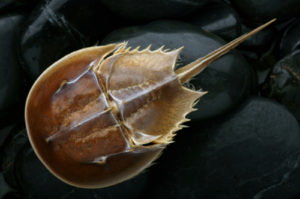
Horseshoe crabs, often referred to as living fossils, include four extant species with origins dating back about 450 million years. Although they look like crabs, they belong to their own subphylum and are more closely related to spiders. When horseshoe crabs spawn, they leave their usual habitat on the ocean floor and migrate to shore in large numbers. As a result, they have been exploited for bait and fertilizer for decades.
Enter endotoxins, an indicator for bacterial contamination in biologicals, drugs and medical devices. U.S. Food & Drug Administration regulations dictate that finished products be tested for the presence of endotoxins. These pyrogenic compounds, found in the cell wall of Gram-negative bacteria, can cause fever and affect a wide range of biological activity, possibly leading to aseptic shock and death. The most common method for testing is the gel clot and Limulus Amebocyte Lysate (LAL) Test.
I first learned about the LAL test during graduate school, where it was presented as a ubiquitous and standard requirement for testing bacterial contamination in injectable drugs. I remember being fascinated that horseshoe crabs (Limulus sp.), contain a substance that could be used to detect endotoxins. Although the instructors mentioned the need to collect blood from horseshoe crabs in order to produce the test, the method or scale of this harvest wasn’t discussed, nor were the true costs of using this method of endotoxin testing.
The LAL test has served as a faster, more inexpensive endotoxin testing replacement for the rabbit pyrogens test for the past 35 years. Every year during mating season horseshoe crabs move to shallow water, where they are removed in huge numbers. (To get an idea of scale for the harvest and read a much more comprehensive investigation of the issue, check out this article in The Atlantic, which features an archive photo of Delaware Bay horseshoe crab harvest from 1928—for fertilizer, not pharmaceutical testing.)
After collection, the crabs end up in a lab where up to 30% of their blood is drained from a needle stuck in tissue around their heart. The LAL is extracted from the blood and can yield a product worth up to $15,000/quart. In order to avoid recollection, the crabs are returned to the ocean far from the shore where they were collected a few days before. Although it’s estimated that only 10-30% of these crabs die as a result of the process, there are indications that the horseshoe crab population and their ecosystems are impacted in other ways.
Researchers at the University of New Hampshire and Plymouth State University used accelerometers attached to recently bled female horseshoe crabs to test the hypothesis that harvesting for LAL was affecting their ability to spawn. While the research supported previous estimates with a death rate of 18%, females were found to be less likely to mate after being bled.
During his talk, Brand shared results from a study still in review that confirm the effect of over-harvesting Limulus on the survival of long distance migratory shorebirds. These birds synchronize their migration with horseshoe crab spawning, which provides a needed feast of eggs before the homestretch of their journey. Along with other ecosystem threats from climate change, the accelerated decline in the horseshoe crab population and dependency of migratory birds will likely to lead to a devastating ecological domino effect.
Fortunately, a synthetic alternative to LAL, recombinant factor C (rFC), has been available for nearly 20 years. Alas, there has been no significant shift by pharmaceutical companies away from the test based on horseshoe crab blood. rFC was patented and licensed to one company, Lonza, which Brand posited as one reason for the reluctance of drug companies to adopt its use.
Obviously, relying on one source for an essential testing reagent with no competition to temper cost is quite unattractive. But that argument has less bearing now that the patent is scheduled to expire in a few months, opening the door for additional manufacturers and creating an economic incentive for switching to the synthetic test.
Another reason may be that implementing a new test would require additional resources to validate the synthetic test for products that are already being tested with the LAL. Since the LAL has been specified in FDA guidance documents on endotoxin testing for decades, quality standards for existing products are based on the LAL, limiting momentum to change.
If both tests offered the same benefits, these arguments would make sense; however, research by one of the discoverers of rFC, Jeak Ling Ding of the National University of Singapore, shows that in many respects rFC is more efficacious than LAL. Since the raw material for the LAL test depends on an organism, there is seasonal variation in the components of the processed blood that must be taken into account. The reaction of the LAL also depends on a cascade of multiple compounds that can be affected by temperature, pH and proteins—leaving the test vulnerable to false positive results.
Although Eli Lilly is the only pharmaceutical company to date to use rFC in place of LAL, It seems the tide may be turning. According to Brand, others are interested in making the transition. It seems foolish not to, given the source for LAL shows signs of dwindling due to overexploitation. Perhaps pharmaceutical companies are beginning to see the value of a “slower/better” philosophy (the cornerstone of the Long Now Foundation, another brainchild of Brand’s), rather than “faster/cheaper.” I have certainly gained a new perspective on endotoxin testing and a deep appreciation for the work of Brand and his foundation.
Does your organization use the LAL test? What is preventing you from switching to the synthetic alternative? Let us know!
Say the words “climate change” in a room full of people and you are bound to inspire some passion in the response—and very likely start an argument. There is no question that emotions and opinions run high whenever this topic is introduced. Most often the debate centers around who or what might be causing changes in the earth’s climate and what should be done about it. So for the sake of everyone’s blood pressure, I want to set some expectations around this blog.
This is not a blog about the causes of climate change. I am not going to talk about who or what might be causing it, nor am I going to discuss ways the changes could be stopped, slowed down or altered.
The earth’s climate has warmed and cooled before. Looking at ice-core and geological records, we know that the earth has been much warmer than it is now, and we know that it has been much colder. Climate is dynamic, there are always fluctuations in temperature and moisture from year to year and decade to decade. Some of these fluctuations become trends where the changes consistently track in one direction, and some are anomalies, with more extreme climate conditions and less predictable patterns. Plant and animal populations are unquestionably affected by both the year-to-year fluctuations and the long-term trends. In this blog I am going to talk about two rather dramatic examples of the effects climate change. One example looks at the impact of warming global temperatures over time on the breeding populations of green sea turtles. The other is an example of the devastating results of one warm, remarkably humid, spring on the calving aggregations of the saiga antelope.
On December 27, 2017, the life sciences community lost a pioneer in neurobiology and an advocate for equality in science. Dr. Ben A. Barres passed away at the age of 63. His work focused on the critical role of glia (non-neuronal cells) in the brain and how they interface with neurons to maintain cognitive function.
Equally remarkable was the more personal side of his life. In 1997, Dr. Barbara Barres transitioned from female to male and lived the remainder of his life as Ben Barres. I read a number of the articles that Dr. Barres wrote and came across one that particularly caught my attention. In 2006 in response to several statements blaming gender imbalance in STEM fields on women’s innate in-aptitude, Ben wrote a Commentary in Nature that touched on his experience as a female scientist versus how he was treated as a male scientist. (Dr. Barres makes many very interesting points in the article, so I would encourage anyone to read it.) Prior to transitioning, he was often dismissed or interrupted but had a completely different experience as a male scientist. Dr. Barres even recounted that he overheard a colleague praising a seminar he gave, and adding that his work was “much better than his sister’s”1. The colleague was unaware that the research was the same and that he was talking about the same person. What a unique perspective to have been the one in the position of discrimination and then to be removed from it.
The mammalian brain is extremely complex. We know that it processes and stores information through synaptic connections within a complicated neural network. But how exactly do neurons communicate with each other? And how did this neural network come to exist? A recent paper published in Cell may provide some answers. It describes a previously unknown signaling pathway–with surprising origins–that transports RNA between neurons.
When I was in graduate school (a really long time ago), I remember going to my first big conference—American Society for Cell Biology—and being completely overwhelmed. I walked in with my AnnualConference Proceedings (back then it was all paper—no apps—and those books were thick, heavy and took up a ridiculous amount of space in your luggage). I had highlighted at least 100 posters that I was going to visit, along with one talk at every session that remotely applied to my work. And of course, I was not going to miss a single platform presentation. I was grimly determined to learn everything.
After a day-and-a-half, I was too tired to even troll the exhibition floor for freebies.
In my current job, I spend time monitoring hashtags for scientific conferences, and I occasionally notice a plaintive tweet from a conference attendee awash in a sea of posters and platform presentations—wondering where to start or where to stop.
So I asked our scientists at Promega what their tips are for getting the most out of a conference. Here are our Conference ProTips:
We invite you to travel with Bettina Bazzini-Lapin, Scientific Client Specialist, who was awarded a Promega Travel Award for sales performance and used her award to travel to Croatia and Italy. In this blog, she describes her travels.
Croatia is an Eastern European country that sits on the Adriatic Sea directly across from Italy. It has more than one thousand islands, and a third of the country is covered by forest. It is known for its beautiful Dalmatian coast line. One of the main sites for travelers to visit is the coastal city of Dubrovnik, known as the Pearl of the Adriatic. This is where my adventure began. Continue reading “Promega Travel Award Blog: An Excursion to Croatia”
Recombinant erythropoietin (rhEPO) is often used as “doping agent” by athletes in endurance sports to increase blood oxygen capacity. Some strategies improve the pharmacological properties of erythropoietin (EPO) through the genetic and chemical modification of the native EPO protein. The EPO-Fcs are fusion proteins composed of monomeric or dimeric recombinant EPO and the dimeric Fc region of human IgG molecules. The Fc region includes the hinge region and the CH2 and CH3 domains. Recombinant human EPOs (rhEPO) fused to the IgG Fc domain demonstrate a prolonged half-life and enhanced erythropoietic activity in vivo compared with native or rhEPO.
Drug-testing agencies will need to obtain primary structure information and develop a reliable analytical method for the determination of EPO-Fc abuse in sport. The possibility of EPO-Fc detection using nanohigh-performance liquid chromatography−tandem mass spectrometry (HPLC−MS/MS) was already demonstrated (1). However, the prototyping peptides derived from EPO and IgG are not selective enough because both free proteins are naturally presented in human serum. In a recent publication, researchers describe the effort to identify peptides covering unknown fusion breakpoints (later referred to as “spacer” peptides; 2). The identification of “spacer” peptides will allow the confirmation of the presence of exogenous EPO-Fc in human biological fluids.
Are you looking for proteases to use in your research? Explore our portfolio of proteases today.
A bottom-up approach and the intact molecular weight measurement of deglycosylated protein and its IdeS proteolytic fractions was used to determine the amino acid sequence of EPO-Fc. Using multiple proteases, peptides covering unknown fusion breakpoints (spacer peptides) were identified.
Results indicated that “spacer peptides” could be used in the determination of EPO-Fc fusion proteins in biological samples using common LC−tandem MS methods.
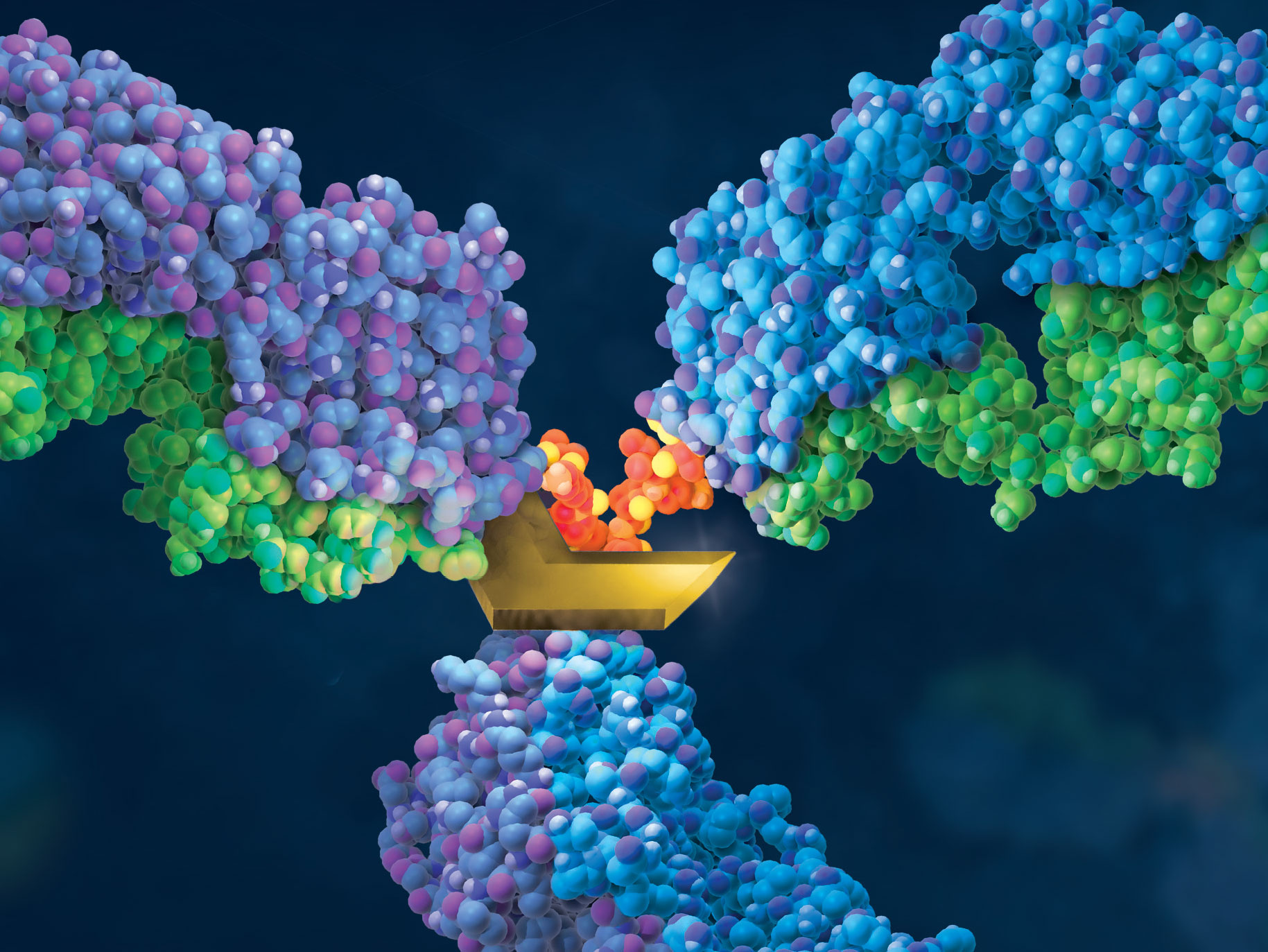
Lysine-specific histone demethylase 1 (LSD1) via Wikimedia Commons
Epigenetics is a new and exciting territory to explore as we understand more about the role it plays in gene silencing and expression. Because epigenetic regulation of gene expression is caused by specific modification of histone proteins (e.g., methylation) that play a role in disease states like cancer, enzymes like histone deacetylases (HDACs) become viable drug targets. One drawback to inhibiting proteins that modify histones is even when selectively targeting HDACs, the effects can be far ranging with multiple HDAC-containing protein complexes found throughout the cell. These broad effects minimize the effectiveness of an inhibitor, caught between efficacy and toxicity. A recent article in Nature Communications explored how using a single compound to target two epigenetic enzymes was more effective than any individual inhibitor or combination of inhibitors. Continue reading “Two Epigenetic Targets Are More Effective Than One”
XWe use cookies and similar technologies to make our website work, run analytics, improve our website, and show you personalized content and advertising. Some of these cookies are essential for our website to work. For others, we won’t set them unless you accept them. To learn more about our approach to Privacy we invite you to Read More
By clicking “Accept All”, you consent to the use of ALL the cookies. However you may visit Cookie Settings to provide a controlled consent.
We use cookies and similar technologies to make our website work, run analytics, improve our website, and show you personalized content and advertising. Some of these cookies are essential for our website to work. For others, we won’t set them unless you accept them. To find out more about cookies and how to manage cookies, read our Cookie Policy.
If you are located in the EEA, the United Kingdom, or Switzerland, you can change your settings at any time by clicking Manage Cookie Consent in the footer of our website.
Necessary cookies are absolutely essential for the website to function properly. These cookies ensure basic functionalities and security features of the website, anonymously.
Cookie
Duration
Description
cookielawinfo-checbox-analytics
11 months
This cookie is set by GDPR Cookie Consent plugin. The cookie is used to store the user consent for the cookies in the category "Analytics".
cookielawinfo-checbox-functional
11 months
The cookie is set by GDPR cookie consent to record the user consent for the cookies in the category "Functional".
cookielawinfo-checbox-others
11 months
This cookie is set by GDPR Cookie Consent plugin. The cookie is used to store the user consent for the cookies in the category "Other.
cookielawinfo-checkbox-advertisement
1 year
The cookie is set by GDPR cookie consent to record the user consent for the cookies in the category "Advertisement".
cookielawinfo-checkbox-necessary
11 months
This cookie is set by GDPR Cookie Consent plugin. The cookies is used to store the user consent for the cookies in the category "Necessary".
cookielawinfo-checkbox-performance
11 months
This cookie is set by GDPR Cookie Consent plugin. The cookie is used to store the user consent for the cookies in the category "Performance".
gdpr_status
6 months 2 days
This cookie is set by the provider Media.net. This cookie is used to check the status whether the user has accepted the cookie consent box. It also helps in not showing the cookie consent box upon re-entry to the website.
lang
This cookie is used to store the language preferences of a user to serve up content in that stored language the next time user visit the website.
viewed_cookie_policy
11 months
The cookie is set by the GDPR Cookie Consent plugin and is used to store whether or not user has consented to the use of cookies. It does not store any personal data.
Analytical cookies are used to understand how visitors interact with the website. These cookies help provide information on metrics the number of visitors, bounce rate, traffic source, etc.
Cookie
Duration
Description
SC_ANALYTICS_GLOBAL_COOKIE
10 years
This cookie is associated with Sitecore content and personalization. This cookie is used to identify the repeat visit from a single user. Sitecore will send a persistent session cookie to the web client.
vuid
2 years
This domain of this cookie is owned by Vimeo. This cookie is used by vimeo to collect tracking information. It sets a unique ID to embed videos to the website.
WMF-Last-Access
1 month 18 hours 24 minutes
This cookie is used to calculate unique devices accessing the website.
_ga
2 years
This cookie is installed by Google Analytics. The cookie is used to calculate visitor, session, campaign data and keep track of site usage for the site's analytics report. The cookies store information anonymously and assign a randomly generated number to identify unique visitors.
_gid
1 day
This cookie is installed by Google Analytics. The cookie is used to store information of how visitors use a website and helps in creating an analytics report of how the website is doing. The data collected including the number visitors, the source where they have come from, and the pages visted in an anonymous form.
Advertisement cookies are used to provide visitors with relevant ads and marketing campaigns. These cookies track visitors across websites and collect information to provide customized ads.
Cookie
Duration
Description
IDE
1 year 24 days
Used by Google DoubleClick and stores information about how the user uses the website and any other advertisement before visiting the website. This is used to present users with ads that are relevant to them according to the user profile.
test_cookie
15 minutes
This cookie is set by doubleclick.net. The purpose of the cookie is to determine if the user's browser supports cookies.
VISITOR_INFO1_LIVE
5 months 27 days
This cookie is set by Youtube. Used to track the information of the embedded YouTube videos on a website.
Performance cookies are used to understand and analyze the key performance indexes of the website which helps in delivering a better user experience for the visitors.
Cookie
Duration
Description
YSC
session
This cookies is set by Youtube and is used to track the views of embedded videos.
_gat_UA-62336821-1
1 minute
This is a pattern type cookie set by Google Analytics, where the pattern element on the name contains the unique identity number of the account or website it relates to. It appears to be a variation of the _gat cookie which is used to limit the amount of data recorded by Google on high traffic volume websites.

 The earth’s climate has warmed and cooled before. Looking at ice-core and geological records, we know that the earth has been much warmer than it is now, and we know that it has been much colder. Climate is dynamic, there are always fluctuations in temperature and moisture from year to year and decade to decade. Some of these fluctuations become trends where the changes consistently track in one direction, and some are anomalies, with more extreme climate conditions and less predictable patterns. Plant and animal populations are unquestionably affected by both the year-to-year fluctuations and the long-term trends. In this blog I am going to talk about two rather dramatic examples of the effects climate change. One example looks at the impact of warming global temperatures over time on the breeding populations of green sea turtles. The other is an example of the devastating results of one warm, remarkably humid, spring on the calving aggregations of the saiga antelope.