My City Flooded, and Thereโ€™s More to Come

It seemed like the rain was never going to stop. It started in the morning, and when I left work around 5pm, it was still coming down hard. I took my normal route home through a back country road. As I turned right onto Fitchrona Road, a long line of cars came into view. Thereโ€™s usually some congestion leading to the stop sign ahead. Except today, something was different. About 20 yards of the road ahead was submerged in water. Continue reading “My City Flooded, and Thereโ€™s More to Come”

Moving Towards Zero Hunger, One Genome at a Time

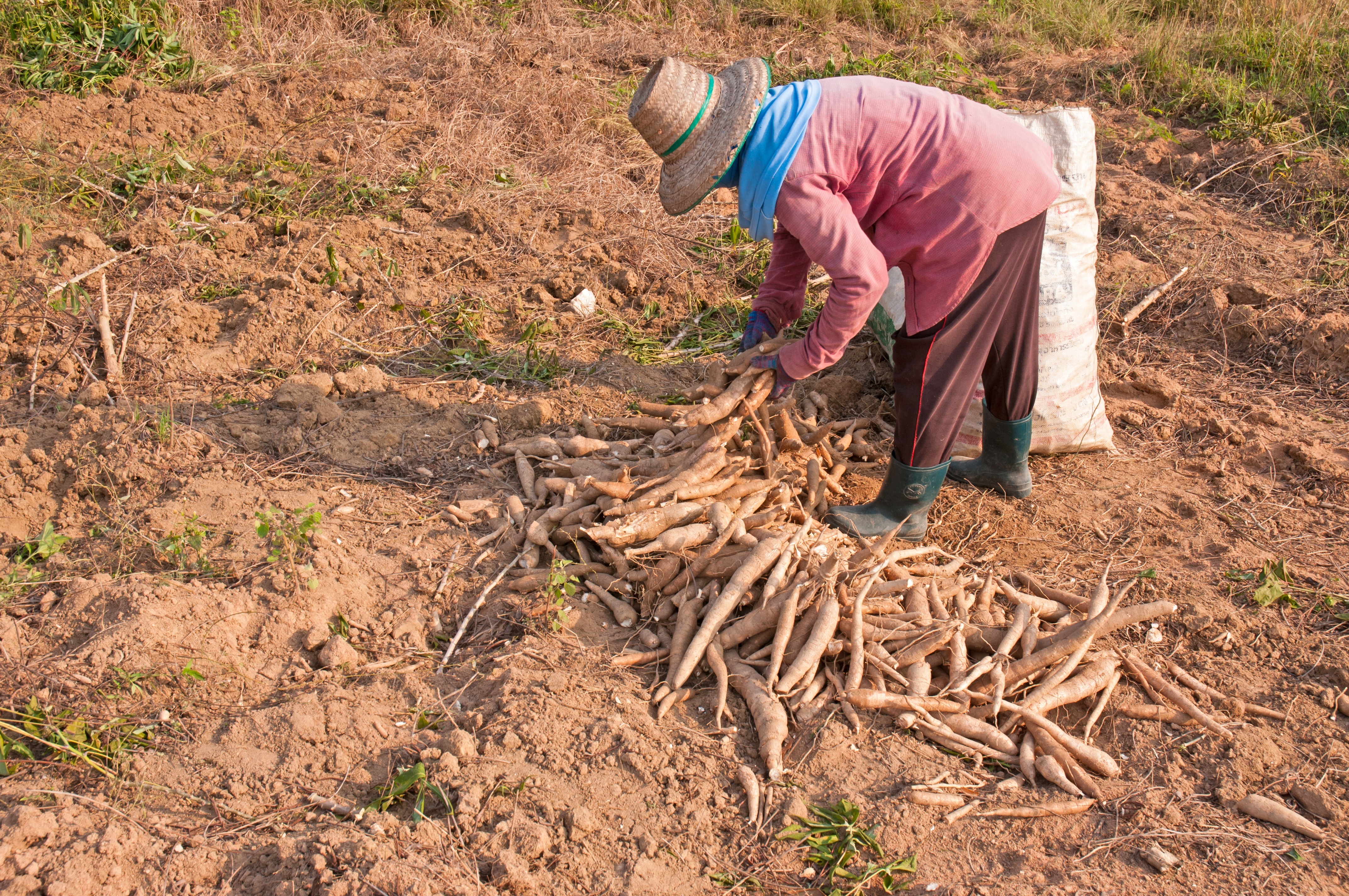
Farmer and a pile of cassava bulbs.

Have you ever thought about plant viruses? Unless youโ€™re a farmer or avid gardener, probably not. And yet, for many people the battle against agricultural viruses never ends. Plant viruses cause billions of dollars in damage every year and leave millions of people food insecure (1โ€“2), making viruses a major barrier to meeting the United Nationsโ€™ global sustainable development goal of Zero Hunger by 2030.

At the University of Western Australia, Senior Research Fellow Dr. Laura Boykin is using genomics and supercomputing to tackle the problem of viral plant diseases. In a recent study, Dr. Boykin and her colleagues used genome sequencing to inform disease management in cassava crops. For this work, they used the MinION, a miniature, portable sequencer made by Oxford Nanopore Technologies, to fully sequence the genomes of viruses infecting cassava plants.

Cassava (Manihot esculenta) is one of the 5 most important calorie sources worldwide (3). Over 800 million people rely on cassava for food and/or income (4). Cassava is susceptible to a group of viruses called begomoviruses, which are transmitted by whiteflies. Resistant cassava varieties are available. However, these resistant plants are usually only protected against a small number of begomoviruses, so proper deployment of these plants means farmers must know both whether their plants are infected and, if so, the strain of virus thatโ€™s causing the infection.

Continue reading “Moving Towards Zero Hunger, One Genome at a Time”

Modeling Scientific Inquiry

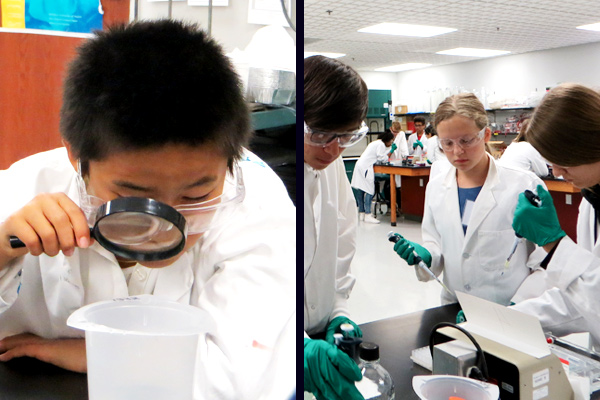
Within science education, teaching Scientific Inquiry to students has gained both traction and prominence.ย  Teachers are increasingly being called to teach students not only science content, but how to take the concepts of the scientific method and put them into action; to think and to act like scientists. As Karin Borgh pointed out in last monthโ€™s blog, teachers invariably run up against the limitations of time and resources as they strive to get their students to enact science.ย  When a teacher brings students to the BTC Institute, they gain access to some of those resources and, on a field trip-basis, a little bit more of that luxury of time.ย  Continue reading “Modeling Scientific Inquiry”

Automated Approach for Multiomic Analysis

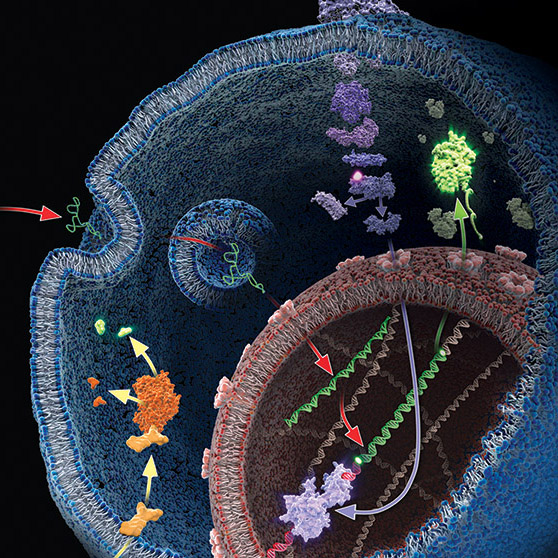
With the use of a suite of “-omics” technologies you can examine the way in which complex cellular processes work together across all molecular domains (i.e., proteomics, metabolomics, transcriptomics) in a single biological system. Several studies have been published across a wide range of fields illustrating the power of such a unified approach (1,2). Most studies however did not focus on the development of a high-throughput, unified sample preparation approach to complement high-throughput “omic” analytics.

A recent publication by Gutierrez and colleagues presents a simple high-throughput process (SPOT) that has been optimized to provide high-quality specimens for metabolomics, proteomics, and transcriptomics from a common cell culture sample (3). They demonstrate that this approach can process  16โˆ’24 samples from a cell pellet to a desalted sample ready for mass spectrometry analysis within 9 hours. They also demonstrated that the combined process did not sacrifice the quality of data when compared to individual sample preparation methods.

Literature Cited

1. Roume, H. (2013) Sequential Isolation of Metabolites, RNA, DNA, and Proteins from the Same Unique Sample. Methods Enzymol. 531, 219โˆ’236.
2. Lo, A. W. et al. (2017) โ€˜Omicโ€™ Approaches to Study Uropathogenic Escherichia Coli Virulence. Trends Microbiol. 25, 729โˆ’740.
3. Gutierrez, D. et al. (2018)ย  An Integrated, High-Throughput Strategy for Multiomic Systems Level Analysis J. Proteome Res.

Are you looking for proteases to use in your research?
Explore our portfolio of proteases today.

In Defense of Wild Spaces in the Yard

Pale purple asters and milkweed. Copyright S. Klink.

Surrounding my mowed lawn is a wild, mostly uncultivated space that currently has goldenrod blooming with tall asters starting to blossom. Every day when I pass these flowers, I see bumblebees, butterflies and other insects collecting the nectar to eat or store for the winter. Last year, when a section of soil was disturbed during construction of a building, I decided to seed the area with native wildflowers rather than grass. (I am not a fan of mowing the lawn.) Watching the series of flowers bloom over the late spring to autumn has been beautiful, colorful and full of tiny moments of joy. Not only do I see insects enjoying the flowering plants, but birds will land on the taller greenery, sometimes just resting, sometimes collecting seeds. I am not sure who has been startled more often, me or the birds when I walk by, flushing a bird from the thicket of tall plants.

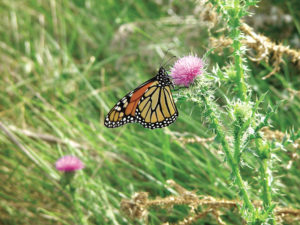
Monarch butterfly on thistle photographed in the prairie at Promega headquarters in Madison, WI. Copyright Promega Corporation.

Where some people might see wild, unruly areas, I see Monarch butterflies on their daily flight, fluttering above me and the โ€œweedsโ€. I have even been lucky enough to find Monarch caterpillars munching on milkweed, a common plant in my wild space. Despite my efforts, I have a lot of tall ragweed appearing in my yard, but have discovered that birds love the seeds, including my chickens, and squirrels will remove and eat the leaves. In addition, I see fireflies in early June through late August, many I find hanging out on the shady greenery during the day before their light display at night. Continue reading “In Defense of Wild Spaces in the Yard”

Overcoming Challenges When Scaling Antibody Production

Tradeoffs are a constant source of challenge in any research lab. To get faster results, you will probably need to use more resources (people, money, supplies). The powerful lasers used to do live cell imaging may well kill those cells in the process. Purifying DNA often leaves you to choose between purity and yield.

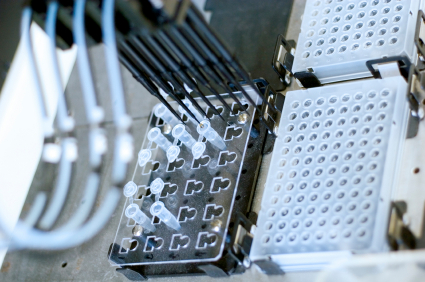
Robot performing autosampling

Working with biologics also involves a delicate balancing act. Producing compounds in biological models rather than by chemical synthesis offers many advantages, but it is not without certain challenges. One of those tradeoffs results from scaling up; the more plasmid that is produced, the greater probability of endotoxin contamination.

Continue reading “Overcoming Challenges When Scaling Antibody Production”

Is MPS right for your forensics lab?

Today’s post was written by guest blogger Anupama Gopalakrishnan, Global Product Manager for the Genetic Identity group at Promega. 

Next-generation sequencing (NGS), or massively parallel sequencing (MPS), is a powerful tool for genomic research. This high-throughput technology is fast and accessibleโ€”you can acquire a robust data set from a single run. While NGS systems are widely used in evolutionary biology and genetics, there is a window of opportunity for adoption of this technology in the forensic sciences.

Currently, the gold standard is capillary electrophoresis (CE)-based technologies to analyze short tandem repeats (STR). These systems continue to evolve with increasing sensitivity, robustness and inhibitor tolerance by the introduction of probabilistic genotyping in data analysisโ€”all with a combined goal of extracting maximum identity information from low quantity challenging samples. However, obtaining profiles from these samples and the interpretation of mixture samples continue to pose challenges.

MPS systems enable simultaneous analysis of forensically relevant genetic markers to improve efficiency, capacity and resolutionโ€”with the ability to generate results on nearly 10-fold more genetic loci than the current technology. What samples would truly benefit from MPS? Mixture samples, undoubtedly. The benefit of MPS is also exemplified in cases where the samples are highly degraded or the only samples available are teeth, bones and hairs without a follicle. By adding a sequencing component to the allele length component of CE technology, MPS resolves the current greatest challenges in forensic DNA analysisโ€”namely identifying allele sharing between contributors and PCR artifacts, such as stutter. Additionally, single nucleotide polymorphisms in flanking sequence of the repeat sequence can identify additional alleles contributing to discrimination power. For example, sequencing of Y chromosome loci can help distinguish between mixed male samples from the same paternal lineage and therefore, provide valuable information in decoding mixtures that contain more than one male contributor. Also, since MPS technology is not limited by real-estate, all primers in a MPS system can target small loci maximizing the probability of obtaining a usable profile from degraded DNA typical of challenging samples.

Continue reading “Is MPS right for your forensics lab?”

Quantitating Kinase-Inhibitor Interactions in Live Cells

Kinase target engagement is a new way to study kinase inhibitors for target selectivity, potency and residency. The NanoBRETโ„ข TE Intracellular Kinase Assays enable you to quantitate kinase-inhibitor binding in live cells, making these assays an exciting new tool for kinase drug discovery research.

For today’s blog about NanoBRETโ„ข TE Intracellular Kinase Assay, we feature spokesperson Dr. Matt Robers. Matt is part of Promega’s R & D department and is one of the developers of the NanoBRETโ„ข TE Intracellular Kinase Assay.

Continue reading “Quantitating Kinase-Inhibitor Interactions in Live Cells”

Smile Science

I have a vivid memory of one Saturday night riding in the car with my parents on our way back from my 4K choir concert. My frequently hungry self was buckled into my car seat next to my two siblings and we watched in excitement as the golden arches came into view.โ€œMOM?! CAN WE GO TO MCDONALDS?!?โ€ I yelled as we quickly sped passed the entrance.โ€œNot today sweetie, I already bought some chicken for dinner,โ€ my smile quickly turned to a frown. My Dad turned around, โ€œAww cโ€™mon honey, give us a smile!โ€ I faked an even deeper frown causing my Dad to laugh. I laughed, then he laughed, and soon I was wearing a grin ear-to-ear.

Smilingโ€ฆ itโ€™s not something we think much about, we just do it. Yet behind itโ€™s faรงade of simplicity, there lies a science that affects our emotional and physical health, and the way with which we approach life Continue reading “Smile Science”