Lynch Syndrome Awareness Day: What is Lynch Syndrome?

Lynch Syndrome is a hereditary condition caused by germline mutations that inactivate at least one of the major DNA mismatch repair (MMR) genes. Individuals with Lynch Syndrome have an elevated risk of developing several cancers, especially colorectal, uterine and endometrial. Approximately 1 in 279 individuals in the United States is Lynch-positive, but most people are unaware of their status.
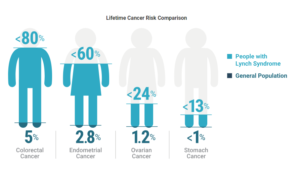
Schematic for Lynch Syndrome awareness showing that ynch Syndrome results in highly elevated risks of several cancers.
Lynch Syndrome results in highly elevated risks of several cancers.

Lynch Syndrome can be diagnosed following screening by microsatellite instability (MSI) analysis or immunohistochemistry (IHC) for the MMR proteins. For some patients, MMR gene sequencing is as easy as an oral โ€œswish.โ€ However, the genetic basis of Lynch Syndrome and its clinical relevancy are relatively recent discoveries. Long before modern sequencing methods simplified testing and diagnosis, a seamstress in Ann Arbor, Michigan correctly predicted her own Lynch Syndrome status based only on her family history. Talking with Dr. Alfred Scott Warthin in the late 19th century, she said that since so many of her family members had died of several specific cancers, she believed that she would follow the same path. Several years later, she unfortunately proved herself right.

Dr. Warthin took interest in the story and began studying the womanโ€™s family. At the time of their conversation, five of her nine siblings had already been diagnosed with uterine, stomach or โ€œabdominalโ€ cancer. Warthin concluded that the family, which he dubbed โ€œCancer Family G,โ€ did, in fact, have a predisposition to cancer. Warthin and other researchers continued studying the family for several decades. They found that cancers of the colon, uterus and stomach were most common, and that many members of the family were diagnosed at extraordinarily young ages.

In the 1970s, Dr. Henry T. Lynch organized a family reunion for Cancer Family G and subsequently published a report on โ€œCancer Family Syndrome.โ€ By this time, 95 members of the family had developed one of the expected cancers. Dr. Lynch still didnโ€™t have the technology to determine the molecular basis of the disease, but he noticed that it followed an autosomal dominant inheritance pattern.

In the mid-1990s, three labs simultaneously discovered microsatellite instability and its connection to colorectal cancer. It had been established in bacteria and yeast that inactivating mutations in DNA mismatch repair genes resulted in mutations in microsatellite sequences, so several labs began racing to clone the human homologs of the DNA MMR genes. Within a few months, two labs had cloned the MSH2 gene and found mutations that were present in members of Lynch-positive families who developed cancer.

Around this time, the name โ€œLynch Syndromeโ€ was adopted to apply to families carrying germline mutations in a gene associated with the condition. Further research established four genes (MSH2, MLH1, MSH6, PMS2) as โ€œLynch Syndrome Genes,โ€ and researchers began working on guidelines for diagnostic testing (See “The History of Lynch Syndrome” below for further reading).

Today, over two decades later, many researchers are pushing for the adoption of universal tumor screening for Lynch Syndrome. One of the widely recommended screening method is MSI analysis. MSI-H status indicates that certain sections of DNA called microsatellites have become unstable because the major mismatch repair genes that correct errors during DNA replication are not functioning properly. MSI status can influence treatment decisions, based on the 2015 discovery that MSI-H tumors respond well to immunotherapy drugs (1).

Lynch Syndrome awareness is also important knowledge for a patientโ€™s family. Lynch-associated cancers are among the most preventable, so individuals who know they are Lynch-positive can work with their healthcare providers to develop robust strategies for prevention and surveillance. As one Lynch-positive mother said to her Lynch-positive son, โ€œYour knowledge is power, and itโ€™s going to keep you healthy and safe.โ€

March 22, 2019 is Lynch Syndrome Awareness Day, and weโ€™re encouraging everyone to join the fight against colorectal cancer. Visit our website to learn more about Lynch Syndrome and MSI status.

Further reading:

Life with Lynch Syndrome: Read about what a Lynch Syndrome diagnosis means for Carrie Ketcham and her family

Dreaming of Universal Tumor Screening: Learn how cancer genetic counselor Heather Hampel is advocating for universal tumor screening and more Lynch Syndrome awareness

The History of Lynch Syndrome: Dr. C. Richard Boland and Dr. Henry T. Lynch provide a broad review of Lynch Syndrome research, starting over a hundred years ago.

Learn more about Lynch Syndrome Testing and Detection at our website.

References

(1) Le, D.T. et al. (2015) PD-1 Blockade in Tumors with Mismatch-Repair Deficiency. New Engl. J. Med. 372, 2509โ€“20.

Wetlands, Water Quality and Rapid Assays

toad

The storms of the previous day had moved eastward, leaving in their wake flooded farm fields and saturated roadside wetlands. At dusk, we loaded the Ford Escort wagon and headed south. We bumped along the maze of farm roads intent upon listening for croaks and snores in the night. At one roadside wetland, I heard my first congress of Spadefoot toads. The sound was deafening, invoking everything that a โ€œcongress of snoring toadsโ€ brings to mind. Around the corner, in a low spot of a corn field, a lone Spadefoot toad called for a mate; he was joined by a rather enthusiastic Copes Gray tree frog and several chorus frogs. The congress down the road provided a rolling bass to these more melodic anurans.

Wetlands exist in many different shapes and sizes and in many different geographies: coastal margins, mountain valleys, beaches and rocky shores, estuarine wetlands where tidal saltwater and freshwater mix, and inland wetlands. Some of them are ephemeral, some of them permanent. Wetlands serve many different functions, from providing habitat and food for plants and animals to offering protection from floods and maintaining water quality. One acre of one-foot deep wetland is estimated to hold 330,000 gallons of water. Coastal wetlands are important for reducing storm erosion by decreasing tidal surge and buffering the wind. In the US alone, this benefit has an estimated value of $23.2 billion dollars each year.

Continue reading “Wetlands, Water Quality and Rapid Assays”

From BTCI to Africa and Back Again: One Student’s Journey in Science Education

Today’s blog is brought to us by and alumus of Dane County Youth Apprenticeship Program, Aidan Holmes.

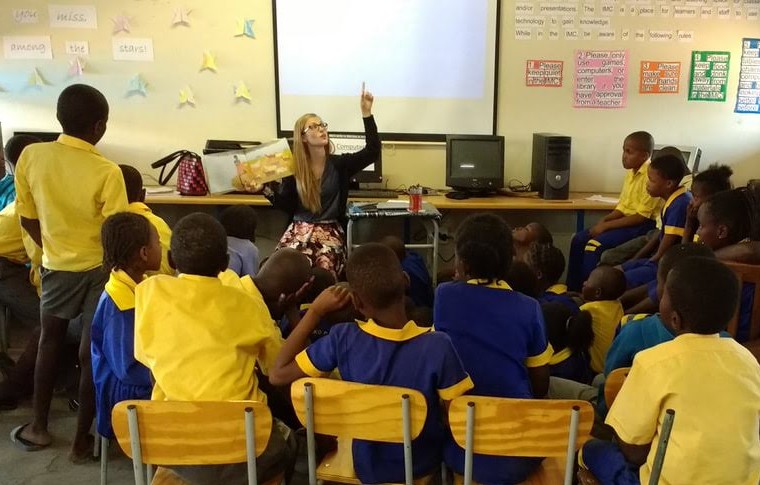
In this blog I have the opportunity to write about how my experiences at the BTC Institute as a high school student were instrumental in leading me to my passion for science education, my Peace Corps experience, and my current role as a biotechnology instructor for the very same institute.

I became familiar with the BTC Institute as a student at Marshall High School when our biology teacher organized a biotechnology field trip for us. I loved learning about DNA and biotechnology since 7th grade so attending a field trip like this was an incredible opportunity to engage in hands-on biotechnology. When I learned about the Youth Apprenticeship Program in Biotechnology I knew I had to apply and enrolled during my senior year of high school. Through the program I took a weekly class at the BTC Institute and I worked as a student researcher in a biochemistry lab at UW-Madison. I enrolled for classes at UW-Madison the following year and pursued an undergraduate degree in genetics and a certificate in education and educational services. Continue reading “From BTCI to Africa and Back Again: One Student’s Journey in Science Education”

Mutation Analysis Using HaloTag Fusion Proteins

In a recent reference, Kinoshita and colleagues characterized the phosphorylation dynamics of MEK1 in human cells by using the phosphate affinity electrophoresis technique, Phos-tag sodium dodecyl sulfateโ€“polyacrylamide gel electrophoresis (Phos-tag SDS-PAGE; 1). They found that multiple variants of MEK1 with diferent phosphorylation states are constitutively present in typical human cells.

To investigate the relationships between kinase activity and drug efficacy researchers from the same laboratory group conducted phosphorylation profling of various MEK1 mutants by using Phos-tag SDS- PAGE (2).

They introduced mutations in of the MEK-1 coding gene that are associated with spontaneous melanoma, lung cancer, gastric cancer, colon cancer and ovarian cancer were introduced into Flexi HaloTag clone pFN21AE0668, which is suitable for expression of N-terminal HaloTag-fused MEK1 in mammalian cells. Continue reading “Mutation Analysis Using HaloTag Fusion Proteins”

Cardboard Couture: From Conception to Runway Debut

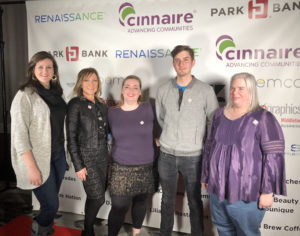
The five-member team at the Read(y) To Wear event.

What do fashion, paperboard product packaging and literacy have in common? Answer: The Read(y) to Wear submission from a team of Promega employees for an event put on by the Madison Reading Project. With a challenge that stated teams need to make a garment mostly of paper, the resulting creations would be displayed on a runway as part of a charitable evening for an organization dedicated to bringing books to children.

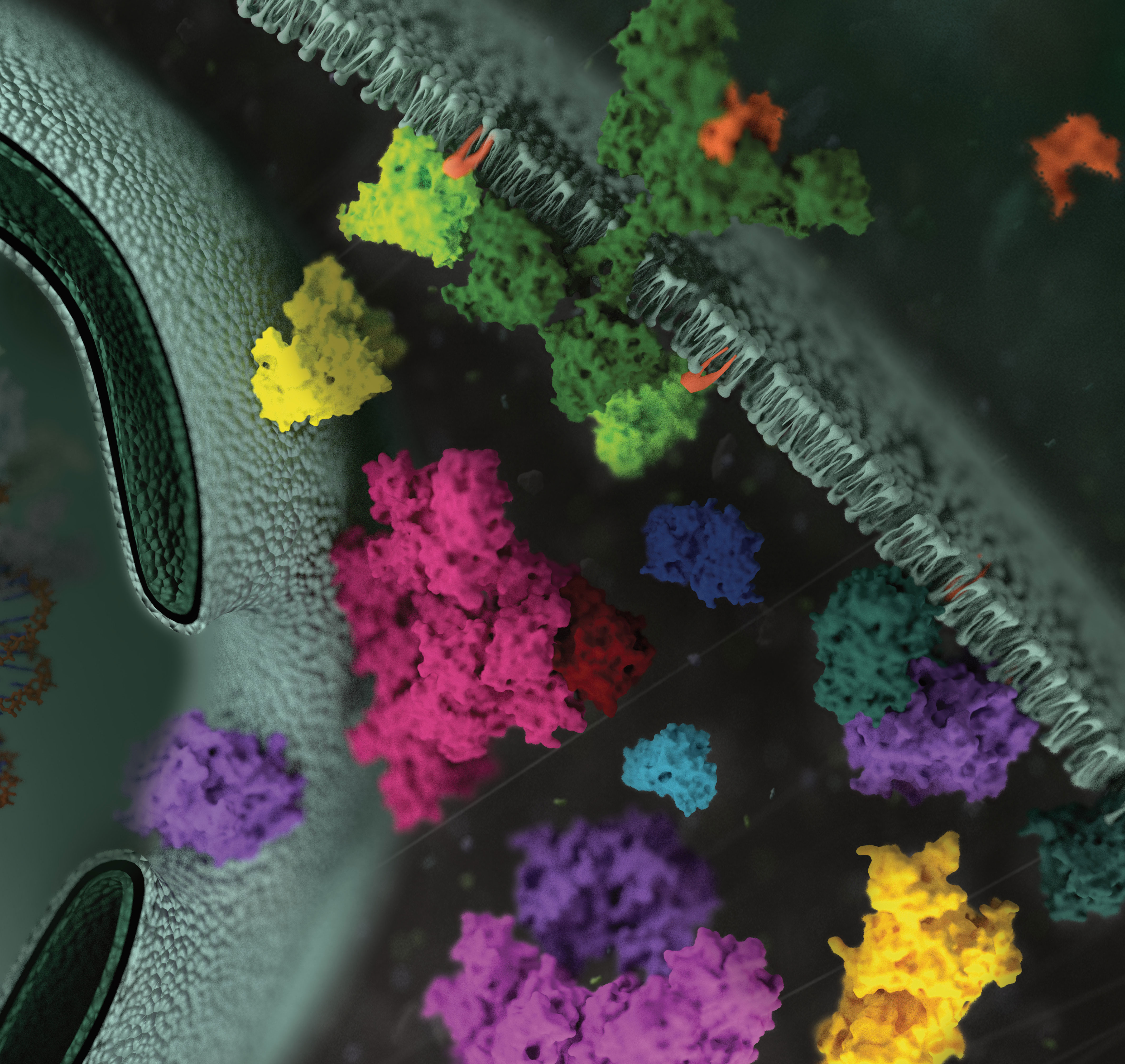
Volunteering to be part of what became a five-person team to create a wearable garment from paper was the easy part. Our first few meetings we were experimenting with ideas and techniques using paper we could access on campus: Print catalogs, discarded books and our prototype product kit boxes. It was the kit boxes with the David Goodsell imagery that inspired our ideas to create a suit of armor. The paperboard boxes protect the products we ship to customers like a suit of armor protects warriors in battle. Continue reading “Cardboard Couture: From Conception to Runway Debut”

A BiT or BRET, Which is Better?

Now that Promega is expanding its offerings of options for examining live-cell protein interactions or quantitation at endogenous protein expression levels, we in Technical Services are getting the question about which option is better. The answer is, as with many assaysโ€ฆ it depends! First letโ€™s talk about what are the NanoBiT and NanoBRET technologies, and then we will provide some similarities and differences to help you choose the assay that best suits your individual needs.

Continue reading “A BiT or BRET, Which is Better?”

Voted Drug Discovery and Development Product for 2018: NanoBRET TE Kinase Assays

Choice Drug Discovery and Development Product 2019 award
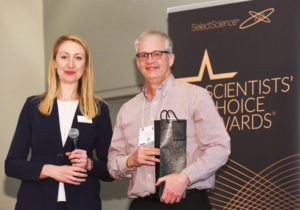
Michael Curtin, Promega, accepting the Reviewersโ€™ Choice for Drug Discovery and Development Product of the Year award from SelectScience.

As announced at SLAS in Washington, D.C. recently, we are excited to haveย NanoBRET Target Engagement (TE) Intracellular Kinase Assays awarded the SelectScience Reviewersโ€™ Choice for Drug Discovery and Development Product of the Year 2018!

The NanoBRET™ Target Engagement (TE) Kinase Assay, first available in the fall of 2017, has been getting great reviews on the SelectScience site for more than a year now. Continue reading “Voted Drug Discovery and Development Product for 2018: NanoBRET TE Kinase Assays”

The Secret Fluorescent Life of Flying Squirrels

flying squirrel specimen
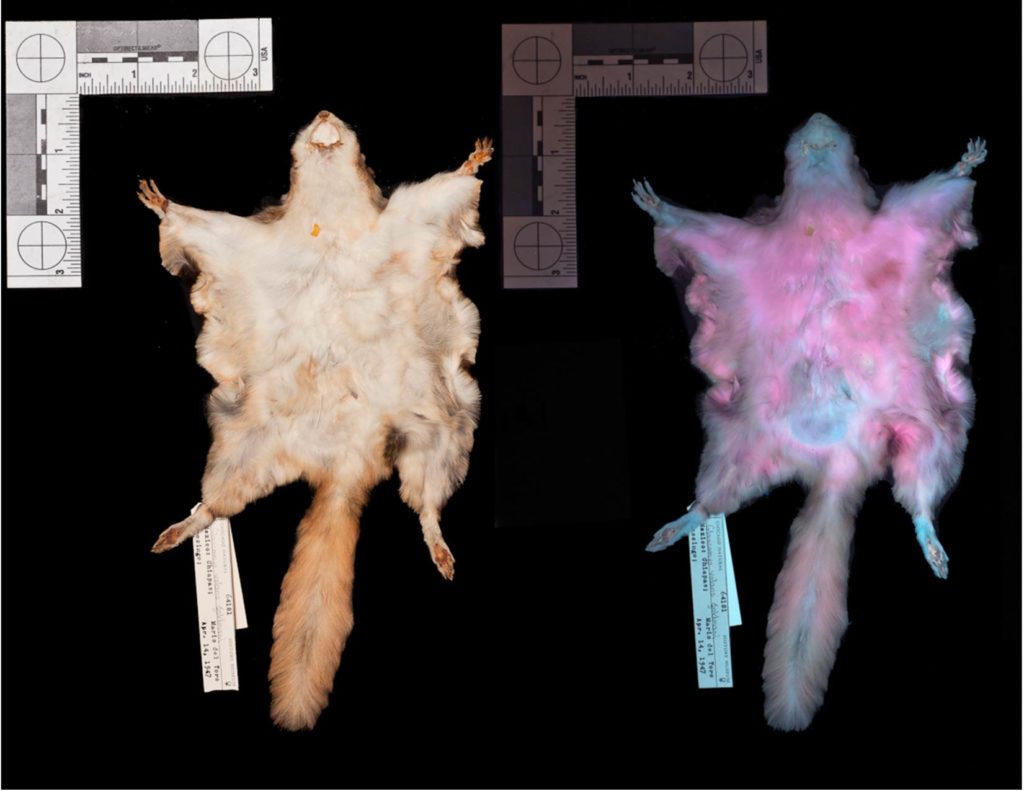
A flying squirrel museum specimen under normal light versus ultraviolet light. Photo courtesy of AM Kohler, et al.

In May 2017, a surprising discovery was made in the woods of Bayfield County, Wisconsin, just about a 5-hour drive north of Promega headquarters. Jonathan Martin, Associate Professor of Forestry at Northland College, was exploring the forest with an ultraviolet (UV) light in search of fluorescent lichen or plant life. What he found instead was a bright pink glow coming from a most unexpected sourceโ€”a flying squirrel.

Continue reading “The Secret Fluorescent Life of Flying Squirrels”

How Gut Microbes Affect Our Brain

coliform bacteria

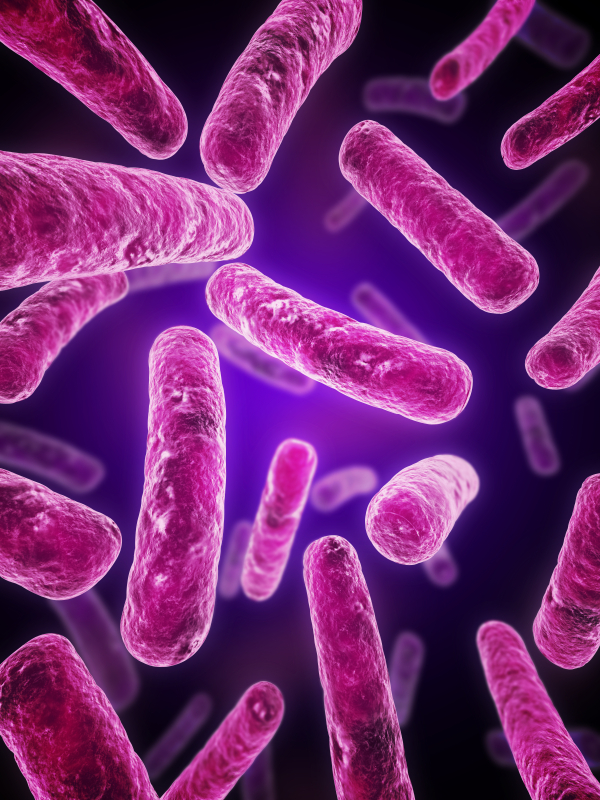
Think about the last time you gave a presentation. The feeling of having โ€œbutterflies in your stomachโ€. Or when you meet someone for the first time, that โ€œgut feelingโ€ of whether you two will get along. In our day-to-day lives, we often associate what happens in the gut with what goes on in our brain. In fact, scientific evidence suggests that our gut and our brain frequently communicateโ€”through gut microbes. Apparently, the existence of trillions of bacteria and eukaryotes in our gut is not only crucial for our physical health, they may also be important for our mental health.

Continue reading “How Gut Microbes Affect Our Brain”

Executing a NanoBRET™ Experiment: From Start to Data

This is a guest post from Katarzyna Dubiel, marketing intern in Cellular Analysis and Proteomics.

โ€œThe objective of my experiment was to test the NanoBRET™ assay as if I was a customer, independent of the research and development team which develops the assay.โ€

Designing and implementing a new assay can be a challenging process with many unexpected troubleshooting steps. We wanted to know what major snags a scientist new to the NanoBRET™ Assay would encounter. To determine this, we reached out to Laurence Delauriere, a senior applications scientist at Promega-France, who had never previously performed a NanoBRET™ assay. Laurence went step-by-step through the experimental process looking at the CRAF-BRAF interaction in multiple cell lines. In an interview, Laurence provided us with some tips and insights from her work implementing the new NanoBRET™ assay.

In a few words, can you explain NanoBRET?
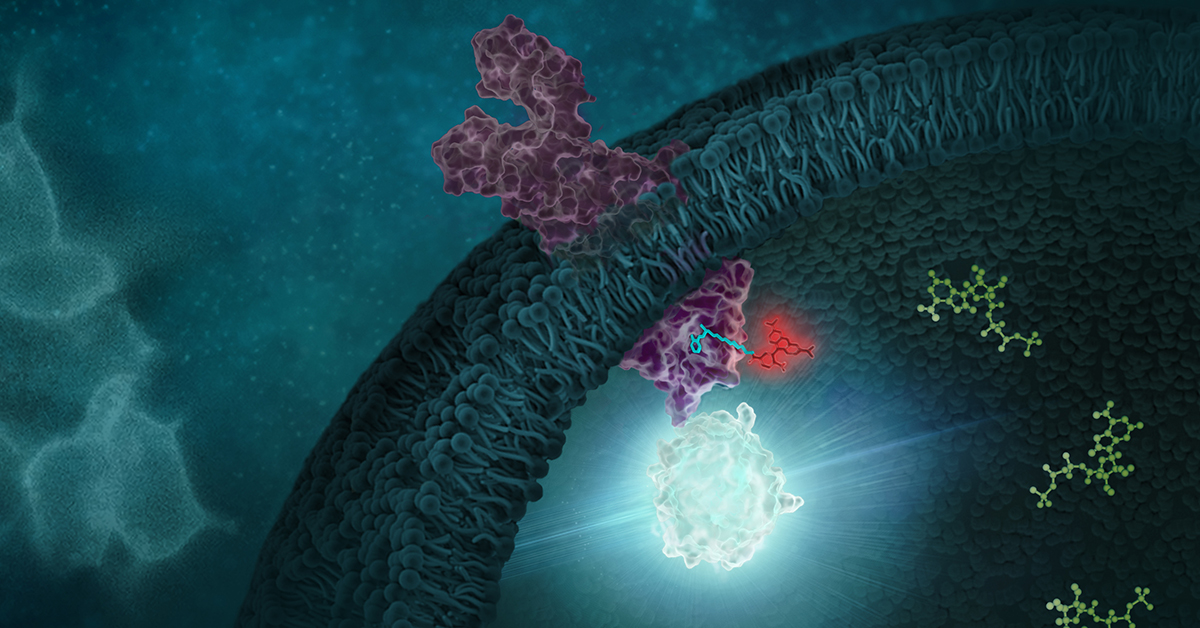
โ€œNanoBRET is used to monitor protein: protein interactions in live cells. It is a bioluminescence resonance energy transfer (BRET) based assay that uses NanoLucยฎ luciferase as the BRET energy donor and HaloTagยฎ protein labeled with the HaloTagยฎ NanoBRET™ 618 fluorescent ligand as the energy acceptor to measure the interaction of two binding partners.โ€ Continue reading “Executing a NanoBRET™ Experiment: From Start to Data”