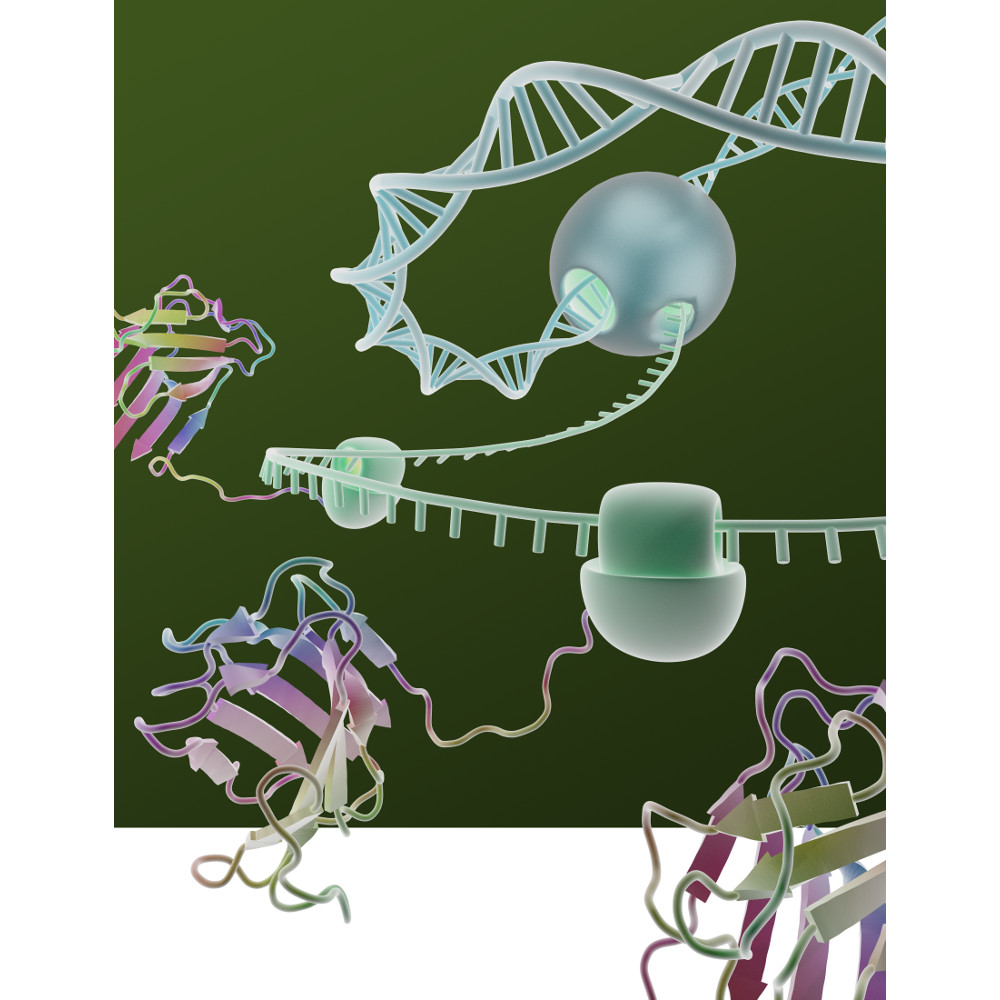
A widely used molecular biology technique, in vitro transcription uses bacteriophage DNA-dependent RNA polymerases to synthesize template-directed RNA molecules. Enzymes like bacteriophage SP6, T3 and T7 RNA polymerases are used to produce synthetic RNA transcripts, which can be used as hybridization probes, as templates for in vitro translation applications, or in structural studies (X-ray crystallography and NMR). Synthesized RNA transcripts are also used for studying cellular RNA functionality in processes such as splicing, RNA processing, intracellular transport, viral infectivity and translation.
Problems in the transcription reaction can result in complete failure (i.e., no transcript generated) or in transcripts that are the incorrect size (i.e., shorter or longer than expected). Below is a discussion of the most common causes of in vitro transcription problems.
Malaria affects nearly half of the world’s population, with almost 80% of cases in sub-Saharan Africa and India. While there have been many strides in education and prevention campaigns over the last 30 years, there were over 200 million cases documented in 2017 with over 400,000 deaths, and the majority were young children. Despite being preventable and treatable, malaria continues to thrive in areas that are high risk for transmission. Recently, clinicians started rolling out use of the first approved vaccine, though clinical trials showed it is only about 30% effective. Meanwhile, researchers must continue to focus on innovative efforts to improve diagnostics, treatment and prevention to reduce the burden in these areas.
Ian Nicastro says he didn’t set out to start a green revolution.
“I’m not hardcore ‘Save the trees,’” Ian says. “I’m probably a little different from the people you traditionally see as promoting the sustainability thing. Obviously, I do want to help the environment, but for me it was like, ‘this is logical, and we should be doing this.’”
Ian is the lab manager of the Pasquinelli Lab, a C. elegans lab at the University of California–San Diego that studies miRNA and its role in processes like aging. He’s been in the lab for about six and a half years, splitting his time between research and lab management duties. According to Allison Paradise, the CEO of My Green Lab, Ian has put out some “outstanding” efforts to implement sustainable practices in the lab. Continue reading “Lab Sustainability Doesn’t Have To Be Painful”
Dioxins (e.g., 2,3,7,8-Tetrachlorodibenzo-p-dioxin, TCDD) and related compounds (DRCs) are persistent environmental pollutants that gradually accumulate through the food chain, mainly in the fatty tissues of animals. Dioxins are highly toxic and can cause reproductive and developmental problems, damage the immune system, interfere with hormones and also cause cancer. This broad range of toxic and biological effects of DRCs is mostly mediated by the aryl hydrocarbon receptor (AHR).
In animal cells, DRCs bind to AHR in the cytoplasm and then translocate into the nucleus, where they affect the transcription of multiple target genes, including xenobiotic-metabolizing enzymes, such as CYP1A isozymes. AHR is also involved in immune system maintenance, protein degradation and cell proliferation.
The jungle crow (Corvus macrorhynchos) has been considered a suitable indicator for monitoring environmental chemicals such as DRCs. While mammals only have one AHR form, avian species have multiple AHR isoforms such as AHR1 and AHR2. To unveil the functional diversity of multiple avian AHR isoforms in terms of their contribution to responses to DRCs a recent study by Kim et al. investigated the molecular and functional characteristics of jungle crow AHR isoforms, cAHR1 and jcAHR2 (1).
cAHR1 and jcAHR2 proteins were synthesized using AHR proteins were synthesized using the TnT Quick-Coupled Reticulocyte Lysate System to examine whether these jcAHRs have the potential to bind to TCDD. TCDD-binding affinity of the in vitro-expressed jcAHR protein was analyzed using the velocity sedimentation assay with a sucrose gradient.
The results demonstrate that both jcAHR1and jcAHR2 are capable of binding to TCDD.
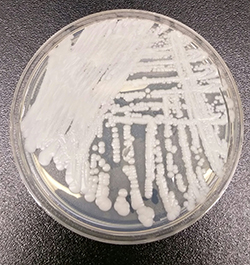
The creamy colonies of C. auris look innocuous. Don’t be fooled. Photo by Shawn Lockhart – Centers for Disease Control, Public Domain, https://commons.wikimedia.org/w/index.php?curid=54680002
Life in the 21st century is full of electronic devices and apps purported to make life easier. Many of us can binge watch movies, videos and news on our phones. There are wireless headphones, electric bicycles, self-operating vacuum cleaners, wine in boxes with taps—and so much more.
This life is, however, not without challenges.
In the event that you or yours ends up in the hospital, the stay could be complicated by an unplanned, unwanted and potentially lethal infection.
I’ve got a set of experiments planned that, if all goes well, will provide me with the answer I have been seeking for months. Plus, my supervisor is eagerly awaiting the results because she needs the data for a grant application, so I don’t want to mess it up. However, I am faced with a choice for my firefly and Renilla luciferase reporter assays: Do I use the Dual-Luciferase® Reporter Assay System or Dual-Glo® Luciferase Assay System? What’s the difference? How do I decide which to use? I’m so confused! Help!
Sound familiar? Not to worry! The choice is not difficult once you know how these assays work and how they differ.
A startling report from researchers in Washington indicates that the increasingly acidic waters of the United States Pacific Northwest are turning sea cucumbers into sea pickles.
It seems that spring has finally come to Southern Wisconsin. The snow has melted. Most days it is warm enough you can go outside without a parka, hat and mittens. The tree buds are starting to swell. And that traditional oracle of spring, the American robin (Turdus migratorius), has been spotted in trees and yards—along with its less friendly cousin, the red winged black bird (Agelaius phoeniceus).
While spring brings the return of migratory birds, it also brings an increase in the number of rescued baby birds flooding into local wildlife rescues and humane societies. When the babies come to these centers, they need a warm, soft, breathable and washable home that resembles the nest they were hatched in.
It turns out that knitted or crocheted nests are a perfect solution. The nests aren’t just used for baby birds; baby rabbits, squirrels, bats, ferrets and racoons are just a few additional animals that benefit. And the best part is, you could be improving your own health while you create those cozy nests. Continue reading “For the Birds: Knitting Nests for Baby Birds Might Just Help Your Health To”
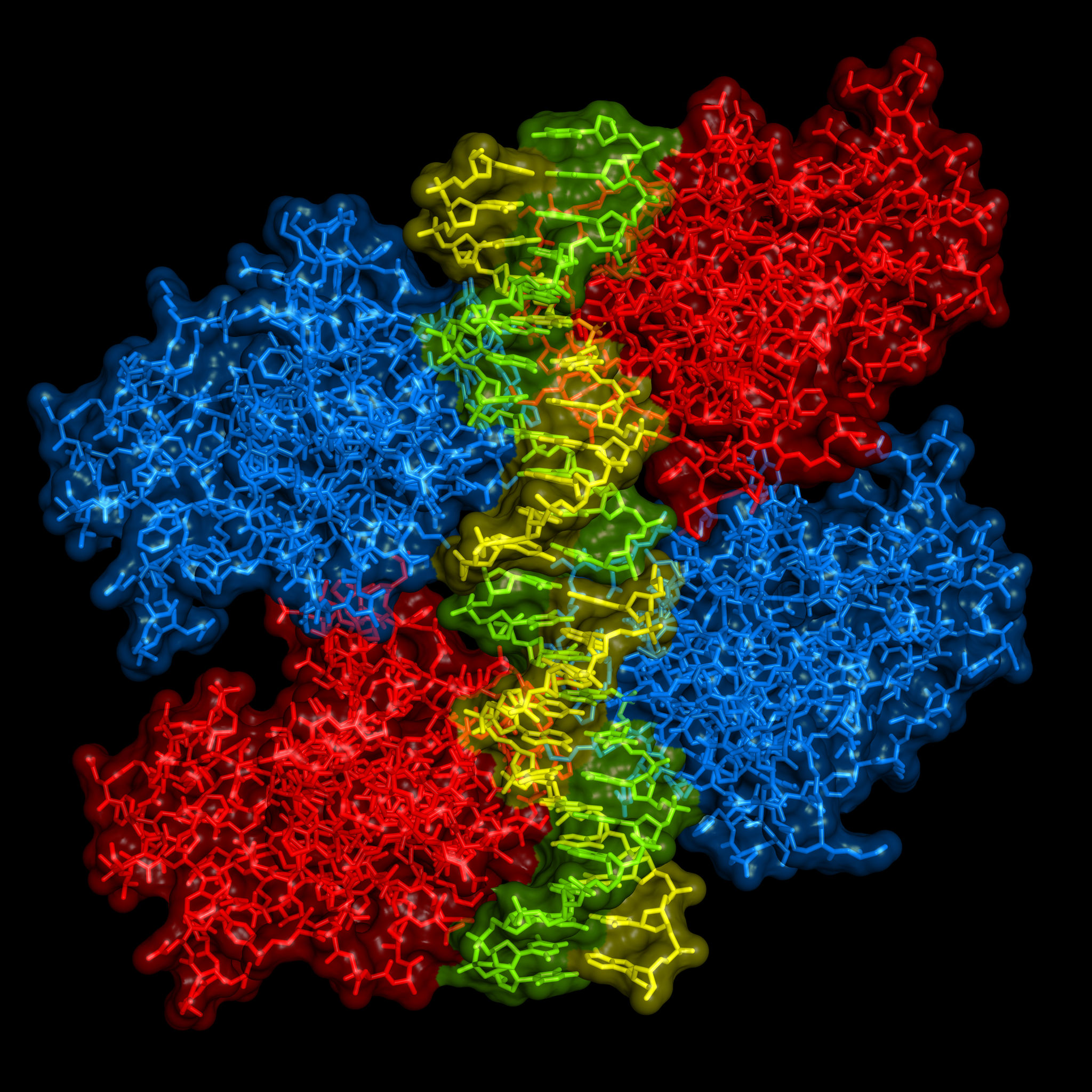
Ribbon model of p53 protein bound to DNA molecule.
Following what feels like an exceptionally long and brutal winter, I for one couldn’t be happier about the arrival of Spring and the way it makes everything seem brighter and brand-new. Soaking in the soul-warming sunshine. Reveling in the sweet melody of chirping birds. Watching the earth literally coming alive again with greenery. And for those of us who love and are enthralled by scientific discoveries like myself, the report of a recent shiny new discovery in the world of cancer research is equally as day-brightening and spirit-lifting.
To suppress tumors or to not suppress tumors: that is the question.
In the world of oncology, the protein known as p53 has long proven itself to be a primary target of interest. p53 operates as a tumor suppressor protein, often lauded as the “guardian of the human genome”, due to its dedication to governing controlled cell division and assessing damaged DNA. There are a number of cellular stressors that can wreak havoc on your DNA, including exposure to ultraviolet light or radiation, oxygen deficiency (hypoxia), and contact with hazardous chemicals.
Consider a normal-functioning p53 protein as the quality control person in a production factory. The p53 protein evaluates the products, DNA, coming down the line and determines an appropriate course of action for those that do not meet the quality standards.
Let’s say some less-than-quality DNA comes down the pipe. If the DNA is not too severely injured, p53 will alert and activate additional genes to repair the damage. However, if the products coming through are too marred to repair, p53 will shut down the whole factory, if you will, by signaling for the cell to self-destruct via apoptosis. In doing so, p53 effectively impedes tumor development by inhibiting the ability for flawed DNA to further divide.
So, it would seem like p53 has proven itself to be an undeniably upstanding citizen of the protein variety, right? The unfortunate truth of the matter is p53 balances delicately on a double-edged sword, establishing itself as the veritable Dr. Jekyll and Mr. Hyde of the cellular world: usually unquestionably good, but sometimes unspeakably evil. Continue reading “When Good Proteins Go Bad”
Tailing blunt-ended DNA fragments with TaqDNA Polymerase allows efficient cloning of these fragments into T-Vectors such as the pGEM®-T Vectors. This method also eliminates some of the requirements of conventional blunt-end cloning — Fewer steps, who can argue with that?
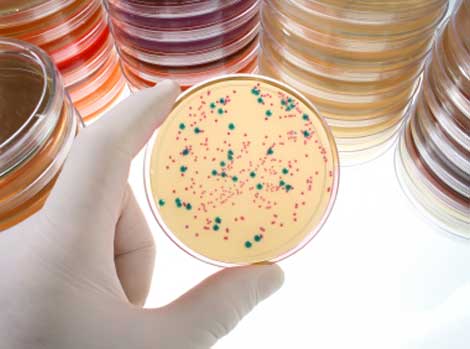
Blue/White colony screening helps you pick only the colonies that have your insert.
XWe use cookies and similar technologies to make our website work, run analytics, improve our website, and show you personalized content and advertising. Some of these cookies are essential for our website to work. For others, we won’t set them unless you accept them. To learn more about our approach to Privacy we invite you to Read More
By clicking “Accept All”, you consent to the use of ALL the cookies. However you may visit Cookie Settings to provide a controlled consent.
We use cookies and similar technologies to make our website work, run analytics, improve our website, and show you personalized content and advertising. Some of these cookies are essential for our website to work. For others, we won’t set them unless you accept them. To find out more about cookies and how to manage cookies, read our Cookie Policy.
If you are located in the EEA, the United Kingdom, or Switzerland, you can change your settings at any time by clicking Manage Cookie Consent in the footer of our website.
Necessary cookies are absolutely essential for the website to function properly. These cookies ensure basic functionalities and security features of the website, anonymously.
Cookie
Duration
Description
cookielawinfo-checbox-analytics
11 months
This cookie is set by GDPR Cookie Consent plugin. The cookie is used to store the user consent for the cookies in the category "Analytics".
cookielawinfo-checbox-functional
11 months
The cookie is set by GDPR cookie consent to record the user consent for the cookies in the category "Functional".
cookielawinfo-checbox-others
11 months
This cookie is set by GDPR Cookie Consent plugin. The cookie is used to store the user consent for the cookies in the category "Other.
cookielawinfo-checkbox-advertisement
1 year
The cookie is set by GDPR cookie consent to record the user consent for the cookies in the category "Advertisement".
cookielawinfo-checkbox-necessary
11 months
This cookie is set by GDPR Cookie Consent plugin. The cookies is used to store the user consent for the cookies in the category "Necessary".
cookielawinfo-checkbox-performance
11 months
This cookie is set by GDPR Cookie Consent plugin. The cookie is used to store the user consent for the cookies in the category "Performance".
gdpr_status
6 months 2 days
This cookie is set by the provider Media.net. This cookie is used to check the status whether the user has accepted the cookie consent box. It also helps in not showing the cookie consent box upon re-entry to the website.
lang
This cookie is used to store the language preferences of a user to serve up content in that stored language the next time user visit the website.
viewed_cookie_policy
11 months
The cookie is set by the GDPR Cookie Consent plugin and is used to store whether or not user has consented to the use of cookies. It does not store any personal data.
Analytical cookies are used to understand how visitors interact with the website. These cookies help provide information on metrics the number of visitors, bounce rate, traffic source, etc.
Cookie
Duration
Description
SC_ANALYTICS_GLOBAL_COOKIE
10 years
This cookie is associated with Sitecore content and personalization. This cookie is used to identify the repeat visit from a single user. Sitecore will send a persistent session cookie to the web client.
vuid
2 years
This domain of this cookie is owned by Vimeo. This cookie is used by vimeo to collect tracking information. It sets a unique ID to embed videos to the website.
WMF-Last-Access
1 month 18 hours 24 minutes
This cookie is used to calculate unique devices accessing the website.
_ga
2 years
This cookie is installed by Google Analytics. The cookie is used to calculate visitor, session, campaign data and keep track of site usage for the site's analytics report. The cookies store information anonymously and assign a randomly generated number to identify unique visitors.
_gid
1 day
This cookie is installed by Google Analytics. The cookie is used to store information of how visitors use a website and helps in creating an analytics report of how the website is doing. The data collected including the number visitors, the source where they have come from, and the pages visted in an anonymous form.
Advertisement cookies are used to provide visitors with relevant ads and marketing campaigns. These cookies track visitors across websites and collect information to provide customized ads.
Cookie
Duration
Description
IDE
1 year 24 days
Used by Google DoubleClick and stores information about how the user uses the website and any other advertisement before visiting the website. This is used to present users with ads that are relevant to them according to the user profile.
test_cookie
15 minutes
This cookie is set by doubleclick.net. The purpose of the cookie is to determine if the user's browser supports cookies.
VISITOR_INFO1_LIVE
5 months 27 days
This cookie is set by Youtube. Used to track the information of the embedded YouTube videos on a website.
Performance cookies are used to understand and analyze the key performance indexes of the website which helps in delivering a better user experience for the visitors.
Cookie
Duration
Description
YSC
session
This cookies is set by Youtube and is used to track the views of embedded videos.
_gat_UA-62336821-1
1 minute
This is a pattern type cookie set by Google Analytics, where the pattern element on the name contains the unique identity number of the account or website it relates to. It appears to be a variation of the _gat cookie which is used to limit the amount of data recorded by Google on high traffic volume websites.