The review “Kinase Inhibitors: the road ahead” was recently published in Nature Reviews Drug Discovery. In it, authors Fleur Ferguson and Nathanael Gray provide an up-to-date look at the “biological processes and disease areas that kinase-targeting small molecules are being developed against”. They note the related challenges and the strategies and technologies being used to efficiently generate highly-optimized kinase inhibitors.
This review describes the state of the art for kinase inhibitor therapeutics. To understand why kinase inhibitors are so important in the development of cancer (and other) therapeutics research, let’s start with the role of kinases in cellular physiology.
All of these people are 99% the same at the genomic level. The individuals of the human species are far more alike than different.
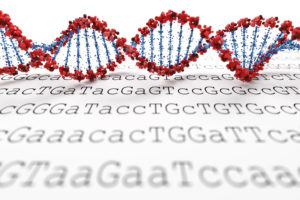
There are 3 billion (3,000,000,000) bases in my genome—in each of the cells of my body. Likewise, Johanna, the writer who sits next to me at work also has 3 billion bases in her genome. Furthermore, our genomes are 99% the same. Still, that’s a lot of places where my genome can differ from hers, certainly enough to distinguish her DNA from mine if we were both suspected of stealing cookies from the cookie jar. The power of discrimination is what makes genetic identity using DNA markers such a powerful crime solving tool.
The completion of the human genome project in 2003 ushered in a tremendously fast-paced era of genomics research and technology. Just like computers shrank from expensive, building-filling mainframes to powerful hand-held devices we now call mobile phones, genome sequencing has progressed from floor-to-ceiling capillary electrophoresis units filling an entire building to bench top sequencers sitting in a corner of a lab. The $99 genome is a reality, and it’s in the hands of every consumer willing to spit into a tube.
Commercial DNA sequencing services are promising everything from revealing your true ancestry to determining your likelihood to develop dementia or various cancers. Is this progress and promise or is it something more sinister?
As it turns out, that isn’t an easy question to answer. What is probably true is that whole genome sequencing technologies are being put into the hands of the consumer faster than society understands the ethical implications of making all of this genomic information so readily available.
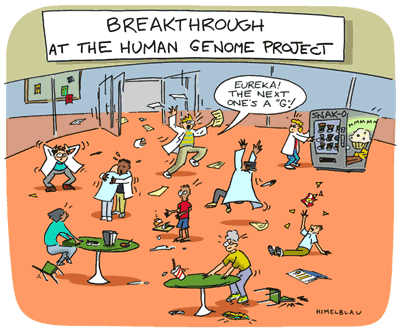
In honor of Human Genome Month, I delved into our Cartoon Lab archives to retrieve this example of the excitement that occurred while sequencing the Human Genome Project.
For more entertaining science cartoons, visit our Cartoon Lab.
In April 2018, a series of 27 papers representing the most comprehensive genomic analysis of human cancers to date was published in Cell Press journals.
The collection constitutes the final outputs from the Cancer Genome Atlas (TCGA) project, a collaboration between the National Cancer Institute (NCI) and the National Human Genome Research Institute (NHGRI) involving analysis of over 11,000 tumors representing 33 different cancers. The many research teams involved analyzed tumor DNA, mRNA, miRNA and chromatin, comparing them to matched normal cellular genomes to perform a complete molecular characterization of cancer-specific changes. The results have been presented with much hope that open access to this type of comprehensive analysis will build on recent advances in understanding tumor biology and spur further progress in developing new approaches to treatment. (See this news item for more detail).
The Pan-Cancer Atlas results are collected on a cell.com portal, where they are presented in three collections grouped by topic: Cell of Origin, Oncogenic Processes and Signaling Pathways. Each collection is accompanied by a “Flagship” paper introducing the topic and summarizing the findings. It seems fitting that these findings have been published in #HumanGenomeMonth. This comprehensive analysis of the genomic and metagenomic profiles of tumors illustrates one powerful application of the type of genomic analysis pioneered by the original Human Genome Project, and shows just how much has been made possible since the initial publication of the human genome fifteen years ago.
The International Forum on Consciousness offers a lively two days of information sharing and discussion regarding important—and often challenging—topics. Over the years, we have been guided through a range of topics, including creativity, near death, entheogens, intelligence in nature, business evolution and the effects of sensory inputs. This year, we’re tackling Means and Metrics for Detecting and Measuring Consciousness. You can find out more here: https://www.btci.org/events-symposia-2018/international-forum-on-consciousness/ .
As we work on the final details for this year and registrations flow in, I took a moment to pause and reflect on the fact that several of the registrants have joined us for many, if not all, of our past events. It’s gratifying to see that they are taking time out of their normal routines to make their way to the Promega campus again this spring. So, I asked a few of them to share their thoughts for this post and this is what they had to say: Continue reading “Back for More: Thoughts from 3 Regular Attendees on the International Forum on Consciousness”
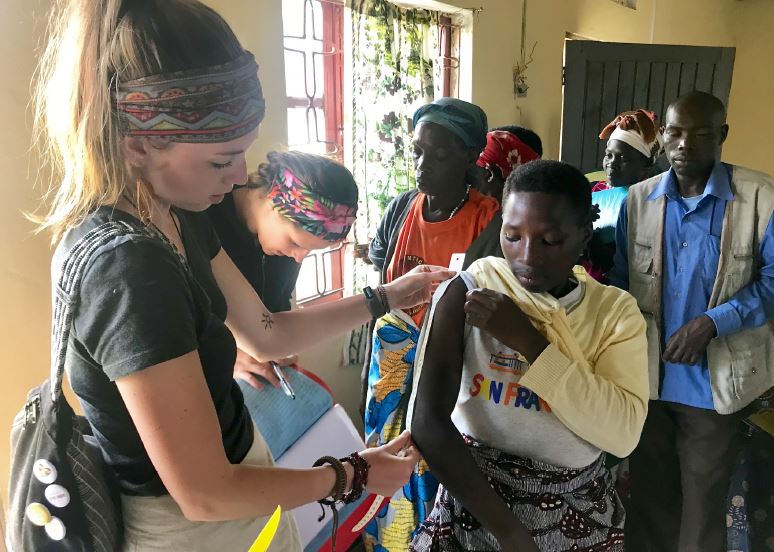
Sydney Roberts, left, at work at a rural community outreach health clinic outside of Kabale, Uganda where she helped conduct basic health screenings. Here she is measuring a woman’s MUAC (midupper arm circumference).
We were inspired by a letter we recently received from one of the recipients of the Promega International Scientific Internship Scholarship. The scholarship supports undergraduate students at the University of Wisconsin – Madison. who are undertaking an international internship aimed at using science to improve the quality of life in the world. Students from all scientific fields are eligible but preference is given to those whose internships use molecular biology techniques. Students must be based in a country other than their own for at least six weeks and cannot be in a country where the recipient has already spent significant time.
Sydney Roberts, a junior at UW Madison majoring in Community and Nonprofit Leadership with a certificate in Global Health, was awarded the Spring 2018 Promega scholarship. As a result, she’s spending her spring a long way from her hometown of Cedarburg, WI. Sydney is currently working in Kabale, Uganda, a town in the southwestern part of the country near the border of Rwanda, as an intern with the Kigezi Healthcare Foundation (KIHEFO).
KIHEFO operates a primary care clinic, HIV/AIDS clinic, Nutrition and Rehabilitation center, and works with rural community groups. Sydney is supporting local staff members as they treat clients, provide counseling sessions for families affected by disease, and work on global health initiatives that support prevention of these diseases and health complications. She has only been in Uganda for a few weeks, but she says her experiences have already been life-changing. Continue reading “Letter from Uganda: A Promega International Internship Scholarship Recipient Shares her Experiences”
Scenario 1: Jake needs a flask of MCF-7 cells for an assay, so he sends an email to the graduate student listserv asking for cells. Melissa replies that she has an extra flask of cells that she could share. Jake happily accepts the cells and begins his experiment.
Scenario 2: Michael passaged his cells yesterday and, according to the protocol, was supposed to plate cells today for treatment. However, his previous experiments were delayed, so he decides to plate them tomorrow instead. The cells look healthy, so it should be ok.
What is wrong with the above scenarios? These actions may seem harmless, but they could be the cause of variability, leading to irreproducible results.
“The Great Book of Nature is written in mathematical language” –Galileo Galilei (1)
Carrion Crow (Corvus corone)
If mathematics is the language of the universe, might we find the ability to do math hard-wired in species?
Research in primates has demonstrated that even without training, humans and monkeys possess numerosity, the ability to assess the number of items in a set (2,3).
A paper in Current Biology from Wagener and colleagues provides evidence that crows are born with a subset of neurons that are “hard wired” to perceive the number of items in a set (4). This work provides yet more evidence supporting a hypothesis of an innate “number sense” that is provided by a specific group of “preprogrammed” neurons.
In this study, Wagener’s group measured the responses of single neurons in two “numerically naïve” crows to color dot arrays. They measured neurons in the endbrain region known as the niopallium caudolaterale (NCL), which is thought to be the avian analog of the primate prefrontal cortex. They found that 12% of the neurons in NCL specifically responded to numbers and that specific neurons responded to specific numbers of items with greater or lesser activity.
This is the first such study to investigate the idea of an innate “sense of number” in untrained vertebrates that are not primates, and as such it suggests that a hard-wired, innate “sense of number” is not a special feature of the complex cerebral cortex of the primate brain but is an adaptive property that evolved independently in the differently structured and evolved end brains of birds.
Many questions remain. Are there similarities in the actual neurons involved? What does learning do on a physiological level to these neurons: Increase their number, increase connections to them? What other vertebrates have similar innate mechanisms for assessing numbers of items? What about other members of the animal kingdom that need to have a sense of number for social or foraging behavior? How is it accomplished?
And finally, one last burning question, if birds are dinosaurs, does that mean that dinosaurs perished because they didn’t do their math homework? Asking for an eleven-year-old I know.
Forty-some years ago fat was just fat. And it was regarded with disdain, to say the least.
An entire industry existed to help get rid of fat, using what was then the latest mass media technology, television. If you wanted to get rid of fat you could exercise with Jack LaLanne as he worked out on television. We exercised in elementary school PE class to a vinyl recording of “Chicken Fat”. You could strap into a device that employed shaking to get rid of the fat from your “hips”, or eat a piece of chocolate fudge with a hot beverage before meals to curb your appetite.
Fat was not our friend. We knew long before the current diabetes epidemic that being overweight was not good for our health.
Fast forward to the 21st century, where we’ve learned that some forms of fat are actually good for you–important in metabolism, growth and immunity. The variety of types of mammalian fat include brown adipose tissue, beige adipose tissue and white adipose tissue, and it’s possible to convert one to the other under certain conditions. For details on these types of adipose tissue, read this article —after you finish this blog.
Multi-subunit protein complexes control membrane fusion events in eukaryotic cells (1). CORVET and HOPS are two such multi-subunit complexes, both containing the Sec1/Munc18 protein subunit VPS33A (2). Metazoans additionally possess VPS33B, which has considerable sequence similarity to VPS33A but does not integrate into CORVET or HOPS complexes and instead stably interacts with VIPAR. Recent research suggests that VPS33B and VIPAR comprise two subunits of a novel multi-subunit complex analogous in configuration to CORVET and HOPS (3).
In a recent publication (4), Hunter and colleagues, further characterized the VPS33B and VIPAR complex. Using co-immunoprecipitation and proximity-based ligation assay, they identified two novel VPS33B-interacting proteins, VPS53 and CCDC22.
In vitro binding experiments, VPS33B and GST-VIPAR were co-expressed in Escherichia coli and purified by GSH affinity. The VPS33B/GSTVIPAR complex was used as bait in pulldown experiments, with myc-CCDC22 and myc-VPS53 expressed by cell-free in vitro transcription/translation in wheat germ lysate. Myc-CCDC22 was very efficiently pulled down by VPS33B/GST-VIPAR, whereas myc-VPS53 was not .The interaction between VPS53 and the VPS33B-VIPAR complex was either indirect, requires other proteins contribute to the interaction, or requires a post-translational modification not conferred in the plant cell-free expression system (wheat germ). Pull-down experiments with individual subunits or expressing as complexes, was inefficient and did not result in binding to VPS33B/GST-VIPAR.
To further understand how VPS33B-VIPAR may interact with CCDC22, Hunter and colleagues attempted to refine the region of CCDC22 that interacts with VPS33B/GST-VIPAR by generating a series of truncated forms of CCDC22. However, none of five CCDC22 truncations were able to bind to VPS33B/GST-VIPAR. The hypothesis was that truncated forms of CCDC22 are unstable and unable to fold correctly in this assay system.
Additional experiments noted that the protein complex in HEK293T cells which contained VPS33B and VIPAR was considerably smaller than CORVET/HOPS, suggesting that, unlike VPS33A, VPS33B does not assemble into a large stable multi-subunit protein complex.
Hunter, M. et. al. (2017) Proteomic and biochemical comparison of the cellular interaction partners of human VPS33A and VPS33B. [Internet bioRxiv http://dx.doi.org/10.1101/236695 Accessed 3/12/2018]
XWe use cookies and similar technologies to make our website work, run analytics, improve our website, and show you personalized content and advertising. Some of these cookies are essential for our website to work. For others, we won’t set them unless you accept them. To learn more about our approach to Privacy we invite you to Read More
By clicking “Accept All”, you consent to the use of ALL the cookies. However you may visit Cookie Settings to provide a controlled consent.
We use cookies and similar technologies to make our website work, run analytics, improve our website, and show you personalized content and advertising. Some of these cookies are essential for our website to work. For others, we won’t set them unless you accept them. To find out more about cookies and how to manage cookies, read our Cookie Policy.
If you are located in the EEA, the United Kingdom, or Switzerland, you can change your settings at any time by clicking Manage Cookie Consent in the footer of our website.
Necessary cookies are absolutely essential for the website to function properly. These cookies ensure basic functionalities and security features of the website, anonymously.
Cookie
Duration
Description
cookielawinfo-checbox-analytics
11 months
This cookie is set by GDPR Cookie Consent plugin. The cookie is used to store the user consent for the cookies in the category "Analytics".
cookielawinfo-checbox-functional
11 months
The cookie is set by GDPR cookie consent to record the user consent for the cookies in the category "Functional".
cookielawinfo-checbox-others
11 months
This cookie is set by GDPR Cookie Consent plugin. The cookie is used to store the user consent for the cookies in the category "Other.
cookielawinfo-checkbox-advertisement
1 year
The cookie is set by GDPR cookie consent to record the user consent for the cookies in the category "Advertisement".
cookielawinfo-checkbox-necessary
11 months
This cookie is set by GDPR Cookie Consent plugin. The cookies is used to store the user consent for the cookies in the category "Necessary".
cookielawinfo-checkbox-performance
11 months
This cookie is set by GDPR Cookie Consent plugin. The cookie is used to store the user consent for the cookies in the category "Performance".
gdpr_status
6 months 2 days
This cookie is set by the provider Media.net. This cookie is used to check the status whether the user has accepted the cookie consent box. It also helps in not showing the cookie consent box upon re-entry to the website.
lang
This cookie is used to store the language preferences of a user to serve up content in that stored language the next time user visit the website.
viewed_cookie_policy
11 months
The cookie is set by the GDPR Cookie Consent plugin and is used to store whether or not user has consented to the use of cookies. It does not store any personal data.
Analytical cookies are used to understand how visitors interact with the website. These cookies help provide information on metrics the number of visitors, bounce rate, traffic source, etc.
Cookie
Duration
Description
SC_ANALYTICS_GLOBAL_COOKIE
10 years
This cookie is associated with Sitecore content and personalization. This cookie is used to identify the repeat visit from a single user. Sitecore will send a persistent session cookie to the web client.
vuid
2 years
This domain of this cookie is owned by Vimeo. This cookie is used by vimeo to collect tracking information. It sets a unique ID to embed videos to the website.
WMF-Last-Access
1 month 18 hours 24 minutes
This cookie is used to calculate unique devices accessing the website.
_ga
2 years
This cookie is installed by Google Analytics. The cookie is used to calculate visitor, session, campaign data and keep track of site usage for the site's analytics report. The cookies store information anonymously and assign a randomly generated number to identify unique visitors.
_gid
1 day
This cookie is installed by Google Analytics. The cookie is used to store information of how visitors use a website and helps in creating an analytics report of how the website is doing. The data collected including the number visitors, the source where they have come from, and the pages visted in an anonymous form.
Advertisement cookies are used to provide visitors with relevant ads and marketing campaigns. These cookies track visitors across websites and collect information to provide customized ads.
Cookie
Duration
Description
IDE
1 year 24 days
Used by Google DoubleClick and stores information about how the user uses the website and any other advertisement before visiting the website. This is used to present users with ads that are relevant to them according to the user profile.
test_cookie
15 minutes
This cookie is set by doubleclick.net. The purpose of the cookie is to determine if the user's browser supports cookies.
VISITOR_INFO1_LIVE
5 months 27 days
This cookie is set by Youtube. Used to track the information of the embedded YouTube videos on a website.
Performance cookies are used to understand and analyze the key performance indexes of the website which helps in delivering a better user experience for the visitors.
Cookie
Duration
Description
YSC
session
This cookies is set by Youtube and is used to track the views of embedded videos.
_gat_UA-62336821-1
1 minute
This is a pattern type cookie set by Google Analytics, where the pattern element on the name contains the unique identity number of the account or website it relates to. It appears to be a variation of the _gat cookie which is used to limit the amount of data recorded by Google on high traffic volume websites.