Producing Snake Venom— in the Lab

Snakebite is a serious public health issue in many tropical countries. Every year, roughly 2 million cases of poisoning from snakebites occur, and more than 100,000 people die. Snake venom is extremely complex, containing a cocktail of chemicals, many of which are undefined. This complicates the development of new therapeutics for treating snakebite.

Antivenom is the most effective treatment for snakebites, but its production is complex and dangerous. It involves manually milking the venom from different species of live snakes, then injecting small doses of the venom into animals (mostly horses) to stimulate an immune response. After a period of time, antibodies form in the animal’s blood, which is purified for use as antivenom.

But what if we could produce snake venom in the lab, instead of using live snakes? Recently, a group from the Netherlands did just that by growing organoids derived from snake venom glands.

Continue reading “Producing Snake Venom— in the Lab”

The Race to Develop New Therapeutics Against Coronaviruses

Once the purview of virology researchers, the word “coronavirus” is now part of the vernacular in the mainstream media as reports of quarantined cruise ships (1) and makeshift hospitals (2) fill our online news feeds. While there is currently no approved anti-viral treatment for coronavirus infection (3), a team led by researchers from Vanderbilt University recently published work characterizing the anti-CoV activity of a compound, which they now plan to test against 2019-nCoV (4).

Developing New Therapeutics Against Coronaviruses

Coronaviruses (CoVs) are enveloped, single-stranded RNA viruses that exhibit cross-species transmission—the ability to spread quickly from one host (e.g., civet) to another (e.g., human). Scientists classify CoVs into four groups based on the nature of the spikes on their surface: alpha (α), beta (ß), gamma (γ) and delta (δ, 1). Only the alpha- and beta-CoVs can infect humans. Four coronaviruses commonly circulate within human populations: Human CoV 229E (HCoV229E), HCoVNL63, HCoVOC43, and HCoVHKU1. Three other CoVs have emerged as infectious agents, jumping from their normal animal host species to humans: SARS-CoV, MERS-CoV and most recently, 2019-nCoV (5).

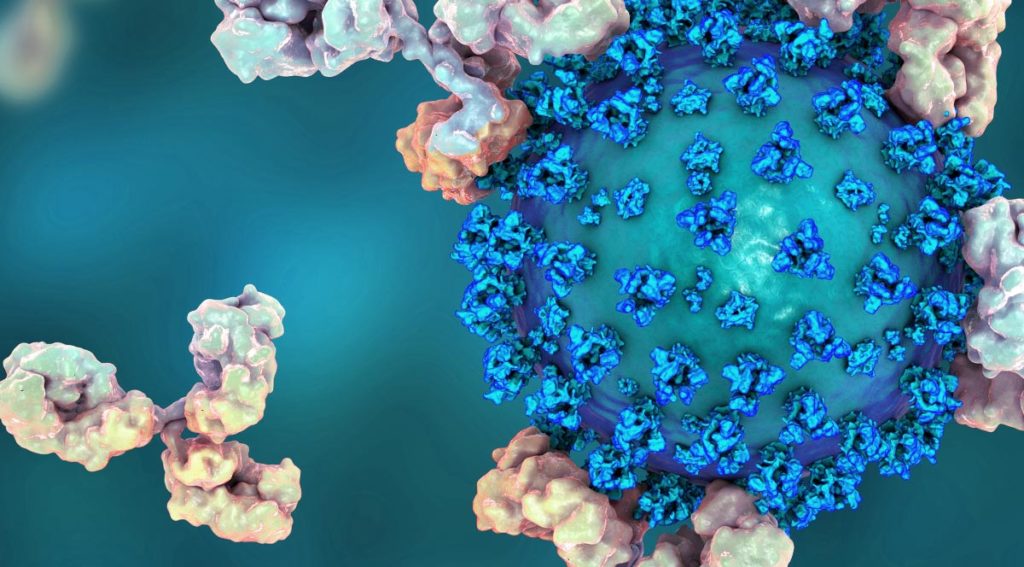
TE micrograph of a single MERS-CoV
Digitally colorized transmission electron micrograph reveals ultrastructural details of a single Middle East respiratory syndrome coronavirus (MERS-CoV) virion. Image credit: National Institute of Allergy and Infectious Diseases

The need for an effective, broad spectrum treatment against HCoVs, has been brought into sharp focus by the recent outbreak of the 2019 Novel Coronavirus (2019-nCoV; 6).

Continue reading “The Race to Develop New Therapeutics Against Coronaviruses”

How Does Our Garden Grow?

It’s the time of year in the northern US when you start to the miss green grass, ample daylight and warm breezes that are still months away. The promise of spring’s renewal and seedlings sprouting from the snow-covered ground seems too far out to even indulge in a daydream of better weather.

But then again, I’m not a farmer.                                                    

The Promega Culinary Garden at Bluebird Farms.

Now is the time of year when farmers are reflecting on last year’s harvest, making decisions about changes that need to be made and planning for the upcoming growing season. This work includes choosing what plants and varieties will be planted, estimating how many of each are needed and ordering the seeds. Crop rotation and cover crops are also part of the considerations.

If you’re a regular reader of this blog, you may know that Promega has a culinary garden that supplies some of the produce for our cafeterias on the Madison campus. During the growing season our Culinary Gardener, Logan Morrow, oversees the operations of Bluebird Farms with the help of his colleage Mike Daugherty.

Continue reading “How Does Our Garden Grow?”

Targeted Protein Degradation: A Bright Future for Drug Discovery

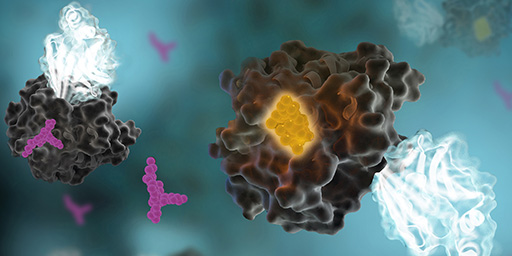
targeted protein degradation and protacs

Our cells have evolved multiple mechanisms for “taking out the trash”—breaking down and disposing of cellular components that are defective, damaged or no longer required. Within a cell, these processes are balanced by the synthesis of new components, so that DNA, RNA and proteins are constantly undergoing turnover.

Proteins are degraded by two major components of the cellular machinery. The discovery of the lysosome in the mid-1950s provided considerable insight into the first of these degradation mechanisms for extracellular and cytosolic proteins. Over the next several decades, details of a second protein degradation mechanism emerged: the ubiquitin-proteasome system (UPS). Ubiquitin is a small, highly conserved polypeptide that is used to selectively tag proteins for degradation within the cell. Multiple ubiquitin tags are generally attached to a single targeted protein. This ill-fated, ubiquitinated protein is then recognized by the proteasome, a large protein complex with proteolytic activity. Ubiquitination is a multistep process, involving several specialized enzymes. The final step in the process is mediated by a family of ubiquitin ligases, known as E3.

Continue reading “Targeted Protein Degradation: A Bright Future for Drug Discovery”

New Year, New Buildings, Same Commitment to Sustainability

In times of rapid growth, we look to the future with excitement while also assuring that our expansion is sustainable. The Promega Global Facilities Planning Team emphasizes environmental stewardship and long-term planning. Each building is designed to meet ambitious sustainability goals, and innovations incorporated into each project inform the next. In 2019, we finished construction on two new buildings in Europe and made progress on two important facilities at our headquarters in Wisconsin.

Continue reading “New Year, New Buildings, Same Commitment to Sustainability”

Sustainability Makeover: Parking Ramp Edition

parking_ramp_solar_panels

As Promega grows globally and locally here at headquarters, the construction of new and expanding facilities are considered with great care to ensure a commitment to sustainability. Between April and November of 2019, the parking ramp located near the Feynman Center received a massive upgrade with long-term impacts on the company’s sustainability goals.

Continue reading “Sustainability Makeover: Parking Ramp Edition”

Enhancing Creativity: The Promega Employee Art Show 2020

What hangs in the hallways of your workplace? Advertising? Awards? Commercially-sourced artwork? The Promega campus in Madison, WI, is composed of eight buildings. In many of these buildings you’ll find all of the above.

But as you enter the atrium of the BTC (Biopharmaceutical Technology Center) building where the Employee Art Show hangs, you’re greeted by handmade, homemade artwork, including drawings, ceramics, paintings, photographs and quilts.

Promega employees examine artwork in the BTC during the 2020 Employee Art Show opening.

These art pieces hold the distinction of being created by talented Promega employees, their families and friends. The annual Promega Employee Art Show opened Friday, January 17, with approximately 150 works displayed, including pieces created by parents of employees, employees and their children. These art pieces are on display to the public through the end of February 2020.

Continue reading “Enhancing Creativity: The Promega Employee Art Show 2020”

Stakeholder Capitalism—40 Years Later

Today’s blog is written by guest blogger, Penny Patterson, VP Corporate Communications at Promega.

The idea that businesses need to serve and provide value to constituents in addition to shareholders is one that has gained increasing recognition since last summer when the Business Roundtable issued its “Statement on the Purpose of the Corporation.”   The topic of what some call “stakeholder capitalism” surfaced again heading into the World Economic Forum in January 2020.

Promega has practiced “stakeholder capitalism” for more than 40 years and, as we’ve shared through our corporate responsibility reporting for the last decade, we have seen meaningful impact. From our founding in 1978, we have taken a “whole human” approach to our business. For us this means growing a financially stable and profitable company that considers and benefits science, employees, customers, community, shareholders and all global residents.

This approach starts with our people. We live the notion that every one of our employees has the potential to make a meaningful difference. And they do. Here are just a few examples. Our manufacturing and operations teams deliver with 99% accuracy and a complaint rate of 0.004%.  Discoveries by our R&D scientists generate some of the most read papers among key science journals. The average tenure of our leadership team is 18 years, and over half of these leaders grew their careers and capabilities at Promega.

Continue reading “Stakeholder Capitalism—40 Years Later”

Popular Papers from Promega Authors

Promega is a chemistry and instrument supplier to scientists in diverse industries and research labs around the world. True. But we are more than just a supply company; we are scientists dedicated to supporting the work of other scientists. We want the science behind the technologies we develop to be both vetted and valued by the scientific community at large, which is one reason our scientists take the time to prepare and submit manuscripts to peer-reviewed journals. Here we call out some of our published research papers that were highly read in 2019. In the journal ACS Chemical Biology alone, five Promega-authored papers were among the top 10 most read papers in 2019. Here’s a quick review of the highlights from these ACS papers.

Continue reading “Popular Papers from Promega Authors”

Green Chemistry is Better Chemistry

When you think of sustainability, what comes to mind? Immediately, my brain imagines vast collections of plastic in the ocean and carbon emissions from millions of cars. I’m guessing that, like me, you didn’t think about optimizing the synthesis of chemical reactions to reduce toxicity or energy usage. Although we’re often focused on the more visible forms of waste, sustainability applies to an enormous range of human activities.

Promega is committed to integrating the principles of sustainability across all aspects of our business. One recent area of focus for our PBI branch is a shift toward Green Chemistry. PBI synthesizes reagents and small molecules used in Promega products. After deciding “it was the right thing to do for our customers and for the environment,” the leader of Promega’s Corporate Responsibility Program, Corey Meek, assembled a few individuals to start a conversation about implementing Green Chemistry principles.

“It was the right thing to do for our customers and for the environment.”

Continue reading “Green Chemistry is Better Chemistry”