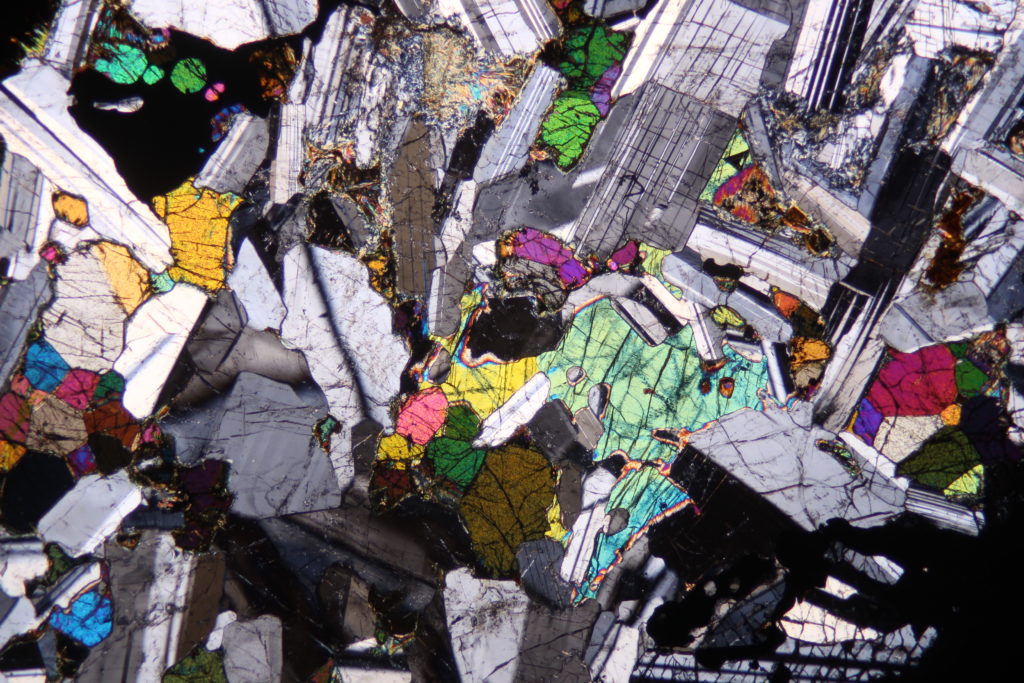
Celebrating the art of science is something the University of Wisconsin-Madison Cool Science Image Contest has been doing since its inception 10 years ago as part of The Why Files. The 2020 winning images include entries as diverse as videos of neural stem cells, eye-ball licking geckos and yes, even a picture of rock: actually a thin section of tractolite, an igneous rock composed of feldspar and olivine collected near Duluth Minnesota form the Proterozoic Mid-continent Rift. This image was collected by Natalie Betz, PhD, Associate Director of the UW-Madison Master of Science in Biotechnology program and her daughter Anya Wolterman, a recent graduate of Macalester College with degrees in Geology and Physics. Natalie has a long-time connection with Promega and the BioPharmaceutical Technology Center Institute, so we reached out to her to get the perspective of a contest entrant. Natalie is answering for both her and her daughter while her daughter is away doing some trail maintenance in the Rockies and is not available for comment.
This thin section of troctolite, an igneous rock composed of feldspar and olivine, was collected near Duluth, Minnesota, from the Proterozoic Midcontinent Rift. The rift is a tear in the Earth’s crust caused by continental plates colliding in the Lake Superior region. Polarized light accentuates vivid colors.
Promega Connections: Why did you decide to enter the UW Cool Science Image contest?
Sometimes, when using trypsin to study a protein sequence or protein modifications, sequence coverage just isn’t quite as complete as you’d like. Looking for a protease with novel cleavage specificity or a protease that functions well in a low pH environment? Promega has a protease for that.
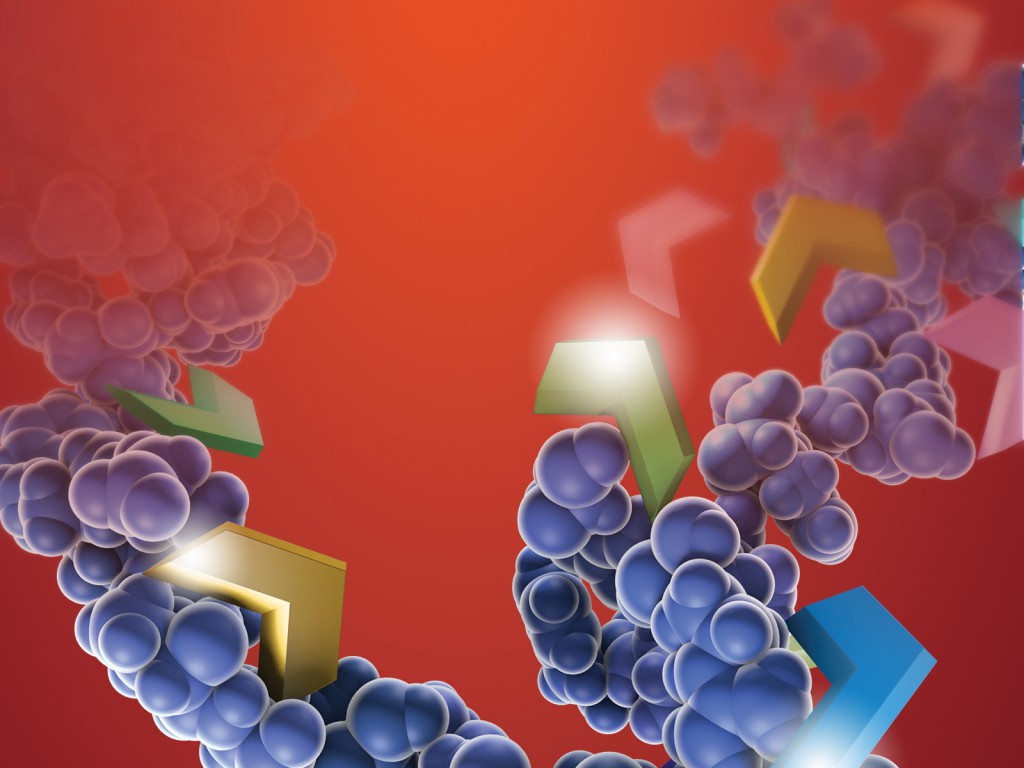
ProAlanase is a new site-specific endoprotease that preferentially cleaves proteins on the C-terminal side of proline and alanine amino acids. The unique cleavage specificity of ProAlanase (also known as An-PEP or EndoPro; 1–3) can help to uncover parts of the proteome not previously accessible with proteases typically used in proteomic studies.
Today’s guest blog is written by Jayme Miller, a Human Resources Generalist at Promega, who has some tips for creating an IDP that will help you achieve your goals. Individual Development Plans (IDPs) are common career development tools used in industry, and there has been a push for PhD programs to incorporate career development tools such as IDPs. By creating an IDP, employees and students both have a formal way to communicate their career goals and help them stay on track.
There is one question I am frequently asked by candidates during the interview process—“Is employee development a focus at this organization?” Employees frequently tell me they are looking for employers and opportunities where they will have the ability to learn, grow and develop. While that all sounds great, it is important to have an upfront and transparent discussion about roles, responsibilities and expectations when it comes to employee development.
Many organizations indicate that they have an employee development “program” at their organization, but when they begin talking about their program, they describe their performance management process. Often, they will describe how employees are evaluated and provided feedback from their manager. Feedback is a key component for employee development, but it is up to the employee to use that feedback to create action items that will give them the opportunity to learn and grow.
Often employees believe that employee development is something provided by companies to employees, that it is something that employers make happen for employees. Good organizations will offer continuous learning opportunities and a feedback culture that allows employees to learn and grow. However, no employee development program will work for an employee who is not fully engaged in their own development and does not take ownership over the process. It is ultimately the employee’s responsibility to ensure they are actively taking the steps to develop within their role and within their organization.
Today’s blog was written by guest bloggers Tara Luther, Marketing Specialist Genetic Identity, and Allison Suchon, Manager of Tradeshows and Events at Promega.
2020 has been a year of changes for all of us. We’ve learned how to keep in touch while physically distancing. We’ve learned how to work from home with furry coworkers who encourage us to break from the traditional 9–5 routine. We’ve learned how to make changes to our labs to stay safe and productive.
For many of us, this will also be the first time that we attend a virtual conference. While it’s easy to focus on what we’ll be missing by not gathering together, there are advantages to moving to the virtual space. By making the most out of your virtual experience, you’ll be able to walk away with valuable insights, a robust network, and insights that you can use in your own lab.
To help, we’ve put together a list of tips that will help you maximize your experience at any virtual conferences you attend.
For many of us, the current SARS-CoV-2 pandemic means working from home. For many, working from home means being away from human companionship that’s normally part of our work lives. While my four-legged office mates are quiet and do not require meetings, they are no substitute for human coworkers.
How about you? In our socially distanced world, do you find strength in the knowledge that others are also self-isolating to stay healthy?
What if I told you that numerous animal species, lobsters to mongoose, ants to mandrills, all practice social distancing to avoid infectious agents? Here are a few examples.
Photo 51 is the now-famous X-ray diffraction picture that allowed Watson and Crick to crystalize centuries work of scientific study (from Mendel to Chargaff) into a viable structural model that explained how DNA could serve as the material of the gene. The photo was painstakingly produced by Dr. Rosalind Franklin, a contemporary of Watson and Crick. Although she and her colleague R.G. Gosling did publish their work in the same issue of Nature as the Watson and Crick paper (1,2), their work did not receive the same public accolades of that of Watson and Crick.
Applications Scientists help partners and customers apply existing technology to new questions. Read more about their work.
Women scientists have been contributing to our understanding of the world around us throughout history. On this 100th anniversary of Dr. Rosalind Franklin’s birth, we want to take a little time to recognize the work that women scientists are doing at Promega.
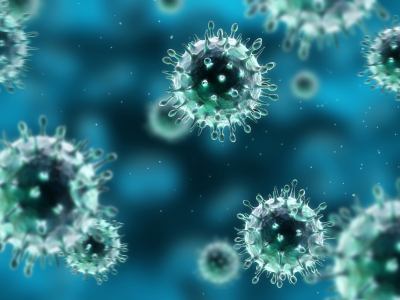
Months into the COVID-19 pandemic, we still have limited knowledge of the SARS-CoV-2 virus, and no effective treatment or vaccine. A major obstacle for scientists trying to understand the SARS-CoV-2 virus is the lack of appropriate cell models. Most of the studies published so far are based on cancer cell lines or animal models that have been engineered to express the human SARS viral entry receptor—ACE2. However, there are a many limitations to using these as models for studying human virus infection:
Today’s blog is written by guest blogger, Erin Schuster, Quality Specialist at Promega.
Change is not easy. It can be challenging and even frustrating at times. Yet, the outcome of change can be incredibly beneficial and rewarding. As a result of the COVID-19 pandemic, many of us are finding ourselves in out-of-the-norm situations and circumstances. Change may be exactly what we need in order to adapt and move forward.
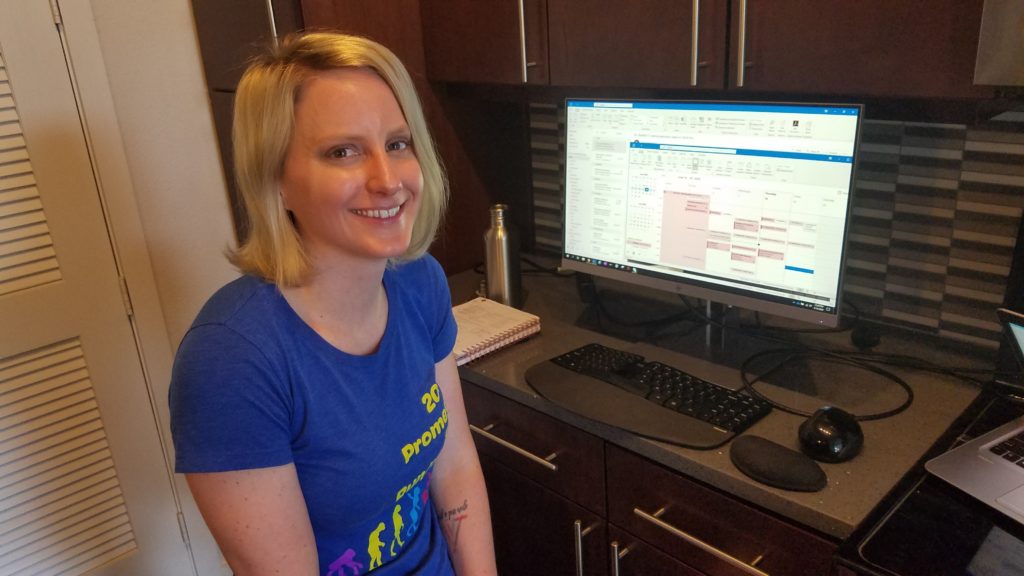
Erin works from home during the coronavirus crisis.
As a quality assurance specialist, I’m very familiar with the processes that can be associated with change. In order to make changes related to the design, manufacture or testing of medical devices and related products, an organization must have clearly defined expectations and instructions within Standard Operating Procedures. Procedures are a key component of the quality management system. Not only do they communicate best practices, but they’re required for compliance to applicable regulations and standards. These procedures, regulations, and standards help ensure products are safe, effective and of high quality.
Unlike changes to medical devices, the process to make life changes does not have a standard operating procedure. Best practices may vary from person to person. There are no regulations or standards to follow. Left to our own devices, we may procrastinate and never quite get around to making the change. Or if unsure of how to even begin, we may feel anxious and overwhelmed, giving up before even starting. I have experienced both scenarios and know I will again.
I am a quality assurance specialist, and I am also a human being. I have made many changes to myself and aspects of my personal life, as well as having supported many change orders and product changes throughout my career. Reflecting on these experiences, I realize there are universal themes within the change control process and change orders that can be extended to any kind of change.
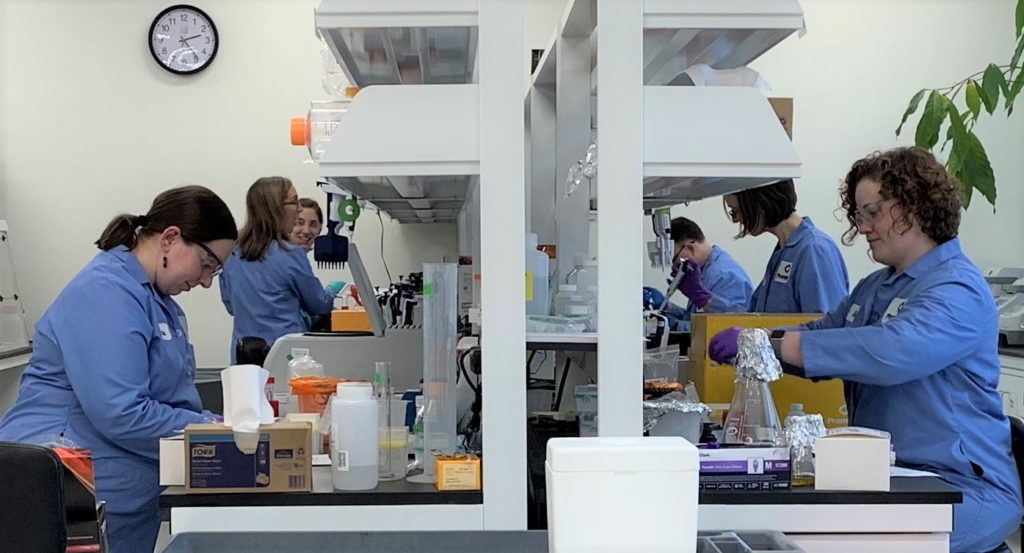
Many research labs around the world have temporarily closed their doors in response to the COVID-19 pandemic, while others are experiencing unprecedented need for reagents to perform viral testing. This urgency has led many scientists to make new connections and build creative, collaborative solutions.
“In labs that are still open for testing or other purposes, there’s certainly heightened anxiety,” says Tony Vanden Bush, Client Support Specialist. “I feel that right now, I need to help them deal with that stress however possible.”

Last week, Tony was contacted by a lab at the University of Minnesota that was preparing to serve as a secondary COVID-19 testing facility for a nearby hospital lab. The two labs needed to process up to 6,000 samples per day, and the university lab was far short of that capacity.
This blog is written by guest blogger, Heather Tomlinson, former Director of Clinical Diagnostics at Promega.
Finding safe and effective treatments for human diseases takes time. Medication and diagnostic tests can take decades to discover, develop and prove safe and effective. In the United States, the FDA stands as the gold-standard gatekeeper to ensure that treatments and tests are reliable and safe. The time we wait in review and clearance means less risk of ineffective or unsafe treatments.
And yet, in a pandemic, we are behind before we even start the race to develop diagnostic tests, so critical for understanding how an infectious disease is spreading. That is when processes like the FDA’s fast track of Emergency Use Authorization (EUA) are critical. Such authorization allows scientists and clinicians to be nimble and provide the best possible test protocol as quickly as possible, with the understanding that these protocols will continue to be evaluated and improved as new information becomes available. The EUA focuses resources and accelerates reviews that keep science at the fore and gets us our best chance at staying safe and healing.
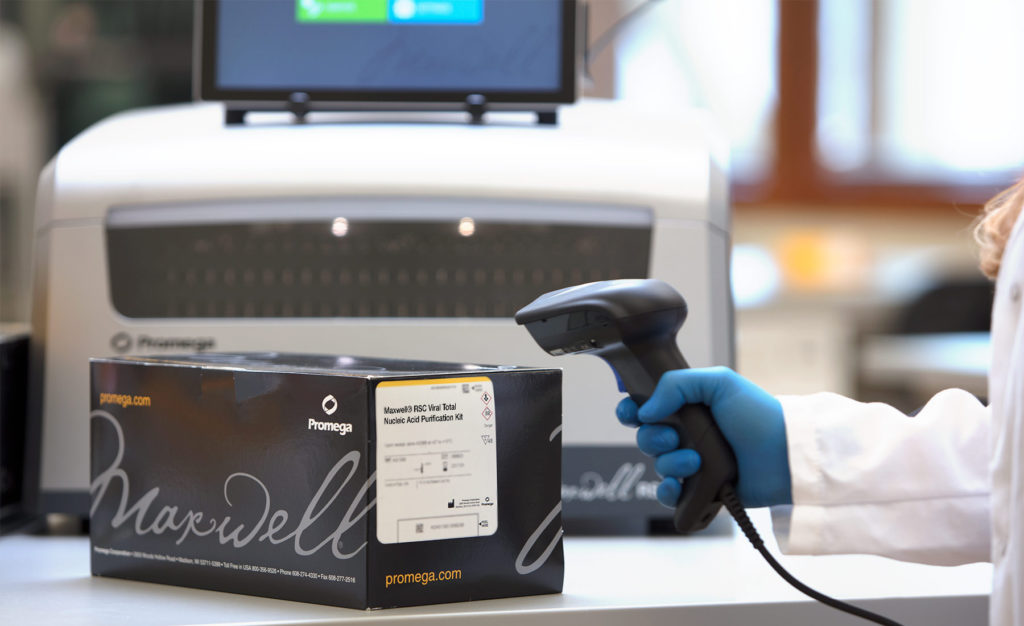
The Maxwell 48 RSC Instrument and the Maxwell RSC Total Viral Nucleic Acid Isolation Kit are now listed as options within the CDC EUA protocol.
For scientists working around the clock, the FDA’s EUA process is ready to review and respond. Getting an EUA gives clinical labs a very specific and tested resource to guide them to the tools and tests to use in a crisis.
Typically the Centers for Disease Control (CDC) will develop the first test or protocol that receives FDA EUA in response to a crisis like a pandemic. For COVID-19 the CDC 2019-Novel Coronavirus Real-Time RT-PCR Diagnostic Panel received FDA EUA clearance in early February. This is the test protocol used by the public health labs that work with the CDC and test manufacturers around the world.
Throughout a crisis such as the current pandemic, scientists continually work to improve the testing protocols and add options to the EUA protocols. This enables more flexibility in the test protocols. Promega is fortunate to play a part of the CDC EUA equation for diagnostic testing. Our GoTaq® Probe 1-Step PRT-qPCR System is one of a few approved options for master mixes in the CDC qPCR diagnostic test, and now our medium-throughput Maxwell 48 Instrument and Maxwell Viral Total Nucleic Acid Purification Kit were added to the CDC protocol as an option for the RNA isolation step as well. These additions to the CDC EUA means that laboratories have more resources at their disposal for the diagnostic testing which is so critical to effective pandemic response.
The Emergency Use Authorization provides the FDA guidance to strengthen our nation’s public health during emergencies, such as the current COVID-19 pandemic. The EUA allows continual improvement of an authorized protocol through the collaborative efforts scientists in all academia, government and industry to identify and qualify the most reliable technologies and systems, giving labs more flexibility as new products are added as options.
Dr. Tomlinson was the Director for the Global Clinical Diagnostics Strategic Business Unit at Promega Corporation bringing over 15 years of experience in clinical diagnostic test development. She was responsible for leading the team that drives strategy in the clinical market for Promega. Her background was in infectious disease diagnostic testing, with a focus on HIV drug resistance and evolution. Her last work focused on oncology companion diagnostic test development. Heather was an accomplished international presenter, delivering conference presentations in the United States, Europe, Asia, and Africa. Heather passed away in 2023.
XWe use cookies and similar technologies to make our website work, run analytics, improve our website, and show you personalized content and advertising. Some of these cookies are essential for our website to work. For others, we won’t set them unless you accept them. To learn more about our approach to Privacy we invite you to Read More
By clicking “Accept All”, you consent to the use of ALL the cookies. However you may visit Cookie Settings to provide a controlled consent.
We use cookies and similar technologies to make our website work, run analytics, improve our website, and show you personalized content and advertising. Some of these cookies are essential for our website to work. For others, we won’t set them unless you accept them. To find out more about cookies and how to manage cookies, read our Cookie Policy.
If you are located in the EEA, the United Kingdom, or Switzerland, you can change your settings at any time by clicking Manage Cookie Consent in the footer of our website.
Necessary cookies are absolutely essential for the website to function properly. These cookies ensure basic functionalities and security features of the website, anonymously.
Cookie
Duration
Description
cookielawinfo-checbox-analytics
11 months
This cookie is set by GDPR Cookie Consent plugin. The cookie is used to store the user consent for the cookies in the category "Analytics".
cookielawinfo-checbox-functional
11 months
The cookie is set by GDPR cookie consent to record the user consent for the cookies in the category "Functional".
cookielawinfo-checbox-others
11 months
This cookie is set by GDPR Cookie Consent plugin. The cookie is used to store the user consent for the cookies in the category "Other.
cookielawinfo-checkbox-advertisement
1 year
The cookie is set by GDPR cookie consent to record the user consent for the cookies in the category "Advertisement".
cookielawinfo-checkbox-necessary
11 months
This cookie is set by GDPR Cookie Consent plugin. The cookies is used to store the user consent for the cookies in the category "Necessary".
cookielawinfo-checkbox-performance
11 months
This cookie is set by GDPR Cookie Consent plugin. The cookie is used to store the user consent for the cookies in the category "Performance".
gdpr_status
6 months 2 days
This cookie is set by the provider Media.net. This cookie is used to check the status whether the user has accepted the cookie consent box. It also helps in not showing the cookie consent box upon re-entry to the website.
lang
This cookie is used to store the language preferences of a user to serve up content in that stored language the next time user visit the website.
viewed_cookie_policy
11 months
The cookie is set by the GDPR Cookie Consent plugin and is used to store whether or not user has consented to the use of cookies. It does not store any personal data.
Analytical cookies are used to understand how visitors interact with the website. These cookies help provide information on metrics the number of visitors, bounce rate, traffic source, etc.
Cookie
Duration
Description
SC_ANALYTICS_GLOBAL_COOKIE
10 years
This cookie is associated with Sitecore content and personalization. This cookie is used to identify the repeat visit from a single user. Sitecore will send a persistent session cookie to the web client.
vuid
2 years
This domain of this cookie is owned by Vimeo. This cookie is used by vimeo to collect tracking information. It sets a unique ID to embed videos to the website.
WMF-Last-Access
1 month 18 hours 24 minutes
This cookie is used to calculate unique devices accessing the website.
_ga
2 years
This cookie is installed by Google Analytics. The cookie is used to calculate visitor, session, campaign data and keep track of site usage for the site's analytics report. The cookies store information anonymously and assign a randomly generated number to identify unique visitors.
_gid
1 day
This cookie is installed by Google Analytics. The cookie is used to store information of how visitors use a website and helps in creating an analytics report of how the website is doing. The data collected including the number visitors, the source where they have come from, and the pages visted in an anonymous form.
Advertisement cookies are used to provide visitors with relevant ads and marketing campaigns. These cookies track visitors across websites and collect information to provide customized ads.
Cookie
Duration
Description
IDE
1 year 24 days
Used by Google DoubleClick and stores information about how the user uses the website and any other advertisement before visiting the website. This is used to present users with ads that are relevant to them according to the user profile.
test_cookie
15 minutes
This cookie is set by doubleclick.net. The purpose of the cookie is to determine if the user's browser supports cookies.
VISITOR_INFO1_LIVE
5 months 27 days
This cookie is set by Youtube. Used to track the information of the embedded YouTube videos on a website.
Performance cookies are used to understand and analyze the key performance indexes of the website which helps in delivering a better user experience for the visitors.
Cookie
Duration
Description
YSC
session
This cookies is set by Youtube and is used to track the views of embedded videos.
_gat_UA-62336821-1
1 minute
This is a pattern type cookie set by Google Analytics, where the pattern element on the name contains the unique identity number of the account or website it relates to. It appears to be a variation of the _gat cookie which is used to limit the amount of data recorded by Google on high traffic volume websites.