Using NanoLuc® Luciferase to Study Interactions between Environmental Flavobacteria and Mosquitos

nanoluc

Studies of the larval stages of Aedes triseriatus  (Eastern TreeHole Mosquito) indicate that the “tree hole” habitats in which these larva develop contain diverse microflora including the flavobacteria Elizabethkingia and Chryseobacterium. Extracts from these bacteria have many properties that might affect mosquito health, including antibacterial and anti-fungal activities. Understanding how these bacteria affect larval mosquito development has the potential to inform strategies for mosquito control.

Some initial work has been done by expressing Bacillus larvacidal toxins in some species of Gram-negative bacteria. However, only limited success was achieved using laboratory bacterial strains for such studies. Using environmental flavobacteria might prove to be a more useful approach. However, few molecular tools exist to study environmental flavobacteria. GFP reporters have been used to look at larval feeding, but autofluorescence in the pupae limit the usefulness of GFP-labeled strains for quantitative studies. Furthermore, environmental flavobacteria have unique transcription and translation machinery, and selectable markers and expression plasmids from proteobacteria do not function in these wild strains.

Chen and colleagues set out to generate molecular tools to study Flavobacterium hibernum, a fast-growing bacterium from native mosquito habitats. Their goal was to use these tools to see if A. triseratus larvae ingest and digest these bacteria and to test whether or not F. hibernum can be used to as a vector for larvacidal toxins directed against mosquito larvae. The results of their work were published in Applied and Environmental  Microbiology .

To develop a reporter that avoided issues of autofluorescence background for quantitative studies on the feeding behavior, the researchers turned to NanoLuc® Luciferase, a small, bright luciferase derived from the sea shrimp Oplopphorus gracilirostris. This luciferase has been used in mammalian cells for many kinds of studies, but it has not been used as a reporter in bacterial cells prior to the work of Chen et al. They also looked at work with laboratory flavobacteria strains that used a promoter of outer membrane protein A (PompA) to drive reporter expression as a potential system that might also work with environmental flavobacteria strains.

Continue reading “Using NanoLuc® Luciferase to Study Interactions between Environmental Flavobacteria and Mosquitos”
Amino Acid Analogs as Possible Cancer Drugs

HeLa cells stained with Hoechst 33258. By TenOfAllTrades (From English wiki 1.) [Public domain], via Wikimedia Commons
Scientists look in unusual places for potential anticancer treatments. I have reviewed papers that investigated the possibility that dandelion root may harbor anticancer treatments, milk fat may moderate cancer metastasis and the effects of chemotherapy, and black raspberry extract may even prevent cancer. Sometimes, research avenues come down to an observation about what a tumor cell needs to grow and exploring the idea that molecular analogs might be a tool to block cancer growth. For the work reported in Drug Design, Development and Therapy, analogs of the amino acid glycine, specifically glyphosate and aminomethylphosphonic acid (AMPA), the degradation product of glyphosate, were used to explore this idea in cancer cell lines. Continue reading “Amino Acid Analogs as Possible Cancer Drugs”

Cell-free Expression: A System for Every Need

6634MA

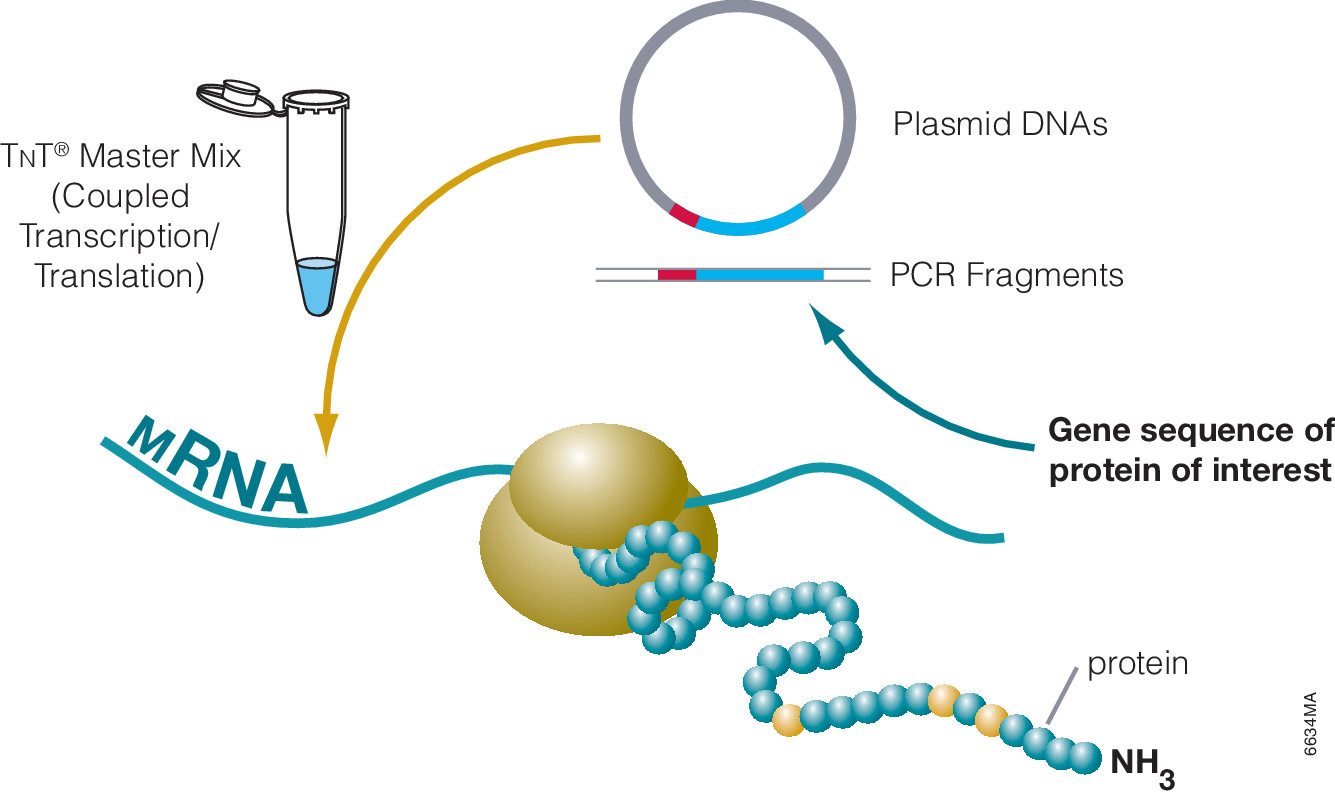
Cell-free protein expression is a simplified and accelerated avenue for the transcription and/or translation of a specific protein in a quasi cell environment. An alternative to slower, more cumbersome cell-based methods, cell-free protein expression methods are simple and fast and can overcome toxicity and solubility issues sometimes experienced in traditional E. coli expression systems. Continue reading “Cell-free Expression: A System for Every Need”

Histone Deacetylase Activity in Health and Disease

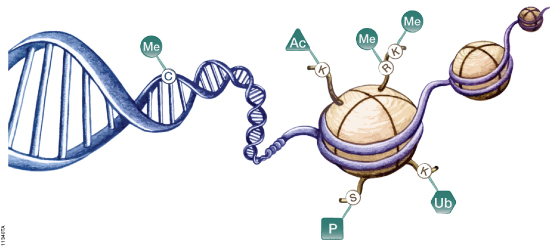
Histones_11340TAEpigenetics is the study of heritable changes in gene expression arising from chromosomal changes that are not caused by alterations in DNA sequence. It seems that almost daily, this field of study is revealing more and more about the ways in which genes are turned on or off–governing cell fate and regulating response to environmental factors such as stress or toxin exposure. In recent years there have been numerous papers implicating epigenetic mechanisms in the control of biological events as varied as fat burning in response to exercise, cancer progression, and control of memory and other neurological processes.

Histone modification by acetylation is one of the most well-studied epigenetic mechanisms. A quick literature search shows that more than 60 papers discussing some aspect of histone acetylation/deacetylation have already been published in 2014. In chromatin, DNA is tightly wrapped around histones. Acetylation of lysine residues on the histone tail by histone acetylases (HATs) neutralizes the positive charge on the histone molecule, decreasing its ability to bind the DNA backbone, and increasing expression by allowing transcription factors to access the DNA. On the other hand, histone deacetlyases (HDACs) remove these acetyl groups, causing tighter binding to DNA and decreasing gene expression. Continue reading “Histone Deacetylase Activity in Health and Disease”

Review: Validation of a high throughput cell-based assay to screen compounds for mitochondrial toxicity

mitotox_covertip

Drug-induced mitochondrial toxicity is a concern for pharmaceuticals that was, until recently, limited by the availability of a cell-based assay that is amenable to rapid high-throughput screening. Incorporating high-throughput assay chemistry that can detect mitochondrial dysfunction early in drug discovery programs provides the opportunity to identify potential mitotoxicants before they reach clinical trials or the market population.

In the paper reviewed here (1) Swiss and colleagues have validated the use of a commercially available Mitochondrial ToxGlo™ Asssay (2) to replace traditional methods that not only require expensive reagents and/or equipment but also do not lend themselves easily to high-throughput screening formats.

Continue reading “Review: Validation of a high throughput cell-based assay to screen compounds for mitochondrial toxicity”

Ancient Origins of a Human Gene Associated with Diabetes

Ancient peopleRecently, researchers of the SIGMA Type 2 Diabetes Consortium published a paper in Nature identifying a new locus associated with a higher risk of type 2 diabetes (1). Considering the increasing prevalence of this metabolic disease in today’s sugar-filled world, any discovery that helps us understand diabetes is exciting news. However, the most interesting discovery published in this paper might not be this new gene variant but rather the origin of this variant in modern human populations: Neandertals.

Continue reading “Ancient Origins of a Human Gene Associated with Diabetes”

When Did Cats Become Companion Animals?

Is that a mouse? Image source: morgueFile.

I am unabashedly a cat person, heavily influenced, I suspect, by the ever-fluctuating population of cats that roamed the family farm. Most of these outdoor cats were skittish around humans, but sometimes there were friendly female cats with a litter of kittens that were fun to chase, pick up and stroke. While the farm’s clowder of cats would eagerly await table scraps my mom would put out in the evening, there was plenty of opportunity for the felines to hunt vermin around the farm. It is this function—rodent control—that may be the reason that many of us share our homes with cats. One hypothesis to explain the association between cats and humans is rodents were stealing from human grain stores and cats could control rodent populations. However, there was not much data to confirm this hypothesis. Recent archeological evidence from China seems to support this view of cat domestication as reported in the Proceedings of the National Academy of Sciences. Continue reading “When Did Cats Become Companion Animals?”

From Where, the Dog’s Ancient Ancestor

We’ve learned this year, 2013, that Europe may be the original home to domestic dogs, a title previously claimed by East Asia and the Middle East. A recent study published in Science magazine may put to rest the debate.

In their report, Thalmann and Wayne (1) used an evidential gold standard, DNA from mitochondria of fossilized ancient dog and wolf remains, to reach the conclusion that dogs originated from a now extinct line of European gray wolves.

In 2002, researchers from Sweden and China collaborated to compared first the mitochondrial DNA and later the complete mitochondrial genomes and Y chromosomes from a hundreds of wolves, coyotes and modern dogs from around the world (2). Their results showed the greatest genetic diversity from canids from East Asia. Such genetic diversity can be a marker of a species’ origin.

In 2010 Wayne, et al. (3) analyzed 48,000 markers from across the genome of gray wolves and dogs, again from around the world. The dogs were found to have more genetic material in common with Middle Eastern wolves than with those from East Asia. Wayne and colleagues found this a yes to dogs’ origins lying in the Middle East.

A criticism of the analysis done with modern dog DNA is that this DNA has been mixed with that from wolves. In addition, dog-dog breeding over the 15,000 to 30,000 years since this domestication, could confound results. Prior to the current study, critics called for analysis of ancient DNA remains only.

Wayne had collected DNA from ancient remains and due to recent collaboration with geneticist Thalmann, now had the lab-power to analyze those remains.

In this work, Wayne and Thalmann looked at mitochondrial DNA from ancient remains, those of 18 wolves and dogs. The fossils  ranging in age from 1,000 to 36,000 years. Eight of the samples were classified as dog-like and 10 samples were wolf-like in nature. They compared the ancient mitochondrial DNA samples to those of modern animals, including 77 dogs from an assortment of breeds, as well as 49 wolves and 4 coyotes. They then built a sort of a canid family tree, demonstrating relatedness in the animals whose DNA was analyzed.

Thalmann and Wayne’s finding showed that 1) the DNA of modern dogs more closely resembled that of ancient gray wolves than modern wolves, and 2) the geographic location of the wolves who’s DNA was most closely resembled, was Europe.

It is important to note that Thalmann and Wayne did not compare ancient remains from animals from the Middle East, nor did they have access to ancient remains from East Asia. In addition, there is criticism of the use of mitochondrial DNA, which represents only the maternal dog lineage. Thus there is more work to be done to finalize the ancestral home of the modern dog.

This work does, however, push back the origins of domesticated dogs to between 18,000 and 32,000 years ago, significant because the domestication timeline was previously believed to coincide with the rise of farming by our human ancestors. Domestic canines are now believed to have been part of humans lives far before farming was a way of life, back in the hunter-gatherer days.

There are those who believe that domestication of wolves, selectively bred to become modern dogs occurred simultaneously at more than one geographic region. Wolves were once found in many locations around the world and their usefulness to and domestication by humans would seem odd if only embraced by people from a single part of the world.

    References

  1. Thalmann, O. et al. Science (2013) 342, 871–874
  2. Savolainen P, Zhang YP, et al. (2002)
  3. Wayne, R.K. et al. (2010) Nature 464(7290), 898-902. 

Novel Application for ProteaseMAX Surfactant: Cell Lysis

ProteaseMax Surfactant


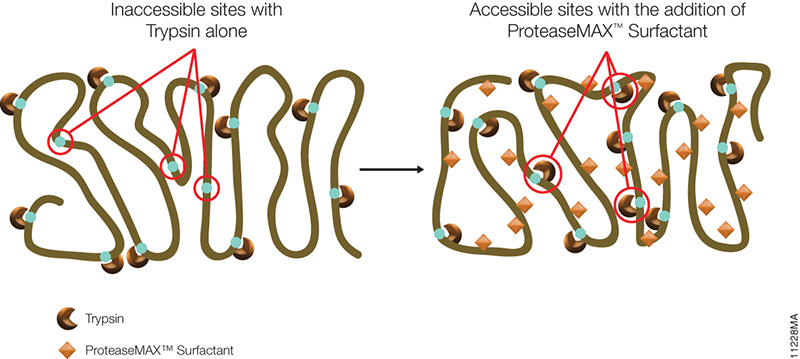
The novel mass spectrometry compatible surfactant sulfonate-(sodium 3-((1-(furan-2-yl)undecyloxy) carbonylamino)-propane-1-sulfonate (i.e.ProteaseMAX) facilitates both in-gel and in-solution digestion applications by reducing the time required, enabling protein solubilization/denaturation and increasing peptide/protein identifications.

A new application was highlighted in a recent publication (1) which utilized ProteaseMAX to lyse cells prior to trypsin digestion and subsequent mass spec analysis. The composition of the buffer determines the overall efficiency of cell lysis, dissociation of protein complexes, protein solubility and ease of removal prior to LC/MS-MS analysis.

Are you looking for proteases to use in your research?
Explore our portfolio of proteases today.

When compared to lysis buffers containing either urea or SDC, ProteaseMAX provided the optimal number of identified peptides/proteins.
In addition it can be easily removed from the lysate by acidic precipitation.

Reference

  1. Pirmoradian, M. et al. (2013). Rapid and deep human proteome analysis by single-dimension shotgun proteomics. Mol. Cell. Prot. 12, 3330–8.

Sustainable Growth: The Edible Kind

community-garden-thumb

From time to time, we use the Promega Connections blog to tell you a little bit more about life here at Promega Corporation. For more than 40 years Promega has consistently integrated the values of corporate responsibility and sustainable business practices in all aspects of our corporate culture and activity; one of those aspects can be found in the Promega cafeterias. As an employee of Promega, one of the things I have considered a key perk is the wonderful menu offerings we have here at the Madison campus. The kitchens offer a varied and fun menu full of healthy choices, using local, seasonal foods as much as possible. The Promega Culinary Garden was covers more than an acre and allows us to grow many of our own vegetables and herbs as well as compost food waste.

Below is a short video highlighting the Culinary Garden Program

For information on other corporate responsibility and sustainable business practices at Promega Corporation, explore our Corporate Responsibility Web site.