5 Signs You’re Ready to Earn that Ph.D.

confused5. No one in your family bothers to ask you what you’re studying anymore.

The longer you spend in a Ph.D. program the more opportunities your family has to ask you what you’re doing in school. No doubt, you’ve spent the first couple years of graduate school going to family functions and trying to explain to your grandma what a molecule is. She will eventually come up with an explanation of what you are doing that she can share with her friends. Her description of your work may or may not be correct, but she’s not going to bother trying to understand it anymore. “Good for your honey, you’re so smart!”

4.  Your former life as a bartender or grocery store clerk starts to sound really appealing. Continue reading “5 Signs You’re Ready to Earn that Ph.D.”

From Soot, Turpentine and Walnut Oil to Bio-Inks with Living Cells: Printing Reinvents Itself in 3D and Comes Alive

Gutenberg-Style Printing Press.
Gutenberg-Style Printing Press (Replica). Wikimedia Commons.

Printing has been an integral part of society since the first movable type printing press was invented by Johannes Gutenberg in the 15th century. And yet, many recent headlines have heralded its impending death.  As everything from books to newspapers transitioned to digital media, the traditional printing techniques seemed destined for the history books and museums. However, even before the popularity of printing started to fade, some of the concepts were being reimagined in amazing, new—and three dimensional— ways. Continue reading “From Soot, Turpentine and Walnut Oil to Bio-Inks with Living Cells: Printing Reinvents Itself in 3D and Comes Alive”

Confessions of a Cookie Mom

I decided last year that I would be a troop leader for my daughter’s Girl Scout Daisy troop. I thought it would be a great way to spend some one-on-one time with her, while volunteering for a cause I believe in. It started off positive; I met with the other leader, we had all these great ideas for what we would do! This was going to be so fun! Well, time went on, and the meetings seemed longer and longer;  the craft ideas were getting much less creative, and by the end of the year the girls were playing tag for the last 15 minutes of the meetings because we had run out of things to do. I realized that I really am not the best “traditional” troop leader, but I still wanted to be involved in a leader capactiy. I know! I will be the cookie coordinator for the Girl Scout cookie season! I can use the skills I am much better at (organization, metrics), and not have to be creative or crafty. Perfect!

Maybe I could arrange them into a futon frame or bookshelf?

We are two weeks into cookie season, and I would like to give the job back. I am completely obsessed with cookies. I think about them almost all day; I dream about them at night. I am placing cookie orders, counting cookies, schlepping cookies, EATING cookies. Here is a picture of my family room. This is what it looks like all the time. I have a “cookie spreadsheet”. I have nightmares that it will get accidentally deleted somehow, and that would throw my life into a tailspin. Continue reading “Confessions of a Cookie Mom”

Ghost of the Himalayas (Snow Leopard) Caught on Camera In a Successful Hunt

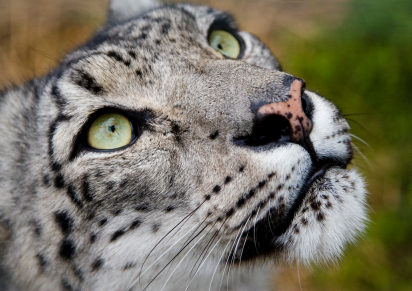
Snow LeopardPaul Steyn has posted an amazing series of photographs taken by Adam Riley in Hemis National Park in the Himalayas on the National Geographic News web site. These photographs are the  first photo documentation of a successful snow leopard hunt, and underscore the amazing biology of this area. If you are interested in learning more, we have another blog post about early work to isolate induced pluripotent stem cells from adult animals–an attempt to compliment the habitat preservation and other efforts to save this incredible hunter before it truly becomes a ghost.

Butterfly Heal Thyself: What We Can Learn from Self-Medicating Animals in Nature

Can animals actively seek out a plant to heal a parasitic infection or to numb pain? For years scientists have presumed that such activity was restricted to animals capable of more complex cognitive abilities, like chimpanzees. However scientists have described incidents of fruit flies (1), caterpillars (2)  and butterflies  (3) “self medicating” to prevent or cure parasitic infections, suggesting that such behavior may be both innate as well as learned.

Continue reading “Butterfly Heal Thyself: What We Can Learn from Self-Medicating Animals in Nature”

Fun with Chemistry for Valentine’s Day

Image credit: Morguefile

Looking for last-minute gift ideas? Wondering what chemistry has to do with Valentine’s Day? The chemists of the American Chemical Society (ACS) have curated a web page called Valentine’s Day Chemistry that offers gift ideas (for example, make a crystal heart using pipe cleaners, borax and hot water), explains the chemistry behind chocolate and flowers, shows a video that equates chemical bonding to people interacting at a party and more. The links and videos offer something for everyone, whether you want to have fun with friends and family of all ages or just want to learn something new about chemistry.

Happy Valentine’s Day!

Dealing with PCR Inhibitors

Inhibition

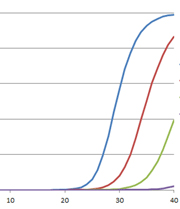
The polymerase chain reaction (PCR) has revolutionized modern biology as a quick and easy way to generate amazing amounts of genomic data. However, when PCR doesn’t work, it can be frustrating. At these times, PCR and reverse transcription PCR (RT-PCR) inhibitors seem to be everywhere: They lie dormant in your starting material and can co-purify with the template of interest, and they can be introduced during sample handling or reaction setup. The effects of these inhibitors can range from partial inhibition and underestimation of the target nucleic acid amount to complete amplification failure. What is a scientist to do?

Continue reading “Dealing with PCR Inhibitors”

For Alphavirus Reporters, Location Matters

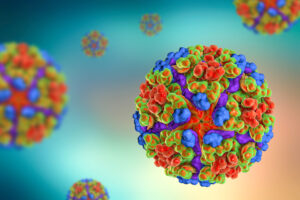
Computer-generated model of an alphavirus.

Luminescent reporters offer virologists a convenient way to measure replication of viruses and are also used to image the spread of viruses in vivo in experimental systems. These reporter viruses are useful for evaluating the effects of antiviral drug treatments, testing the efficacy of potential vaccines, and studying the ways in which viruses replicate in the body and cause disease. One challenge in the construction of such reporters is the need to ensure that the reporter molecule itself does not alter the virus in ways that affect its ability to cause disease. Another challenge is maintaining the reporter gene throughout several cycles of viral replication. In smaller viruses, it can be particularly difficult to introduce a reporter gene without compromising the ability of the virus to replicate and cause disease.

A 2014 paper was published in J. Virology comparing the effectiveness of various NanoLuc® luciferase alphavirus reporter constructs. The authors of the study, Chengqun Sun et al. from the University of Pittsburgh, placed these reporter genes in three different locations in the genome of several alphaviruses and compared the effect on their ability to replicate in vitro and in vivo. They also assessed the ability of the luciferase genes to persist during infection of cultured cells and in a mouse model. They showed that the size and location of the reporter had a significant effect on successful replication and persistence. They also showed that the reporters could potentially be integrated at different positions within the genome to study different aspects of viral pathogenesis.

Continue reading “For Alphavirus Reporters, Location Matters”

Battling Obesity One Thermostat at a Time

ThermometerWinter in Wisconsin is synonymous with cold, and this year thanks to the “wobbly polar vortex” it has been really, really cold. I have been very grateful for my under-desk space heater at work and my toasty gas fireplace at home. However, according to an article currently in press in the journal Trends in Endocrinology and Metabolism (1), all that lovely toasty warmness might be working against me if I am hoping to loose weight.

Excess weight is nothing more than a positive energy balance, meaning we have taken in more calories than we have burned. The deceptively simple sounding solution for losing or maintaining weight is to take in no more calories than you will be expending. Typically this is achieved by eating less, increasing physical activity or through pharmacological interventions. However, anyone who has ever tried any of these approaches knows that there is nothing simple about them, and often times the results are disappointing or short lived.

The authors of the Trends in Endocrinology and Metabolism paper hypothesize that regular exposure to mild cold could affect our energy expenditure in a positive way. We know that shivering produces heat (shivering thermogenesis) and thus expends energy. It can increase the metabolic rate to up to five  times the resting rate (2). However, it is not comfortable and can make coordinated movements difficult. The authors focused on something close to this state, but not quite. Nonshivering thermogenesis (NST) is the cold-induced increase in heat production that is does not involve muscle activity like shivering. It occurs by activating brown adipose tissue (3–5).

Although there is great variation between individuals, most young and middle-aged people will see an increase in NST between a few percent to up to 30% when exposed to mildly cold conditions (1). The authors note that a recent study found a significant decrease in body fat content following a 6 week cold acclimation study (2 hours/day at 62.6°F [17°C]; 6).
ScaleAs many of us can probably attest, the downfall of undertaking anything that increases our body’s energy usage is that often we end up increasing our caloric intake to compensate for it. Interestingly, the authors point to a 2009 study (7) that found evidence that increased food intake did not fully compensate for this type of cold-induced thermogenesis.

Personally, I love to be warm— as evidenced by my previous comments about space heaters and gas fireplaces. However, if the benefits of cold acclimation suggested by this paper hold to be true, I think I could tolerate 2 hours a day at 62°C.

References

  1. Van Marken Lichtenbelt. W. et al. (2014) Cold exposure—An approach to increasing energy expenditure in humans. Trends Endrochron. Met. In Press.
  2. Jansky, L. (1998) Shivering. In Physiology and Pathophysiology of Temperature Regulation (Blattheis, C.M. ed.) World Sceintific.
  3. Cannon, B. and Nedergaard, J. (2004) Brown adipose tissue: Function and physiological significance. Physiol. Rev. 84, 277–359.
  4. Van Marken Lichtenbelt, W.D. et al. (2009) Cold-activated brown adipose tissue in health adult men. N. Engl. J. Med. 360, 1500–1508.
  5. Virtanen, K.A. et al. (2009) Functional brown adipose tissue in health adults. N. Engl. J. Med. 360, 1518–1525.
  6. Yoneshiro, T.  et al. (2013) Recruited brown adipose tissue as an antiobesity agent in humans. J. Clin. Invest. 123, 3404–3408.
  7. Cannon, B. and Nedergaard, J. (2009) Thermogenesis challenges the adipostat hypothesis for body-weight control. Proc. Nutr. Soc. 68, 401–407.

Practical Tips for HEK293 Cell Culture When Using cAMP-Glo™ Assay

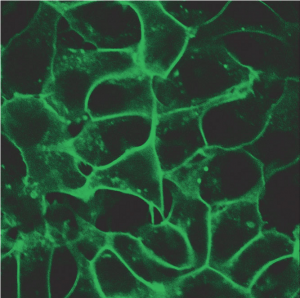
HEK293 cells stably expressing HaloTag®-ECS (ExtraCellular Surface; comprised of a signal sequence and single transmembrane domain of β1-integrin) fusion protein labeled with HaloTag® Alexa Fluor® 488 Ligand and then imaged.
HEK293 cells stably expressing HaloTag®-ECS fusion protein labeled
with HaloTag® Alexa Fluor® 488 Ligand and then imaged.

G Protein Coupled Receptors represent one of the largest classes of cell surface receptors and one of the most important classes for drug targets. Fifty of the top 200 drugs target GPCRs. GPCRs respond to various stimuli like light, odors, hormones, neurotransmitters and others. They cover virtually all therapeutic areas. When a particular GPCR is implicated in a disease, researchers screen the GPCR and its signaling pathways, the hope being that promising therapeutic targets might be identified. Major G-protein families signal via secondary messengers like cAMP, which in turn activate a range of effector systems to change cell behavior and/or gene transcription. There are various approaches and methods to study GPCRs and measure the increase or decrease of intracellular cAMP. However, the fastest and the most sensitive among all methods is a plate based cAMP-Glo™ Assay.

Continue reading “Practical Tips for HEK293 Cell Culture When Using cAMP-Glo™ Assay”