Ebola Virus Disease (EBOD) remains one of the most severe viral infections, with case fatality rates reaching 40% during the 2013-2016 West African outbreak that claimed over 11,000 lives (1). At this scale, durable protection isn’t optional.
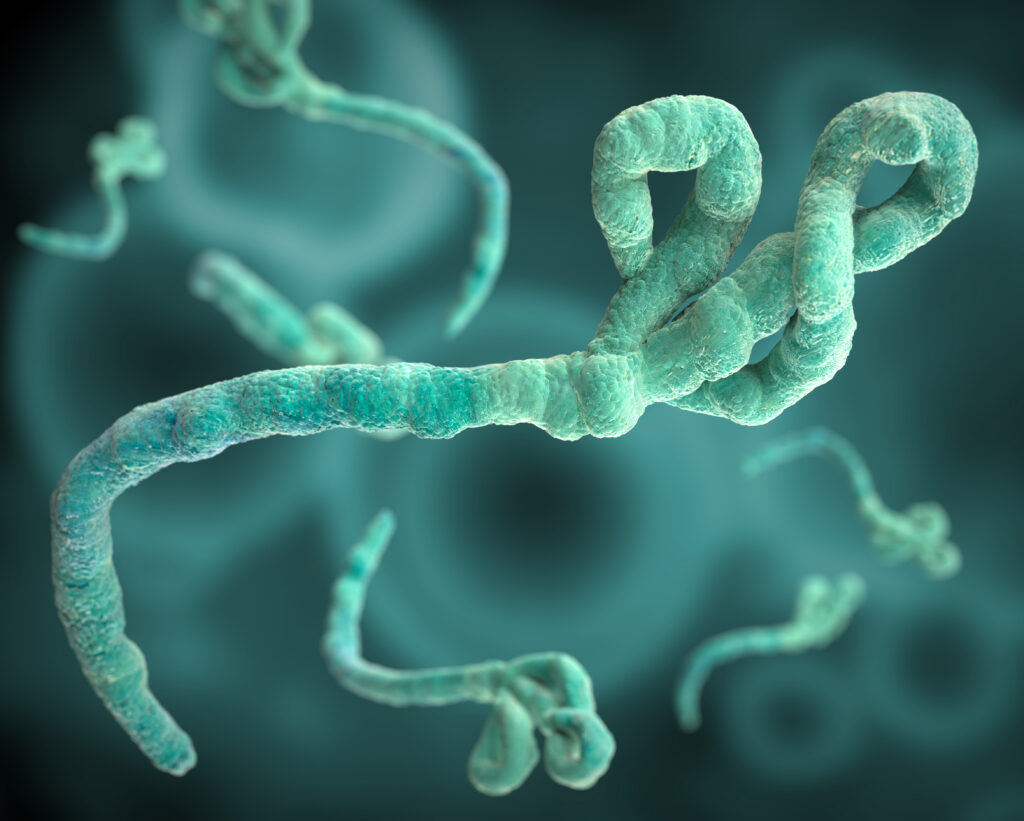
If you’ve followed vaccine development, you’ve probably noticed something counterintuitive. Shorter intervals between doses are not always better. SARS-CoV-2 mRNA vaccine studies have shown that extended intervals between doses enhance neutralizing antibody responses against multiple variants (5). Now, new research published in Nature Immunology suggests the same may be true for Ebola (1).
The findings challenge assumptions about how vaccine boosters should be timed and reveal something important about how our immune systems respond when given the space to do what they do best.
The Problem with Standard Timing
The current Ebola vaccine (rVSV∆G-ZEBOV-GP) has been traditionally used as a single-dose vaccine (4). When researchers previously tested a second dose just 28 days after the first, it provided little additional benefit (3). The booster primarily generated short-lived IgM antibodies that declined relatively quickly (3).
During the 2018–2020 outbreak in the Democratic Republic of the Congo, some vaccinated individuals experienced breakthrough infections, raising important questions about long-term durability (2). This left healthcare workers, laboratory researchers and populations in endemic areas with a challenge: they need protection that remains robust over longer periods of time.
What Happens When You Wait 18 Months
Researchers tested a different approach. Instead of boosting at 28 days, they waited 18 months. The results:
Participants who received the delayed booster generated neutralizing antibody responses that were 23-fold higher than their initial peak levels (1). More importantly, these responses persisted for at least 36 months and maintained antibody levels higher than peak responses observed after a single dose (1).
The researchers did not stop at measuring quantity; they also examined antibody quality.
Quality Over Quantity
Using surface plasmon resonance (SPR), the team found that delayed boosting produced antibodies with 13-fold higher binding affinity compared to single-dose vaccination (1). These antibodies were not only more abundant, they were more effective at recognizing their target.
The improvements overall:
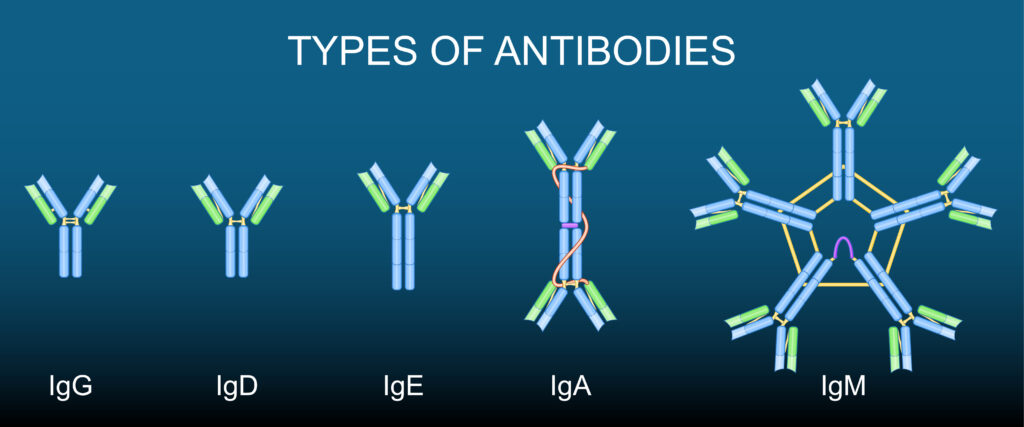
- Class switching: From predominantly short-lived IgM antibodies (~ 77–79% after the first dose) to largely IgG (~84% after delayed booster), which are associated with long-term immunity (1).
- Cross-reactivity: Antibodies recognized multiple Ebola virus strains, not just the vaccine strain (1).
- Binding diversity: The immune response targeted a broader range of viral epitopes (1).
This process, known as affinity maturation, is a defining feature of durable immune protection.
Functional Improvements Matter Too
The study also examined what these antibodies could do, not just how well they bound.
Using luminescence-based ADCC and ADCP bioassays, the researchers measured key immune effector functions:
- ADCC (antibody-dependent cellular cytotoxicity), measured using Promega’s ADCC Reporter Bioassay: Increased approximately 5.5-fold compared to single vaccination (1).
- ADCP (antibody-dependent cellular phagocytosis), measured using Promega’s ADCP reporter Bioassay: Increased about 4-fold (1).
These functions help immune cells recognize and eliminate infected cells or viral particles, complementing neutralization and possibly contributing to vaccine efficacy (1).
Importantly, these functional responses remained elevated over time, suggesting a more durable and effective immune profile following delayed boosting (1).
Why Multiple Measurements Tell the Complete Story
Rather than relying on a single readout, the study combined multiple analytical approaches. These included neutralizing antibody titers, binding kinetics, epitope mapping, Fcγ receptor engagement and functional assays (1).
Together, these measurements revealed a more complete picture of immunity. While neutralizing antibodies are critical, Fc-mediated functions and antibody diversity may also contribute to protection, particularly in high-exposure settings (1).
This layered analysis highlights how different aspects of the immune response work together.
Why 18 Months Made the Difference
The key insight lies in timing. When a booster is given too soon, the immune system is still actively responding to the first dose. Residual antibodies and ongoing immune activation may limit the effectiveness of the second exposure (1).
By waiting 18 months, the immune system likely has time to return to a resting state, develop more mature memory responses and reduce interference from circulating antibodies (1).
This creates conditions for a stronger recall response, and the resulting immune response is more refined, durable and effective.
The Science Behind the Wait
Vaccine development has long prioritized speed: how quickly can we establish protection? This study suggests a different question might be equally important: how can we give the immune system the time it needs to build its most durable responses?
The 13-fold improvement in antibody affinity maturation didn’t happen despite the delay, it happened because of it (1). For researchers working on protection strategies in high-risk settings, that insight goes beyond Ebola.
Explore Promega Tools for Ebola Research
The immune measurements described in this study represent the same endpoints researchers need to evaluate candidate vaccines and therapeutic antibodies in the lab. Promega offers a suite of tools designed for exactly this work. The ADCC and ADCP Reporter Bioassays, the same assays used in the Khurana et al. study, provide a luminescence-based approach to measuring antibody effector function. The Lumit FcγR Binding Immunoassays (6) complement that functional data with a fast, no-wash biochemical readout of Fc receptor interactions. And for neutralization specifically, the Filovirus HiBiT-PsVLP Bioassays provide a BSL-1/2 compatible system for measuring the neutralizing capacity of vaccine-elicited antibodies against Ebola (Zaire), Sudan Ebola and Marburg virus glycoproteins.
References
- Khurana, S. et al. (2026) Improved VSV-Ebola-GP booster vaccination approach promotes antibody affinity maturation and durable anti-Ebola immunity in humans. Nature Immunology 27, 1053–1065. https://www.nature.com/articles/s41590-026-02459-w
- Coulborn, R.M. et al. (2024) Case fatality risk among individuals vaccinated with rVSV∆G-ZEBOV-GP. Lancet Infectious Diseases 24, 602–610. https://www.thelancet.com/journals/lanxxx/article/PIIS1473-3099(23)00819-8/abstract
- Khurana, S. et al. (2016) Human antibody repertoire after VSV–Ebola vaccination identifies novel targets and virus-neutralizing IgM antibodies. Nature Medicine 22, 1439–1447. https://www.nature.com/articles/nm.4201
- Henao-Restrepo, A.M. et al. (2017) Efficacy and effectiveness of an rVSV-vectored vaccine in preventing Ebola virus disease: final results from the Guinea ring vaccination, open-label, cluster-randomised trial (Ebola Ça Suffit!). Lancet 389, 505–518. https://www.thelancet.com/journals/lancet/article/PIIS0140-6736(16)32621-6/abstract
- Hall, V.G. et al. (2022) Delayed-interval BNT162b2 mRNA COVID-19 vaccination enhances humoral immunity and induces robust T cell responses. Nature Immunology 23, 380–385. https://www.nature.com/articles/s41590-021-01126-6
- Promega Corporation. Lumit FcγR Binding Immunoassays. https://www.promega.com/products/immunoassay-elisa/lumit-immunoassays/lumit-fcgr-binding-immunoassays/?tabset0=0&catNum=W7070