Coffee and Scienceโ€“A Cartoon Perspective

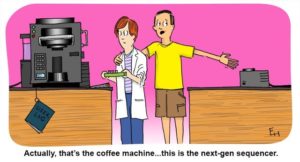
Although never actually on the lab bench,  coffee makers have had a prominent place in every laboratory I have worked in. It is because of my laboratory coffee experiences that I am able to drink coffee at any temperature and at any time of the day. The credit for my preference for really strong coffee (with cream, I confess)  goes to two Russian labmates who insisted on making the coffee every morning and went through two bags of beans a week (we had a very wide awake lab).

Cartoon depicting a coffee machine next to a next-generation sequencer.

In all the labs, keeping track of whose turn it was to buy the coffee supplies was just as important as keeping track of whose turn it was to defrost the freezers. I am sorry to say we never thought of a log book because that might have saved me some frantic early morning trips to the store.

Does your lab have coffee rules or traditions? I’d love to hear what they are.

Evaluating DNA Quantity and Quality in FFPE Tumor Samples After Prolonged Storage Using the ProNexยฎ DNA QC Assay

When tumors are surgically removed from cancer patients, the tumor samples are often stored as formalin-fixed and paraffin-embedded (FFPE) tissue blocks. In many cases, tumor samples need to be analyzed several years after diagnosis in order to develop target treatments. But what happens to the DNA after years of storage in FFPE blocks? How well is the DNA preserved?

Scientists in France tried to answer this question in a recent study published in Virchows Arch. The authors extracted DNA from 46 FFPE tumor samples of lung, colon and the urothelial tract, all stored between 4โ€“6 years at room temperature. They then compared the quantity and quality of the DNA to DNA that had been extracted before storage. Using common fluorimetry and qPCR methods, the authors found that the total amount of DNA extracted decreased by half. In addition, the percentage of amplifiable DNA decreased from 56% to only 15% after prolonged storage. Continue reading “Evaluating DNA Quantity and Quality in FFPE Tumor Samples After Prolonged Storage Using the ProNexยฎ DNA QC Assay”

Rwanda – Africa’s Next Biotech Hub

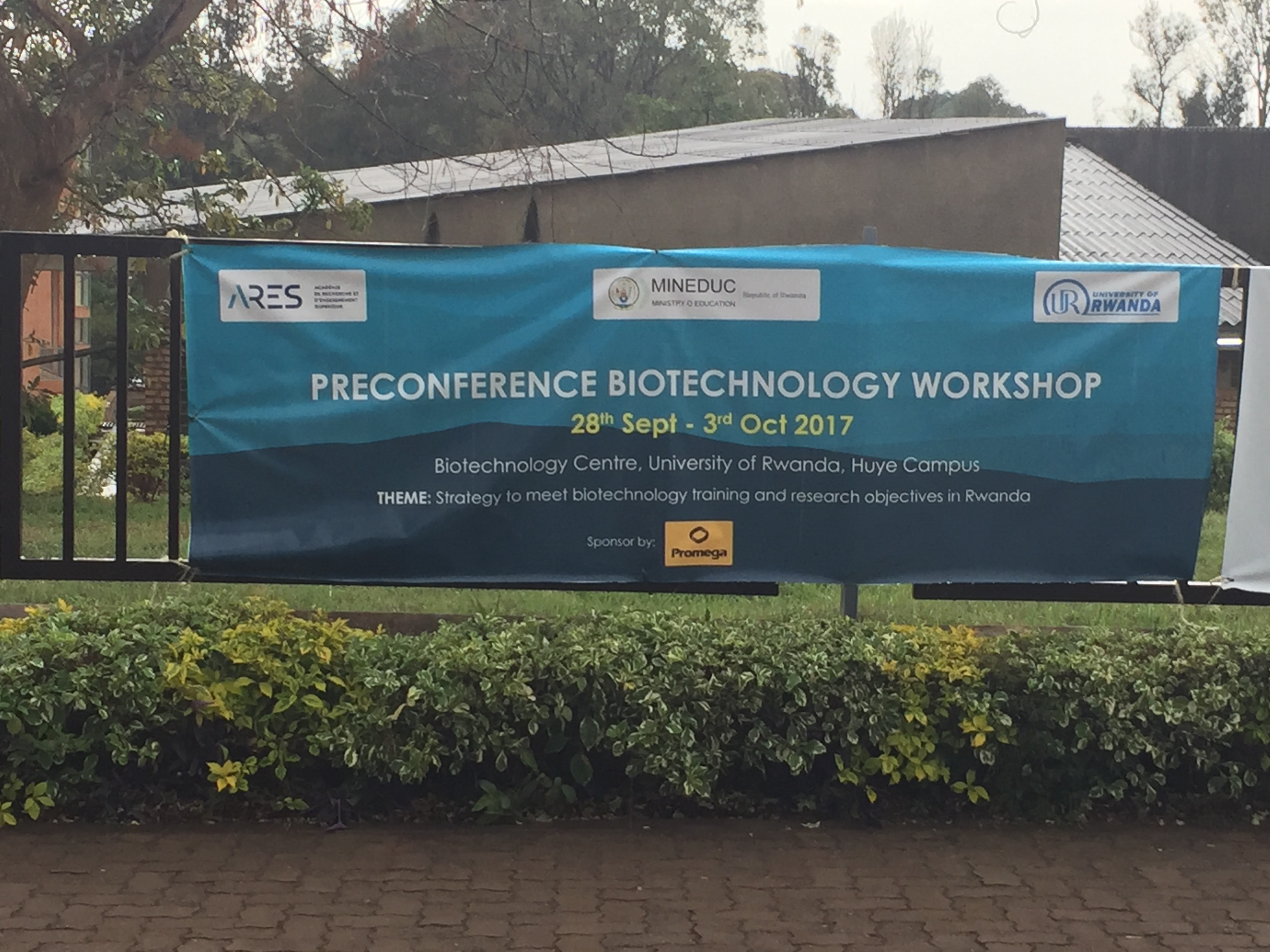
Promega sponsored a preconference workshop for grad and undergrad students at the University of Rwandaโ€™s biotechnology campus in Huye, the capital city of Rwandaโ€™s Southern Province.

More than twenty years after the Rwandan genocide when some 800,000 people were killed in just 100 days by ethnic extremists, Rwanda is on a path to not only healing and order, but also technological advancement. Now politically and functionally stable, which is an exception to the rule in east Africa, the country is recognizing that biotechnology is one of the key drivers to help improve the health and well being of its citizens. Rwanda is focusing on providing the resources and training needed to grow its capabilities in biotechnology, and could be on track to become an African biotech hub.

Rwanda, and its biotech push, caught the attention of Promega by way of customers working with its Belgium-Netherlands-Luxembourg (BNL) branch office. Researchers who are also African ex-patriots working at Universitรฉ libre de Bruxelles (ULB), a French-speaking private research university in Brussels, Belgium, invited Promega to attend a conference in Rwanda earlier this month organized by the Society for the Advancement of Science in Africa (SASA) and the Rwanda Biotechnology Association focusing on translational science and biotechnology advances in Africa. Promega was a main sponsor of the conference along with US medical device manufacturer Medtronic.

Continue reading “Rwanda – Africa’s Next Biotech Hub”

Tick, Tock! The Molecular Basis of Biological Clocks

A long time ago, before the rise of humans, before the first single celled organisms, before the planet even accumulated atmospheric oxygen, Earth was already turning, creating a 24-hour day-night cycle. Itโ€™s no surprise, then, that most living things reflect this cycle in their behavior. Certain plants close their leaves at night, others bloom exclusively at certain times of day. Roosters cock-a-doodle-doo every morning, and Iโ€™m drowsy by 9:00 pm every night. These behaviors roughly align with the daylight cycles, but internally they are governed by a set of highly conserved molecular circadian rhythms.

Jeffrey Hall, Michael Rosbash and Michael Young were awarded the 2017 Nobel Prize in Physiology/Medicine for their discoveries relating to molecular circadian rhythms. The official statement from the Nobel Committee reads, โ€œโ€ฆthis yearโ€™s Nobel laureates isolated a gene that controls the normal daily biological rhythm. They showed that this gene encodes a protein that accumulates in the cell during the night, and is then degraded during the day. [They exposed] the mechanism governing the self-sustaining clockwork inside the cell.โ€ What, then, does this self-sustaining clockwork look like? And how does it affect our daily lives (1)?

Continue reading “Tick, Tock! The Molecular Basis of Biological Clocks”

Better NGS Size Selection

One of the most critical parts of a Next Generation Sequencing (NGS) workflow is library preparation and nearly all NGS library preparation methods use some type of size-selective purification. This process involves removing unwanted fragment sizes that will interfere with downstream library preparation steps, sequencing or analysis.

Different applications may involve removing undesired enzymes and buffers or removal of nucleotides, primers and adapters for NGS library or PCR sample cleanup. In dual size selection methods, large and small DNA fragments are removed to ensure optimal library sizing prior to final sequencing. In all cases, accurate size selection is key to obtaining optimal downstream performance and NGS sequencing results.

Current methods and chemistries for the purposes listed above have been in use for several years; however, they are utilized at the cost of performance and ease-of-use. Many library preparation methods involve serial purifications which can result in a loss of DNA. Current methods can result in as much as 20-30% loss with each purification step. Ultimately this may necessitate greater starting material, which may not be possible with limited, precious samples, or the incorporation of more PCR cycles which can result in sequencing bias. Sample-to-sample reproducibility is a daily challenge that is also regularly cited as an area for improvement in size-selection.

Continue reading “Better NGS Size Selection”

Analysis of a biosimilar mAb using Mass Spectrometry

Several pharmaceutical companies have biosimilar versions of therapeutic mAbs in development. Biosimilars can promise significant cost savings for patients, but the unavoidable differences
between the original and thencopycat biologic raise questions regarding product interchangeability. Both innovator mAbs and biosimilars are heterogeneous populations of variants characterized by differences in glycosylation,oxidation, deamidation, glycation, and aggregation state. Their heterogeneity could potentially affect target protein binding through the Fยดab domain, receptor binding through the Fc domain, and protein aggregation.

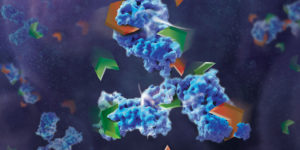
As more biosimilar mAbs gain regulatory approval, having clear framework for a rapid characterization of innovator and biosimilar products to identify clinically relevant differences is important. A recent reference (1) applied a comprehensive mass spectrometry (MS)-based strategy using bottom-up, middle-down, and intact strategies. These data were then integrated with ion mobility mass spectrometry (IM-MS) and collision-induced unfolding (CIU) analyses, as well as data from select biophysical techniques and receptor binding assays to comprehensively evaluate biosimilarity between Remicade and Remsima.

The authors observed that the levels of oxidation, deamidation, and mutation of individual amino acids were remarkably similar. they found different levels of C-terminal truncation, soluble protein aggregates, and glycation that all likely have a limited clinical impact.  Importantly, they identified more than 25 glycoforms for each product and observed glycoform population differences.

Overall the use of mass spectrometry-based analysis provides rapid and robust analytical information vital for biosimilar development. They demonstrated the utility of our multiple-attribute monitoring workflow using the model mAbs Remicade and Remsima and have provided a template for analysis of future mAb biosimilars.

1.ย Pisupati, K. et. al. (2017) A Multidimensional Analytical Comparison of Remicade and the Biosimilar Remsima. Anal. Chemย 89, 38โ€“46.

Your Kid Can Become a Citizen Scientist with These 6 Apps

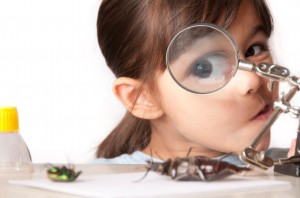
Has your kid ever asked you what you do in the lab all day? (โ€œHmmโ€ฆgood question, what am I doing all day?โ€) A simplified answer might sound something like this: I observe, ask a question, collect data, and use those data to answer the question (or at least try!). The scientific method may be difficult to explain to a kindergartner, but you can always start by encouraging them to observe the world around them, ask lots of questionsโ€”and even help collect data. In fact, with the help of technology, your child can become a scientist without 7 long years in graduate school or ever setting foot in a lab. A โ€œcitizen scientistโ€, that is. All you need is a smart phone. Here is a list of apps that can make your kid, grandma, neighbor, anyone, become a citizen scientist by helping professional scientists collect data for their research. The apps are all free to download, easy to use and have a real impact on the scientific community.

1. iNaturalist:

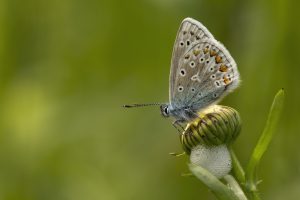
Are you sick of not knowing the answer when your child asks โ€œWhatโ€™s this bug?โ€ on a nature walk? You need the iNaturalist app. Hereโ€™s how it works: You observe an interesting plant/insect/animal, take a photo, and the app identifies the name of the species and some basic information about it. There is also the option to share your finding with other users and they can suggest an identification. iNaturalist shares your findings with scientific data repositories like the Global Biodiversity Information Facility to help scientists understand biodiversity. You can even set up scavenger hunt-like activities: iNaturalist birthday party anyone?

Continue reading “Your Kid Can Become a Citizen Scientist with These 6 Apps”

The Bones Didnโ€™t Lie: DNA Proves Viking Warrior was a Woman

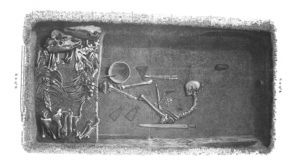
There is a grave near the Swedish town of Birka that was the final resting place of a Viking warrior. The grave, called Bj 581, was filled with weapons, including a sword, battle knife, axe, armor-piercing arrows, a spear and two shields as well as a full set of gaming pieces with a board, and the skeletons of two horsesโ€”a mare and a stallion. First described in the late 1800s, this grave has been held up as the example of what a Viking warrior burial site would look like because it was so well furnished.

Illustration by Evald Hansen based on the original plan of grave Bj 581 drawn by Hjalmar Stolpe; published in 1889. From Hedenstierna-Jonson, C. et al. (2017) Am. J. Phys. Anthropol. 2017, 1โ€“8.
Continue reading “The Bones Didnโ€™t Lie: DNA Proves Viking Warrior was a Woman”

Your New Best Research Partner: The Structural Genomics Consortium

Research surrounding drug discovery has historically been highly competitive and expensive. Unfortunately, many late-stage drug failures have occurred over recent years, often due to lack of efficacy. These failures have left the industry searching for new means by which to improve early drug discovery efforts aimed at understanding the drug target and its role in disease. One idea that is gaining traction is partnerships to openly share information at the early, precompetitive stages of drug discovery.

I used to think of open access only in terms of publishing data and informationโ€”online sites where you could freely access data without a subscription or membership, and without payment.

Structural Genomics Consortium logo.

Meet the Structural Genomics Consortium (SGC), the international partnership thatโ€™s taking open access to a new level in order to advance scientific research for scientists working in a variety of disciplinesโ€”structural genomics and beyond. The SGC might just become your new, best laboratory research partner. Continue reading “Your New Best Research Partner: The Structural Genomics Consortium”

One Year Later: Living Organ Donor & Recipient Share Their Story

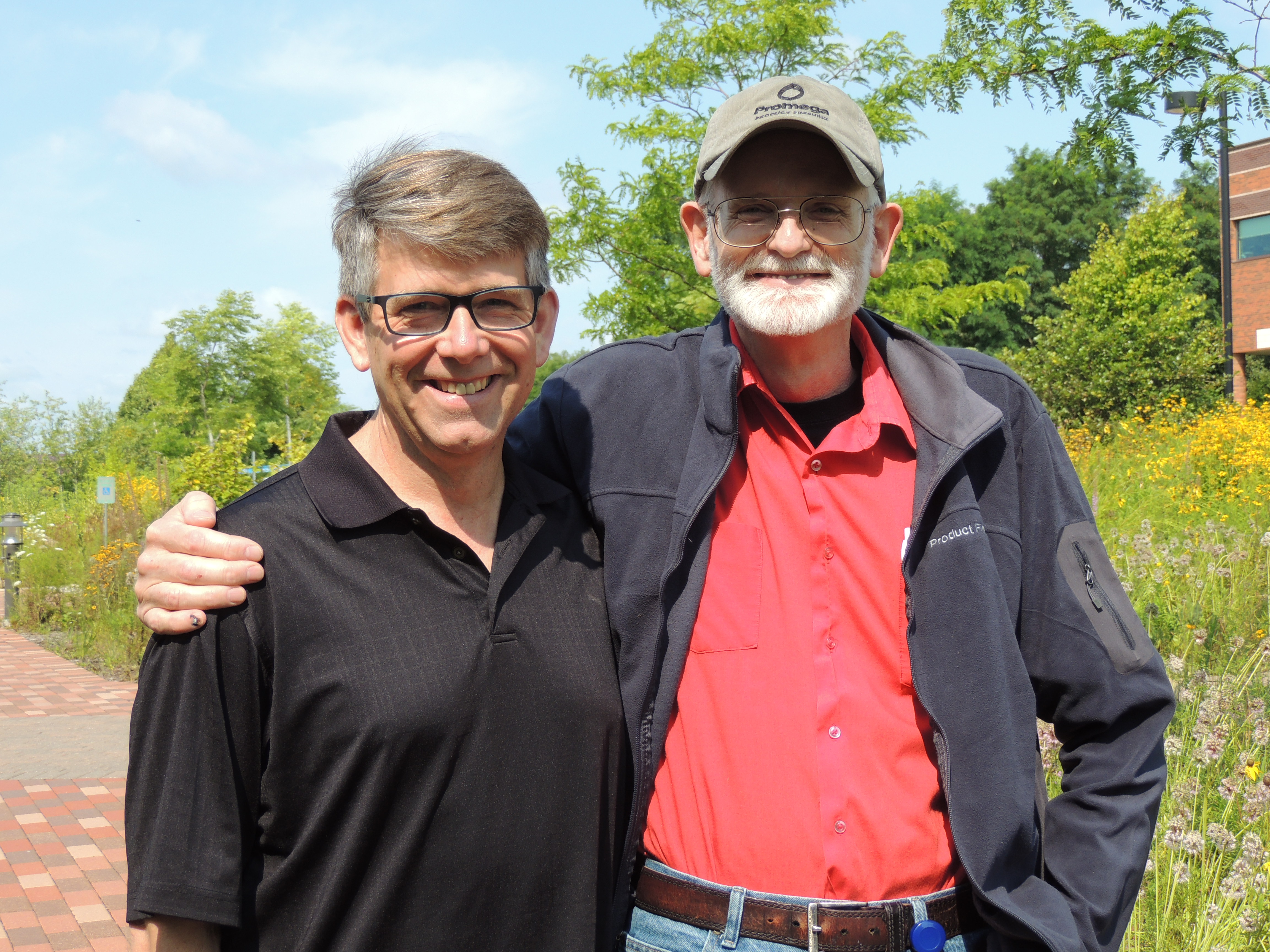
Jim and John one year later.
John Van Herwynen, Promega Senior Production Scientist, and Jim Stevens, Product Finishing Project Coordinator, on the Promega Madison campus one year after John donated one of his kidneys to Jim.

This article was jointly written by science writer, Nicole Sandler, and Corporate Affairs Communication Specialist, Karen Burkhartzmeyer.

One year ago, on September 14, 2016, two people once connected only through the common denominator of their workplace began sharing a bond that very few people ever experience. That was the day that Jim Stevens, Product Finishing Project Coordinator at Promega Madison, received a kidney from living donor John Van Herwynen, a Promega Senior Production Scientist. The last year, full of emotional successes but also some challenging setbacks, is one that has transformed both of their lives. Organ donor and organ recipient are marking todayโ€™s important milestone by sharing their remarkable story. Continue reading “One Year Later: Living Organ Donor & Recipient Share Their Story”