You have probably heard a lot of excitement over NASA’s recent announcement about the discovery of seven earth-size planets found orbiting around the star TRAPPIST-1, which is part of the constellation Aquarius.
These exoplanets are notable because they exist within the habitable zone of the star (nicknamed Goldilocks planets because this area is not too hot and not too cold) and are probably rocky with the potential to contain water on their surface.
A lot of the enthusiasm revolves around the hope that one of these exoplanets might harbor extraterrestrial life or could be suitable for human inhabitants. Of course, many further observations must be made to determine if these scenarios are plausible, not to mention the huge advances in technology that would need to occur so we could actually verify the planetary conditions or send humans 40 light-years away.
Imagine the pleasure Barbara Bielec, the BTC Institute’s K-12 Program Director and co-coordinator of the Dane County Youth Apprenticeship Program in Biotechnology (YAP-Biotechnology), felt when reading this recent message from Sharon Tang, one of our apprentice’s mentors:
“I am unbelievably proud to let you know that Madhu won not only first place for the biological science projects, but also the GRAND PRIZE at the Capital Science and Engineering Fair this weekend! She was at the fair from 7:30am until 4:30pm presenting her work done in our lab and did a fantastic, eloquent job speaking about her project. This was such an impressive honor – she won among over 20 competing students in the region, earned a cash award, and will be competing as a finalist at the Intel international science fair in May. I’m sure she’ll tell you, but I am just over the moon and wanted to share the news as well. Attaching a photo I took of her in action.”
A second year student in the program, Madhu is a senior at Middleton High School. Since November, 2015, she has been working in the lab of Dr. Susan Thibeault in the Department of Surgery, Division of Otolaryngology – Head & Neck Surgery at the University of Wisconsin-Madison.
When I was a post-doc at UT Southwestern, I was fortunate to interact with two Nobel prize winners, Johann Deisenhofer and Fred Gilman. Johann once helped me move a -80°C freezer into his lab when we lost power in my building. I once replaced my boss at small faculty mixer with a guest speaker and had a drink with Fred Gilman and several other faculty members from around the university. Among the faculty, one professor had a cell phone on his belt, an odd sight in 1995. Fred Gilman asked him what it was and why he had it. It was so his lab could notify him of good results anytime of the day. Fred laughed and told him to get rid of it – if it’s good data, it will survive until morning.
I was reminded of this story when I read a recent paper by Bodle, C.R. et al (1) about the development of a NanoBiT® Complementation Assay (2) to measure interactions of Regulators of G Protein Signaling (RGS) with Gα proteins in cells. (Fred Gilman was the first to isolate a G protein and that led to him being a co-recipient of the Nobel Prize in 1994). The authors created over a dozen NanoBiT Gα:RGS domain pairs and found they could classify different RGS proteins by the speed of the interaction in a cellular context. The interactions were readily reversible with known inhibitors and were suitable for high-throughput screening due to Z’ factors exceeding 0.5. The study paves the way for future work to identify broad spectrum RGS domain:Gα inhibitors and even RGS domain-specific inhibitors. This is the second paper applying NanoBiT Technology to GPCR studies (3).
A Little Background… A primary function of GPCRs is transmission of extracellular signals across the plasma membrane via coupling with intracellular heterotrimeric G proteins. Upon receptor stimulation, the Gα subunit dissociates from the βγ subunit, initiating the cascade of downstream second messenger pathways that alter transcription (4). The Gα subunits are actually slow GTPases that propagate signals when GTP is bound but shutdown and reassociate with the βγ subunit when GTP is cleaved to GDP. This activation process is known as the GTPase cycle. G proteins are extremely slow GTPases.
Imagine driving in your car and suddenly not recognizing where you were going and having no idea how to find your way home. What if you looked across the breakfast table at your spouse and no longer recognized them? Or maybe you have to brace yourself every time you visit your parent, waiting for the day when they won’t know who you are. This is the reality for the estimated 50 million (worldwide) Alzheimer’s disease sufferers and their families.
In a world with an aging population, Alzheimer’s is a growing problem. Recent estimates suggest that 11% of people over the age of 65 have Alzheimer’s disease. For people 85 and older, that number increases to 32% (1).
Alzheimer’s disease is a devastating degenerative brain disease. It is the most common cause of dementia and is characterized by a decline in cognitive skills such as memory, language skills, communication and problem-solving abilities. These symptoms make it difficult for people with Alzheimer’s to perform everyday activities. It also is difficult to diagnose, even more, difficult to treat, and, as of now, impossible to cure.
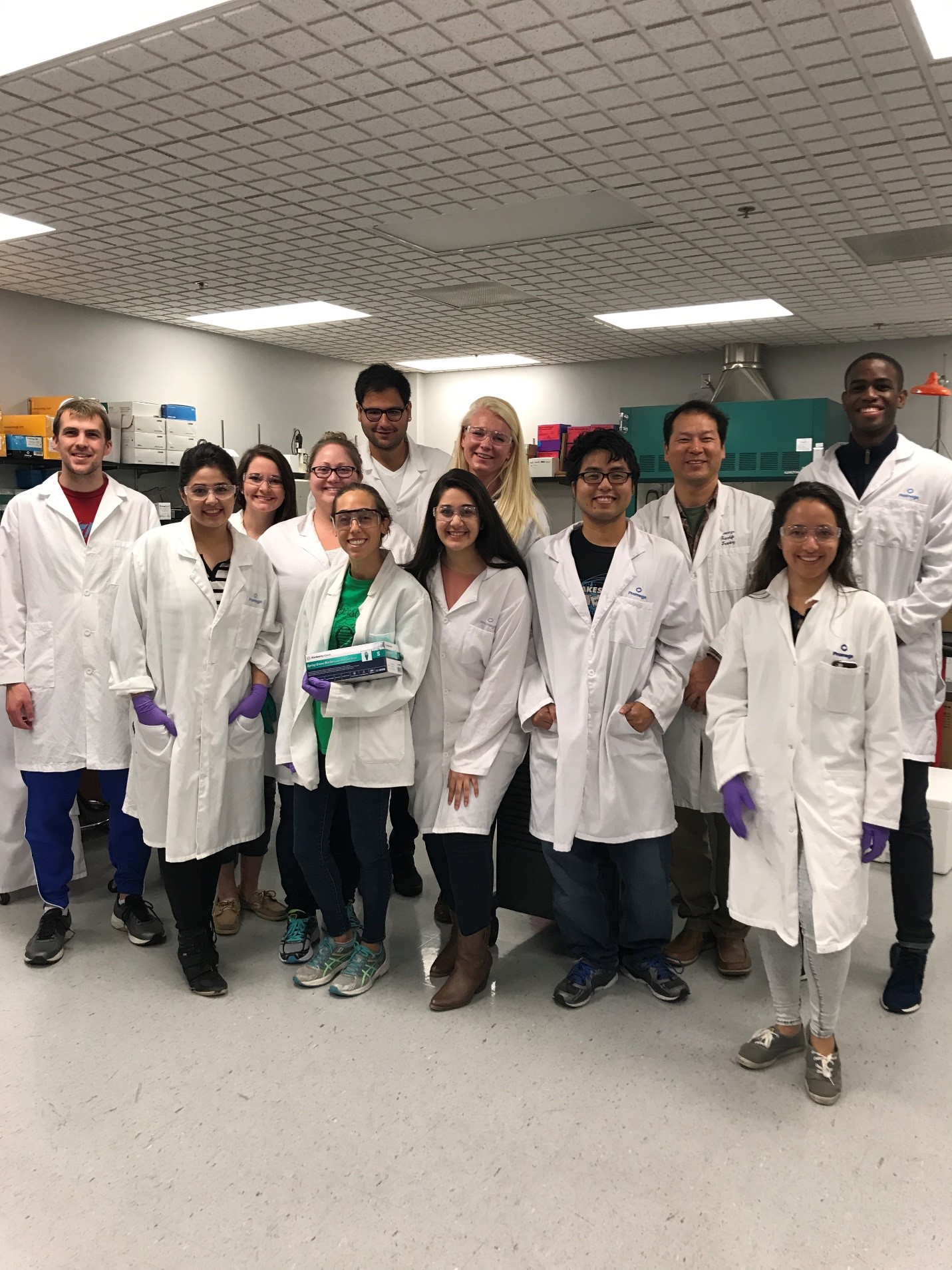
The On the Road (OTR) BTC Institute Biotechnology Field Trips (BFT) program is rolling right along! We are doing our best to brave the winter weather to take hands-on science activities all over the state of Wisconsin.
The BTC Institute BFT program served over 3,400 students last year, most of them here at the BTC in Fitchburg. That said, each year the OTR part of the program is growing in order to serve schools that cannot travel here for various reasons, such as distance, bus costs and the need to minimize out-of-school time.
A cold case that had stumped investigators for nearly 41 years was solved last month. The 1976 sexual assault and murder of Karen Klass, ex-wife of Righteous Brother’s singer Bill Medley, shocked her Hermosa Beach, CA community and captured the public interest. Failing to make any arrests for decades, detectives were able to use DNA evidence to eliminate suspects in 1999 but were unable to find a database match. In 2011, investigators decided to try a new technique called a familial search and, after a few attempts, successfully identified the perpetrator.
Familial searching (FS) involves taking a DNA profile obtained from a crime scene and comparing it to profiles in CODIS and other databases to identify male relatives. The DNA profile of an immediate family member, such as a sibling, parent or child, can provide a match that generates new leads for law enforcement. Detectives can then collect additional evidence to narrow down that new pool of individuals to a single suspect.
Last May I wrote a blog featuring a Q & A about FS provided by Mr. Rockne Harmon, a respected member of the forensic community and passionate advocate for FS. Supporters, like Harmon, and opponents agree that this method of obtaining matches to DNA evidence has demonstrated scientific precision and successful outcomes, as in the Klass case. However, it is still considered controversial and most states have not implemented specific policies regarding the application of FS to criminal investigations. So why isn’t the use of FS more widespread?
Most of us are aware that the human body is covered by and full of microorganisms. And we understand that most of these microorganisms are helpful, both in terms of competition with and protection against invading microorganisms, and in the gut, as agents of digestion.
Bacillus subtilis, an example of Firmicutes, and not a good gut microbe. By Y tambe (original uploader) – Own work, CC BY-SA 3.0, https://commons.wikimedia.org/w/index.php?curid=49528
In the past decade, however, research has brought compelling details implicating gut microbes in obesity, cancer, insulin resistance and such central nervous system disorders as depression, austism spectrum disorder and multiple sclerosis (Adnan, S. et al.). Yet the mechanisms and details of these associations have not been fully demonstrated.
Gut microbes have been proven to be connected to thickening of heart vasculature, known as atherosclerosis. Researchers have demonstrated that bacteria metabolize choline and L-carnitine from food to trimethylamine, which crosses the gut barrier into circulation and reaches the liver. In the liver, trimethylamine is metabolized to the atherogenic molecule triethylamine-N-oxide (Gregory, J.C. et al., Brown and Hazen). These studies are among the few that provide a direct connection between gut microbes and a pathological condition.
The tactic of “telling a good story” is nothing new within the business of selling, marketing and even educating about science. The word itself, “storytelling,” achieved buzzword status a few years ago in the corporate world, so it’s no surprise that it now touches industry scientists. But the importance of telling a good story within the realm of peer-reviewed scientific papers? That is something new, and it may impact how scientists write up their results from this point forward.
In a provocative scientific study published in PLOS ONE in December 2016, researchers from the University of Washington showed that “Narrative Style Influences Citation Frequency in Climate Change Science.” Perhaps the results they report are unique to climate change science—an area of science especially susceptible to public perception. But then again, perhaps not. This paper may be worth considering no matter what field of science you call your own.
The authors—Ann Hillier, Ryan Kelly, and Terrie Klinger—used metrics to test their hypothesis that a more narrative style of writing in climate change research papers is more likely to be influential, and they used citation frequency as their measure of influence. A sample of 732 abstracts culled from the climate change literature and published between 2009 and 2010 was analyzed for specific writing parameters. The authors concluded that writing in a more narrative style increases the uptake and influence of articles in this field of science and perhaps in scientific literature across the board.
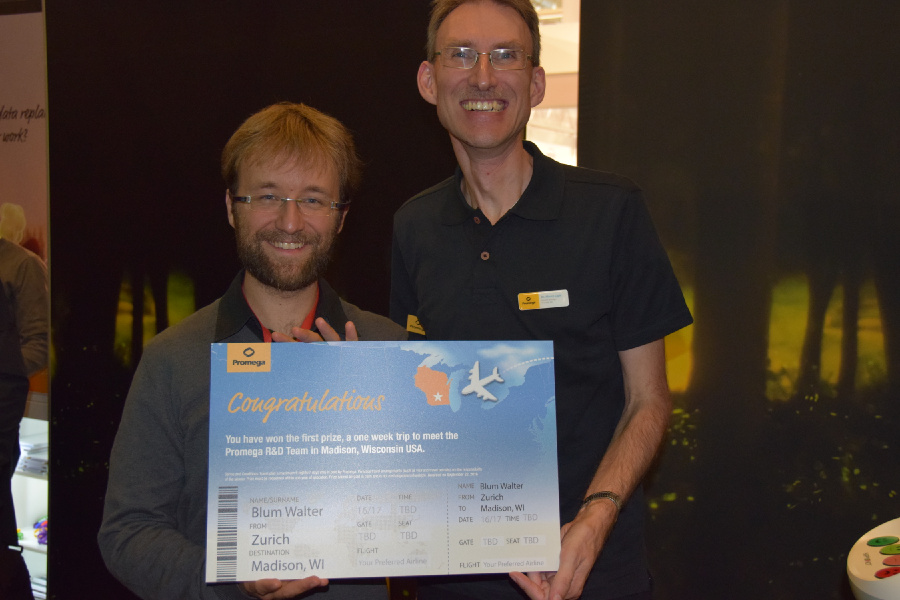
In 2014, Promega created a special incentive to reward field science consultants who help the scientific community take advantage of our on-site stocking program. The winners had to meet ambitious criteria to receive 2 round-trip tickets to anywhere in the world, a week of paid vacation and spending money. Our four winners will share photos and stories about their journeys on the Promega Connections Blog.
Today’s travelogue is Part II of the adventures of Amy Parman, a regional sales manager, who used her award to travel to Ecuador and the Galapagos Islands.
Day 7: Urbina Bay, Isabela Island & Punta Mangle, Fernandina Island – Today was another early morning wake up, this time to the soothing strains of Journey. We had a quick breakfast and jumped in the dinghy for an exploratory ride. We passed a tree full of so many pelicans covering the branches that they looked as though they could be fruit, ripe for the picking. Our dinghy slowly passed many more sea turtles, golden cownose rays, small eagle rays, marine iguanas and Sally Lightfoot crabs (stunningly red against the black lava).
We also came across several sea lions sleeping away the morning in a comfy mangrove branch bed. More striated herons were perched in the mangroves hunting fish below and three playful sea lion pups swam right up to our feet dangling over the dinghy as if to say, “jump out and play with us.” Bayron said they are likely around ten months old and their mother has left them in the protected bay while she goes out to fish.
Sea lion pup in Urbina Bay, Isabela Island.
After the ride, we had a chance to snorkel for a couple of hours and did, in fact, swim right along with a very fast and playful sea lion. The sea lions were pretty big, and seemed even more so when we were in the water with them. It was quite the experience to have him dart all around us while we swam. Marine iguanas were also swimming with us and clinging to the lava eating seaweed off the rocks about eight feet deep. There were loads of fish all around and by now we’ve had a few shark sightings among the group. Interestingly, the shark species around the Galapagos, while numerous, do not regard humans as a food source. It has become a tour goal to find as many as we can and, while a challenge, we do catch glimpses of the hammerheads and reef sharks that are never too far away. Continue reading “Travelogue Galapagos Part II: An Incredible Experience in Paradise”
Becky Guy (keyboard), Randy Dimond (left), Eric Vincent (Trombone) play for the Promega Employee Recognition Meeting as part of Lead Generation (now Major Groove).
Musicians wait onstage as the sound tech adjusts the cables around them. He signals “OK” and runs back through the seats of the empty auditorium to the mixing board. The musicians all dressed in black, instruments in hand, prepare to play. Four sharp whacks from the drummer’s sticks and music fills the space. Horns, keyboards, electric guitar, bass, and harmonica back singers as they belt out the upbeat earworm Drive It Like You Stole It. They sound great and make it look pretty effortless too, which is why it’s hard to believe these “rock stars” are also scientists, marketers, IT specialists, lawyers, you name it, who make up the Promega employee band, Lead Generation, known now as “Major Groove”.
“Lead Generation is just one of the many opportunities at Promega that make it truly unique,” says Kris Zimmerman, a research scientist who sings and plays trumpet with the band. “Any kind of expression of creativity can help you to have different perspectives and be a better problem solver. Fostering an environment where collaboration and creativity are rewarded really helps to create a sense of belonging, and creates a vibe of excitement that you don’t find just anywhere. Plus how cool is it to tell people that you play in a band? At work?”
XWe use cookies and similar technologies to make our website work, run analytics, improve our website, and show you personalized content and advertising. Some of these cookies are essential for our website to work. For others, we won’t set them unless you accept them. To learn more about our approach to Privacy we invite you to Read More
By clicking “Accept All”, you consent to the use of ALL the cookies. However you may visit Cookie Settings to provide a controlled consent.
We use cookies and similar technologies to make our website work, run analytics, improve our website, and show you personalized content and advertising. Some of these cookies are essential for our website to work. For others, we won’t set them unless you accept them. To find out more about cookies and how to manage cookies, read our Cookie Policy.
If you are located in the EEA, the United Kingdom, or Switzerland, you can change your settings at any time by clicking Manage Cookie Consent in the footer of our website.
Necessary cookies are absolutely essential for the website to function properly. These cookies ensure basic functionalities and security features of the website, anonymously.
Cookie
Duration
Description
cookielawinfo-checbox-analytics
11 months
This cookie is set by GDPR Cookie Consent plugin. The cookie is used to store the user consent for the cookies in the category "Analytics".
cookielawinfo-checbox-functional
11 months
The cookie is set by GDPR cookie consent to record the user consent for the cookies in the category "Functional".
cookielawinfo-checbox-others
11 months
This cookie is set by GDPR Cookie Consent plugin. The cookie is used to store the user consent for the cookies in the category "Other.
cookielawinfo-checkbox-advertisement
1 year
The cookie is set by GDPR cookie consent to record the user consent for the cookies in the category "Advertisement".
cookielawinfo-checkbox-necessary
11 months
This cookie is set by GDPR Cookie Consent plugin. The cookies is used to store the user consent for the cookies in the category "Necessary".
cookielawinfo-checkbox-performance
11 months
This cookie is set by GDPR Cookie Consent plugin. The cookie is used to store the user consent for the cookies in the category "Performance".
gdpr_status
6 months 2 days
This cookie is set by the provider Media.net. This cookie is used to check the status whether the user has accepted the cookie consent box. It also helps in not showing the cookie consent box upon re-entry to the website.
lang
This cookie is used to store the language preferences of a user to serve up content in that stored language the next time user visit the website.
viewed_cookie_policy
11 months
The cookie is set by the GDPR Cookie Consent plugin and is used to store whether or not user has consented to the use of cookies. It does not store any personal data.
Analytical cookies are used to understand how visitors interact with the website. These cookies help provide information on metrics the number of visitors, bounce rate, traffic source, etc.
Cookie
Duration
Description
SC_ANALYTICS_GLOBAL_COOKIE
10 years
This cookie is associated with Sitecore content and personalization. This cookie is used to identify the repeat visit from a single user. Sitecore will send a persistent session cookie to the web client.
vuid
2 years
This domain of this cookie is owned by Vimeo. This cookie is used by vimeo to collect tracking information. It sets a unique ID to embed videos to the website.
WMF-Last-Access
1 month 18 hours 24 minutes
This cookie is used to calculate unique devices accessing the website.
_ga
2 years
This cookie is installed by Google Analytics. The cookie is used to calculate visitor, session, campaign data and keep track of site usage for the site's analytics report. The cookies store information anonymously and assign a randomly generated number to identify unique visitors.
_gid
1 day
This cookie is installed by Google Analytics. The cookie is used to store information of how visitors use a website and helps in creating an analytics report of how the website is doing. The data collected including the number visitors, the source where they have come from, and the pages visted in an anonymous form.
Advertisement cookies are used to provide visitors with relevant ads and marketing campaigns. These cookies track visitors across websites and collect information to provide customized ads.
Cookie
Duration
Description
IDE
1 year 24 days
Used by Google DoubleClick and stores information about how the user uses the website and any other advertisement before visiting the website. This is used to present users with ads that are relevant to them according to the user profile.
test_cookie
15 minutes
This cookie is set by doubleclick.net. The purpose of the cookie is to determine if the user's browser supports cookies.
VISITOR_INFO1_LIVE
5 months 27 days
This cookie is set by Youtube. Used to track the information of the embedded YouTube videos on a website.
Performance cookies are used to understand and analyze the key performance indexes of the website which helps in delivering a better user experience for the visitors.
Cookie
Duration
Description
YSC
session
This cookies is set by Youtube and is used to track the views of embedded videos.
_gat_UA-62336821-1
1 minute
This is a pattern type cookie set by Google Analytics, where the pattern element on the name contains the unique identity number of the account or website it relates to. It appears to be a variation of the _gat cookie which is used to limit the amount of data recorded by Google on high traffic volume websites.