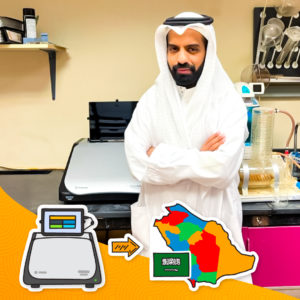
When setting up a new research lab, many researchers opt to outfit their new space with the technology and materials that got them through their academic studies. After graduating with his PhD from the University of Wisconsin-Madison, Dr. Tawfiq Alsulami will be traveling with a GloMax® Navigator Microplate Luminometer across the globe to continue his work as Assistant Professor in the Department of Food Science and Nutrition at King Saud University.Dr. Alsulami and his new lab at KSU will be using the NanoBiT® system to develop novel assays for the future of food testing.
Dr. Tawfiq Alsulami answered a few of our questions regarding his upcoming research at KSU and offered a few pieces of advice to new labs. Read the Q&A below:
Today’s blog is written by KCL iGEM Team Leaders Alya Masoud Abdelhafid and Luke Bateman. Both in their third and final year at King’s College London, Alya is completing a BSc in Nutrition and Luke a BSc in Biochemistry.
Every year, the International Genetically Engineered Machine competition (iGEM) offers high-school, undergraduate and post-graduate students the opportunity to conduct independent research using synthetic biology and genetic engineering to develop solutions to local and global problems.
More than 350 teams from around the world participate in iGEM, which culminates in a presentation at the global iGEM Giant Jamboree, attended by more than 6000 people every year. Here, novel research is presented amongst pioneers in synthetic biology, and outstanding projects are awarded prizes for their contribution to the greater scientific community. iGEM teams consistently produce ground-breaking solutions to modern challenges, many of which facilitate the development of multimillion-dollar companies and start-ups.
We are the King’s College London (KCL) iGEM team and are honored to be involved in the innovative and prestigious iGEM community.
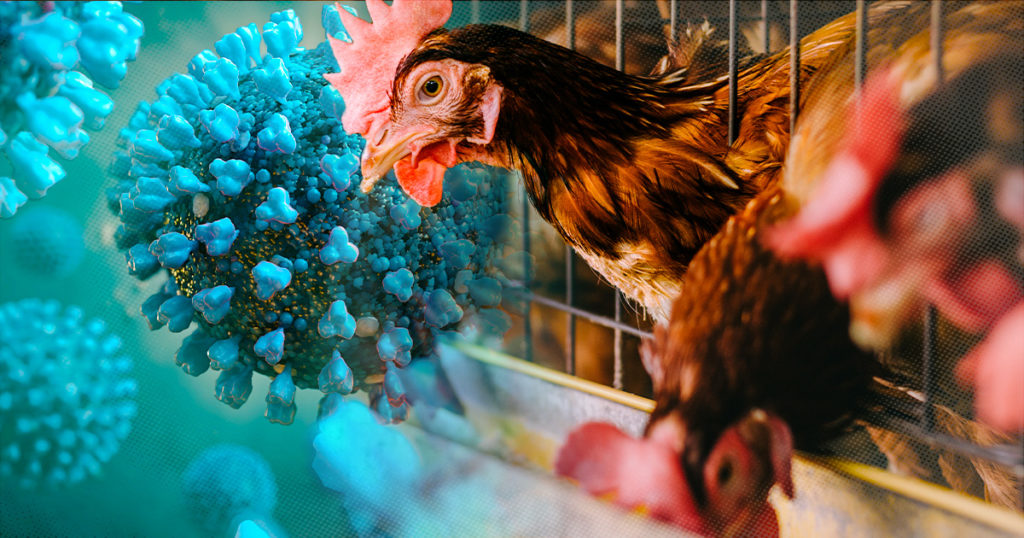
In January 2022, the state of South Carolina reported a case of highly pathogenic avian influenza in a wild bird—the first detected case of this virus subtype in the United States since 2016, likely introduced from Canada late in 2021. Since then, the virus has spread across the U.S., affecting both coasts with multiple separate introductions. As of 2024, this outbreak continues to cause significant issues, and has even reached dairy cows in Texas, Kansas, Michigan, New Mexico, South Dakota, Idaho, North Carolina, and Ohio.
Welcome back to Part 2 of our March Women in Science series! In Part 1 of this series, Breaking the Bias: Addressing the STEM Gender Gap, we took a closer look at gender stereotypes and male-dominated culture and their roles as key factors in perpetuating the gender gap in STEM. In this installment, we will be continuing the conversation about the STEM gender gap and focusing on the key issue of fewer female role models in STEM.
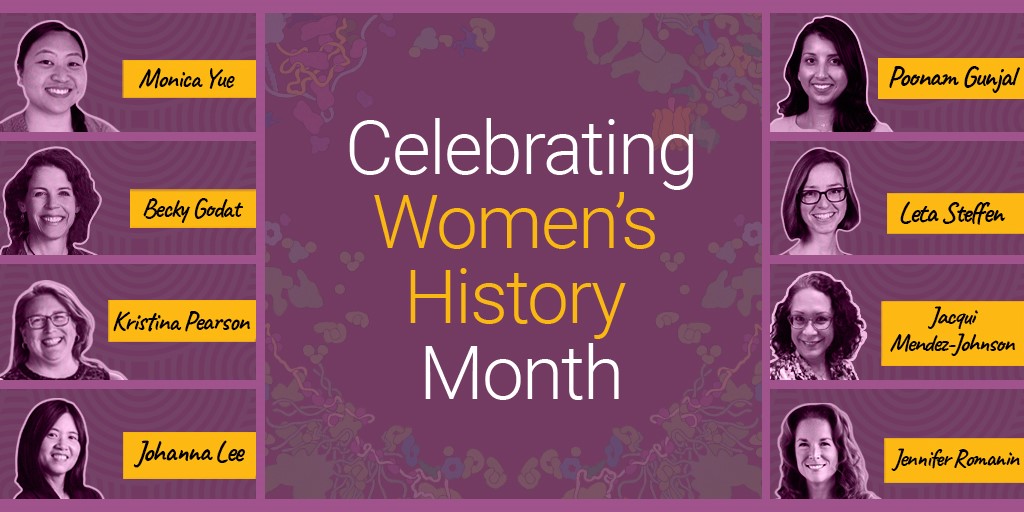
Part of my exploration of this topic included having conversations with a handful of my female colleagues at Promega about the about the challenges women in STEM face. These colleagues were (in no particular order): Monica Yue, Technical Services Scientist; Poonam Gunjal, Manager, Regional Sales; Becky Godat, Instrumentation Scientist; Leta Steffen, Supervisor, Scientific Applications; Kris Pearson, Director, Manufacturing & Custom Operations; Jacqui Mendez-Johnson, Quality Assurance Scientist; Johanna Lee, Content Lead, Marketing Services; and Jen Romanin, Sr. Director, IVD Operations and Global Support Services.
What Does A Scientist Look Like?
If someone asked you to draw a scientist, what would that person look like? Over the past 5 decades, this question has been asked of over 20,000 students across all grades from kindergarten through 12th, and evaluated in nearly 80 studies. A meta-analysis of these decades of studies revealed some interesting findings.
Between 1966 and 1977, of the 5,000 drawings collected from students during the original 11-year study, only 28 of those 5,000 drawings (less than 1% of the drawings) depicted a female scientist, with all 28 of them being drawn by girls.
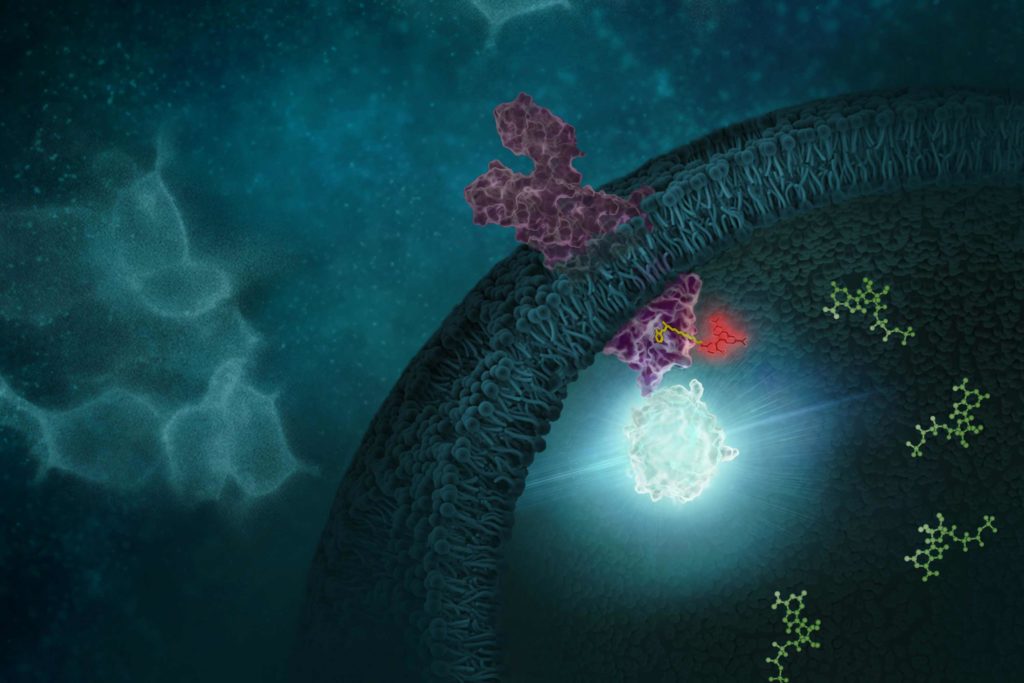
A new study published in Nature Chemical Biology shows that the most commonly mutated protein in cancer might not be as “undruggable” as previously believed. Promega R&D scientists collaborated with the research group led by Kevan Shokat at the University of California – San Francisco to develop strategies for targeting mutants of KRAS that have evaded previous drug discovery efforts. Their paper opens new possibilities for developing small molecule inhibitors against KRAS(G12D) and other clinically significant mutants.
While PROTACs might not be the topic of conversation at high society cocktail parties, or merit cover stories in glamor magazines, they’re certainly shaking up the drug discovery industry. PROTAC® degraders, together with related compounds like molecular glues and LYTACs, are the basic tools for a targeted protein degradation strategy. Research in this field is advancing rapidly, enabling the development of therapies for disease targets disease targets previously thought to be “undruggable”. This blog post provides an overview of PROTACs based on frequently asked questions.
Lynch syndrome, named for American physician Dr. Henry T. Lynch, is a hereditary condition that causes a predisposition to several types of cancer, most commonly colorectal but to other types as well, including ovarian, endometrial and stomach cancer. The root of this disorder lies in a genetic defect known as DNA mismatch repair deficiency (or dMMR), which affects the process by which mistakes are repaired when our DNA is copied during cell division. People with Lynch syndrome can have up to an 80% increased lifetime risk of developing colorectal cancer, and are more susceptible to developing colorectal and other types of cancers at an earlier age. Accounting for 3-5% of all colon cancers, Lynch syndrome is an excellent target for preventative treatment, like a vaccine. Research exploring a Lynch syndrome vaccine seeks to harness the body’s innate immune response to target tumor cells and has yielded promising results.
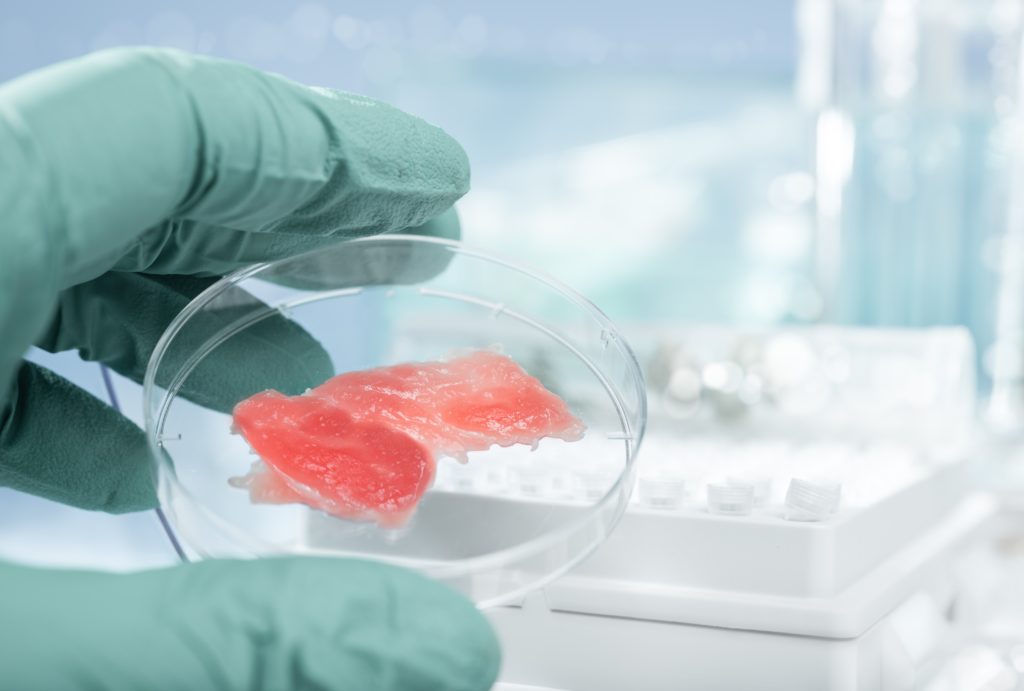
Cultured meat grows in a plastic dish in laboratory conditions.
The biotechnology industry has been powering through barriers standing between the lab and the dinner plate as cultured meat advances toward the market. Challenges like scaling up the technology and getting products to the market are significant, but future food demands are an even bigger obstacle. Earth’s population is projected to reach 10 billion people by 2050. Our current agricultural practices will not be able to meet the food demands. Therefore, we need to find alternative ways to produce food–like “growing” it in the lab.
During the summer after my junior year of undergrad, I worked as a marketing intern for a health education nonprofit. I was a biology major, but by this time I knew I wanted to pursue a career in science writing, and this internship was my first real-world experience. It was an amazing summer, and by the time I walked into my exit interview, I was confident that my supervisor was pleased with my performance. However, she shared a piece of feedback that caught me off guard.
Within the broader March-long observance of Women’s History Month, March 8th marks the annual International Women’s Day. It’s a day of both celebration and reflection, dedicated not only to honoring the accomplishments and contributions that women bring to the table, but also to critical analysis of the areas where gender inequality still persists.
Although we’ve made big strides in the last few decades, women are still significantly under-represented in many fields of science, technology, engineering and mathematics (STEM). Women make up nearly 50% of the US workforce, but less than 30% of that number are STEM workers, and with women comprising less than 30% of the world’s researchers.
In honor of this year’s theme for International Women’s Day, Break the Bias, and as a woman in science myself, I was interested in exploring the challenges of anyone who identifies and lives as a woman in science, and the key factors that continue to perpetuate the gender gap in STEM fields. I invited eight of my female colleagues at Promega—diverse in roles, age, educational background, ethnicity, and experience—to sit down with me (virtually) to learn more about them and their experiences as women in STEM.
XWe use cookies and similar technologies to make our website work, run analytics, improve our website, and show you personalized content and advertising. Some of these cookies are essential for our website to work. For others, we won’t set them unless you accept them. To learn more about our approach to Privacy we invite you to Read More
By clicking “Accept All”, you consent to the use of ALL the cookies. However you may visit Cookie Settings to provide a controlled consent.
We use cookies and similar technologies to make our website work, run analytics, improve our website, and show you personalized content and advertising. Some of these cookies are essential for our website to work. For others, we won’t set them unless you accept them. To find out more about cookies and how to manage cookies, read our Cookie Policy.
If you are located in the EEA, the United Kingdom, or Switzerland, you can change your settings at any time by clicking Manage Cookie Consent in the footer of our website.
Necessary cookies are absolutely essential for the website to function properly. These cookies ensure basic functionalities and security features of the website, anonymously.
Cookie
Duration
Description
cookielawinfo-checbox-analytics
11 months
This cookie is set by GDPR Cookie Consent plugin. The cookie is used to store the user consent for the cookies in the category "Analytics".
cookielawinfo-checbox-functional
11 months
The cookie is set by GDPR cookie consent to record the user consent for the cookies in the category "Functional".
cookielawinfo-checbox-others
11 months
This cookie is set by GDPR Cookie Consent plugin. The cookie is used to store the user consent for the cookies in the category "Other.
cookielawinfo-checkbox-advertisement
1 year
The cookie is set by GDPR cookie consent to record the user consent for the cookies in the category "Advertisement".
cookielawinfo-checkbox-necessary
11 months
This cookie is set by GDPR Cookie Consent plugin. The cookies is used to store the user consent for the cookies in the category "Necessary".
cookielawinfo-checkbox-performance
11 months
This cookie is set by GDPR Cookie Consent plugin. The cookie is used to store the user consent for the cookies in the category "Performance".
gdpr_status
6 months 2 days
This cookie is set by the provider Media.net. This cookie is used to check the status whether the user has accepted the cookie consent box. It also helps in not showing the cookie consent box upon re-entry to the website.
lang
This cookie is used to store the language preferences of a user to serve up content in that stored language the next time user visit the website.
viewed_cookie_policy
11 months
The cookie is set by the GDPR Cookie Consent plugin and is used to store whether or not user has consented to the use of cookies. It does not store any personal data.
Analytical cookies are used to understand how visitors interact with the website. These cookies help provide information on metrics the number of visitors, bounce rate, traffic source, etc.
Cookie
Duration
Description
SC_ANALYTICS_GLOBAL_COOKIE
10 years
This cookie is associated with Sitecore content and personalization. This cookie is used to identify the repeat visit from a single user. Sitecore will send a persistent session cookie to the web client.
vuid
2 years
This domain of this cookie is owned by Vimeo. This cookie is used by vimeo to collect tracking information. It sets a unique ID to embed videos to the website.
WMF-Last-Access
1 month 18 hours 24 minutes
This cookie is used to calculate unique devices accessing the website.
_ga
2 years
This cookie is installed by Google Analytics. The cookie is used to calculate visitor, session, campaign data and keep track of site usage for the site's analytics report. The cookies store information anonymously and assign a randomly generated number to identify unique visitors.
_gid
1 day
This cookie is installed by Google Analytics. The cookie is used to store information of how visitors use a website and helps in creating an analytics report of how the website is doing. The data collected including the number visitors, the source where they have come from, and the pages visted in an anonymous form.
Advertisement cookies are used to provide visitors with relevant ads and marketing campaigns. These cookies track visitors across websites and collect information to provide customized ads.
Cookie
Duration
Description
IDE
1 year 24 days
Used by Google DoubleClick and stores information about how the user uses the website and any other advertisement before visiting the website. This is used to present users with ads that are relevant to them according to the user profile.
test_cookie
15 minutes
This cookie is set by doubleclick.net. The purpose of the cookie is to determine if the user's browser supports cookies.
VISITOR_INFO1_LIVE
5 months 27 days
This cookie is set by Youtube. Used to track the information of the embedded YouTube videos on a website.
Performance cookies are used to understand and analyze the key performance indexes of the website which helps in delivering a better user experience for the visitors.
Cookie
Duration
Description
YSC
session
This cookies is set by Youtube and is used to track the views of embedded videos.
_gat_UA-62336821-1
1 minute
This is a pattern type cookie set by Google Analytics, where the pattern element on the name contains the unique identity number of the account or website it relates to. It appears to be a variation of the _gat cookie which is used to limit the amount of data recorded by Google on high traffic volume websites.