“Why? Why? Why?” Anyone who has been around small children has experienced the monotonous, often aggravating, seemingly endless barrage of the “W” word. Why does soap make bubbles? Why do feathers float and acorns fall to the ground? Why are baths important? Why are those flowers purple? Why can’t I be purple? Why do tigers have stripes and leopards have spots and lions don’t have anything (majestic manes not withstanding)? Why can rocks bounce (skip) off water? Why didn’t my rock bounce? Why does the plant in the window bend toward the light? Why are my eyes blue and my brother’s eyes brown?
It would seem that from a very young age people are hard wired to think like a scientist. It is not enough to simply know a feather will float slowly to the ground while the acorn will plummet, or that plants turn their leaves toward the sunlight. We want to know why.
I have watched nieces and nephews as well as my own children pass through the “Wonderful Why?” stage, and I have noticed that there is often a predictable progression to the questions: “Why do plants turn their leaves toward the light?” is quickly followed by: “How do they move their leaves to face the light?” and then “What if we took away the light?”
Ray Bradbury said,
Touch a scientist and you touch a child.
As children we are all scientists. It is just that some of us never grow up.
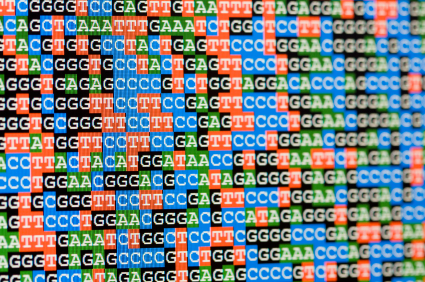 While the forensic and general communities continue to argue about the merits of the recent Supreme Court ruling on collection of samples from arrestees prior to conviction, I am fascinated by the technology that make this question relevant. The conventional way of generating a DNA profile from a sample by STR (short tandem repeat) analysis is a long process involving a series of steps that require sophisticated expensive equipment, trained personnel and, more importantly, time. The actual process of DNA analysis consists of a) sample collection, b) DNA extraction, c) PCR amplification using 16 or more unique fluorescently labeled primer sets d) capillary electrophoresis to size labeled DNA amplicons, e) software analysis to size DNA fragments and allele calls based on migration of allelic ladder fragments, and f) comparison to known profiles in the database. This entire workflow can typically take days or even weeks, and therefore it is not surprising that we see newspaper reports of backlogs of criminal and other property cases. With these time ranges, the sample collected at a site would be of no practical use to most ongoing investigations.
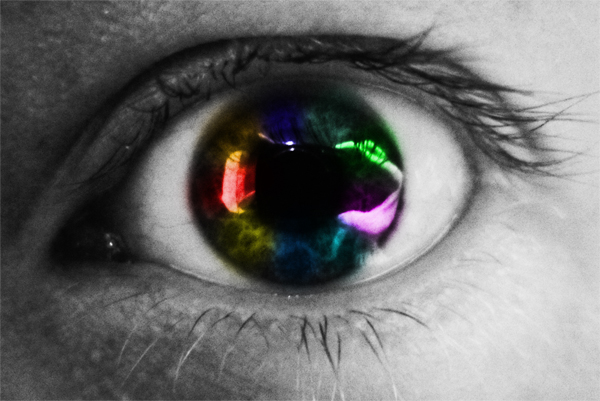 I asked my Facebook friends what my blog post should cover today. They gave me a list of very creative subjects that I will try to cover in the coming months. The winning suggestion for today is “why do my eyes change color depending on my mood?” In a simple Google search, it is apparent that many people have witnessed the phenomenon of their eyes changing color depending on their moods.There seem to be many explanations for this from light scattering to hormonal influences to psychic powers. What’s the real story? To get to the bottom of this, let’s take a closer look at how eye color is determined in the first place.