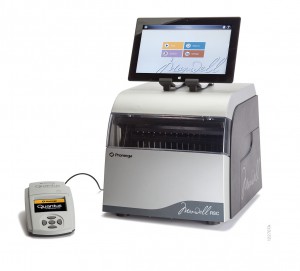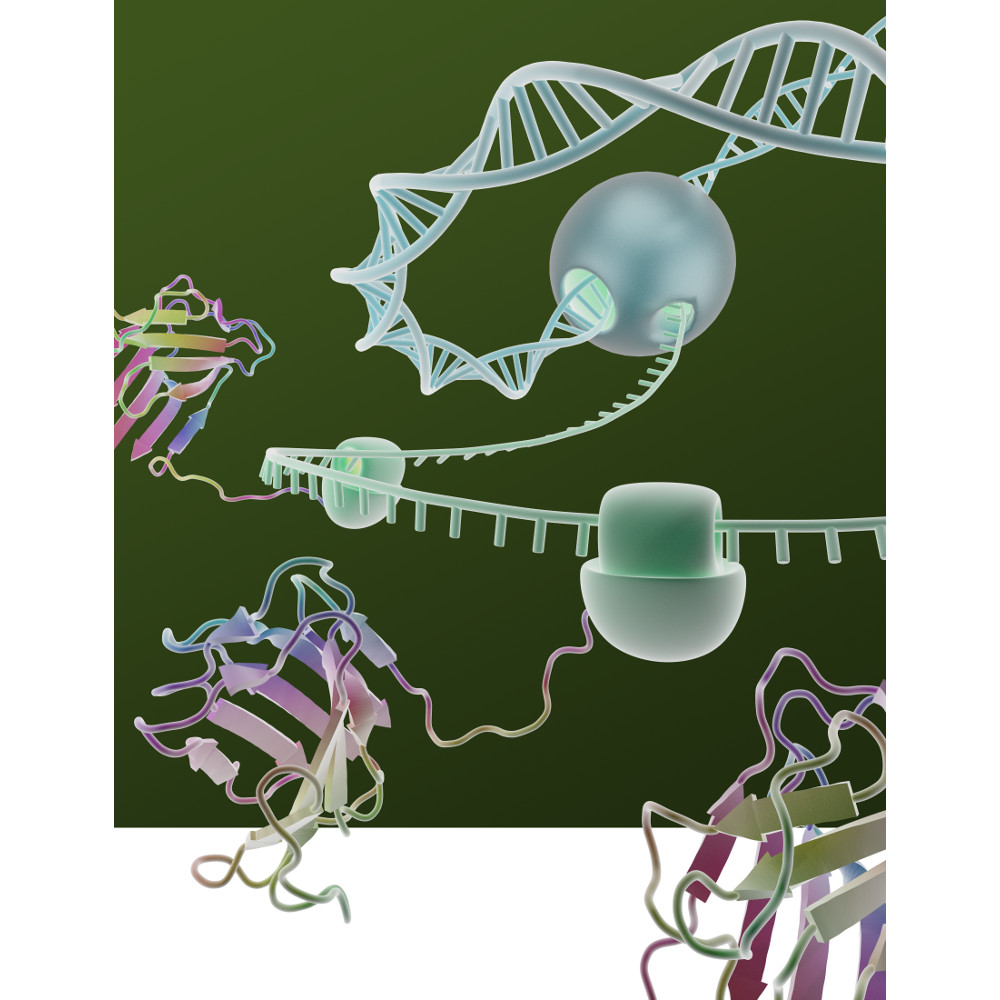
If you are trying to investigate protein:protein interactions inside cells, you know how important physiologically relevant results are. If you overload your cells with fusion constructs, your protein interactions may not actually reflect what is going on in the cell, and if your BRET energy donor and acceptor do not have sufficiently separated spectra, you can pick up a fair amount of noise in your experiment. Using the new superbright NanoLuc® Luciferase, and the HaloTag® Technology, we have developed a sensitive BRET system to help you take a better look specific protein interactions that interest you. Promega research scientist, Danette Daniels, describes the system in the Chalk Talk below:
Optimize Your Western Blot
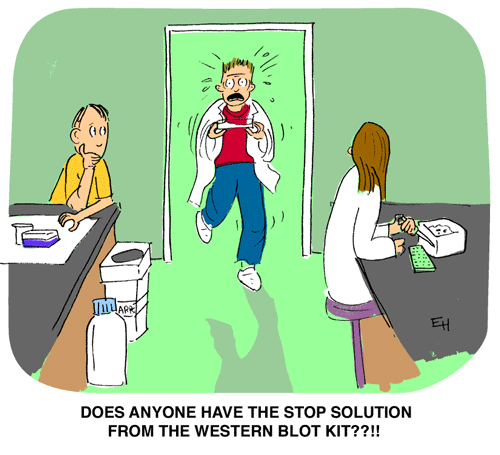
You’ve probably been there. You’ve got a new antibody or you’re testing out one you’ve made yourself. After weeks or months of work, your antibody is going to help move your research project forward. As you excitedly head to the dark room to develop your film, your mood is crushed when you see…bands, more bands, and smears. Alas, science has played one more cruel joke on you as you experience what so many of your fellow scientists have before. Despite such a dismal beginning, you often can still get good western blots by changing steps in your protocol.
Several steps in the western blot protocol can be optimized.
Continue reading “Optimize Your Western Blot”Mass Spec-Compatible Proteome Reference Material

The complexity of biological samples places high demand on mass spec analytical capability. Adequate monitoring of instrument performance for proteomics studies requires equally complex reference material such as whole-cell extracts. However, whole-cell extracts available commercially are developed for general research (e.g., enzymatic or Western blot analysis) and contain detergents and salts that interfere with reverse phase liquid chromatography and mass spectrometry. Even after clean up, the extracts need to be digested, requiring time, labor and experience to generate samples for use in mass spectrometry. To address the need for complex protein material, we have developed whole-cell protein extracts from yeast and human cells. The yeast extract offers the convenience of a relatively small and well annotated proteome, whereas the human extract provides a complex proteome with large dynamic range. The human extract also serves as reference material for studies targeting the human proteome.
The extracts are free of compounds that interfere with reverse phase liquid chromatography-mass spectrometry (LC-MS), and have been reduced with DTT and alkylated with iodoacetamide then digested with Trypsin/Lys-C Mix and lyophilized. These digested extracts (tryptic peptides) can be readily reconstituted in trifluoroacetic acid (TFA) or formic acid and injected into an instrument. The same human and yeast whole-cell extracts also are provided in an intact (undigested) form for users who would like to develop an independent method for preparing protein mass spectrometry samples. For convenience, the intact extracts are provided as a frozen solution.
Consistent extract protein composition is ensured by tight control over cell culture conditions and manufacturing process. Lot-to-lot consistency of extracts is monitored by various protein and peptide qualitative and quantitation methods, including LC-MS. (Quality control results are provided upon request.) Our manufacturing process assures compatibility with reverse phase liquid chromatography and mass spectrometry, minimal nonspecific protein fragmentation, nonbiological post-translational modifi cations and,for digested extracts, minimal undigested peptides. The extracts are optimized for a high number of peptide and protein identifications in mass spectrometry analysis.
Genetically Modified Mosquitoes Fight Malaria
Mosquitos: They are the scourge of summer activities—the annoying buzzing noise as they fly around our ears and the pain, itching and swelling associated with their bites. Worst of all, certain species of mosquitoes can transmit diseases such as West Nile virus, Dengue fever and malaria. Defense mechanisms such as mosquito repellent, covering my head with netting and wearing heavy clothing are often insufficient against the swarm of hungry insects. It’s enough to make me want to stay indoors.
Those people who cannot escape these pests have a higher risk of being bitten and contracting a disease such as malaria, which killed an estimated 627,000 people in 2012, mostly in Africa and southeast Asia (1). A common step in malaria reduction programs in high-risk areas is reducing the number of Anopheles gambiae mosquitoes, which act as the host for malaria-causing parasites. This often involves massive amounts of insecticides, including limited amounts of the much maligned but very effective insecticide dichlorodiphenyltrichloroethane (DDT). Due to these programs, the World Health Organization (WHO) estimates that between 2000 and 2012, malaria mortality rates decreased by 42% worldwide, including a 48% decrease in children under 5 years of age. Clearly these programs are saving lives, but wouldn’t it be nice to achieve the same thing with fewer pesticides?
Continue reading “Genetically Modified Mosquitoes Fight Malaria”Screening for Antiviral Compounds under Level 4 Containment Conditions
Working with bacteria and viruses that cause life-threatening diseases with no currently available treatment options takes guts. Most scientists are familiar with the routine requirements of good aseptic technique, are highly aware of laboratory safety requirements, and are more than familiar with autoclaves and sterilization issues, but if we make a mistake the consequences are usually only lost time or a spoiled experiment—not a lost life.
Scientists working with highly virulent organisms deal with a whole other level of risk that requires adherence to the strictest of safety regulations, and these containment regulations can sometimes place constraints on the type of experiment that can be performed with dangerous pathogens. A paper published in the April 2014 issue of Assay and Drug Development Technologies brought this to my attention and reminded me of the serious issues some scientists face on a daily basis as they research ways to combat infectious diseases.
Continue reading “Screening for Antiviral Compounds under Level 4 Containment Conditions”The Role of the Black Death in Human Evolution

Understanding Knowledge Transfer at the Doctoral Level – One Pathway to Better Career Development – An Introduction

Though my work is primarily in the area of biotechnology, my doctoral degree is in education. Over my next few posts, I thought that I would share some of the findings that came out of research I conducted for my dissertation. It’s been over two years since graduation and much of this is still not published, though on my honor it’s in the works…I focused my study on understanding knowledge transfer at the doctoral level. I was able to complete this work due to the generosity of many doctoral students, recent graduates and mentors across the country. This research was not funded in any way, but I believe it is of great importance given the socio-political context we are all functioning in as learners and professionals. Also, many studies that are similar to the one I did are funded, with a great deal of money I might add. So, without further ado, let me start by introducing the concept of knowledge transfer and why developing knowledge transfer skills are important.
“Knowledge transfer” is a concept grounded in K-12 education and in a general sense refers to an individual’s ability to use knowledge gained in one context in another (similar or dissimilar) context. Continue reading “Understanding Knowledge Transfer at the Doctoral Level – One Pathway to Better Career Development – An Introduction”
Choosing the Right Cell Health Assay
Based on the Illuminations article by Dr. Terry Riss, from our Cellular Analysis group.
Choosing the most appropriate cell health assay for your experiment can be difficult. There are several factors to consider when choosing an assay: the question you are asking, the nature of your sample, the number of samples being tested, the required sensitivity, the nature of the sample, the plates and plate readers and the reagent costs.
What question are you asking?
The first, and perhaps most important factor to consider, is the question you need answered. What do you want to know at the end of the experiment? There are cell health assays available that specifically detect the number of living cells, the number of dead cells, and for assessing stress response mechanisms or pathways that may lead to cell death. Matching the assay endpoint to the information you need is vital to choosing the appropriate cell health assay.
Continue reading “Choosing the Right Cell Health Assay”Why We Care About Glycosyltransferases
Today’s post is a guest blog from Michael Curtin in the cellular analysis and proteomics group at Promega.
Glycobiology is the study of carbohydrates and their role in biology. Glycans, defined as “compounds consisting of a large number of monosaccharides linked glycosidically” are present in all living cells and coat cell membranes and are integral components of cell walls (1). They play diverse roles, including critical functions in cell signaling, molecular recognition, immunity and inflammation. They are the cell-surface molecules that define the ABO blood groups and must be taken into consideration to ensure successful blood transfusions. (2).The process by which a sugar moiety is attached to a biological compound is referred to as glycosylation. Protein glycosylation is a form of post-translational modification, which is important for many biological processes and often serves as an analog switch that modulates protein activity.The class of enzymes responsible for transferring the sugar moiety onto proteins is called a glycosyltransferase (GT).
GTs can be divided into three major types based on their roles:
- Oligosaccharide elongation for peptidoglycan biosynthesis
- Regulation of protein activities by post-translational modification
- Small molecule glucuronidation as means of drug metabolism
Lessons From the ‘Long Goodbye’
A week ago Sunday, I walked among crowds of mothers, grandmothers, and children of all ages celebrating Mother’s Day at the Botanical Gardens in St. Louis, Missouri. As I watched happy families, I couldn’t help being jealous. Though I was there with my grandmother and other close relatives, I missed my mom, especially since I was in my hometown for her funeral the day before. Had my mom been alive and well, we might have walked those same paths ourselves and enjoyed the new life teeming above the earth. Instead, my mother lost her battle of more than six years with Lewy Body dementia the week before at the age of 61.
As a biologist, I was well-aware of Alzheimer disease in the abstract, and tau proteins, beta-amyloid, and genetic predisposition. But until my mom was diagnosed in 2008, I was painfully ignorant of dementias other than Alzheimer disease. Once we knew what mom was fighting, I learned that Alzheimer disease and Lewy Body are hardly unique. The number of other dementias that exist is long and includes vascular dementia, mixed dementia, Parkinson’s disease, frontotemporal dementia, Creutzfeldt-Jakob disease, Huntington disease, and many others.[1]