Lessons From the ‘Long Goodbye’

Lewy Body stained with alpha-synuclein.

A week ago Sunday, I walked among crowds of mothers, grandmothers, and children of all ages celebrating Mother’s Day at the Botanical Gardens in St. Louis, Missouri.  As I watched happy families, I couldn’t help being jealous.  Though I was there with my grandmother and other close relatives, I missed my mom, especially since I was in my hometown for her funeral the day before.  Had my mom been alive and well, we might have walked those same paths ourselves and enjoyed the new life teeming above the earth.  Instead, my mother lost her battle of more than six years with Lewy Body dementia the week before at the age of 61.

As a biologist, I was well-aware of Alzheimer disease in the abstract, and tau proteins, beta-amyloid, and genetic predisposition.  But until my mom was diagnosed in 2008, I was painfully ignorant of dementias other than Alzheimer disease.  Once we knew what mom was fighting, I learned that Alzheimer disease and Lewy Body are hardly unique.  The number of other dementias that exist is long and includes vascular dementia, mixed dementia, Parkinson’s disease, frontotemporal dementia, Creutzfeldt-Jakob disease, Huntington disease, and many others.[1]

Continue reading “Lessons From the ‘Long Goodbye’”

His-Tagged Fusion Proteins: Application Update

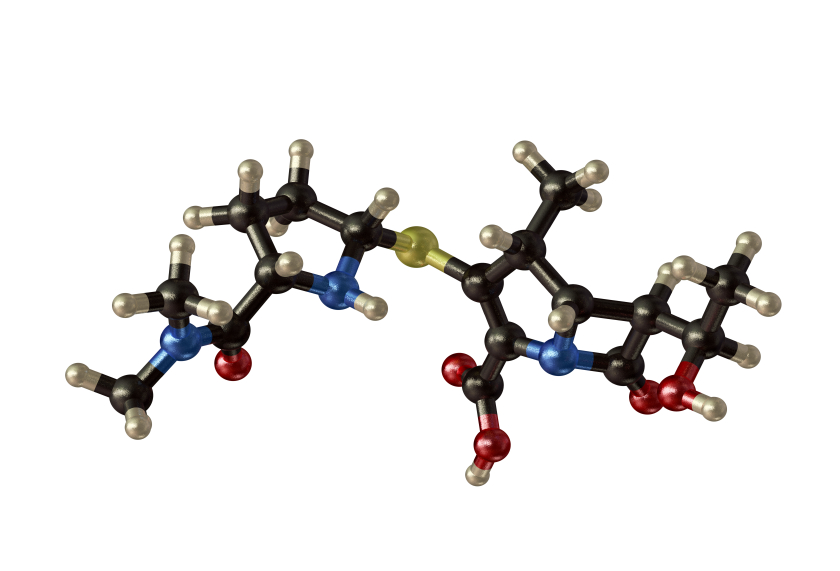
Crystal structure of Polyhistidine tagged recombinant catalytic subunit of cAMP-dependent protein kinase. Credit: StructureID=1fmo; DOI=http://dx.doi.org/10.2210/pdb1fmo/pdb;

Researchers often need to purify a single protein for further study. One method for isolating a specific protein is the use of affinity tags. Affinity purification tags can be fused to any recombinant protein of interest, allowing fast and easy purification following a procedure that is based on the affinity properties of the tag.

The most commonly used tag to purify and detect recombinant expressed proteins is the polyhistidine tag. Protein purification using polyhistidine tags relies on the affinity of histidine residues for immobilized metal such as nickel, which allows selective protein purification. The metal is immobilized to a support through complex formation with a chelate that is covalently attached to the support.

Polyhistidine tags offer several advantages for protein purification. The small size of the polyhistidine tag renders it less immunogenic than other larger tags. Therefore, the tag usually does not need to be removed for downstream applications following purification.

A large number of commercial expression vectors that contain polyhistidine are available. The polyhistidine tag may be placed on either the N- or C-terminus of the protein of interest.

And finally, the interaction of the polyhistidine tag with the metal does not depend on the tertiary structure of the tag, making it possible to purify otherwise insoluble proteins using denaturing conditions. The resulting purified protein can be used for a variety of applications.

The following references illustrate examples of some of the most common post purification applications with fusion proteins containing a polyhistidine tag:

Enzymatic assays

  1. Negi, V-S. et al. (2014) A carbon nitrogen Lyase from Leucaena leucocephala catalyzes the first Step of mimosine degradationPlant Physiol. 164,  922–34.
  2. Yu, S. et al. (2013) Syk Inhibits the activity of protein kinase A by phosphorylation tyrosine of the catalytic subunitJ. Biol. Chem. 288, 10870-81.
  3. Rusconi, B. et al. (2013) Discovery of catalases in members of the Chiamydiales order. J. Bact. 195, 3543–51.

Structural analysis

  1. Araiso, Y. et al. (2014) Crystal structure of Saccharomyces cerevisiae mitochondrial GatFAB a novel subunit assembly in tRNA –dependent amidotransferases. Nucl.Acids. Res.(available only online).
  2. Someya, T. et al. (2012) Crystal Structure of Hfq from Bacillus subtilis in complex with SELEX-dervived RNA aptamer: insight into RNA-binding properties of bacterial Hfq. Nucl. Acid Res. 40, 1856-67.

Protein pulldowns

  1. Yun, S-C. et al. (2010) Pmr a Histone-like protein H1 (H-NS) family protein encoded by the IncP-7 plasmid pCAR1, is a key global regulator that alters host functionJ.Bact. 192, 4720–31.
  2. Haim, H. et al. (2010)  Cytokeratin 8 interacts with clumping factor B: a new possible virulence factor target. Microbiology 156, 3710-21.

Additional Resources
His-tagged Protein Purification Systems

Plant Biologists Take the Lead on Elucidating Zombie Genetics

claimtoken-5367ae87b7cd2

Biology is full of stories that read like a modern day zombie apocalypse. For instance, the parasite Toxoplasma gondii has been in the news for its ability to infect the brains of rats, and reprogram their normal behavioral responses such that they lose their innate fear of cats. Previously, we reviewed the research about the parasitic fungus that infects ants, causing drastic changes in typical ant behavior to aid in distribution of the fungal spores.

In April of this year, MacLean and colleagues published research in PLOS Biology describing interactions between a phytoplasma parasite and Arabidopsis thaliana. What is nice about this particular “zombie” biology story is that the researchers present the beginnings of the genetics that underlie the plant-parasite-insect relationship, moving beyond a description of the phenotypic changes that occur to describing an actual mechanism for those changes.

Continue reading “Plant Biologists Take the Lead on Elucidating Zombie Genetics”

Grays On the Move: Whale Watching in San Diego

As a boy, one of my favorite childhood books was without a doubt, Herman Melville’s Moby Dick. For those not familiar with the story, it tells of the obsessive quest of one Captain Ahab to kill a white whale in revenge for an attack that left him with a severed leg. The story is told by the character Ishamel who accompanies Ahab and provides the reader with a front row seat on the doomed saga of Ahab and his crew. After reading the book, I set myself the task of learning more about whales and how we can do more to protect the lives of these magnificent ‘leviathans of the deep’. My parents bought me Jacques Cousteau’s Whales one Christmas. From that moment on, my heart and mind were transfixed. This year I was privileged to see Gray whales for the first time, following their migratory path down the west coast of the United States. Together with a handful of other excited tourists, I went on a 3 hour cruise outside of San Diego bay, organized by the Scripps Institute Birch Aquarium. Below are several of the many pictures I took on that memorable day.

All Aboard Skipper!
All Aboard Skipper!

Continue reading “Grays On the Move: Whale Watching in San Diego”

Biology of Overeating and the Weight-Gain Cycle

ScaleA person needs to browse through any health related journal, magazine or website to find new and novel ways to reduce weight. While the options range from bariatric surgery to good old “eat-less-exercise-more” concepts, it is intriguing how the more weight a person gains, the harder it is to shed the extra calories. Losing weight is an uphill battle for majority of us. And that got me thinking about how much our biology cooperates while we try to lose weight. I came across these two elegant studies that explain why this is indeed an uphill battle. Continue reading “Biology of Overeating and the Weight-Gain Cycle”

CheckMate™ Mammalian Two-Hybrid System: Application Update

Assay principle for CheckMate™ Mammalian Two-Hybrid System.
Assay principle.

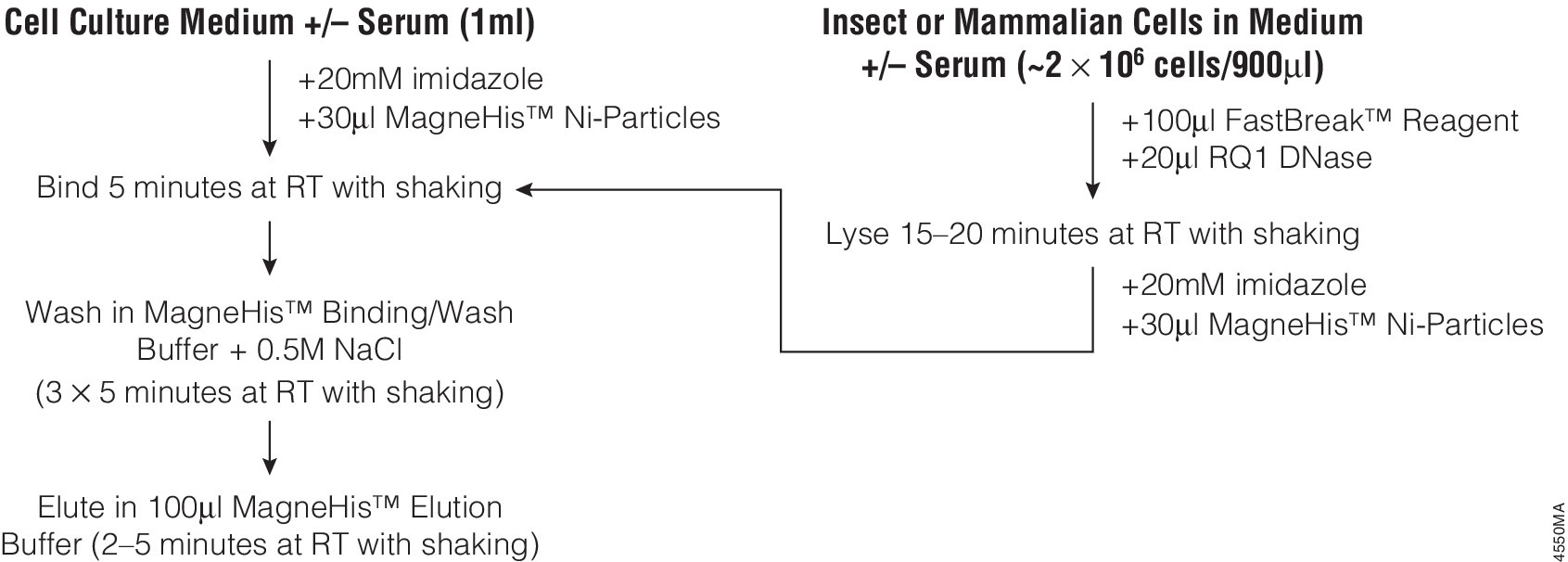
In the CheckMate™ Mammalian Two-Hybrid System, the pBIND Vector contains the yeast GAL4 DNA-binding domain upstream of a multiple cloning region, and the pACT Vector contains the herpes simplex virus VP16 activation domain upstream of a multiple cloning region. The two genes encoding the two potentially interactive proteins of interest are cloned into pBIND and pACT Vectors to generate fusion proteins with the DNA-binding domain of GAL4 and the activation domain of VP16, respectively. The pG5luc Vector contains five GAL4 binding sites upstream of a minimal TATA box, which in turn, is upstream of the firefly luciferase gene (luc+). The pGAL4 and pVP16 fusion constructs are transfected along with pG5luc Vector into mammalian cells. Interaction between the two test proteins, as GAL4 and VP16 fusion constructs, results in an increase in firefly luciferase expression over the negative controls. Traditionally mammalian two hybrid analysis was used to confirm initial data obtained from yeast two hybrid experiments.

Due to enhanced bioinformatics information and the development of improved co-immunoprecipiation/pulldown procedures/technology, there is a growing trend to use only mammalian cells to characterize protein:protein interactions. The following references illustrate the use of the CheckMate™ system to complement  other techniques to characterize protein;protein interactions using only mammalian cells .

Bagchi, P. et al. (2013) Molecular Mechanism behind Rotavirus Nsp-1 Mediated PI3 Kinase Activation: Interaction between NSP1 and the p85Subunit of PI3 kinase. J. Vir. 87, 2358-62.

Greninger, A. et al. (2013) ACBD3 Interaction with TBC1 domain 22 protein is differentially affected by Enteroviral and Kobuviral 3A protein binding.  mBio 4, 00098-13.

Patki, M. et al. ( 2013) The ETS Domain Transcription Factor ELK1 Direct a critical component of growth signalling by Androgen Receptor in prostrate cancer cells. J.Biol. Chem. 288 11047-65

Konig, H-G. (2012) Fibroblast growth factor homologous factor 1 interact with NEMO to regulate NF-kappaB signaling in neurons J. Cell Sci. 125, 6058-70

Can Fruit Flies Glow in the Dark?

Fruit fly. Image from morguefile.
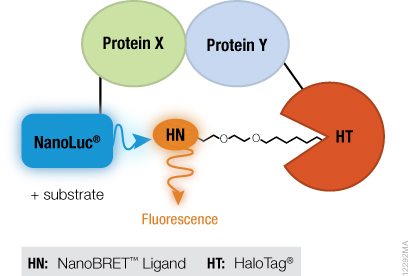
Question: How is a fruit fly like a firefly? No, this is not an obvious answer (their names start with the letter “f”) or the beginning of a bad entomology joke. These two organisms may both be winged insects, but as it turns out, what makes the firefly light show such a special treat on summer evenings is something that fruit flies, the bane of the kitchen in the summertime and annoyance for labs near Drosophila researchers, can mimic with a little help from a synthetic luciferin substrate as reported in PNAS. Continue reading “Can Fruit Flies Glow in the Dark?”

Lost in Translation? Tips for Preparing RNA for in vitro Translation Experiments

In vitro translation of proteins through cell-free expression systems using rabbit reticulocytes, E. coli S30, or wheat germ extracts can be invaluable in studying protein function.  If you only need a small amount (100s of nanograms), it’s also faster and easier than synthesizing vast quantities in bacterial or mammalian cells (~ 90 minutes for cell-free vs. long growth times and extraction steps after an initial optimization for protein synthesized in larger scale).  There are many systems out there, and knowing which to use can sometimes be difficult.  Many kits include components that combine transcription and translation in one-step, eliminating the need to provide your own RNA.  But when you want to make your own RNA templates to add to lysates, then there are additional concerns.

artists concept of in vitro translation
A protein chain being produced from a ribosome.

Many people don’t want to work with RNA since the common lab lore suggests it’s a finicky molecule, and for good reason.  Extracting it requires the utmost care in technique and elimination of nucleases.  Failing to do so results in degradation of the molecule, and so with it your experiments (see our recent blog by Terri Sundquist on tips for isolating RNA with ease).  Preparing RNA for cell-free expression is subject to the same concerns as extracted RNA, but with the proper care is not that much more of a challenge than using a DNA template.

The first step for using cell-free expression systems with RNA templates is to make the RNA.  Here are some tips that will ensure success.

Continue reading “Lost in Translation? Tips for Preparing RNA for in vitro Translation Experiments”

Culture Rules- Investigating Company Cultures

iStock_000025830858SmallWhen searching for a job it’s important to consider the job duties as well as the company and the company’s culture. Two companies have become famous for their cultures—Google and Zappos. Google is known as a company where you work hard in an amazing environment. Oh, and the food is free! Zappos is known as a place where employees are valued, and customer service is the first priority. Here at Promega, science rules, employee well-being is extremely important, and you can make a big impact regardless of your job title.

If you are able to find a company with an appealing culture and similar values to your own, it is a win-win situation. You will likely be happier in your job and therefore a better performer.

Here are some questions that you can ask to learn about the company culture and figure out if it is a fit with your personality and needs. These questions can be asked in an interview or in an informational conversation with someone in your network before you apply for a job. Keep in mind that there is no right answer to these questions. Some people thrive in government jobs while others have more of an entrepreneurial spirit; you need to figure out what type of culture will work best for you. Continue reading “Culture Rules- Investigating Company Cultures”

Asp-N Protease: Applications Update

TrypsinLysC Page 2

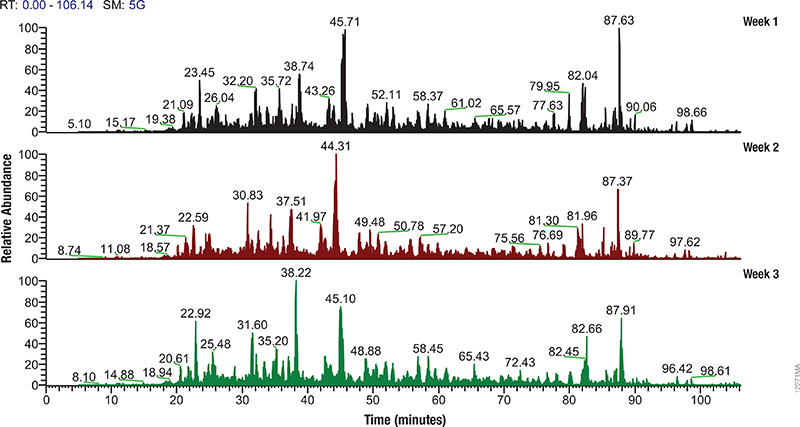
Asp-N, Sequencing Grade, is an endoproteinase that hydrolyzes peptide bonds on the N-terminal side of aspartic and cysteic acid residues: Asp and Cys. Asp-N activity is optimal in the pH range of 4.0–9.0. This sequencing grade enzyme can be used alone or in combination with trypsin or other proteases to produce protein digests for peptide mapping applications or protein identification by peptide mass fingerprinting or MS/MS spectral matching. It is suitable for  in-solution or in-gel digestion reactions.

The following references illustrate the use of Asp-N in recent publications:

Protein sequence coverage

  1. Jakobsson, M et al. (2013)  Identification and characterization of a novel Human Methyltransferase modulating Hsp70 protein function through lysine methylation. J. Biol. Chem. 288, 27752–63.
  2. Carroll, J. et. al. (2013) Post-translational modifications near the quinone binding site of mammalian complex I.  J. Biol. Chem. 288, 24799–08.

Glycoprotein analysis

  1. Siguier, B. et al. (2014) First structural insights into α-L-Arabinofuranosidases from the two GH62 Glycoside hydrolase subfamilies. J. Biol. Chem. 289, 5261–73.
  2. Vakhrushev, S. et al. (2013) Enhanced mass spectrometric mapping of the human GalNAc-type O-glycoproteome with SimpleCells. Mol. Cell. Prot. 12, 932–44.
  3. Berk, J. et al. (2013) . O-Linked β-N- Acetylglucosamine (O-GlcNAc) Regulates emerin binding to autointegration Factor (BAF) in a chromatin and Lamin B-enriched “Niche”.  J. Biol. Chem. 288, 30192–09.

Phosphoprotein analysis

  1. Roux, P. and Thibault, P. (2013) The Coming of Age of phosphoproteomics –from Large Data sets to Inference of protein Functions. Mol. Cell. Prot. 12, 3453–64.

Are you looking for proteases to use in your research?
Explore our portfolio of proteases today.