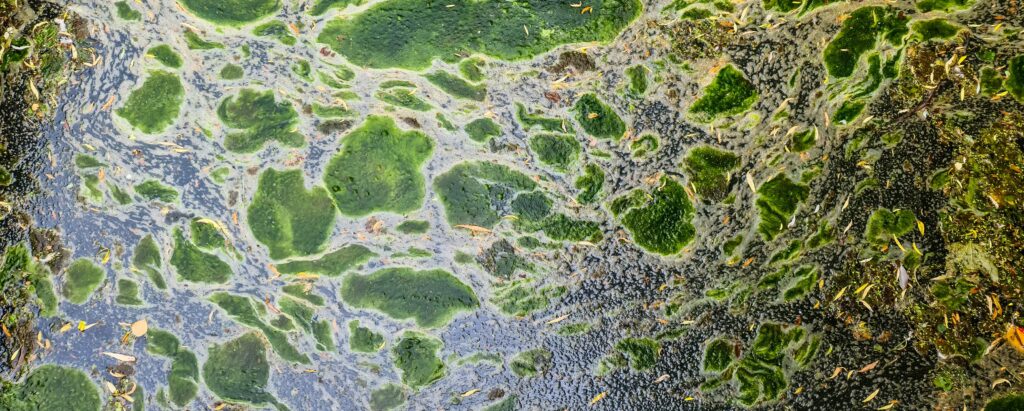
Despite its many mysteries, a chrysalis is one of the most familiar transformations in nature. We know what goes in. We know what comes out. For a long time, what happened in between was essentially invisible to us. Not because we weren’t curious, but because the mechanism was sealed inside something the size of a thumbnail, and we had no way in.
This same invisibility exists on a much older and much larger scale.
Sometime around two billion years ago, a cell swallowed a bacterium and, instead of digesting it, kept it alive inside itself. This process, called endosymbiosis, is arguably the single most consequential event in the history of complex life. The bacterium became a permanent resident, and over billions of years of co-evolution, it became something else entirely: the mitochondria that power every complex cell on earth. Without it, the living world as we know it doesn’t exist.
Scientists have known for decades that this kind of cellular acquisition had to have occurred. What has proved harder to explain is not that it happened, but how it started. What did the earliest molecular steps actually look like from the inside?
In the ocean, there is a microscopic single-celled organism called Rapaza viridis. It hunts algae by propelling itself through the water on whip-like appendages called flagella. That hunt may be showing us the beginning of a modern endosymbiosis: the same process that gave every complex cell its mitochondria and every plant its chloroplasts.
Most consumption is destructive. The prey is dismantled and its components absorbed. R. viridis does something different. Instead of digesting its prey whole, it keeps the chloroplasts (the photosynthetic machinery) intact and running. It preserves a working piece of another organism’s machinery inside itself and uses it to photosynthesize. Stolen solar panels. This is called kleptoplasty. When R. viridis has active kleptoplasts, it runs green, visually distinctive for something that is, at its core, a predator.
Kleptoplasty is not unique to R. viridis. Sea slugs do it. Certain single-celled marine organisms do it. What none of them had been observed doing before is what R. viridis does next: a process called transient chimerism. The host begins supplying its own proteins to maintain a foreign organelle, mirroring the molecular integration that made mitochondria and chloroplasts permanent in the rest of us.
Once the algal nucleus degrades and the chloroplast’s own proteins begin to run out, R. viridis starts producing its own proteins and shipping them into the stolen organelle to keep it running. It is actively maintaining something it took from another species. Each time it steals a new chloroplast, it rebuilds that machinery from nothing. It does not inherit this system. It does not pass it on.
The story of endosymbiosis has a known ending. What R. viridis offers is a living chrysalis. Not the caterpillar, not the butterfly. It is the part in the middle that we knew had to exist but could not see inside. Seeing inside it matters because while the outcome tells you something is possible, the mechanism tells you how possibility becomes reality.
The challenge was precision: tracking a specific protein across a cellular boundary without disrupting the very process being observed. NanoLuc® Luciferase, a bioluminescent reporter roughly 150 times brighter than traditional luciferases and small enough not to interfere with the proteins it tags, is exactly suited for this challenge. By attaching the NanoLuc® reporter to a protein sequence from R. viridis, the researchers could follow where it went. When luminescence was observed inside the kleptoplast, they had their confirmation: those proteins were being translocated into the stolen organelle.
The delivery itself was significant. These were host proteins, actively directed into a foreign organelle. But delivery alone wasn’t enough. If those proteins were doing nothing, R. viridis was just a predator with an unusual habit. When the researchers disabled the gene responsible for producing one of those proteins, photosynthesis in the kleptoplast failed. That failure was the proof. The transfer was not incidental. R. viridis was something else entirely: an organism actively sustaining what it had taken, the earliest recognizable behavior of endosymbiosis.
R. viridis was there long before we thought to look, going about its small, extraordinary business in the ocean, maintaining stolen organelles with its own proteins, mid-sentence in a story whose ending we already knew. Finding it, two billion years after endosymbiosis produced every complex cell on earth, means the chrysalis is no longer sealed.
Resources
Kashiyama, Y., Maruyama, M., Nakazawa, M., Kagamoto, T., Imanishi, H., Yamamoto, S., Inoue, M., Onuma, R., Tanifuji, G., Ashida, H., Inada, N., Awai, K., & Miyagishima, S. (2026). Transient molecular chimerism for exploiting xenogeneic organelles. Nature Communications, 17, 2371. https://doi.org/10.1038/s41467-026-70516-x
Cruz, S., & Cartaxana, P. (2022). Kleptoplasty: Getting away with stolen chloroplasts. PLOS Biology, 20(11), e3001857. https://doi.org/10.1371/journal.pbio.3001857
Karnkowska, A., et al. (2023). Euglenozoan kleptoplasty illuminates the early evolution of photoendosymbiosis. Proceedings of the National Academy of Sciences, 120(12), e2220100120. https://doi.org/10.1073/pnas.2220100120
Ku, C., & Martin, W. F. (2024). Endosymbioses have shaped the evolution of biological diversity and complexity time and time again. Genome Biology and Evolution, 16(6), evae112. https://doi.org/10.1093/gbe/evae112
Elise Johnson
Latest posts by Elise Johnson (see all)
- ADC Development: The Questions Running in the Background - July 30, 2026
- Time Capsules in the Language of Science - July 23, 2026
- AI Identifies the Target. Someone Still Has to Validate It. - July 9, 2026