Several years ago an intriguing story of successful navigation in complex situation, by pigeons, the birds most often compared to rats, caught my eye.
Our backyard once had a coop full of pigeons, so I’m not a total stranger to their navigation abilities (nor am I a pigeon expert). My favorites were the tumbling pigeons.
But it didn’t take much time researching that article from 2012, to learn that one of the more hotly debated how-do-they-do-it topics is animal navigation, in particular, the ability of pigeons to navigate back to home/point A when released at point B.
So when it appeared online today, in Nature Materials, the story “A Magnetic Protein Biocompass” caught my eye.
In 2014, Promega created a special incentive to reward field science consultants who help the scientific community take advantage of the our on-site stocking program. The winners had to meet ambitious criteria to receive 2 round-trip tickets to anywhere in the world, a week of paid vacation and spending money. Our four winners from 2014 will share photos and stories about their journeys in a semi-regular Friday feature on the Promega Connections Blog.
Today’s travelogue comes to us from Mica Zaragoza, a senior client rep, who used his award to travel to Australia and New Zealand.
When initially introduced to the ambitious Helix award, I was amazed at the prospect of selecting anywhere in the world to travel, while blogging about my the adventures. Both humbled and amazed to receive this opportunity, my wife and I embarked on a journey across the Pacific.
Hyde Park in Sydney, Australia.
Sydney, Australia
Departing our home in Chicago, my wife Crystal and I started our journey with a 5-hour trip to San Francisco for a layover before the 14 hour journey to Sydney. After jumping into the future (Thurs became Saturday), our first visit was to Central Sydney’s Hyde Park.
Taking jet lag into consideration, we decided to double-down by freshening up and dropping luggage to kick off our day at 7:30am. My first Australian purchase? Coffee! Continue reading “There and Back Again, Part 1”
When researchers first identified a new family of seemingly non-functional “junk” RNA molecules, it’s unlikely they could have predicted the power and promise of these nucleic acids. The small, non-coding, single-stranded RNAs – typically 21-25 base pairs in length – were first discovered over 20 years ago in C. elegans, yet they were quickly found to be ubiquitous in species from worms to flies to plants to mammals. The role of these novel RNAs in the regulation of developmental pathways in worms, coupled with their prevalence, inspired researchers to better understand their significance.
We now know that miRNAs (for microRNAs) serve as post-transcriptional repressors of gene expression by targeting degradation of mRNA or interfering with mRNA translation. While small, each can have a big effect; a single miRNA can regulate dozens to hundreds of distinct target genes. They’ve been implicated in a variety of critical cellular processes such as differentiation, development, metabolism, signal transduction, apoptosis and proliferation.
Tissue-specific expression patterns revealed that specific miRNAs are enriched in mammalian tissues including adult brain, lung, spleen, liver, kidney and heart. More compelling was the identification of abnormal miRNA expression in tumorigenic cell lines. It’s no wonder that this growing family quickly became ripe for exploration in disease development.
Research on miRNA is making its way into the clinic.
Within only a few years, a rapidly expanding body of research supported the theory that miRNA expression may indeed play a role in the development of human diseases including cardiovascular disease, cancer, diabetes, cystic fibrosis, and liver disease. Investigations into the expression of miRNAs in cardiovascular disease, in particular, have demonstrated not only their value as disease markers, but also how their dysregulation is linked to disease processes.
I moved back to Madison from the east coast last September and I have to say it’s been really great being back in the Midwest… the Youth Apprenticeship Program opened doors to opportunities for me that may never have existed if I had not participated in the program. It established the foundation of my entire resume throughout college, which was crucial to the genetic counseling application process. — Kristin Gunderson, Genetic Counselor, Carbone Cancer Center (Kristin worked in the lab of Dr. Deane Mosher, UW School of Medicine Public Health, under the mentorship of Dr. Bianca Tomasini-Johannson and is a 2006 high school graduate.)
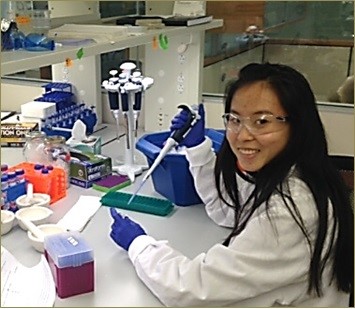
Yang Chen, 2015 graduate, at her worksite in the lab of Dr. Xuehua Zhong, UW-Madison Department of Genetics; mentor: Dean Sanders. Yang is currently a freshman at UW-Madison, majoring in microbiology.
OK, we are not going to be shy about it: We need any assistance our readers may be able to provide to help us find additional mentors for high school juniors and seniors who are enrolled in the Dane County Youth Apprenticeship Program in Biotechnology.
The good news is that there are 32 students who have elected to participate in the program, given their strong interests in the life sciences and in particular, biotechnology. They represent 14 public high schools in the area. They (1) complete all necessary classes for graduation; (2) attend a hour-hour intensive laboratory course at the BTC Institute from 4:30–8:30pm on Wednesdays; and, (3) work in laboratory settings throughout the community. (For details, please visit: http://www.btci.org/k12/yap/yap.html) Continue reading “Support Young Scientists: Mentors Needed for Dane County Biotechnology Youth Apprentices”
I’m a list person. You may know people like me—we are the ones who start compiling a list of items to pack for vacation a month in advance; we wouldn’t be caught in a grocery store without a carefully curated grocery list (often organized by department), and we have been known to write down previously completed items on our to-do list just to experience the satisfaction of crossing them off. The internet is full of lists and I love comparing other people’s checklists against my own to make sure I have what I need.
Some call my list-making zeal a curse, some call it a gift. Whatever you call it, I’d like to share with you my suggestions of items to bring to your next onsite interview (in list form, of course). Whether you are as passionate about lists as I am or not, I think it can help. Packing for an onsite interview in advance can help you feel calm, confident and prepared; which is exactly what an interviewer wants to see. When getting ready for an interview, be sure to pack:
Yersinia pestis. By A.Myasnikov for Wiki (Self made work) [CC0], via Wikimedia Commons
Fridays are generally reserved for fun posts to share prior to the weekend. As we all know, fun is relative and to me, the latest news about how long Yersinia pestis has been entwined with human history is intriguing. I enjoy writing about the latest historical finding of Y. pestis even if I do earn a black reputation among my blogging colleagues (pun intended). Therefore, as soon as I saw the Cell article about Y. pestis found in Bronze age human teeth, I knew my blog topic was at hand.
Y. pestis has long been suspected in several plagues that occurred in the last two millennia. Publications in 2011 and 2013 used DNA extracted from teeth of human remains dated to the 14th century Black Death and 6th century Plague of Justinian to confirm Y. pestis was the causative agent in those devastating plagues. These results beg the question: How long has Y. pestis been infecting humans? The phylogenic trees generated from recent studies suggested Y. pestis has been with humans for as little as 2,600 years and as long as and 28,000 years. Equipped with these DNA-based tools, Rasmussen et al. asked if they could find evidence of Y. pestis in older human remains.
Therapeutic monoclonal antibodies are large, complex molecules that undergo numerous post translational modifications (PTMs). In-depth characterization of antibody PTMs remains a significant hurdle because their large size (~150 kDa) makes mass spectrometry analysis extremely challenging.
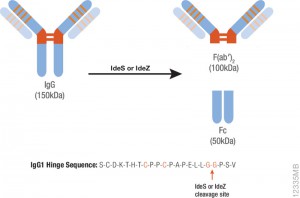
IdeS protease specifically cleaves IgGs into Fab and Fc fragments. This enzyme is highly specific and cleaves human IgG specifically at one site in the lower hinge region. Because of the exquisite specificity of the enzyme, it produces highly homogeneous Fc and Fab fragments which are then readily analyzed using techniques such as mass spectrometry or HPLC.
Are you looking for proteases to use in your research? Explore our portfolio of proteases today.
One of the drawbacks of IdeS is that it exhibits poor activity against mouse IgGs. IdeZ Protease is an immunoglobulin-degrading enzyme from Streptococcus equi subspecies zooepidemicus. It is an engineered recombinant protease overexpressed in E. coli. Like IdeS Protease, IdeZ Protease specifically cleaves IgG molecules below the hinge region to yield F(ab′)2 and Fc fragments. Reduction of the digestion products produces three fragments of ~25kDa that are readily analyzed by LC-MS.
One of the key advantages of the IdeZ Protease is that it has significantly improved activity against mouse IgG2a and IgG3 subclasses compared to IdeS Protease. IdeZ Protease does not cleave mouse IgG1 or IgG2b.
Key technical parameters when digesting mouse IgGs utilizing IdeZ are the following:
• Add 1 unit of IdeZ Protease per 1µg of IgG to be digested. • IdeZ Protease is most active in buffers at or near neutral pH. The recommended digestion buffer is 50mM sodium phosphate, 150mM NaCl (pH 6.6). • Mouse IgG2a and IgG3 typically require 2–4 hours at 37°C for complete digestion. • IdeZ Protease has a histidine tag for easy removal if so desired.
Yesterday my fellow blogger, Kari, posted a review of the ACS Chemical Biology paper describing a new BRET platform for analyzing protein-protein interactions. If you are interested in studying induction and inhibition of protein interactions in real time, take a look at the infographic below to learn how to develop a NanoBRET™ Assay to monitor your protein of interest.
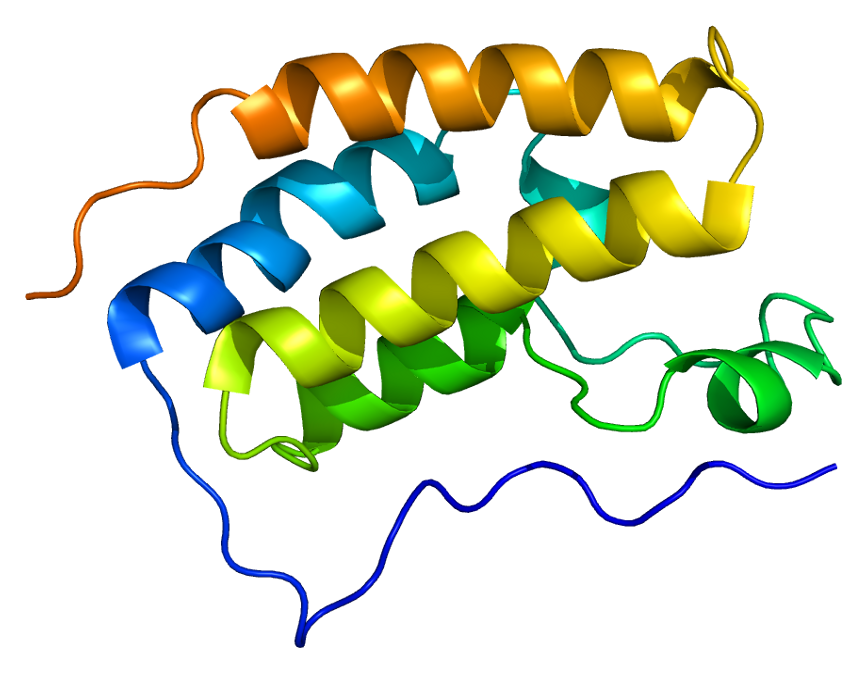
“Protein BRD4 PDB 2oss” by Emw – Own work. Licensed under CC BY-SA 3.0 via Wikimedia Commons – https://commons.wikimedia.org/wiki/File:Protein_BRD4_PDB_2oss.png#/media/File:Protein_BRD4_PDB_2oss.png
One of the more exciting reporter molecules technologies available came online in the past year, with the launch of the Promega NanoBRET™ technology. While it’s easy for me, a science writer at Promega, to brag, seriously, this is a very cool protein interactions tool.
A few of the challenges facing protein-protein interactions researchers include:
The ability to quantitatively characterize protein-protein interactions
Ability to examine protein-protein interactions in situ, in the context of the living cell
A goal of the NanoBRET™ developers was to improve the sensitivity and dynamic range of traditional BRET technology, in order to address these challenges.
In May 2015 these researchers published an article outlining their efforts to create NanoBRET technology in ACS Chemical Biology, in an article entitled, “NanoBRET—A Novel BRET Platform for the Analysis of Protein-Protein Interactions”. Here is a brief look at their work.
When it comes to combating cancer does size matter? If every cell in the body has the propensity to become cancerous, it should naturally follow that larger animals that pack greater number of body cells and that those whose cells undergo greater number of cell divisions are more likely to develop cancer. By the same logic, organisms with longer lifespans must also have a greater chance of accumulating mutations leading to cancer. Surprisingly, the risk of developing cancer is only 5% in elephants and 18% in whales whereas it is as high as 30% in humans and rodents. The apparent lack of correlation between body mass, longevity and cancer- known as Peto’s paradox- has flummoxed scientists for several decades.1
A recent study published in Journal of the American Medical Association by Abegglen and colleagues has unlocked the secret weapon held by the pachyderms in fighting cancer2. While the weapon itself might not be new to cancer biologists, the stash carried by these marvelous animals is the highest recorded for any living species so far. To understand this weapon let’s revisit the coping mechanisms developed by cells to prevent cancer. When mammalian cells are exposed to cancer inducing treatments, such as UV radiation for example, a gene encoding TP53, kicks into gear making copies of the tumor suppressing protein of the same name. TP53 acts as a tumor suppressor, which means that it regulates cell division by keeping cells from growing and dividing too fast or in an uncontrolled way. It does so by either repairing any damage to the cells caused by the UV exposure or by killing off the cell by a self-destructing mechanism known as apoptosis which is akin to committing suicide.
Many mammals, including humans carry only two copies of this important gene; one copy or allele is inherited from each parent. If the TP53 gene is inactivated by mutations, the risk of developing cancer increases by several fold. A rare but lethal condition called Li-Fraumeni Syndrome marks patients who have only one working copy of TP53 with more than a 90 percent lifetime cancer risk from childhood into their adult years. In a quest to investigate the unexplained resistance to cancer by elephants, the scientists combed through the elephant genome and stumbled upon 40 copies of genes that code for TP53. One pair was ancestral in origin, whereas the remainder appear to have diverged from the ancestral copy and were archived within the genome over the course of evolution as retrogenes. Continue reading “Beating the Odds of Cancer: Not Just a Tall Tale”
XWe use cookies and similar technologies to make our website work, run analytics, improve our website, and show you personalized content and advertising. Some of these cookies are essential for our website to work. For others, we won’t set them unless you accept them. To learn more about our approach to Privacy we invite you to Read More
By clicking “Accept All”, you consent to the use of ALL the cookies. However you may visit Cookie Settings to provide a controlled consent.
We use cookies and similar technologies to make our website work, run analytics, improve our website, and show you personalized content and advertising. Some of these cookies are essential for our website to work. For others, we won’t set them unless you accept them. To find out more about cookies and how to manage cookies, read our Cookie Policy.
If you are located in the EEA, the United Kingdom, or Switzerland, you can change your settings at any time by clicking Manage Cookie Consent in the footer of our website.
Necessary cookies are absolutely essential for the website to function properly. These cookies ensure basic functionalities and security features of the website, anonymously.
Cookie
Duration
Description
cookielawinfo-checbox-analytics
11 months
This cookie is set by GDPR Cookie Consent plugin. The cookie is used to store the user consent for the cookies in the category "Analytics".
cookielawinfo-checbox-functional
11 months
The cookie is set by GDPR cookie consent to record the user consent for the cookies in the category "Functional".
cookielawinfo-checbox-others
11 months
This cookie is set by GDPR Cookie Consent plugin. The cookie is used to store the user consent for the cookies in the category "Other.
cookielawinfo-checkbox-advertisement
1 year
The cookie is set by GDPR cookie consent to record the user consent for the cookies in the category "Advertisement".
cookielawinfo-checkbox-necessary
11 months
This cookie is set by GDPR Cookie Consent plugin. The cookies is used to store the user consent for the cookies in the category "Necessary".
cookielawinfo-checkbox-performance
11 months
This cookie is set by GDPR Cookie Consent plugin. The cookie is used to store the user consent for the cookies in the category "Performance".
gdpr_status
6 months 2 days
This cookie is set by the provider Media.net. This cookie is used to check the status whether the user has accepted the cookie consent box. It also helps in not showing the cookie consent box upon re-entry to the website.
lang
This cookie is used to store the language preferences of a user to serve up content in that stored language the next time user visit the website.
viewed_cookie_policy
11 months
The cookie is set by the GDPR Cookie Consent plugin and is used to store whether or not user has consented to the use of cookies. It does not store any personal data.
Analytical cookies are used to understand how visitors interact with the website. These cookies help provide information on metrics the number of visitors, bounce rate, traffic source, etc.
Cookie
Duration
Description
SC_ANALYTICS_GLOBAL_COOKIE
10 years
This cookie is associated with Sitecore content and personalization. This cookie is used to identify the repeat visit from a single user. Sitecore will send a persistent session cookie to the web client.
vuid
2 years
This domain of this cookie is owned by Vimeo. This cookie is used by vimeo to collect tracking information. It sets a unique ID to embed videos to the website.
WMF-Last-Access
1 month 18 hours 24 minutes
This cookie is used to calculate unique devices accessing the website.
_ga
2 years
This cookie is installed by Google Analytics. The cookie is used to calculate visitor, session, campaign data and keep track of site usage for the site's analytics report. The cookies store information anonymously and assign a randomly generated number to identify unique visitors.
_gid
1 day
This cookie is installed by Google Analytics. The cookie is used to store information of how visitors use a website and helps in creating an analytics report of how the website is doing. The data collected including the number visitors, the source where they have come from, and the pages visted in an anonymous form.
Advertisement cookies are used to provide visitors with relevant ads and marketing campaigns. These cookies track visitors across websites and collect information to provide customized ads.
Cookie
Duration
Description
IDE
1 year 24 days
Used by Google DoubleClick and stores information about how the user uses the website and any other advertisement before visiting the website. This is used to present users with ads that are relevant to them according to the user profile.
test_cookie
15 minutes
This cookie is set by doubleclick.net. The purpose of the cookie is to determine if the user's browser supports cookies.
VISITOR_INFO1_LIVE
5 months 27 days
This cookie is set by Youtube. Used to track the information of the embedded YouTube videos on a website.
Performance cookies are used to understand and analyze the key performance indexes of the website which helps in delivering a better user experience for the visitors.
Cookie
Duration
Description
YSC
session
This cookies is set by Youtube and is used to track the views of embedded videos.
_gat_UA-62336821-1
1 minute
This is a pattern type cookie set by Google Analytics, where the pattern element on the name contains the unique identity number of the account or website it relates to. It appears to be a variation of the _gat cookie which is used to limit the amount of data recorded by Google on high traffic volume websites.






 When it comes to combating cancer does size matter? If every cell in the body has the propensity to become cancerous, it should naturally follow that larger animals that pack greater number of body cells and that those whose cells undergo greater number of cell divisions are more likely to develop cancer. By the same logic, organisms with longer lifespans must also have a greater chance of accumulating mutations leading to cancer. Surprisingly, the risk of developing cancer is only 5% in elephants and 18% in whales whereas it is as high as 30% in humans and rodents. The apparent lack of correlation between body mass, longevity and cancer- known as Peto’s paradox- has flummoxed scientists for several decades.1