Sample preparation: A critical step for consistent protein phosphorylation data

MSextractcroppedProtein phosphorylation is a very important protein post-translational modification that controls many cellular processes including metabolism, transcriptional and translation regulation, degradation of proteins, cellular signaling and communication, proliferation, differentiation, and cell survival (1). Approximately 35% of human proteins are phosphorylated. Phosphoproteins are low in abundance, and, therefore, are challenging to detect and characterize by mass spectrometry. Different enrichment systems have been developed to isolate phosphopeptides. Among these techniques, immobilized metal affinity chromatography (IMAC) using Fe3+ and Ga3+ has been widely used for the enrichment of phosphopeptides.

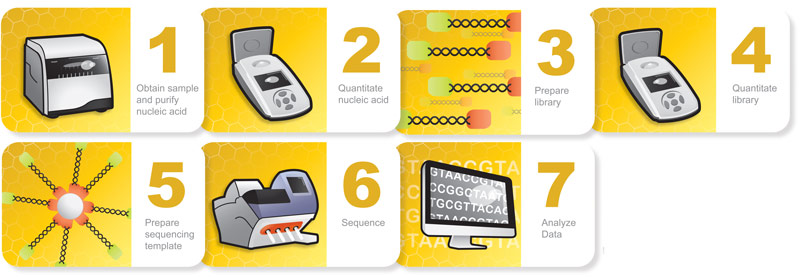
Typical experimental workflows are tedious and consist of numerous steps, including sample collection and cell lysis. One of the major challenges of the process is to maintain the in vivo phosphorylation state of the proteins throughout the preparation process

To evaluate the effect of sample collection protocols on the global phosphorylation status of the cell, a recent paper by Kashin et al. compared different sample workflows by metabolic labeling and quantitative mass spectrometry on Saccharomyces cerevisiae cell cultures (2).

Three different sample collection workflows were evaluated: two that used denaturating conditions and involved mixing of cell cultures with an excess of either ethanol (EtOH) at −80 °C or trichloroacetic acid (TCA), and a third under nondenaturing conditions and washing the cells in PBS.

Their data suggest that either TCA or EtOH sample collection protocols introduced lower collection bias than the PBS protocol. It was also suggested that similar studies be carried out to determine what effects sample preparation has on other post translation modifications such as acetylation or ubiquitination.

Literature Cited

  1. Thingholm T.E. et al, (2009) Analytical strategies for phosphoproteomics. Proteomics 9,1451–68
  2. Kanshin, E. et al. (2015)  Sample Collection Method Bias Effects in Quantitative Phosphoproteomics. J  Proteome Res. 14, 2998-04.

A Reason for Ribonuclease: From Laboratory Nuisance to Cancer Therapeutic

"RNase A". Licensed under CC BY-SA 2.5 via Wikimedia Commons - https://commons.wikimedia.org/wiki/File:RNase_A.png#/media/File:RNase_A.png
“RNase A”. Licensed under CC BY-SA 2.5 via Wikimedia Commons – https://commons.wikimedia.org/wiki/File:RNase_A.png#/media/File:RNase_A.png

RNase, back in the early 1990s, posed a serious threat to laboratories working with RNA isolation. My graduate work involved isolating RNA from the tissues of Lyme disease-infected mice and hamsters. We struggled to DEPC-treat glass and plasticware, or autoclave anything that could be autoclaved, kept tissues cold during RNA harvest and held our breaths (truly, as aerosol could be another source of ribonuclease) until PAGE proved us successful in RNA isolation.

Ribonuclease (RNase) was omnipresent and the arch rival of our work, across several species, due to its RNA destroying abilities.

Now, a July 13, 2015 publication by researchers at the University of Wisconsin-Madison provided both a catch-up for this former lab rat on modern day research with and knowledge of RNase, as well as an exciting look at what may be a real purpose for this RNA-destroying molecule: RNase has moved to clinical trials due to the discovery of it’s cytotoxicity for cancer cells.

Raines’ group in the Department of Chemistry at UWI-Madison published in ACS Central Science their findings on the ligand that RNase 1 uses to attach to human cancer cells, in the article, “Human Cancer Antigen Globo H is a Cell-Surface Ligand for Human Ribonuclease 1”. Continue reading “A Reason for Ribonuclease: From Laboratory Nuisance to Cancer Therapeutic”

Friday Cartoon Post: Do You See the Assays Glowing?

As a tribute to the fireflies lighting up the night during July evenings in Wisconsin and the reporter gene assays they inspire, I wanted to share a special Ed Himelblau cartoon:

Cartoon Copyright by Ed Himelblau

Think your budget is too small to start your new lab? Well, think again.


eh62Guest blog by Joanna Stevenson, Promega AG

You are young, dynamic and full of initiative. Your dreams oscillate around setting your playground and working without being told what to do and how to do it. You think it is the only way for you to produce results that others will envy. Well, your dreams can actually come true sooner than you think— with your persistence and with a little help from the Promega New Lab Set Up Program.

Even after receiving for external funding, you probably have a few items you still need to set up your new lab. Maybe you have already established your first lab, but you need to change the location. In any case, maximize you budget and continue dreaming. It doesn’t matter if you are in the USA, Australia, Spain or Switzerland –we can help. Please visit our program at www.promega.com/newlab to find out how.

Summer Friday Blog: This Week We Travel to Hawaii and Peshtigo, WI to Learn about Firestorms

Fire-whirlThis week’s video takes us to a forest fire on Mauna Kea, a dormant volcano on the island of Hawaii. One of the firefighters captured this amazing video of a fire whirl that erupted as the air temperature near the ground grew very hot. Fire whirls like this one are caused by extreme heat rising from the ground rather than a confluence of atmospheric events, but they can be be every bit as destructive as atmospheric tornadoes and cause a forest fire to continue to burn out of control.

There are written records of fire tornadoes including several that developed after lightning struck an oil storage facility near San Luis Obispo, CA, USA in 1926. In 2003, scientists confirmed true fire tornadoes in Australia associated with the Canberra fires. In this case the fire tornadoes produced damage consistent with the intensity of an F2 tornado. In The Great Pestigo Fire in 1871, the town of Peshtigo, WI, may well have been consumed by fire tornadoes. Dry weather conditions and slash and burn farming practices contributed to this devastating fire (as they did the more famous Chicago fire that occurred on the same day). Strong winds carried a forest fire into the mill town of Peshtigo, WI, and researchers theorize that cut timber and wooden structures of the town fueled such intense heat that a massive fire whirls formed, consuming the town. You can read some compelling stories about the Peshtigo fire here and here.

Understanding the conditions under which firestorms and fire tornadoes form hopefully will lead to a better understanding of how forest and brush fires spread and allow scientists and fire control experts to develop more effective methods of control.

A “Spare Tire” for Proto-oncogene Promoters

A guanine tetrad (left) and G-quadruplex (right). Image courtesy of Wikimedia Commons.

Proto-oncogenes are genes that organisms rely on for normal growth and development but, when mutated or dysregulated, can cause cells to grow uncontrollably, resulting in cancer and metastasis. In some cases, a single DNA mutation is sufficient for cancer to develop. Why then, do so many proto-oncogene promoters contain strings of guanine residues, which are extremely vulnerable to DNA damage from factors such as oxidative stress and hyperinflammation, to control transcription levels? From an evolutionary viewpoint, this is a contradiction: DNA sequences that are the most vulnerable to damage and mutation are key to regulating one of the cell’s most dangerous classes of genes. This seems to be a recipe for genomic instability and disease. Fortunately, evolution has provided a very clever solution to this potential problem.

Continue reading “A “Spare Tire” for Proto-oncogene Promoters”

A Celebration of Life XX—Wild Weather!

Summer Science Vacation

The African American Ethnic Academy and the BioPharmaceutical Technology Center Institute (BTC Institute), both 501(c)(3) non-profit educational organizations, have collaborated for twenty years in offering A Celebration of Life, a summer science program for upper elementary and middle school students. The program is open to all area students, with tuition reimbursement and transportation provided for those who need that assistance.

With supporting grants from the Wisconsin Space Grant Consortium, an educational arm of NASA, two summer science camps are offered this year – one for upper elementary and one for middle schools students. We just completed the first session, full mornings for two weeks for students entering 3rd–5th grade and have launched the second one, same format, for middle school students this week.

Needless to say, the theme of Wild Weather! lends itself to a wide array of hands-on, exploratory activities.  Here are a few of our favorites that you may wish to try out with the kids in your life. Continue reading “A Celebration of Life XX—Wild Weather!”

If We Could But Peek Inside the Cell …Quantifying, Characterizing and Visualizing Protein:Protein  Interactions

14231183 WB MS Protein Interactions Hero Image 600x214

Robert Hooke first coined the term “cell” after observing  plant cell walls through a light microscope—little empty chambers, fixed in time and space. However,  cells are anything but fixed.

Cells are dynamic: continually responding to a shifting context of time, environment, and signals from within and without. Interactions between the macromolecules within cells, including proteins, are ever changing—with complexes forming, breaking up, and reforming in new ways. These interactions provide a temporal and special framework for the work of the cell, controlling gene expression, protein production, growth, cell division and cell death.

Visualizing and measuring protein:protein interactions at the level of the cell without perturbing them is the goal of every cell biologist.

A recent article by Thomas Machleidt et al. published in ACS Chemical Biology, describes a new technology that brings us closer to being able to realize that goal.

Continue reading “If We Could But Peek Inside the Cell …Quantifying, Characterizing and Visualizing Protein:Protein  Interactions”

Wellness at Work: Pedal to Petal Summer Bike Event and Other Initiatives

Corporate wellness programs have been discussed in the media over the past few years, and as I read more about them this week, I discovered that the tangible benefits of such programs are vast, ranging from blood pressure and cholesterol management, to stress reduction and mental wellness. I also came across articles claiming wellness initiatives don’t encourage healthy behavior beyond the requirements, or can be an invasion of privacy when employees are required to submit to comprehensive health screenings. Do corporate wellness programs really work? In my experience, they are indispensable. Wellness programs can serve as motivational starting points for employees interested in leading healthier lifestyles and are thus a very positive component of a company’s culture. In my case, the programs offered at Promega greatly facilitated my personal efforts to become more active and mindful.

Bike PicAs many Wisconsinites can attest, staying active in Wisconsin during the winter months can be incredibly challenging. Even walking from your car to the gym might cause your eyes to water and fingers to go numb from the cold. It is no wonder that when given the chance to snuggle up on a warm couch or to go for a run in the brisk weather this winter, I chose the former. Continue reading “Wellness at Work: Pedal to Petal Summer Bike Event and Other Initiatives”

Getting the Most DNA from Your Plasmid Prep

dificult_cloningPlasmid DNA preparation is one of the fundamental techniques of molecular biology research. It goes without saying that you want to maximize your plasmid DNA yield as much as possible. Below are a few tips to help you get the most out of every Plasmid prep.

Increase Your Culture Volume

Most plasmid prep systems can process a range of volumes. For example, the PureYield™ Miniprep System can process 600μl to 3 ml of culture. Note: Exceeding the recommended culture volume can result in decreased yields because the increased biomass can lead to insufficient lysis and lysate clearing problems.

Use Optimized Culture Conditions

Media: We recommend growing cells in 1X Luria-Bertani (LB) medium. The use of rich medium, such as 2X YT, CircleGROW®, Terrific broth, or LB-Miller medium, which contains more NaCl, can significantly increase yields, provided that the biomass is within the acceptable range.

Culture incubation times: Low-density bacterial cultures yield relatively low amounts of DNA. Overgrown cultures produce suboptimal yields and excessive chromosomal DNA contamination. Do not use cultures grown longer than 18–20 hours. Continue reading “Getting the Most DNA from Your Plasmid Prep”