Traditionally, scientists have relied on flat,
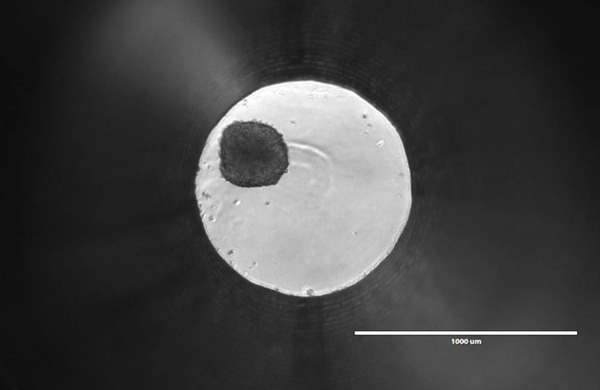
two-dimensional cell cultures grown on substrates such as tissue culture
polystyrene (TCPS) to study cellular physiology. These models are simple and
cost-effective to culture and process. Within the last decade, however, three-dimensional
(3D) cell cultures have become increasingly popular because they are more
physiologically relevant and better represent in vivo conditions.
In recent years, it’s become a well-documented fact that koalas are about as picky as they are adorable. These beloved Australian marsupials have evolved to become ecological specialists: consumers that feed primarily on a single organism, or small number of organisms. Eucalyptus, their organism of choice, encompasses approximately 900 species, most of which are native to Australia. To the koala’s benefit, the leaves of eucalyptus trees are difficult to digest, low in protein content and their chemical composition contains compounds that are toxic. This makes their competition for eucalyptus with other species virtually nonexistent.
That’s not to say there isn’t competition amongst themselves. Of those 900 species of eucalyptus, koalas are only really known to feed on about 40–50 of them, and of those 40–50, they tend to limit their diet to around 10. Depending on their location, however, some koalas will only stick to one preferred type, which can lead to trouble.
With average sea surface temperatures increasing around the world, coral bleaching events are growing in extent and severity. More than two thirds of the corals in the Great Barrier Reef, the world’s largest coral reef, have already bleached. While the physiological consequences of coral bleaching are well-studied, we still don’t fully understand how bleaching happens on a cellular level.
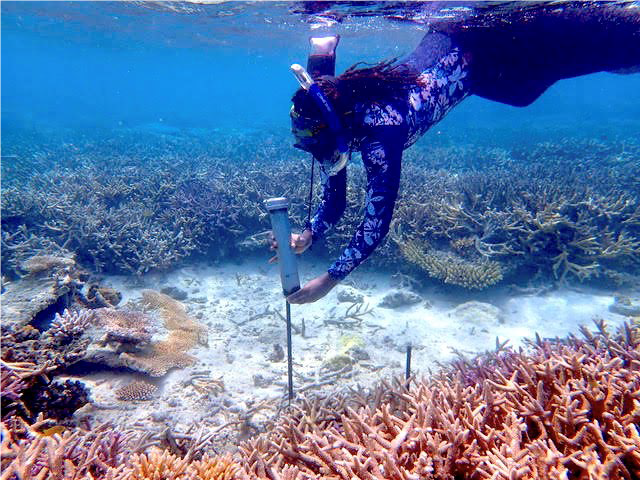
Corals living on shallow patch reefs in Palau. The Palau International Coral Reef Center is the staging ground for the research on mechanisms allowing corals to thrive in warming waters.
Steve Palumbi at Stanford University is delving deeper into the mechanisms by which coral bleaching occurs. In 2018, Promega pledged $3 million over three years to the nonprofit Revive & Restore Catalyst Science Fund, to identify and develop advanced techniques for conservation, enhancing biodiversity, and genetic rescue. Palumbi was awarded the first grant from this fund to study the genomic stress trigger that causes corals to bleach in warming oceans.
You may have heard that antioxidants are good for you, but
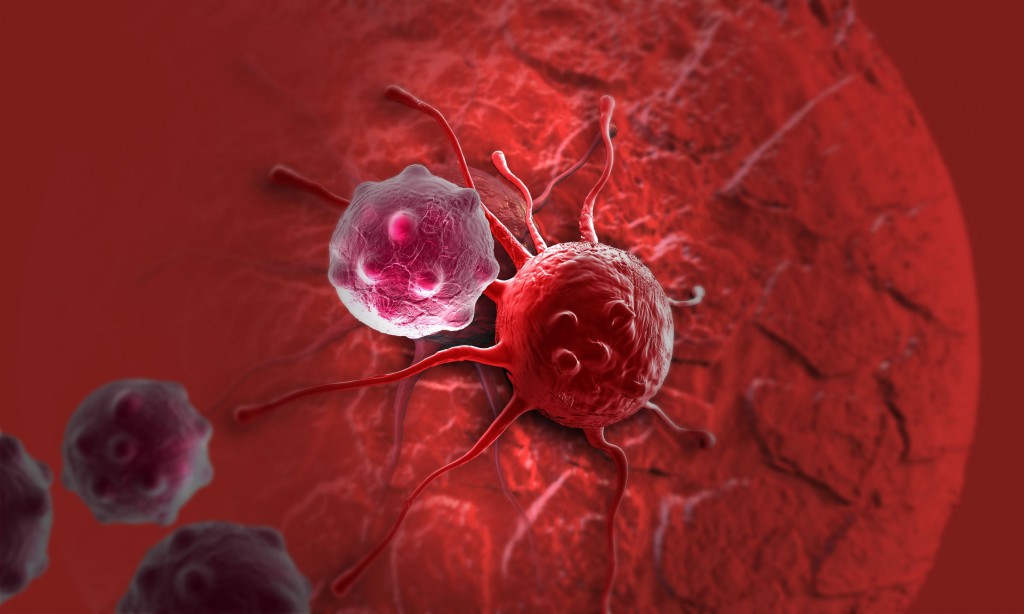
in some cases, they can be harmful. In 2014, a study led by Dr. Martin Bergo at
the Karolinska Institutet in Sweden showed that antioxidant supplements, such
as vitamin E, accelerated tumor growth. This sparked much controversy as it was
previously believed that antioxidants prevented tumor progression.
Since then, more evidence suggests that antioxidants indeed promote tumor progression by reducing reactive oxygen species (ROS) that block tumor growth. In 2019, the same group published a follow-up study to further explain how antioxidants promote lung cancer metastasis.
Bacteria make you sick. The idea that bacteria cause illness has become ingrained in modern society, made evident by every sign requiring employees to wash their hands before leaving a restroom and the frequent food recalls resulting from pathogens like E. coli. But a parallel idea has also taken hold. As microbiome research continues to reveal the important role that bacteria play in human health, we’re starting to see the ways that the microbiota of the human body may be as important as our genes or environment.
The story of how our microbiome affects our health continues to get more complex. For example, researchers are now beginning to understand that the composition of bacteria residing in your body can significantly impact the effects of therapeutic drugs. This is a new factor for optimizing drug response, compared to other considerations such as diet, interaction with other drugs, administration time and comorbidity, which have been understood much longer.
The review “Kinase Inhibitors: the road ahead” was recently published in Nature Reviews Drug Discovery. In it, authors Fleur Ferguson and Nathanael Gray provide an up-to-date look at the “biological processes and disease areas that kinase-targeting small molecules are being developed against”. They note the related challenges and the strategies and technologies being used to efficiently generate highly-optimized kinase inhibitors.
This review describes the state of the art for kinase inhibitor therapeutics. To understand why kinase inhibitors are so important in the development of cancer (and other) therapeutics research, let’s start with the role of kinases in cellular physiology.
The Medicinal Chemistry Center (CQMED), headquartered at Campinas State University in Brazil, recently started a project in partnership with Promega to develop drugs that can be used against Leishmania. This genus of protozoans is the etiological agent of leishmaniasis, transmitted to humans by sandflies.
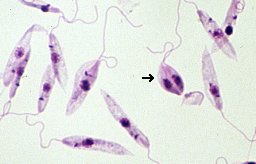
Microscopic image of Leishmania tropica. Credit: Brian E. Keas at Michigan State University.
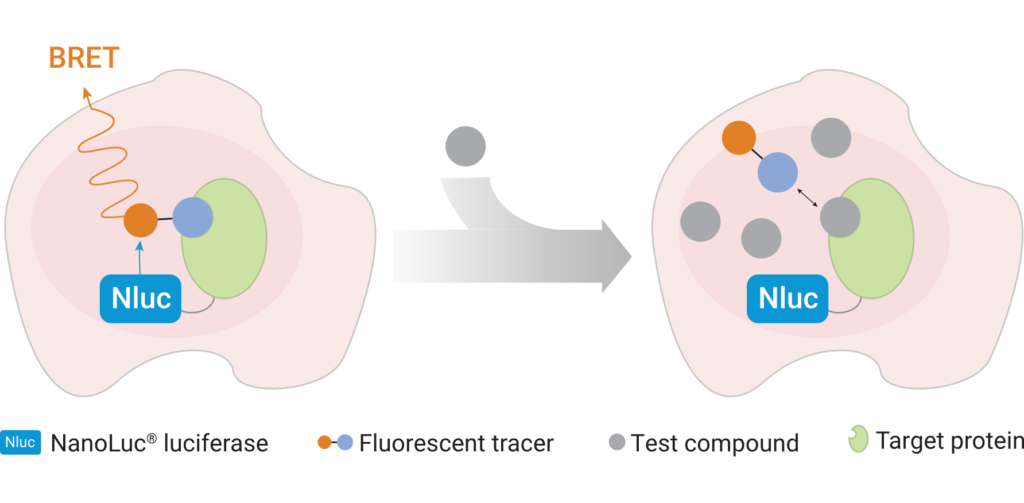
Leishmaniasis is classified as a neglected tropical disease that mainly affects poor communities. Symptoms include large skin sores and an enlarged spleen. The challenge in developing drugs to treat Leishmania is finding appropriate therapeutic targets. These targets are normally proteins whose inhibition leads to death of the parasite. In addition to pharmaceutical company Eurofarma, whose goal is to develop drugs for Leishmania, Promega was chosen to help solve this problem because of our NanoBRET™ Target Engagement (TE) assay*, a well-established technique for measuring protein interactions. In this assay, NanoLuc® luciferase is attached to the protein of interest, and a fluorescent NanoBRET™ tracer molecule is added to the cells. This produces a BRET signal. When a competing ligand is added, it will displace the tracer molecule, enabling quantification of the strength of the interaction compared to the tracer molecule..
A challenge that researchers will face will be ensuring that the NanoBRET™ tracer reaches the inside of the parasite cells; because Leishmania is an intracellular parasite, molecules need to cross the host cell membrane, the membrane of the vacuole containing the parasites, and the membrane of the parasite itself. Another challenge the slow reproduction of Leishmania within macrophages. On top of that is the fact that the parasite’s metabolism varies depending on its biological cycle, meaning that there could be long periods of time during which a drug’s therapeutic target is not expressed in the cell, during which time the drug would have no effect. The ideal target would be expressed at high levels throughout the cell cycle.
The project is being led by Rafael Couñago, a researcher at CQMED, and Promega scientists Matt Robers and Jean-Luc Vaillaud.
*An earlier version of this blog incorrectly said that these experiments are based on the NanoBRET™ assay using HaloTag® protein.
Have you read last week’s breaking story about the microbiome of the human placenta? Wait, stop, don’t run away to Google it! I’ll tell you all about it – this is a science blog, remember?
I’m asking because as I started reading about the topic in preparation for writing this blog post, I noticed two things. First, as a science writer who tries to stay well-connected with what’s going on in the world of biology research, it would have been nearly impossible for me to avoid this story. I get eight or nine daily digest emails from scientific publications every day, and I think over the course of last week, every single one came with a headline related to the placenta study. (Of course, I read them all. And the Nature study they were based on.)
Second, I noticed that each story I read had a slightly different angle on covering the research. As scientists, we like to believe that science is, well, just science. It’s factual. We pore over the data and reach a conclusion. If we aren’t sure of something, we search the journals. The story, if there is one, is about methods and controls, protocols and reagent quality. However, when information about that research is communicated broadly, outside of the journals, we can get a different impression based on how the author frames their article.
Concepcion Sanchez-Cid didn’t know she wanted to be a scientist when she was older. She grew up with a love of music and played the violin, but her curiosity and eagerness to learn drove her down the path for a career in biomedical research.
Hear more of Concepcion’s story:
As a Master’s student at the University of Granada, Concepcion studied biotechnology and landed an internship at the Promega Europe Training and Application Lab (PETAL) in France. She worked with the Applications Team to develop protocols for DNA and RNA extraction from soil. When she decided to pursue a PhD, she received a sponsorship from Promega and enrolled as a student at the University of Lyon while also remaining an employee at PETAL.
Concepcion says that the balance between both worlds—academia and industry—provide her with technical skills and a unique support network that has helped shape her PhD thesis work. “Working at a university and a company at the same time…you get very different feedback from people that are very specialized, and they really know what they’re doing, so at the end you integrate everything,” she says. “It’s one of the things I appreciate most about my PhD.”
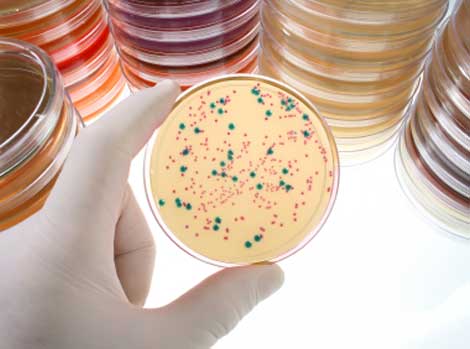
Agar plate containing colonies important for research.
Ah, the wonders and frustrations of cloning. We’ve all been there. After careful planning, you have created the cloned plasmid containing your DNA sequence of interest, transformed it into bacterial cells and carefully spread those cells on a plate to grow. Now you stand at your bench gazing down at your master piece: a plate full of tiny bacterial colonies. Somewhere inside those cells is your DNA sequence, happily replicating with its plasmid host. But wait – logic tells you that not ALL of those colonies can contain your plasmid. There must be hundreds of colonies. Which ones have your plasmid? You begin to panic. Visions of yourself old and grey and still screening colonies flash through your mind. At the next bench, your lab-mate is cheerfully selecting colonies to screen. Although there are hundreds of colonies on her plate as well, some are white and some are blue. She is only picking the white colonies. What does she know that you don’t?
XWe use cookies and similar technologies to make our website work, run analytics, improve our website, and show you personalized content and advertising. Some of these cookies are essential for our website to work. For others, we won’t set them unless you accept them. To learn more about our approach to Privacy we invite you to Read More
By clicking “Accept All”, you consent to the use of ALL the cookies. However you may visit Cookie Settings to provide a controlled consent.
We use cookies and similar technologies to make our website work, run analytics, improve our website, and show you personalized content and advertising. Some of these cookies are essential for our website to work. For others, we won’t set them unless you accept them. To find out more about cookies and how to manage cookies, read our Cookie Policy.
If you are located in the EEA, the United Kingdom, or Switzerland, you can change your settings at any time by clicking Manage Cookie Consent in the footer of our website.
Necessary cookies are absolutely essential for the website to function properly. These cookies ensure basic functionalities and security features of the website, anonymously.
Cookie
Duration
Description
cookielawinfo-checbox-analytics
11 months
This cookie is set by GDPR Cookie Consent plugin. The cookie is used to store the user consent for the cookies in the category "Analytics".
cookielawinfo-checbox-functional
11 months
The cookie is set by GDPR cookie consent to record the user consent for the cookies in the category "Functional".
cookielawinfo-checbox-others
11 months
This cookie is set by GDPR Cookie Consent plugin. The cookie is used to store the user consent for the cookies in the category "Other.
cookielawinfo-checkbox-advertisement
1 year
The cookie is set by GDPR cookie consent to record the user consent for the cookies in the category "Advertisement".
cookielawinfo-checkbox-necessary
11 months
This cookie is set by GDPR Cookie Consent plugin. The cookies is used to store the user consent for the cookies in the category "Necessary".
cookielawinfo-checkbox-performance
11 months
This cookie is set by GDPR Cookie Consent plugin. The cookie is used to store the user consent for the cookies in the category "Performance".
gdpr_status
6 months 2 days
This cookie is set by the provider Media.net. This cookie is used to check the status whether the user has accepted the cookie consent box. It also helps in not showing the cookie consent box upon re-entry to the website.
lang
This cookie is used to store the language preferences of a user to serve up content in that stored language the next time user visit the website.
viewed_cookie_policy
11 months
The cookie is set by the GDPR Cookie Consent plugin and is used to store whether or not user has consented to the use of cookies. It does not store any personal data.
Analytical cookies are used to understand how visitors interact with the website. These cookies help provide information on metrics the number of visitors, bounce rate, traffic source, etc.
Cookie
Duration
Description
SC_ANALYTICS_GLOBAL_COOKIE
10 years
This cookie is associated with Sitecore content and personalization. This cookie is used to identify the repeat visit from a single user. Sitecore will send a persistent session cookie to the web client.
vuid
2 years
This domain of this cookie is owned by Vimeo. This cookie is used by vimeo to collect tracking information. It sets a unique ID to embed videos to the website.
WMF-Last-Access
1 month 18 hours 24 minutes
This cookie is used to calculate unique devices accessing the website.
_ga
2 years
This cookie is installed by Google Analytics. The cookie is used to calculate visitor, session, campaign data and keep track of site usage for the site's analytics report. The cookies store information anonymously and assign a randomly generated number to identify unique visitors.
_gid
1 day
This cookie is installed by Google Analytics. The cookie is used to store information of how visitors use a website and helps in creating an analytics report of how the website is doing. The data collected including the number visitors, the source where they have come from, and the pages visted in an anonymous form.
Advertisement cookies are used to provide visitors with relevant ads and marketing campaigns. These cookies track visitors across websites and collect information to provide customized ads.
Cookie
Duration
Description
IDE
1 year 24 days
Used by Google DoubleClick and stores information about how the user uses the website and any other advertisement before visiting the website. This is used to present users with ads that are relevant to them according to the user profile.
test_cookie
15 minutes
This cookie is set by doubleclick.net. The purpose of the cookie is to determine if the user's browser supports cookies.
VISITOR_INFO1_LIVE
5 months 27 days
This cookie is set by Youtube. Used to track the information of the embedded YouTube videos on a website.
Performance cookies are used to understand and analyze the key performance indexes of the website which helps in delivering a better user experience for the visitors.
Cookie
Duration
Description
YSC
session
This cookies is set by Youtube and is used to track the views of embedded videos.
_gat_UA-62336821-1
1 minute
This is a pattern type cookie set by Google Analytics, where the pattern element on the name contains the unique identity number of the account or website it relates to. It appears to be a variation of the _gat cookie which is used to limit the amount of data recorded by Google on high traffic volume websites.