Working with RNA doesn’t have to be a nightmare

We’re all familiar with the Central Dogma of Molecular Biology: DNA is transcribed into RNA, which is translated into proteins. It’s drilled into our heads from the early days of biology classes, and it’s surprisingly useful when we start exploring in our own research projects. For example, if you’re interested in gene expression, you’ll most likely be working with RNA, specifically mRNA. Messenger RNA (mRNA) is transcribed from DNA and is used by ribosomes as a “template” for a specific protein. The total mRNA in a cell represents all of the genes that are actively being transcribed. So, if you want to know whether or not a gene is being transcribed, RNA purification is a great place to start.

When preparing your RNA samples for a downstream assay, there are several roadblocks and pitfalls that could give you quite a headache. Letโ€™s tackle two of the most common.

Continue reading “Working with RNA doesn’t have to be a nightmare”

Using Environmental DNA to Find Sharks

Sharks are often known as one of the fiercest predators in the ocean. Yet they are also one of the most threatened marine speciesโ€”largely because they are hunted by humans for their highly valuable fins. How do we know they are being threatened?

Traditionally, researchers have estimated the population and diversity of sharks using two methods. One is by sending divers into the water to count the number of sharks and record which species they see. Another is to set up baited cameras in different locations to record the sharks that come near. When fewer species of sharks are examined using these methods, we conclude that there is a decrease in diversity and an increase in whatโ€™s called โ€œdark diversityโ€.

Continue reading “Using Environmental DNA to Find Sharks”

Shaping the Future by Investing in Science

โ€œToday is certainly a great day for Promega R&D, but it is also a great day for science.โ€

Picture of people gathered
Community members and Promega employees gather for the ground breaking celebration for a new R&D facility.

Gary Tarpley, director of Research and Development at Promega closed his remarks for the ground breaking of the new Promega Research and Development Center in Fitchburg, WI, with those words.

With the ground breaking on this new R&D facility, Promega makes a $190 million, long-term investment in science.

But why invest in science?

Continue reading “Shaping the Future by Investing in Science”

Beneath the Writing: Non-Invasive DNA Sampling from Modern and Historic Writing Surfaces

We can learn a lot about the past and its people from the written records of the time. What people write and how they write it can gives us glimpses into historical events, interpersonal relationships, social standing and even social and cultural norms. From paper to papyrus to clay tablets, the surface that holds the writing can tell us things that the words cannot.

For plant-based writing surfaces, the quality of the surface or even the technique used to make it can give historians and archeologists insight into the people who used them. What more could we learn if we knew what plant, or plants, were used in the production of ancient writing material? Continue reading “Beneath the Writing: Non-Invasive DNA Sampling from Modern and Historic Writing Surfaces”

Tetanus Neurotoxin: Potential Mechanism for Drug Delivery

Tetanus neurotoxin (TeNT), produced by Clostridium tetani, is one of the most potent neurotoxins in humans. TeNT causes tetanus, which is characterized by painfulย muscular contractions and spasms as well as seizure. TeNT is composed of a light chain and a heavy chain (TTH). The toxic properties of TeNT reside in the toxinย light chain (L), but like complete TeNT, the TeNT heavy chain (TTH) and the C-terminal domain (TTC) alone can bind and enter into neurons.

Based on these properties, a recent publication (1) considered that TTC could be a promising vehicle to deliver drug cargos to neurons. To explore this possibility, they engineered fusion proteins containing various Tetanus neurotoxin fragments. They chose B-cell leukemia/lymphoma 2 protein (Bcl-2) as a partner protein, because Bcl-2 is one of the most potent anti-apoptotic proteins and has an appropriate size (26kDa) to act as a fusion partner.

They tested these fusion proteins in both cell-based and cell-free protein expression systems to determineย whether theย purified fusion products retained both anti-apoptotic and neuronal migration properties.ย One construct (Bcl2-hTTC) exhibited neuronal binding and prevented cell death of neuronal PC12 cells induced by serum and NGF deprivation, as evidencedย by the inhibition of cytochrome C release from the mitochondria. For in vivo assays, Bcl2-hTTC was injected into the tongues of mice and was seenย to selectively migrate to hypoglossal nuclei mouse brain stems.

  1. Watanbe, Y. et. al. (2018) Tetanus toxin fragments and Bcl-2 fusion proteins : cytoprotection and retrograde axonal migration. BMC Biotechnologyย 18, 39.

“GenEthics” – The Implications of Genomic Data

I majored in genetics because I love Punnett Squares. Donโ€™t get me wrong, I was fascinated by the groundbreaking research going on in fields like oncology and agriculture, but there was something about the simple and logical nature of calculating inheritance patterns that really drew me in. At the time when I confusingly wandered into my advisorโ€™s office to make this life changing academic decision, I had no idea that this degree would help me see the more complicated, โ€œgray areaโ€, of science, changing the way that I look at the world today.

What is “GenEthics” ?

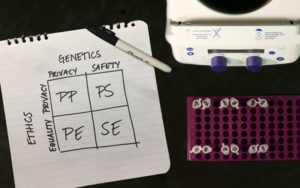
As Iโ€™m sure youโ€™ve already guessed, โ€œGenEthicsโ€ is the intersection between the fields of genetics and ethics. A broad term involving questions related to the implications of a variety of different topics in genetic research; โ€œGenEthicsโ€ covers everything from the modification of stem cells, to gene therapy and GMOs. Since this term encompasses such a large array of topics, Iโ€™m going to focus on some of the ethical questions related to your genome.

Genomic data and its applications

If youโ€™ve ever heard of 23andMe or Ancestry.com then youโ€™ve already had an introduction to genomic data. These direct-to-consumer genetic testing companies are a result of advancements in technology that have made the genotyping process relatively cheap and quick. When you submit a sample, they send it to a lab, extract the DNA, and test it for various markers. Whatโ€™s returned to you is a report of what markers (alleles) you do and donโ€™t have. These reports can tell you everything from what percent German you are, to your status for any of the many alleles of several genes that may increase risk for Alzheimerโ€™s disease. Genomic data has affected a variety of fields; knowledge of the genome has allowed us to catch famous criminals like the Golden State Killer and has provided us with diagnostic markers for serious diseases. But even with all the good that genomic data has done and will do, there is a โ€œgray areaโ€ where many questions regarding safety, equality, and privacy lie.

Safety – Should everyone have their genomes sequenced?

Some believe this is the future of healthcare, that everyone will have their genomes sequenced at birth and put into a national database. This would have amazing implications in the research world; access to endless data, and the ability to form conclusions about everything from human disease to intelligence.

This question also brings up a plethora of others, some pertaining to identity safety. In particular, what if this fictitious database is hacked? There have already been smaller-scale database breaches, the most recent being on the MyHeritage website. These breaches are potentially dangerous; the entirety of your personal health information is housed in your genome. With proper scientific guidance, hackers could infer your: gender, ethnicity, disease status, etc. DNA is not like a credit card, there is no way to obtain a new set of genes.

Equality – How do we ensure that everyone benefits from the advancements that genomic data has to offer?

There are many studies being done with the goal of eradicating cancer using precision medicine. This involves finding common tumor-causing variants in patientsโ€™ DNA sequences, and treating them based on their genes. These types of studies have the potential to contribute greatly to the field of personalized medicine, but caution needs to be taken to ensure that multiple populations are represented in the study. Ethnic groups have evolved on separate continents and their genetic sequences contain different variations, one set of conclusions about a disease might not apply to all populations.

Privacy: Who has a right to your genetic information?

The Genetic Nondiscrimination Act (GINA) was passed in 2008 to prevent your genetic test results from affecting your qualification for health insurance, or employment prospects. However, this is but a scratch on the surface of possible genomics-related legal issues; the ownership of a DNA sequence is a complete question mark at this time. There are no laws regarding an organization or family membersโ€™ right to an individualโ€™s sequence.

Genomic data has the ability to save lives and prevent devastating disease, but it also can cause disputes within families, and between organizations and individuals. The question of DNA ownership brings up many others: if you test positive for a condition, should you inform other at risk family members? Do you have sole claim on your DNA when you have family members that share most of your sequence? When you submit your DNA to an organization what ownership rights do they have?

The Future…

We have come a long way since completion of the Human Genome Project back in 2003, and we will continue to make amazing advances thanks to the field of genetics. The questions I have posed are just a few that lie in the โ€œgray areaโ€ we will be venturing into in the future. These questions may seem as if they are just for researchers, doctors, and lawyers, but they really are for everyone. The social and ethical implications of science affect us all; itโ€™s important that we all join the conversation!
High-Throughput Drug Screening Using 3D Cell Cultures

For a long time, the drug industry has relied on flat 2D cell cultures grown on a plate to screen for potential drugs. However, 2D models do not accurately reflect the native environment of cells in vivo. 3D cell cultures, on the other hand, better represent the numerous cell-cell and cell-matrix interactions and hypoxic conditions that have a profound effect on the behavior of cells. In a 2018 study published in Oncogene, Kota et al. developed a high-throughput 3D spheroid-based screening assay to identify drug candidates that target RAS proteins.


RAS proteins are GTPases that transmit extracellular signals into cellular signaling pathways, which could activate cell proliferation, differentiation and survival mechanisms. Oncogene mutation in the three human RAS genes (HRAS, NRAS and KRAS) are found in 30% of all cancers, making RAS proteins the most common oncogene. In fact, mutations in KRAS are found in >90% of pancreatic cancers. Despite the prevalence of RAS mutations, targeting RAS proteins with drugs is extremely challenging due to the complex nature of the protein.

The authors in this study wanted to test a new approach using a 3D spheroid-based screening assay to find drugs that target RAS proteins. They first harvested 2D monolayer cultures of pancreatic epithelial tumor cells that express either wild-type KRAS or mutant oncogenic KRAS, and tested their ability to form 3D spheroids. They confirmed spheroid growth using the CellTiter-Gloยฎ 3D Cell Viability Assay with linearity of detection in the range of 1,000โ€“10,000 cells seeded.

The 3D spheroids were then treated with a library of 1,280 known drugs. From the high-throughput screen, they identified one compound with the greatest selective inhibition against oncogenic KRAS. The compound is called Proscillaridin A, a cardiac glycoside that is known for treating congestive heart failure and cardiac arrhythmia. In 3D spheroids, Proscillardin A inhibited oncogenic KRAS at a >90% inhibition rate, with <10% inhibition of wild-type KRAS. In 2D cultures, however, there was no selective inhibition of oncogenic KRAS (inhibition rates for both oncogenic and wild-type KRAS were about 50%). This means that Proscillaridin A would not have been identified as a candidate if the screen was done using only 2D cultures.

Next, the authors wanted to determine how Proscillaridin A impacts tumor cell viability. Could it induce apoptosis in tumor cells? To test this, they used the RealTime-Glo™ Annexin V Apoptosis Assay. This bioluminescent assay is able to detect apoptosis in real time, based on the exposure of phosphatidylserine on the outer leaflet of the cell membrane when apoptosis occurs. Using this assay, they found that Proscillaridin A induced apoptosis at earlier time points and higher rates in 3D spheroids expressing oncogenic KRAS compared with wild-type KRAS. In 2D cultures, there was no difference in the rate of apoptosis.

This study shows that high-throughput screening in 3D spheroids can identify potential drugs that would not have been discovered in a 2D format. This provides hope for finding drugs against difficult target proteins such as RAS.

Reference: Kota S., et al. (2018) A novel three-dimensional high-throughput screening approach identifies inducers of a mutant KRAS selective lethal phenotype. Oncogene. Epub ahead of print.

Bacteria and Viruses as Cancer Treatments

Over a hundred years ago William B Coley, the โ€œFather of Immunotherapyโ€, discovered that injection of bacteria or bacterial toxins into tumors could cause those tumors to shrink. The introduction of bacteria had the side-effect of stimulating the immune system to attack the tumor. The field of cancer immunotherapy researchโ€”which today includes many different approaches for generating anti-tumor immune responsesโ€”originated with these early experiments.

Use of bacteria is one way to stimulate the immune system to attack cancer cells, others include use of cytokines, immune checkpoint blockades and vaccines. This Nature animation provides a simple overview of these methods.

Continue reading “Bacteria and Viruses as Cancer Treatments”

Factors Influencing Compound Potency in Biochemical and Cellular Assays

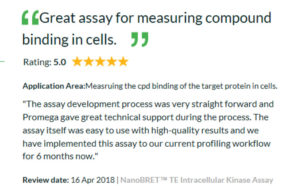
Late in 2017, a group here at Promega launched an exciting new assay, the NanoBRETโ„ข Target Engagement (TE) Intracellular Kinase Assay.

Itโ€™s easy for me to call this assay exciting; I was an editor on the project team. But judging by the reviews on the SelectScienceยฎ web site, others are excited about NanoBRETโ„ข Target Engagement Intracellular Kinase Assay too.

A review of the NanoBRET TE Kinase assay from SelectScienceยฎ .
Continue reading “Factors Influencing Compound Potency in Biochemical and Cellular Assays”

Millions of Pickles, Pickles in the Sea

For a few years beginning late in 2013, warmer ocean conditions in the eastern Pacific prompted the appearance of unexpected species and toxic algal blooms that devastated others. When temperatures cooled in 2017, the marine ecosystems seemed to be returning to normal. Except for the pyrosomes. Although these previously rare organisms did start to wash up on beaches during the periods of warming, they began to appear by the millions from Oregon to Alaska that spring.

Pyrosomes
Photo by Steven Grace.

Some combination of ideal conditions led pyrosomes to multiply, dominate the ocean surface and wash up on beaches along the US and Canadian Pacific Coasts. Pyrosomes typically exist offshore, far below the surface in warm, tropical waters all over the world. Their sudden proliferation in other areas is likely due to the warm, Pacific ocean โ€œblob,โ€ although atypical sea currents and changes in pyrosome diet have been offered as other possible explanations.

While the appearance of pyrosomes impeded the efforts of fisherman by clogging nets and filling hooks, greater ecological effects have yet to be observed. As we celebrate World Oceans Month, pyrosomes offer a mesmerizing example of the astounding biological diversity our oceans have to offer and, perhaps, a cautionary tale of the impact climate change can have on those marine lifeforms.

The pyrosome species common in the NE Pacific, Pyrosoma atlanticum, goes by a few other colorful names. Each name reveals something captivating about these creatures. Commonly called โ€œsea picklesโ€ due their size, shape and bumpy texture (like a transparent cucumber), these are not single organisms, but colonies formed by hundreds or thousands of individual multicellular animals call zooids.

Continue reading “Millions of Pickles, Pickles in the Sea”