Seeds of Change Award Recognizes Commitment to Local Community

Nicole Haselwander and Stephanie Shea accept the Seeds of Change award for Promega.

Community Shares of Wisconsin presented Promega with its Seeds of Change award for our workplace giving efforts. The award is presented to a local business that shows innovation, growth, and commitment to Community Shares of Wisconsin. Over the past 15 years Promega and our employees have collectively contributed more than $717,000 to Community Shares work! Our 100% corporate matching helps employee gifts go twice as far to member nonprofits and the community.

Charitable giving programs and paid time off for community service are examples of Promega’s commitment to corporate responsibility. Learn more at https://www.promega.com/responsibility #corporateresponsibility

Nicole Haselwander and Stephanie Shea were on hand at the Community Change-Maker Awards hosted by Community Shares of Wisconsin to accept the Seeds of Change award on behalf of Promega Corporation. “It was an incredibly inspiring and uplifting program,” says Stephanie.
Related Posts

The Surprising Life of Bones

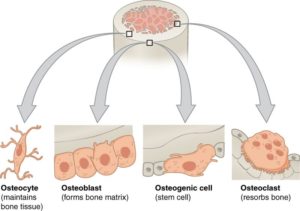
Schematic of bone producing and reducing cells osteoblasts and osteoclasts.
The cells that make and degrade bone.

Standing, walking, running. When was the last time you gave your skeleton a second thought? How about when that car barely missed you in the parking lot? Or a deer ran in front of you? Maybe you just missed a car door opening on your bike ride today?

Your bones were involved in your response to that sudden shock/surprise, but not the way you think.

You may have jumped, swerved or hit the brake pedal (congratulations on the excellent reflexes) and yes, bones were involved in all of those actions. But a new article in Cell Metabolism reveals that bone is the essential component in initiation of that response.

Continue reading “The Surprising Life of Bones”

Experimenting with Resilience: Lessons from Grad School

Today’s blog is guest-written by Susanna Harris, a graduate student at the University of North Carolina in Chapel Hill.


It’s one thing to hear that everything is going to be okay. It’s another to know it and make it that way.

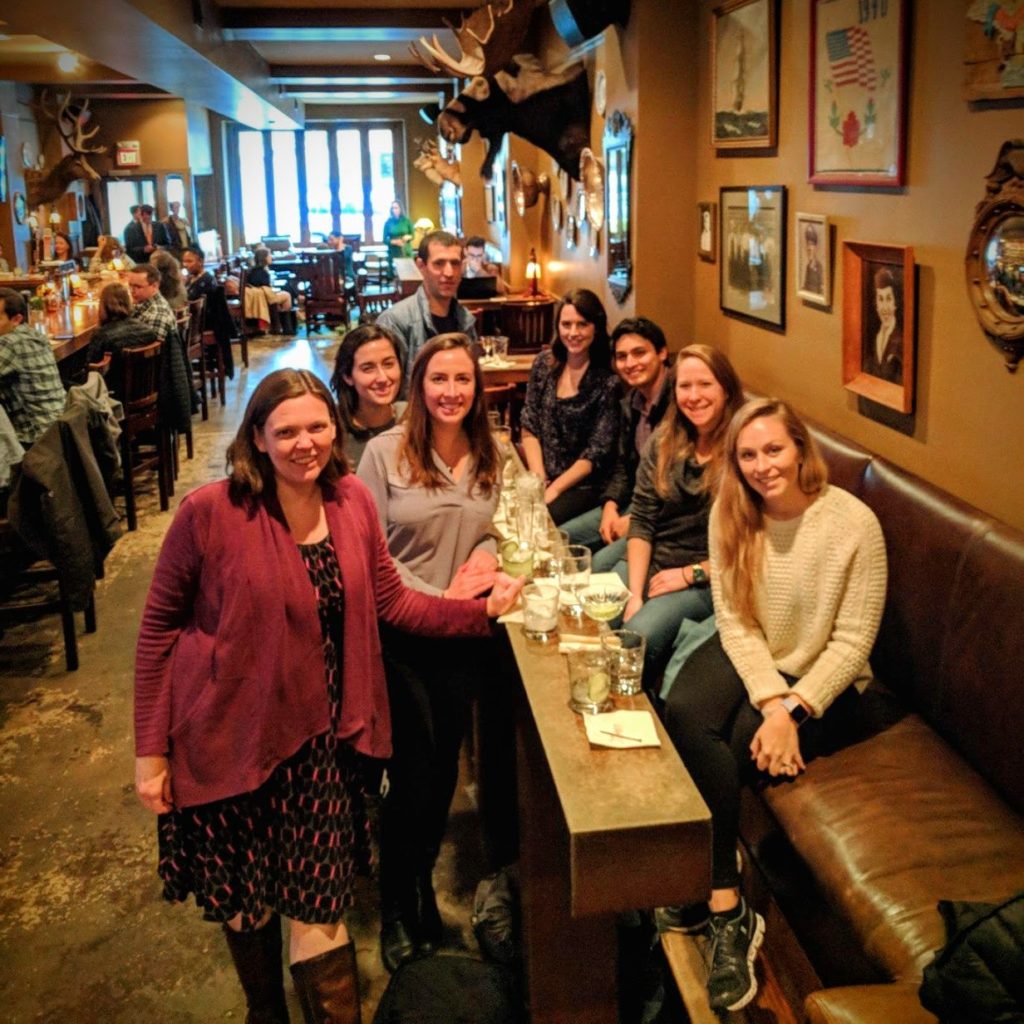
Susanna and her lab mates at a recent bar night
Photo provided by Susanna Harris

At the end of a lab meeting where I had outlined my last of six years getting my PhD, my advisor announced she would be moving the lab from North Carolina to Massachusetts in about six months. Just when everything had settled into place, this announcement turned my bookshelf of plans on its side once again. Suddenly, I didn’t know what would happen next.

I chose to go to grad school partly to challenge myself to accept uncertainty. When I started my PhD in Microbiology in 2014, I thought this would mean reading new papers and adjusting experiments accordingly. As it has turned out, the real challenge has been to constantly get back up as life and graduate school knock me flat on my ass. Yes, I needed strength to power through, but even more than that, I needed resilience.

Continue reading “Experimenting with Resilience: Lessons from Grad School”

Striking Fear into the Heart of Cardiovascular Disease Using Zebrafish and NanoLuc® Luciferase

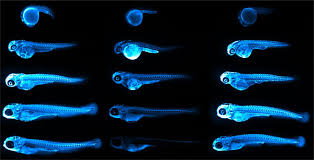
Representative images of ApoB-LP localization in zebrafish across developmental, genetic, pharmacological and dietary manipulations.
Credit: Figure 5.D of The LipoGlo reporter system for sensitive and specific monitoring of atherogenic lipoproteins by James Thierer, Stephen C. Ekker and Steven A. Farber.
Article licensed under Creative Commons Attribution 4.0 International License.

Cardiovascular diseases, or CVDs, are collectively the most notorious gang of cold-blooded killers threatening human lives today. These unforgiving villains, including the likes of coronary heart disease, cerebrovascular disease and pulmonary embolisms, are jointly responsible for more deaths per year than any other source, securing their seat as the number one cause of human mortality on a global scale.

One of the trademarks of most CVDs is the thickening and stiffening of the arteries, a condition known as atherosclerosis. Atherosclerosis is characterized by the accumulation of cholesterol, fats and other substances, which together form plaques in and on the artery walls. These plaques clog or narrow your arteries until they completely block the flow of blood, and can no longer supply sufficient blood to your tissues and organs. Or the plaques can burst, setting off a disastrous chain reaction that begins with a blood clot, and often ends with a heart attack or stroke.

Given the global prevalence and magnitude of this problem, there is a significant and urgent demand for better ways to treat CVDs. In a recent study published in Nature Communications, researchers at the Carnegie Institution for Science, Johns Hopkins University and Mayo Clinic are taking the fight to CVDs through the study of low-density lipoproteins (LDLs), the particles responsible for shuttling bad cholesterol throughout the bloodstream.

Continue reading “Striking Fear into the Heart of Cardiovascular Disease Using Zebrafish and NanoLuc® Luciferase”

I Have My Luciferase Vector, Now What?

Choosing and Optimizing Transfection Methods

Here in Technical Services we often talk with researchers at the beginning of their project about how to carefully design and get started with their experiments. It is exciting when you have selected the Luciferase Reporter Vector(s) that will best suit your needs; you are going to make luminescent cells! But, how do you pick the best way to get the vector into your cells to express the reporter? What transfection reagent/method will work best for your cell type and experiment? Do you want to do transient (short-term) transfections, or are you going to establish a stable cell line?

Continue reading “I Have My Luciferase Vector, Now What?”

Manipulating Koala Microbiomes Using…Poo Pills?

“Koalas – mum and baby” by Amanda Penrose is licensed under CC BY-NC-SA 2.0 

In recent years, it’s become a well-documented fact that koalas are about as picky as they are adorable. These beloved Australian marsupials have evolved to become ecological specialists: consumers that feed primarily on a single organism, or small number of organisms. Eucalyptus, their organism of choice, encompasses approximately 900 species, most of which are native to Australia. To the koala’s benefit, the leaves of eucalyptus trees are difficult to digest, low in protein content and their chemical composition contains compounds that are toxic. This makes their competition for eucalyptus with other species virtually nonexistent.

That’s not to say there isn’t competition amongst themselves. Of those 900 species of eucalyptus, koalas are only really known to feed on about 40–50 of them, and of those 40–50, they tend to limit their diet to around 10. Depending on their location, however, some koalas will only stick to one preferred type, which can lead to trouble.  

Continue reading “Manipulating Koala Microbiomes Using…Poo Pills?”

Prions Go Slow with ASOs: Experimental Treatment for ALS, Alzheimer’s and Other Prion-like Diseases

In the late-80’s through the 90’s, food and health agencies focused on a mysterious fatal brain disease that infected thousands of cattle. Bovine spongiform encephalitis—or “mad cow disease”—is caused by an infectious protein called a prion. Despite fears that tainted meat would cause the disease to spread to humans, mad cow disease never really made an impact on human health. However, forms of the prion disease such as Creutzfeldt-Jakob disease do affect humans.

In addition to Creutzfeldt-Jakob disease, many neurodegenerative diseases such as Alzheimer’s, Parkinson’s, Huntington’s and amyotrophic lateral sclerosis (ALS or Lou Gehrig’s disease) are now thought to be a result of prion-like activity. There is no cure for these diseases, however, new experimental treatment strategies might help slow the progression of neural degeneration.

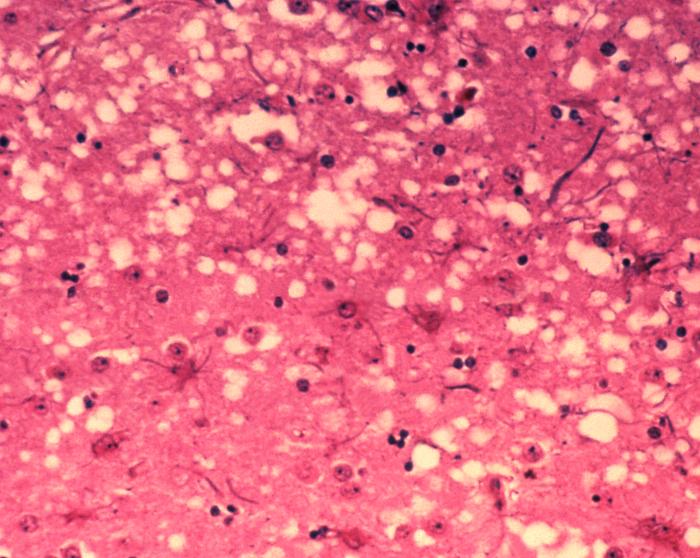
prion_bse_histology
The tell-tale “holes” of prion infection in brain tissue.
Continue reading “Prions Go Slow with ASOs: Experimental Treatment for ALS, Alzheimer’s and Other Prion-like Diseases”

Anti-Cancer Drugs Are Pro-Coral

With average sea surface temperatures increasing around the world, coral bleaching events are growing in extent and severity. More than two thirds of the corals in the Great Barrier Reef, the world’s largest coral reef, have already bleached. While the physiological consequences of coral bleaching are well-studied, we still don’t fully understand how bleaching happens on a cellular level.

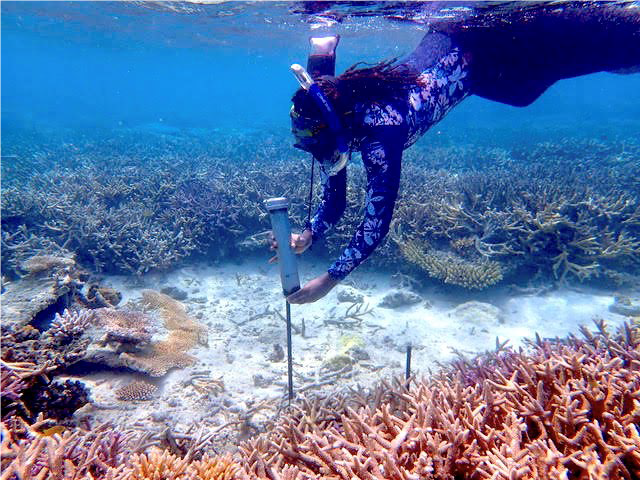
Corals living on shallow patch reefs in Palau. The Palau International Coral Reef Center is the staging ground for the research on mechanisms allowing corals to thrive in warming waters.

Steve Palumbi at Stanford University is delving deeper into the mechanisms by which coral bleaching occurs. In 2018, Promega pledged $3 million over three years to the nonprofit Revive & Restore Catalyst Science Fund, to identify and develop advanced techniques for conservation, enhancing biodiversity, and genetic rescue. Palumbi was awarded the first grant from this fund to study the genomic stress trigger that causes corals to bleach in warming oceans.

Continue reading “Anti-Cancer Drugs Are Pro-Coral”

Delving into the Diversity of The Plague of Justinian

Wayson stain of Yersinia pestis showing the characteristic
Yersinia pestis. U.S. Center for Disease Control [Public domain], via Wikimedia Commons.
Human teeth play a key role in our understanding of how organisms evolve. Whenever a possible new member of the hominid family is uncovered, the shape and number of teeth are used to place that individual in the family tree. Teeth also harbor information about pathogens that have plagued humans for millennia. Because bacteria use our bloodstream as a transport system, protected places that can preserve DNA—like the pulp of teeth—are a rich medium for uncovering information about humans and the microbes that infected them.

Teeth have been the choice for identifying the infectious agent behind the Plague of Justinian in the sixth century and the Black Plague in the 14th century. In fact, Yersinia pestis, the bacterium responsible for these plagues, has infected humans as far back as the Neolithic. But what can we learn about the pandemic strain or strains of Y. pestis described in historical records? A team of researchers from Europe and the US, many of whom have been delving into the history of Y. pestis for the last decade, wanted to further investigate the Plague of Justinian. They studied bacterial DNA extracted from human remains found in Western European communal graves that were dated to around 541–750, the period of the historically documented Plague of Justinian. Their investigation examined the bacteria’s diversity and how far it spread during this “First Pandemic” of plague. Continue reading “Delving into the Diversity of The Plague of Justinian”

How Antioxidants Stimulate Lung Cancer Metastasis

You may have heard that antioxidants are good for you, but in some cases, they can be harmful. In 2014, a study led by Dr. Martin Bergo at the Karolinska Institutet in Sweden showed that antioxidant supplements, such as vitamin E, accelerated tumor growth. This sparked much controversy as it was previously believed that antioxidants prevented tumor progression.

Since then, more evidence suggests that antioxidants indeed promote tumor progression by reducing reactive oxygen species (ROS) that block tumor growth. In 2019, the same group published a follow-up study to further explain how antioxidants promote lung cancer metastasis.

Continue reading “How Antioxidants Stimulate Lung Cancer Metastasis”