The Path Brightens for Vaccine Researchers: Luminescent Reporter Viruses Detect Neutralizing Antibodies

Developing a vaccine that is safe, effective, easily manufactured and distributed is a daunting task. Yet, that is exactly what is needed in response to the COVID-19 pandemic.
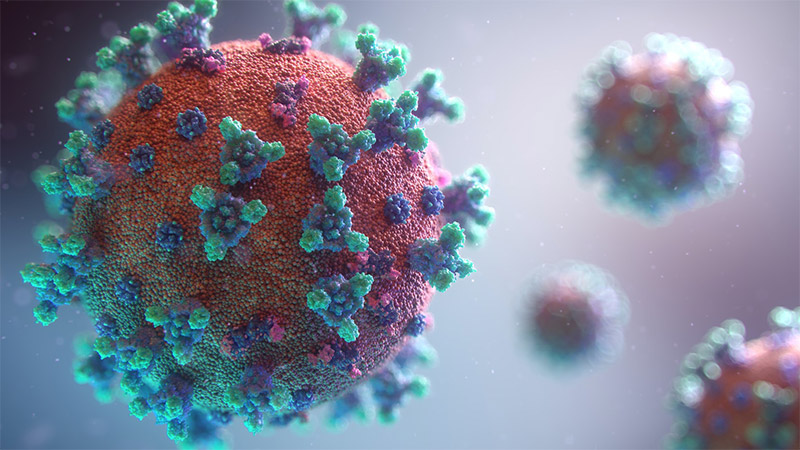
Computer generated 3D image of coronavirus

Vaccine development, safety and efficacy testing take time. The mumps vaccine is thought to be the quickest infectious disease vaccine ever produced, and its development required four years from sample collection to licensing (2). However, there are many reasons to anticipate quicker development for a COVID-19 vaccine: Researchers are collaborating in unprecedented ways, and most COVID-19 scientific publications are free for all to access and often available as preprints. As of August 11, 2020, researchers around the globe have more than 165 vaccine candidates in development, 30 of which are in some phase of human clinical trials (1). The range of vaccine formulations available to scientists has expanded to include RNA and DNA vaccines, replication-defective adenovirus vaccines, inactivated or killed vaccines and subunit protein vaccines. Equally important is that vaccine developers and researchers have greater access to powerful molecular biology tools like bioluminescent reporters that enable quicker testing and development.

Continue reading “The Path Brightens for Vaccine Researchers: Luminescent Reporter Viruses Detect Neutralizing Antibodies”
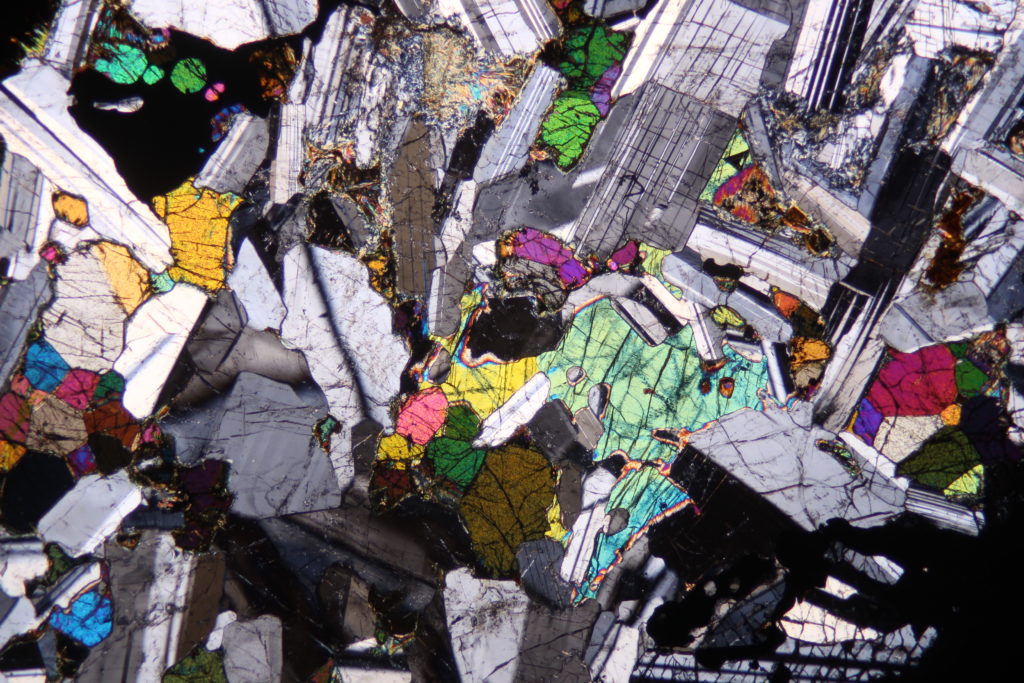


An art award for a picture of a rock? A decade of the UW-Madison Cool Science Image Contest

Celebrating the art of science is something the University of Wisconsin-Madison Cool Science Image Contest has been doing since its inception 10 years ago as part of The Why Files. The 2020 winning images include entries as diverse as videos of neural stem cells, eye-ball licking geckos and yes, even a picture of rock: actually a thin section of tractolite, an igneous rock composed of feldspar and olivine  collected near Duluth Minnesota form the Proterozoic Mid-continent Rift. This image was collected by Natalie Betz, PhD, Associate Director of the UW-Madison Master of Science in Biotechnology program and her daughter Anya Wolterman, a recent graduate of Macalester College with degrees in Geology and Physics. Natalie has a long-time connection with Promega and the BioPharmaceutical Technology Center Institute, so we reached out to her to get the perspective of a contest entrant.  Natalie is answering for both her and her daughter while her daughter is away doing some trail maintenance in the Rockies and is not available for comment.

This thin section of troctolite, an igneous rock composed of feldspar and olivine, was collected near Duluth, Minnesota, from the Proterozoic Midcontinent Rift. The rift is a tear in the Earthโ€™s crust caused by continental plates colliding in the Lake Superior region. Polarized light accentuates vivid colors.

Promega Connections: Why did you decide to enter the UW Cool Science Image contest?

Continue reading “An art award for a picture of a rock? A decade of the UW-Madison Cool Science Image Contest”

Proteomics from a Different Point of View: Introducing ProAlanase, the Newest Mass-Spec Grade Protease from Promega

Sometimes, when using trypsin to study a protein sequence or protein modifications, sequence coverage just isnโ€™t quite as complete as youโ€™d like. Looking for a protease with novel cleavage specificity or a protease that functions well in a low pH environment? Promega has a protease for that.

ProAlanase is a new site-specific endoprotease that preferentially cleaves proteins on the C-terminal side of proline and alanine amino acids. The unique cleavage specificity of ProAlanase (also known as An-PEP or EndoPro; 1โ€“3) can help to uncover parts of the proteome not previously accessible with proteases typically used in proteomic studies.

Continue reading “Proteomics from a Different Point of View: Introducing ProAlanase, the Newest Mass-Spec Grade Protease from Promega”

7 Tips for Creating an Individual Development Plan

Todayโ€™s guest blog is written by Jayme Miller, a Human Resources Generalist at Promega, who has some tips for creating an IDP that will help you achieve your goals. Individual Development Plans (IDPs) are common career development tools used in industry, and there has been a push for PhD programs to incorporate career development tools such as IDPs. By creating an IDP, employees and students both have a formal way to communicate their career goals and help them stay on track.

Employee development, the different paths you can take, arrows pointing

There is one question I am frequently asked by candidates during the interview processโ€”โ€œIs employee development a focus at this organization?โ€ Employees frequently tell me they are looking for employers and opportunities where they will have the ability to learn, grow and develop. While that all sounds great, it is important to have an upfront and transparent discussion about roles, responsibilities and expectations when it comes to employee development.

Many organizations indicate that they have an employee development โ€œprogramโ€ at their organization, but when they begin talking about their program, they describe their performance management process. Often, they will describe how employees are evaluated and provided feedback from their manager. Feedback is a key component for employee development, but it is up to the employee to use that feedback to create action items that will give them the opportunity to learn and grow.  

Often employees believe that employee development is something provided by companies to employees, that it is something that employers make happen for employees. Good organizations will offer continuous learning opportunities and a feedback culture that allows employees to learn and grow. However, no employee development program will work for an employee who is not fully engaged in their own development and does not take ownership over the process. It is ultimately the employeeโ€™s responsibility to ensure they are actively taking the steps to develop within their role and within their organization.  

Continue reading “7 Tips for Creating an Individual Development Plan”

Tips for Attendees: Making the Most of a Virtual Conference

Today’s blog was written by guest bloggers Tara Luther, Marketing Specialist Genetic Identity, and Allison Suchon, Manager of Tradeshows and Events at Promega.

2020 has been a year of changes for all of us. Weโ€™ve learned how to keep in touch while physically distancing. Weโ€™ve learned how to work from home with furry coworkers who encourage us to break from the traditional 9โ€“5 routine. Weโ€™ve learned how to make changes to our labs to stay safe and productive.

For many of us, this will also be the first time that we attend a virtual conference. While itโ€™s easy to focus on what weโ€™ll be missing by not gathering together, there are advantages to moving to the virtual space. By making the most out of your virtual experience, youโ€™ll be able to walk away with valuable insights, a robust network, and insights that you can use in your own lab.

To help, weโ€™ve put together a list of tips that will help you maximize your experience at any virtual conferences you attend.

Continue reading “Tips for Attendees: Making the Most of a Virtual Conference”

Social Distancing: Taking a Lesson from Creatures Big and Small

For many of us, the current SARS-CoV-2 pandemic means working from home. For many, working from home means being away from human companionship that’s normally part of our work lives. While my four-legged office mates are quiet and do not require meetings, they are no substitute for human coworkers.

How about you? In our socially distanced world, do you find strength in the knowledge that others are also self-isolating to stay healthy?

What if I told you that numerous animal species, lobsters to mongoose, ants to mandrills, all practice social distancing to avoid infectious agents? Here are a few examples.

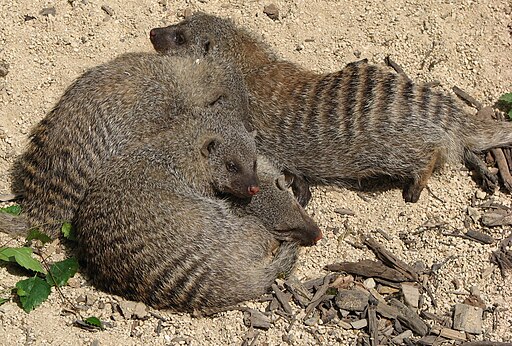
Image of banded mongoose family group.
Banded mongoose family group.
Continue reading “Social Distancing: Taking a Lesson from Creatures Big and Small”

Celebrating the Work of Women Scientists on the 100th Anniversary of Rosalind Franklinโ€™s Birth

Photo 51 is the now-famous X-ray diffraction picture that allowed Watson and Crick to crystalize centuries work of scientific study (from Mendel to Chargaff) into a viable structural model that explained how DNA could serve as the material of the gene. The photo was painstakingly produced by Dr. Rosalind Franklin, a contemporary of Watson and Crick. Although she and her colleague R.G. Gosling did publish their work in the same issue of Nature as the Watson and Crick paper (1,2), their work did not receive the same public accolades of that of Watson and Crick.

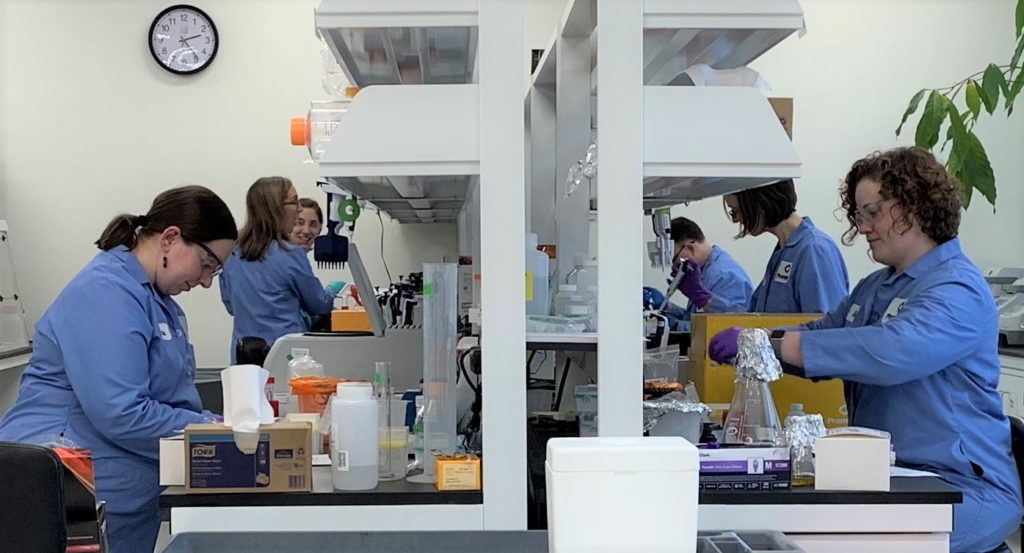
Applications Scientists help partners and customers apply existing technology to new questions. Read more about their work.

Women scientists have been contributing to our understanding of the world around us throughout history. On this 100th anniversary of Dr. Rosalind Franklinโ€™s birth, we want to take a little time to recognize the work that women scientists are doing at Promega.

Continue reading “Celebrating the Work of Women Scientists on the 100th Anniversary of Rosalind Franklinโ€™s Birth”

New Human Pluripotent Stem Cell-Derived Model For SARS-CoV-2 Research

influenza viruses

Months into the COVID-19 pandemic, we still have limited knowledge of the SARS-CoV-2 virus, and no effective treatment or vaccine. A major obstacle for scientists trying to understand the SARS-CoV-2 virus is the lack of appropriate cell models. Most of the studies published so far are based on cancer cell lines or animal models that have been engineered to express the human SARS viral entry receptorโ€”ACE2. However, there are a many limitations to using these as models for studying human virus infection:

Continue reading “New Human Pluripotent Stem Cell-Derived Model For SARS-CoV-2 Research”

Working Through Change: Quality Assurance Insight on Change Orders and Life

Today’s blog is written by guest blogger, Erin Schuster, Quality Specialist at Promega.


Change is not easy. It can be challenging and even frustrating at times. Yet, the outcome of change can be incredibly beneficial and rewarding. As a result of the COVID-19 pandemic, many of us are finding ourselves in out-of-the-norm situations and circumstances. Change may be exactly what we need in order to adapt and move forward.

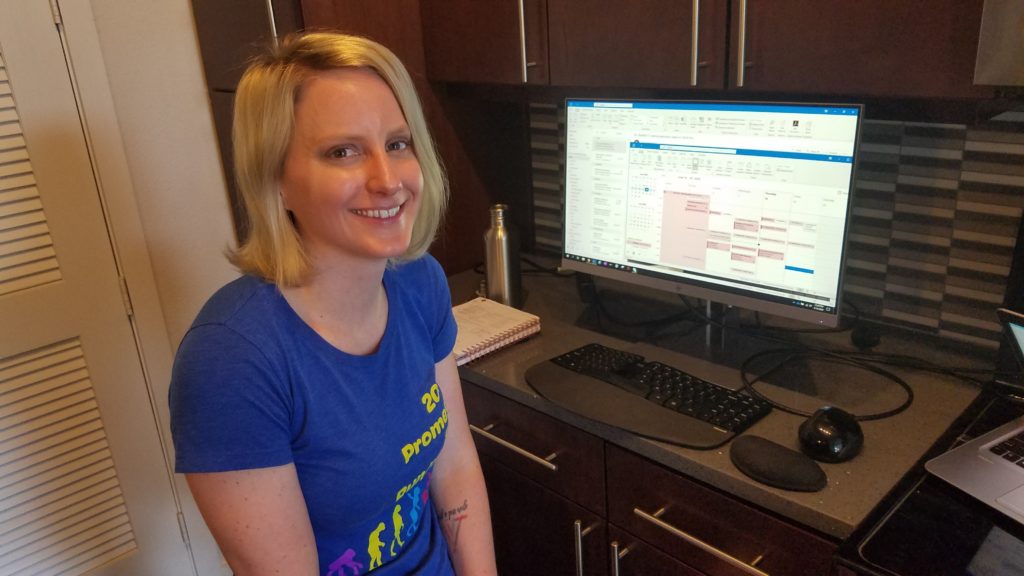
Erin works from home during the coronavirus crisis.

As a quality assurance specialist, Iโ€™m very familiar with the processes that can be associated with change. In order to make changes related to the design, manufacture or testing of medical devices and related products, an organization must have clearly defined expectations and instructions within Standard Operating Procedures. Procedures are a key component of the quality management system. Not only do they communicate best practices, but theyโ€™re required for compliance to applicable regulations and standards. These procedures, regulations, and standards help ensure products are safe, effective and of high quality.

Unlike changes to medical devices, the process to make life changes does not have a standard operating procedure. Best practices may vary from person to person. There are no regulations or standards to follow. Left to our own devices, we may procrastinate and never quite get around to making the change. Or if unsure of how to even begin, we may feel anxious and overwhelmed, giving up before even starting. I have experienced both scenarios and know I will again.

I am a quality assurance specialist, and I am also a human being. I have made many changes to myself and aspects of my personal life, as well as having supported many change orders and product changes throughout my career. Reflecting on these experiences, I realize there are universal themes within the change control process and change orders that can be extended to any kind of change.

Continue reading “Working Through Change: Quality Assurance Insight on Change Orders and Life”

Connecting and Collaborating: How Scientists Across the Globe are Supporting Each Other During The COVID-19 Pandemic


Many research labs around the world have temporarily closed their doors in response to the COVID-19 pandemic, while others are experiencing unprecedented need for reagents to perform viral testing. This urgency has led many scientists to make new connections and build creative, collaborative solutions.

โ€œIn labs that are still open for testing or other purposes, thereโ€™s certainly heightened anxiety,โ€ says Tony Vanden Bush, Client Support Specialist. โ€œI feel that right now, I need to help them deal with that stress however possible.โ€

Last week, Tony was contacted by a lab at the University of Minnesota that was preparing to serve as a secondary COVID-19 testing facility for a nearby hospital lab. The two labs needed to process up to 6,000 samples per day, and the university lab was far short of that capacity.

Continue reading “Connecting and Collaborating: How Scientists Across the Globe are Supporting Each Other During The COVID-19 Pandemic”