Inventory Managment and Onsite Stocking without the Headache

The Helix on-site stocking program has been a resource for scientists for many years. With customized onsite stocking, inventory management and automated billing, losing precious time to a missing reagent is a thing of the past.

Helix freezers and cabinents provide seemless onsite stocking and inventory managment

To better understand the impact of Helix on our customers’ research, we spoke to Chris Thompson of Pro-GeneX, a clinical laboratory in Atlanta, GA. “Using the Helix system has been a game changer from the first day we got it,” Chris said.  “It was simple to set up and use from the start and has never let us down.  We routinely show it off to visitors to our lab because we are so impressed with it.  I only wish all my reagents used a system like this.  From an inventory perspective it is the best invention in our lab!”

Read our full Q&A with Chris below:

Continue reading “Inventory Managment and Onsite Stocking without the Headache”

Streamlining Research: The Merits of Adaptive Clinical Trials

Clinical trials are arguably the backbone of medical advancement. But the trials most worth doing are usually large, costly and time-intensive, demanding extensive resources and personnel. During the COVID-19 pandemic, there has been a marked uptick in the number of clinical trials, many of which are woefully flawed with issues ranging from insufficient sample size to bad design. The published research that follows is often redundant or inconclusive.

So how can scientists designing and running clinical trials streamline their efforts to reduce waste and achieve more useful outcomes? The answer could be adaptive clinical trials.

Adaptive clinical trials are designed so they can be modified as data are being collected
Continue reading “Streamlining Research: The Merits of Adaptive Clinical Trials”

Hiring Undergraduates and Recent Graduates in these Unprecedented Times

Today’s guest blog was written in collaboration with Melissa Martin, a former global marketing intern with Promega. She is a senior at the University of Wisconsin-Madison where she is double majoring in zoology and life sciences communication, with a certificate in environmental studies.

Image: a young woman at a computer. Recent graduates may have transcripts and resumes that look different because of their pandemic experience

Writing to PIs and hiring managers is a new experience for me, and one that is interesting to reflect upon as I will soon be graduating college and pursuing a career myself. I think it is important that PIs and potential employers understand my fellow undergraduates and recent graduates. This is crucial to ensure that they can find a fitting job for themselves, while employers also benefit by hiring an individual that will fit in to the work environment and make positive contributions.

Continue reading “Hiring Undergraduates and Recent Graduates in these Unprecedented Times”

Catalyzing Greener Chemistry

Scrolling through the October 6 headlines, enjoying my morning cup of coffee, I came across a piece of news that brought this chemist-turned-science writer a special sort of nerdy joy. The 2021 Nobel Prize in Chemistry had been announced, and I was going to get to write about a subject near and dear to my heart—catalysis and sustainability.

Continue reading “Catalyzing Greener Chemistry”

Illuminating the Kinome: NanoBRET Target Engagement Technology in the Spotlight

Updated November 21, 2023

In the life of a cell, phosphorylation of proteins is an everyday occurrence. The transfer of a phosphate group, from a molecule such as adenosine triphosphate (ATP) to a specific functional group on a protein, is catalyzed by a protein kinase. The vast majority of protein kinases are classified as either serine/threonine kinases or tyrosine kinases; over 500 kinase genes have been identified in the human genome (1).

nanobret-Target-Engagement-1024x512-1

Protein phosphorylation is a key step in most cell signaling pathways, in response to external or internal stimuli, and it is not surprising that dysregulation of these pathways contributes to a variety of cancers. The first oncogene to be characterized was SRC, a gene that encodes a tyrosine kinase (reviewed in 2). With more kinases being implicated in oncogenic pathways, significant drug discovery efforts have been devoted to developing and characterizing inhibitors of protein kinases. These efforts have accelerated ever since the first targeted small-molecule kinase inhibitor, imatinib, received US FDA approval in 2001 for the treatment of chronic myeloid leukemia (3). Since that time, many more protein kinase inhibitors have received FDA approval, with 67 small-molecule inhibitors listed as of September 2021.

Continue reading “Illuminating the Kinome: NanoBRET Target Engagement Technology in the Spotlight”

The Power of Binding: Using Trivalent PROTACs to Enhance Protein Degradation

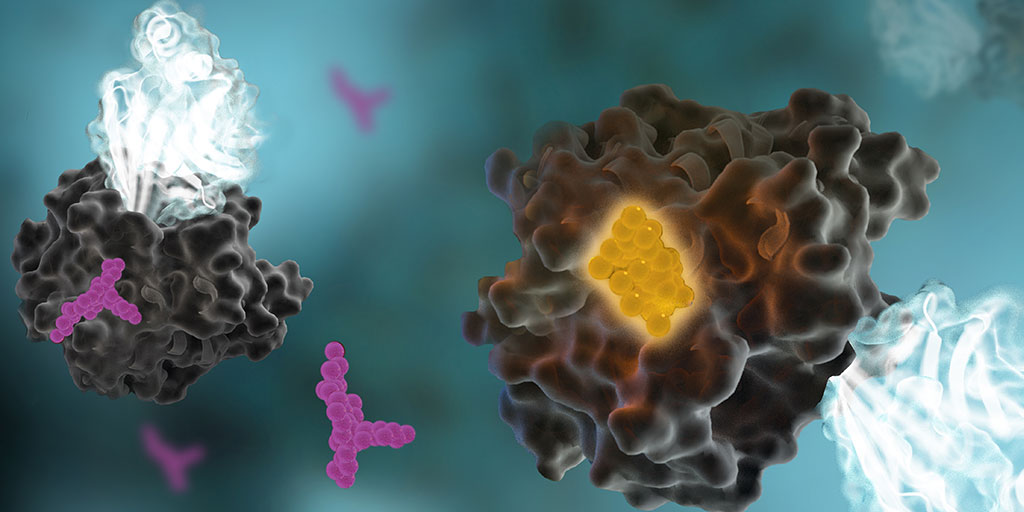
The University of Dundee in Scotland and Promega Corporation have developed a new approach to targeted protein degradation: a revolutionary “three-headed hydra” with a unique three-pronged structure that packs a powerful punch.

3D rendering of trivalent protacs
The “three-headed hydra” is made up of three protein-binding ligands rather than two.
Continue reading “The Power of Binding: Using Trivalent PROTACs to Enhance Protein Degradation”

Five Fun Facts About Sloths and Three Things We Can Learn from Them

Sloths. These slow-moving, baby-faced, tree-dwelling mammals have risen to stardom in recent years, with their chubby, bandit-masked faces appearing on everything from socks and t-shirts to coffee mugs and post-it notes. We can all agree they are cute, but how much do we know about them?

Picture of a sloth hanging from a branch. Sloths are tree dwelling mammals.
Continue reading “Five Fun Facts About Sloths and Three Things We Can Learn from Them”

Rare Human Antibody Could Lead to A Universal Coronavirus Vaccine

Artists 3D rendering of SARS-CoV-2. One lab group is trying to develop a universal coronavirus vaccine.

As we’ve all learned from the current global COVID-19 pandemic, coronaviruses are generally bad news. Among the four genera of coronaviruses, the betacoronavirus genus has been especially notorious. In the past 20 years, three highly pathogenic betacoronaviruses, MERS-CoV, SARS-CoV and SARS-CoV-2 have resulted in serious pandemics. All three of these viruses originated from bats, highlighting the continued risk of coronavirus transmission from animals to humans.

Typically, when a new viral threat emerges, researchers scramble to develop drugs or vaccines after the virus has already gotten out of control. However, developing a vaccine for each new virus is a slow and painstaking process, and many lives will be lost before a vaccine is distributed. But what if we had one, universal coronavirus vaccine that could neutralize not only all existing betacoronaviruses, but any new variants that emerge in the future?

Continue reading “Rare Human Antibody Could Lead to A Universal Coronavirus Vaccine”

Our Future is at Hand; Global Handwashing Day

Each year, on October 15th, we celebrate Global Handwashing Day. This day aims to raise awareness about the critical importance of handwashing as well as educate and encourage people around the world to handwash with soap.

Keeping hands clean is one of the easiest, most effective, and cheapest ways we can prevent germs from spreading. As we continue to fight COVID-19, we need to leverage the lessons learned from our pandemic response and prioritize proper hand hygiene.

Continue reading “Our Future is at Hand; Global Handwashing Day”

ProDye Brings Sanger Sequencing to Multiple Platforms

Researchers looking for new chemistry for Sanger sequencing need look no further than the ProDye™ Terminator Sequencing System, developed by Promega for use in capillary electrophoresis instruments. Sanger sequencing, or dye-terminator sequencing, has been the gold standard of DNA analysis for over 40 years and is a method commonly used in labs around the world. Even as new technologies emerge, Sanger sequencing remains the most cost-effective method for sequencing shorter pieces of DNA.

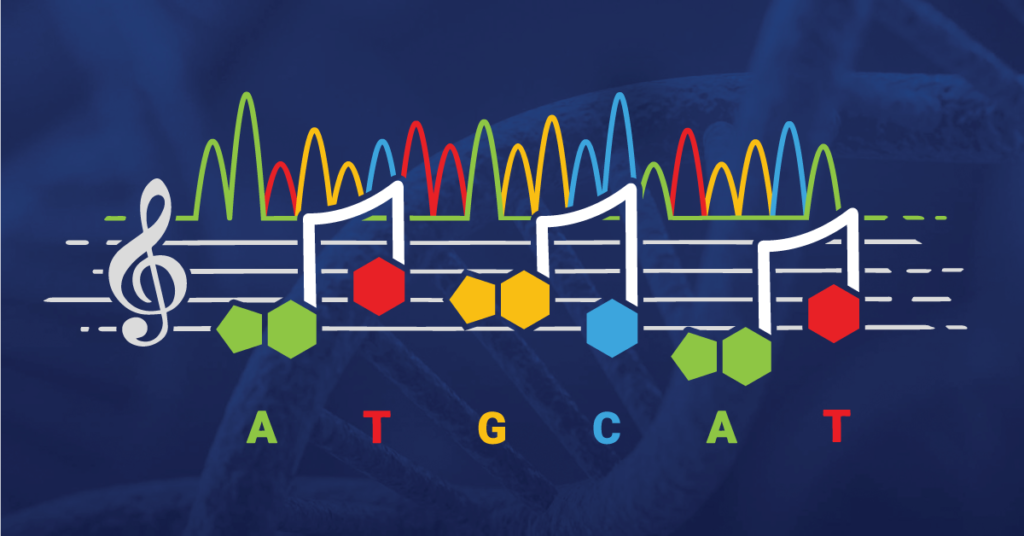
Sanger sequencing depicted as results on a musical cleft
Continue reading “ProDye Brings Sanger Sequencing to Multiple Platforms”