Back to school!

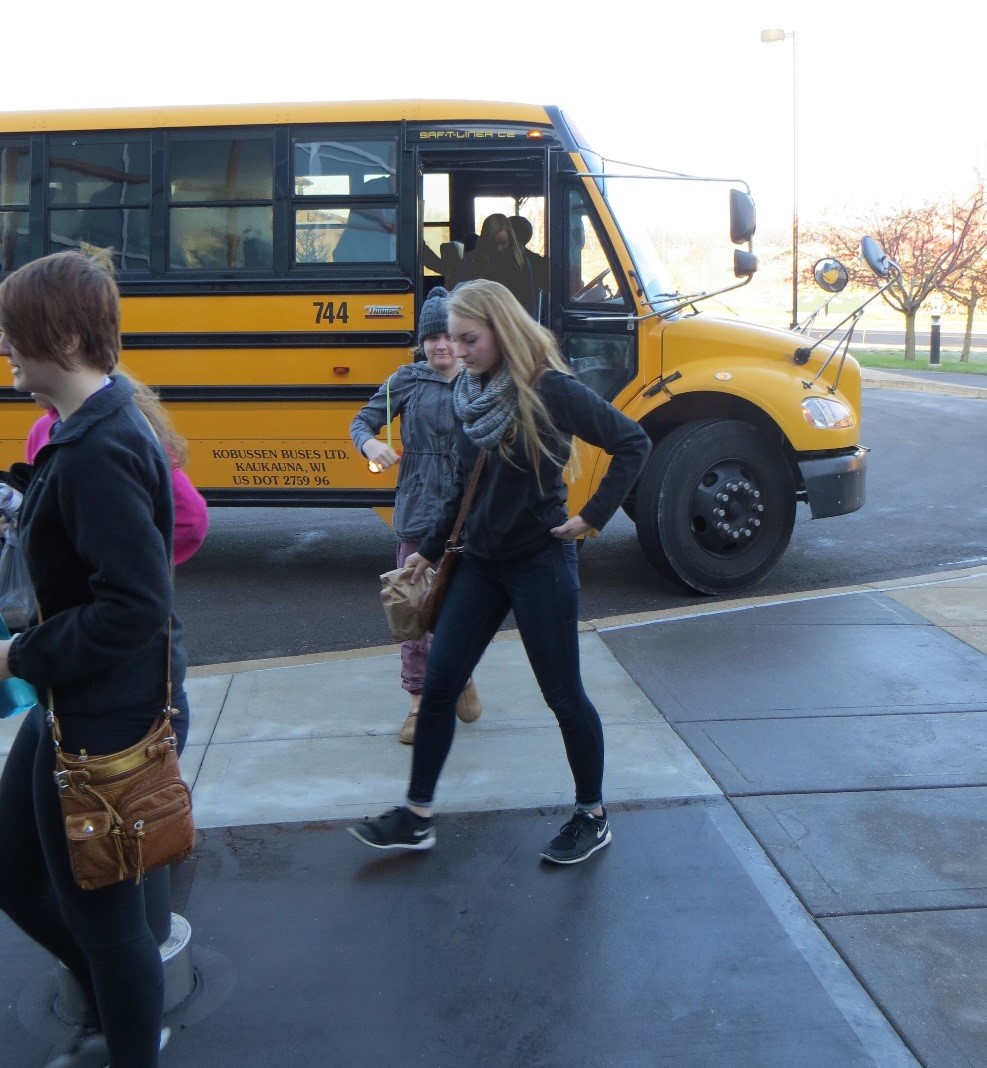
Kindergarten teacher and children looking at bird's nest in librBack to school! We’re experiencing a cold snap this week, and my kids are complaining that it shouldn’t be this cold on the last week of summer! I agree, but I’m so excited that school is back! I’m a full-time working mom, but the stresses of summer are hard. My kids aren’t on schedules, there is always some party/event/BBQ, and trying to fit in a summer vacation. I’m tired just thinking about it! Especially in Wisconsin, where we don’t have the best weather in the winter so we try to soak it all up in the summer.

As we are getting back into routines, I’m working on setting up some ground rules so our school year isn’t as hectic this year as previous years. Summer has been a free for all at our house, so the adjustment might be rough, but my kids do much better on routines. Continue reading “Back to school!”

The Volcano Beneath our Feet

Photo credit: Kelly Grooms
Firehole River, Yellowstone National Park. Photo credit: Kelly Grooms

This summer my family and I vacationed on one of the world’s largest active volcanoes. We weren’t alone. Every year over three million people visit this super volcano.

Yellowstone National Park covers almost 3,500 square miles in the northwest corner of Wyoming (3% of the park is in Montana and 1% in Idaho). The park is famous for its hydrothermal features, including the Old Faithful Geyser and vivid hot springs such as the Grand Prismatic Spring.

The park’s hydrothermal system is the visible expression of the immense Yellowstone volcano; they would not exist without the underlying partially molten magma body that releases tremendous heat. National Park Service website

Photo Credit: Nathan Grooms
Grand Prismatic Spring, Yellowstone National Park. Photo Credit: Nathan Grooms

These features are all visible reminders of the immense volcano that exists beneath the surface.  Recently, a team of seismologists discovered a reservoir of partly molten rock 12–28 miles beneath Yellowstone National Park. This video from Science 360 describes the discovery and why scientists are interested in it. It is important to note that this discovery does not mean that there is new activity or that the volcano under the park is closer to erupting. It does mean that scientist now have a better picture of the underground “plumbing”.

Cell-Free Expression Application: Antibody Screening

TestPermissions2Ricin, derived from caster seeds, inhibits protein synthesis by binding to ribosomes, resulting in cell death. The protein is composed of two polypeptide chains: Ricin Toxin A chain and Ricin Toxin B chain. Ricin inhibits protein synthesis very quickly, and the cell or tissue damage begins within several hours. However, signs of poisoning often are not noted before significant damage has been done, making treatment difficult. Therapeutics that either block the ribosome binding site or compete with the toxin for binding are highly desired. Both antibodies and competitive ligands inhibited binding of the toxin to cell membranes.

A recent publication by Dong et al. (1), described a study to investigate the therapeutic effect of mAb 4C13, a monoclonal antibody against ricin. One of first experiments performed was to determine the general effect the inhibition of protein synthesis induced by ricin using cell-free expression.

In the study, the authors used T3 Coupled Reticulocyte Lysate Systems from Promega. Both ricin and mAb were diluted with saline. Aliquots of ricin (80 ng/ml) were mixed with an equal volume mAbs (1.6μg/ml) or saline alone and incubated at 4 °C for 1.5 h. A total volume of 4μl of sample was added into the reaction system (i.e, T3 Coupled Reticulocyte and plasmid DNA containing the lucifersase gene downstream of T3 RNA phage promoter). After incubation at 30 °C for 1.5 h, the products were cooled at −20 °C for 10 min. A total of 5μl of each reactive product containing synthesized luciferase was mixed with 50μl luciferase assay reagent pre-equilibrated to room temperature, and the fluorescence absorbance was measured immediately with the micro-ELISA Reader.

Positive results obtained from this preliminary experiment, led to more thorough experiments to determine the dosage effect using in vivo models (i.e., cell lines and mice) to characterize the cytotoxicity and binding activity of mAb 4C13. The mAB 4C13 was shown to be a effective in the mouse model.

Dong, N. et al. (2015) Monoclonal antibody , mAb 4C13, an effective detoxicant antibody against ricin poisoning. Vaccine 33, 3836–42

Sequencing the Octopus Genome: Invertebrate Intelligence Explained?

In a Letter in Nature magazine last week (August 13, 2015), researchers published surprising findings from a genome analysis of the octopus. As a result, we now know that this invertebrate has more than just behavioral oddities with which to amaze.

In their publication, C. Albertin et al. report the results of genome sequencing of the California two-spot octopus, Octopus bimaculoides. They did not find the predicted whole-genome duplication, but rather an unexpectedly large genome with many rearrangements, and two gene family expansions that were previously thought to exist only in vertebrates.

Califonia two spot octopus. Image by Jeremy S. Taken at Santa Monica Aquarium. Used via Creative Commons license, Wikimedia.

The Research
Albertin et al. sequenced the O. bimaculoides genome using a whole-genome shotgun approach, and then annotated it using extensive transcriptome sequences from 12 tissues. They estimate that the genome assembly incorporated 97% of protein-coding sequences, and 83% of the entire 2.7gigabase genome. The remaining sequence was composed largely of repetitive elements. Continue reading “Sequencing the Octopus Genome: Invertebrate Intelligence Explained?”

Summer Friday Blog: Wizard World Comic Con in Chicago

wizardworldLet’s put a little fiction in our science this week and take a look at the upcoming Wizard World Comic Con in Chicago. It’s one of the biggest in the U.S., typically drawing an crowd of around 50,000 throughout the weekend. This year the Chicago event takes place August 20th through August 23rd at the Donald E. Stephenson Center in Rosemont, Illinois.

This will be my fourth year attending Wizard World Chicago, and it definitely won’t be my last. It’s more manageable than the famous Comic Con in San Diego, but still big enough to spend the whole weekend wandering aisles and aisles of geeky treasures. There’s no conceivable way to get bored with celebrity autographs, hundreds of booths for browsing, and dozens of panels about pop culture. The people watching’s pretty entertaining, too.

My favorite part of any fan convention is the costumes. Some people spend months making elaborate pieces of armor from foam or painting a perfect replica of Captain America’s shield. Those are the die-hard fans, but most people dress up in some way, even if it’s just a T-Shirt with their favorite super hero printed on it. I love scanning the crowd and catching a glimpse of a character from one of my favorite TV shows. The atmosphere is fun and welcoming for all types of people and all levels of geek. Even entry level.

As comic cons and super heroes become increasingly popular, the guest list for Wizard World Chicago gets longer and more impressive each year. It’s not just for nerds anymore! Some of television and film’s biggest stars make appearances at conventions, and this year Chicago gets Jeremy Renner from Marvel’s The Avengers. You can call him Hawkeye. His autograph line will probably be the longest, people waiting hours for their chance to meet and exchange a few words with him. I’m particularly excited to see Nathan Fillion (Castle, Firefly), Norman Reedus (Walking Dead), Billie Piper (Doctor Who), and Burt Reynolds (no references needed). Meanwhile, upstairs the legendary Bruce Campbell will host his first annual Horror Fest. This year’s show will be star-packed, that’s for sure.


Molecular Autopsies in the Whole Genome Sequencing Era

Engraving of the human heart by T. Milton, 1814. Image courtesy of Wikimedia Commons. In some cases of death, molecular autopsies are the best way to understand cause of death.
Engraving of the human heart by T. Milton, 1814. Image courtesy of Wikimedia Commons.

Every year, nearly 8 million people die from sudden cardiac death, which is defined as the unexpected death of a seemingly healthy person due to malfunctions in the heart’s electrical system and loss of cardiac function. Although sudden cardiac death (SCD) is usually associated with mature adults, SCD claims thousands of young lives every year. In most cases, the cause of death can be determined by autopsy or toxicological analysis, but up to 30% of these premature deaths have no apparent cause, leaving medical examiners and family members of the young victims to wonder what happened.

In cases where traditional pathological examinations cannot provide insight into causation, medical examiners are increasingly turning to molecular autopsies to determine if there is an underlying genetic factor that contributed to a person’s death.

Continue reading “Molecular Autopsies in the Whole Genome Sequencing Era”

Summer Friday Blog: La Brea Tar Pits in the Heart of Los Angeles

Hyrophilius sp. fossils from La Brea Tar Pits (photo credit: Archaedontosaurus Wikimedia commons  https://commons.wikimedia.org/wiki/File:Hydrophilus_-_La_Brea_Tar_Pits.jpg
Hyrophilius sp. fossils from La Brea Tar Pits (photo credit: Archaedontosaurus Wikimedia commons https://commons.wikimedia.org/wiki/File:Hydrophilus_-_La_Brea_Tar_Pits.jpg
Urban Southern California is one of the last places I associate with archaeological digs. It’s better known for the Hollywood sign and expansive mansions. In reality, central Los Angeles is home to the La Brea Tar Pits, one of the most famous tar deposits in the North America. Situated just south of Beverly Hills and nestled between busy streets is a bubbling lake of black sludge that offers paleontologists important information about the past.

For tens of thousands of years, natural asphalt has oozed from the earth in this part of California. Crude oil seeps up along the 6th Street Fault from the Salt Lake Oil Field, forming pools topside in several locations in the park. The oil becomes sticky asphalt as lighter fractions of petroleum evaporate or biodegrade, though methane gas emerges in uneven bursts and makes the pools look like they’re boiling.

This California tar has preserved the bones of many prehistoric creatures and pieces of plant life, giant and tiny, mostly from the last glacial period. Paleontologists have excavated saber-tooth cats, dire wolves, giant ground sloths, and a nearly intact mammoth nicknamed Zed. When covered with leaves, dirt, and water, the land became a snare for any animal that wandered too close. Predators then approached the dying prey in hopes of an easy meal, only to become stuck themselves. It was a cruel cycle, so Los Angeles fenced it all in to save today’s wildlife from meeting the same fate. A 2006 dig unearthed six dire wolves, and archaeologists were then able to confidently infer that the creatures hunted in packs like their modern relatives. The on-site George C. Page Museum is dedicated to researching and displaying the animals that have died in the Los Angeles tar.

One lone human specimen has emerged from the La Brea Tar Pits, a partial female skeleton dubbed the La Brea Woman. The remains of the roughly 25-year-old female were first discovered in 1914, and date back around 10,000 years.

Sometimes black tar trickles onto the streets and flowerbeds, so at least one a week the city has to clean and drain the sewers beneath the roads. Playing host to a prehistoric landmark isn’t easy. When I lived out in Los Angeles I rode my bike past the tar pits every day, and I always caught a whiff of fresh asphalt or rotten eggs. It took me a while to realize it was the tar pits, not some nearby construction.

Check out this crash course in fossil excavation from the official La Brea Tar Pits & Museum website:

Building Community: Outreach through BTC Institute Courses and Activities

Students in the Core Techniques in Protein and  Genetic Engineering Course (photo credit BTCI)
Students in the Core Techniques in Protein and Genetic Engineering Course (photo credit BTCI)

One of the questions that Promega has always asked of itself is “How can a company really become a vital part of its community over the long term, making truly valuable and unique contributions that foster deep connections to local communities where it exists?”  Lately we have formalized that with our Corporate Responsibility Report, but this question has always been a part of our corporate culture, long before such thinking was popular or “en vogue”.

In 1993 Promega helped to begin the nonprofit educational outreach institution, the BTC institute, this long-term commitment to the local community has grown throughout the 22 years to become an integral part of the local Wisconsin educational community and serve as a model for global partners as well. Here are a few thoughts from the Karin Borgh, the Executive Director of BTC Institute, about how it has managed to work toward a vision of being a vital, contributing member of the community. Continue reading “Building Community: Outreach through BTC Institute Courses and Activities”

All You Need is Pla (for Pneumonic Plague)

Yersinia pestis. By Mrs Robinson at bg.wikipedia (Transferred from bg.wikipedia) [Public domain], from Wikimedia Commons.
Writing about Yersinia pestis or the Black Death, has earned me a reputation among Promega Connections bloggers. I am interested in what researchers have been able to piece together about the causative agent of ancient plagues, what modern research shows about how Y. pestis spreads in the body and the continuing reservoirs in modern times, resulting in publication of eight blog posts on the subject. Understanding Y. pestis bacterium is of continuing interest to researchers. How did Yersinia pestis evolve from the humble Yersinia pseudotuberculosis, a pathogen that causes gastrointestinal distress, into a virulent pneumonic plague that is a global killer? One strategy for answering this question is to look at the genomic tree of Y. pestis and trace which strains had what characteristics. In a recent Nature Communications article, Zimbler et al. explored the role of the plasmid pPCP1 in Y. pestis evolution and the signature protease Pla it expresses. Continue reading “All You Need is Pla (for Pneumonic Plague)”

Summer Friday Blog: Journey into Outer Space for the Delta Aquarid Meteor Shower

11156716_lThis week we travel to outer space, the Final Frontier, to catch a glimpse of the Southern Delta Aquarid Meteor Shower. But don’t worry, you don’t have to leave your backyard. Just grab a blanket and find a place without too much light pollution, and you’ll be able to catch a glimpse of this worldwide phenomenon.

The Southern Delta Aquarid Meteor Shower is an annual summer occurrence that spans July and August, but this weekend marks its nominal peak in activity. From July 26th through August 1st, give or take a couple of days because nature is lovably fickle, we can expect a maximum hourly rate of 15-20 meteors. That might not sound like much, but a special angle of atmospheric entry gives Delta Aquarid meteors long, lingering trails that seriously set this shower apart.

Most meteor showers are created by comets. As a comet circles our Sun, it sheds a rocky dust stream along its orbit. When Earth travels through this space litter, the result is a meteor shower. Astronomers believe that the Southern Delta Aquarids originated from the breakup of two sungrazing comets, Marsden and Kracht.

Shooting stars, as they’re lovingly called, can appear anywhere in the sky, but if you trace the tails it becomes clear that each shower has a definite epicenter. The showers are named after these radiant points, taking the name of the constellation dominating that particular region of the sky. The Delta Aquarids, as you can probably guess, pay homage to the constellation Aquarius. Look for the star Skat within the “water bearer” constellation, the point where Delta Aquari meteors are born.

For every time zone and all continents, the hours between midnight and dawn will be the best time to glimpse these brief celestial bodies. Those of you in the southern hemisphere and southerly latitudes in the northern hemisphere will get a better show, as is typical with this particular shower, though all observers are bound to see activity. Unfortunately, this year the waning crescent moon rises around midnight and will drown out dimmer meteors. But we’ll still see the big ones, and those are arguably the most thrilling.

Meteors are really just bits of interplanetary debris traveling tens of thousands of miles per hour, igniting as they vaporize in Earth’s upper atmosphere, but they sure are pretty. For a preview, take a look at this video of last year’s meteor shower, filmed August 2 by Canadian Geographic.