Stories about the people, places and activities that make Promega Corporation all that it is to our customers and the communities where we work, live and play.
The red roof of Woods Hollow Child Care center peeks out over the prairie swale at the Promega Madison campus.
Woods Hollow Children’s Center is a prominent feature on the Promega Madison campus, due not only to the building’s distinctive red metal roof, but also the sights, sounds and energy that emanate from it. Playground laughter echoes across the prairie, little ones with their teachers stop in to explore the art at the Promega gallery, children and scientists alike share the meandering paths between lab, manufacturing and office buildings.
The fully accredited child center for children 6 weeks to 10 years old has been part of the Promega community since 1991 when the company built and began financially supporting Woods Hollow, making it available to employees as well as families in the surrounding community. (Promega employees do not receive a break in tuition, but they are given priority for admission. And Promega funding allows Woods Hollow to keep operating costs down while also being able to hire top teachers and offer them competitive wages.)
During its 27 years in operation, the center has served more than 2000 families, many of those with multiple children. It is natural to assume that someday perhaps at least a few of those kids would grow up to work at Promega.
Today’s blog is contributed by guest blogger Caitlin Cavanaugh, Client Support Consultant with Promega North America.
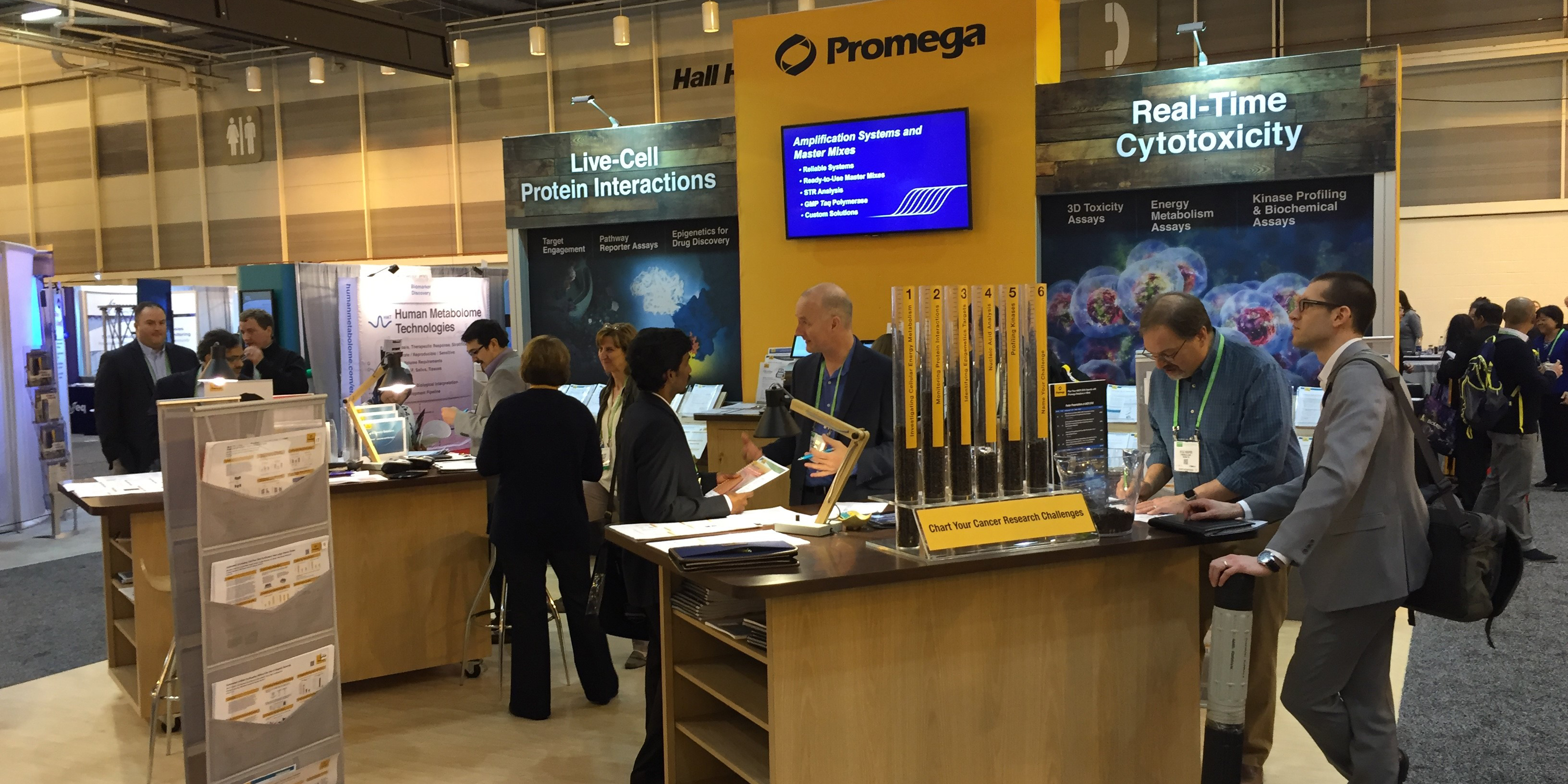
Recently, I began a new role as a client support consultant at Promega. In this role, I’m responsible for all technical and sales support for the Promega portfolio in the New Jersey and Philidelphia area.
Before coming to Promega, I worked in a lab at a start-up company right out of college, then made my way into sales, where I worked for a leading life-science instrumentation company for thirteen years.
“Today is certainly a great day for Promega R&D, but it is also a great day for science.”
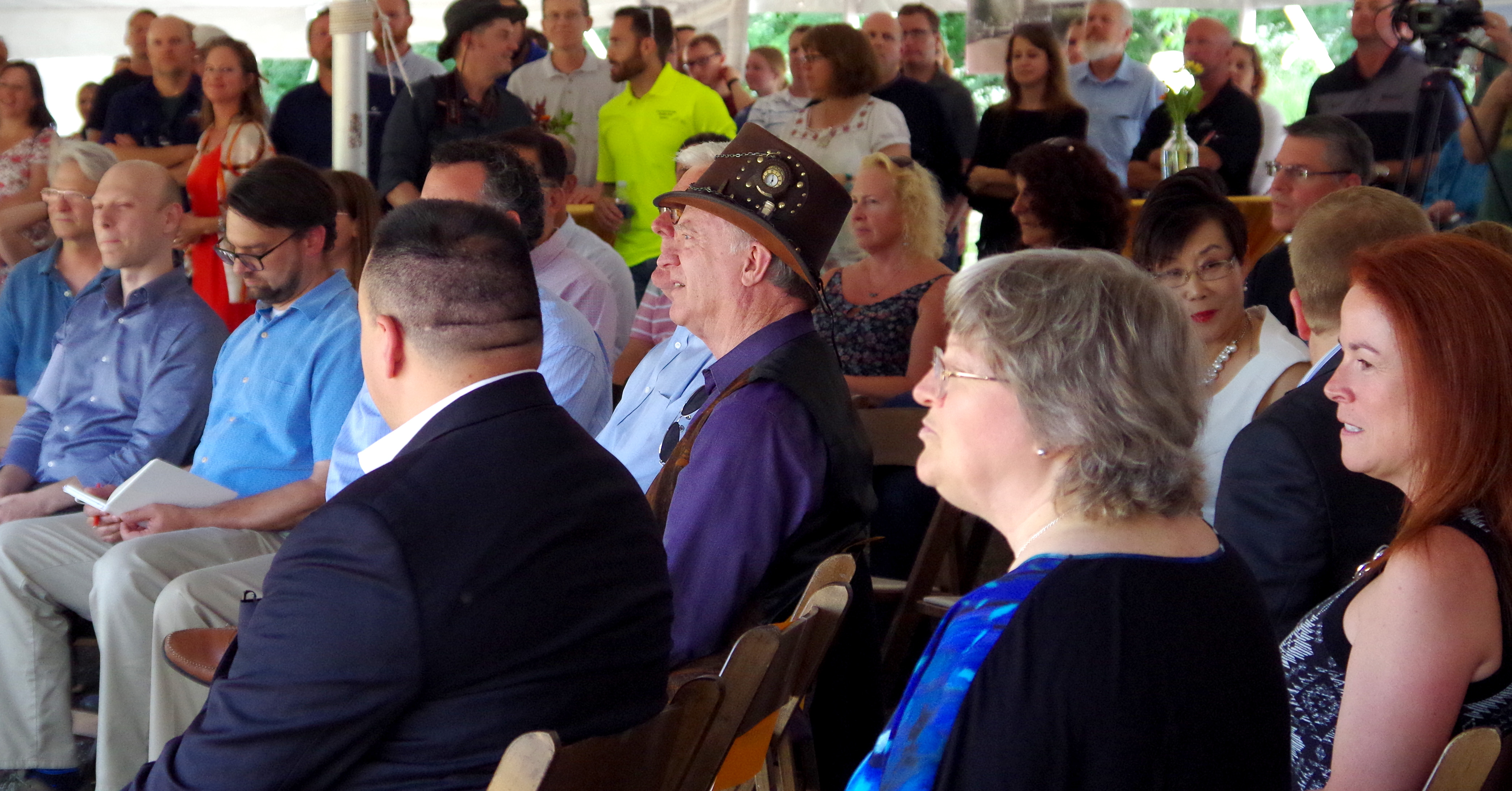
Community members and Promega employees gather for the ground breaking celebration for a new R&D facility.
Gary Tarpley, director of Research and Development at Promega closed his remarks for the ground breaking of the new Promega Research and Development Center in Fitchburg, WI, with those words.
With the ground breaking on this new R&D facility, Promega makes a $190 million, long-term investment in science.
Today’s Promega Connections blog is written by guest blogger Tori Sheldon, North America Marketing and Events Coordinator.
It is crazy to think how quickly the months fly by. It feels like yesterday I was watching the ball drop as 2017 turned to 2018. Now it is almost March, when Wisconsin starts to emerge from the cold winter. March also happens to be National Optimism Month.
As I think about optimism, I am reminded of one of the core values that guide interpersonal relationships at Promega: “look for the good, with discernment”. The spirit of this value is to remember that deep down everyone is trying to come from a positive place and that even though we may not always agree with each other it is an opportunity for further discussion and collaboration.
Today’s blog post is written by guest blogger, Josh Agate, Manager, Global CRM.
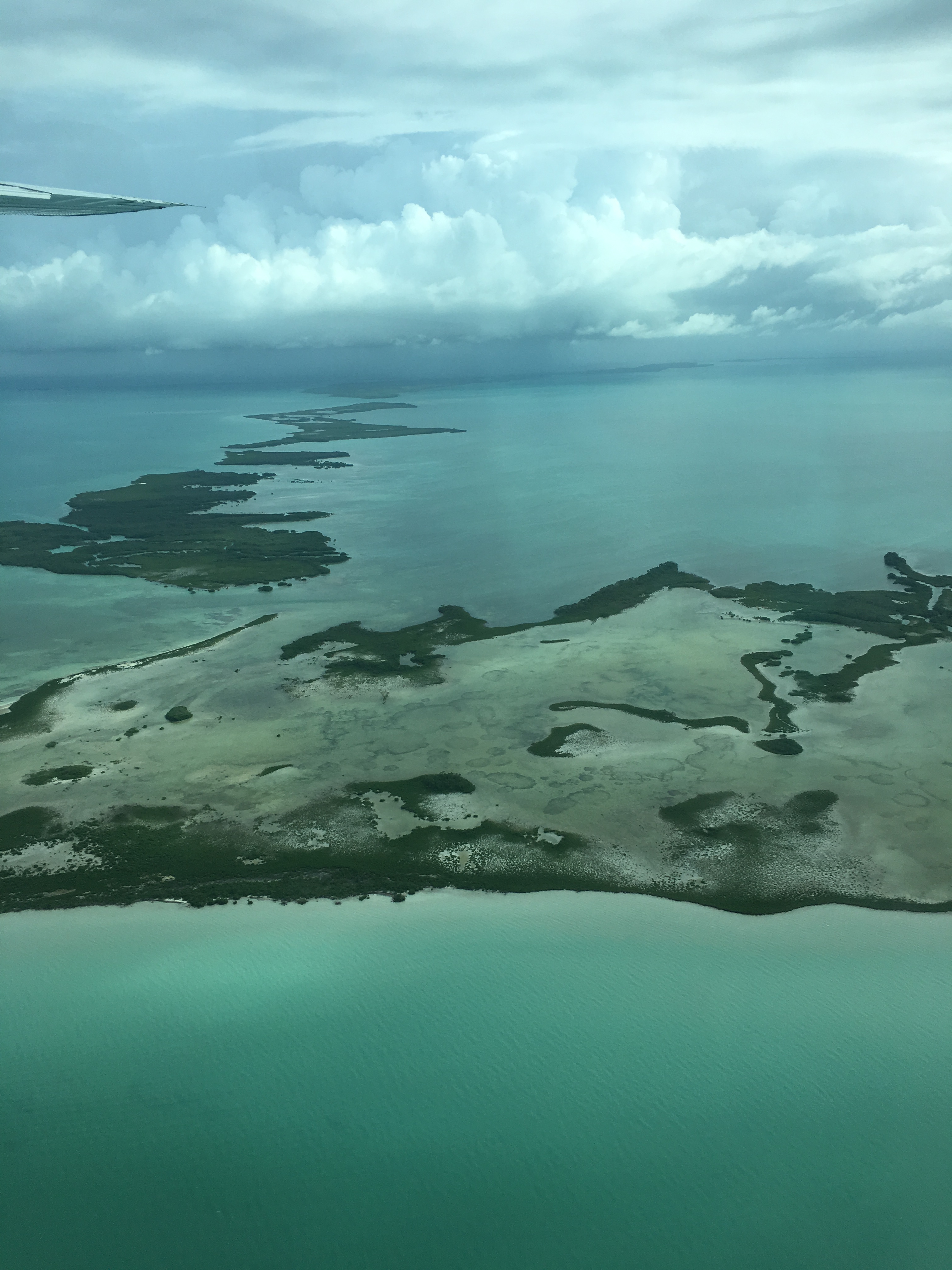
Approaching Ambergis Caye.
Adventure is relative. Most people are looking for new adventures in life, and those can range from planning where to go on vacation to starting a new job. What each person looks for in an adventure and the level of thrill they seek is different. When I learned that Promega had awarded me a trip to a destination of my choice with my family for my job performance, I was excited to plan this new adventure with my wife and two daughters (ages 4 and 6). We decided on a trip to Belize.
The trip required two commercial flights, followed by a puddle jumper flight (with hand-written boarding passes), and a 30 minute boat ride before we arrived at our hotel on the island of Ambergris Caye. This island, off the northern coast of Belize, would provide the backdrop for our family’s greatest adventure to date. The trip to get to the island wasn’t tedious travel for them; it was a wild ride that included a plane that held 12 people, flying over crystal clear waters and a boat trip, where our hair flew wildly as we were sprayed with ocean mist. Continue reading “Adventure in Belize”
Recently, I had the opportunity to attend a fascinating symposium held at Promega featuring conservationist Steward Brand, where he described some of the projects developed by his foundation, Revive & Restore.
The organization’s mission is to apply emerging biotechnology techniques to endangered and extinct species with the intent to increase genetic diversity, provide disease resistance and facilitate adaptation to changing climates. Although the overall message of enhancing biodiversity through the application of new genetic technology was inspiring, the project that resonated most for me was related to the plight of horseshoe crabs.
Horseshoe crabs, often referred to as living fossils, include four extant species with origins dating back about 450 million years. Although they look like crabs, they belong to their own subphylum and are more closely related to spiders. When horseshoe crabs spawn, they leave their usual habitat on the ocean floor and migrate to shore in large numbers. As a result, they have been exploited for bait and fertilizer for decades.
Enter endotoxins, an indicator for bacterial contamination in biologicals, drugs and medical devices. U.S. Food & Drug Administration regulations dictate that finished products be tested for the presence of endotoxins. These pyrogenic compounds, found in the cell wall of Gram-negative bacteria, can cause fever and affect a wide range of biological activity, possibly leading to aseptic shock and death. The most common method for testing is the gel clot and Limulus Amebocyte Lysate (LAL) Test.
I first learned about the LAL test during graduate school, where it was presented as a ubiquitous and standard requirement for testing bacterial contamination in injectable drugs. I remember being fascinated that horseshoe crabs (Limulus sp.), contain a substance that could be used to detect endotoxins. Although the instructors mentioned the need to collect blood from horseshoe crabs in order to produce the test, the method or scale of this harvest wasn’t discussed, nor were the true costs of using this method of endotoxin testing.
The LAL test has served as a faster, more inexpensive endotoxin testing replacement for the rabbit pyrogens test for the past 35 years. Every year during mating season horseshoe crabs move to shallow water, where they are removed in huge numbers. (To get an idea of scale for the harvest and read a much more comprehensive investigation of the issue, check out this article in The Atlantic, which features an archive photo of Delaware Bay horseshoe crab harvest from 1928—for fertilizer, not pharmaceutical testing.)
After collection, the crabs end up in a lab where up to 30% of their blood is drained from a needle stuck in tissue around their heart. The LAL is extracted from the blood and can yield a product worth up to $15,000/quart. In order to avoid recollection, the crabs are returned to the ocean far from the shore where they were collected a few days before. Although it’s estimated that only 10-30% of these crabs die as a result of the process, there are indications that the horseshoe crab population and their ecosystems are impacted in other ways.
Researchers at the University of New Hampshire and Plymouth State University used accelerometers attached to recently bled female horseshoe crabs to test the hypothesis that harvesting for LAL was affecting their ability to spawn. While the research supported previous estimates with a death rate of 18%, females were found to be less likely to mate after being bled.
During his talk, Brand shared results from a study still in review that confirm the effect of over-harvesting Limulus on the survival of long distance migratory shorebirds. These birds synchronize their migration with horseshoe crab spawning, which provides a needed feast of eggs before the homestretch of their journey. Along with other ecosystem threats from climate change, the accelerated decline in the horseshoe crab population and dependency of migratory birds will likely to lead to a devastating ecological domino effect.
Fortunately, a synthetic alternative to LAL, recombinant factor C (rFC), has been available for nearly 20 years. Alas, there has been no significant shift by pharmaceutical companies away from the test based on horseshoe crab blood. rFC was patented and licensed to one company, Lonza, which Brand posited as one reason for the reluctance of drug companies to adopt its use.
Obviously, relying on one source for an essential testing reagent with no competition to temper cost is quite unattractive. But that argument has less bearing now that the patent is scheduled to expire in a few months, opening the door for additional manufacturers and creating an economic incentive for switching to the synthetic test.
Another reason may be that implementing a new test would require additional resources to validate the synthetic test for products that are already being tested with the LAL. Since the LAL has been specified in FDA guidance documents on endotoxin testing for decades, quality standards for existing products are based on the LAL, limiting momentum to change.
If both tests offered the same benefits, these arguments would make sense; however, research by one of the discoverers of rFC, Jeak Ling Ding of the National University of Singapore, shows that in many respects rFC is more efficacious than LAL. Since the raw material for the LAL test depends on an organism, there is seasonal variation in the components of the processed blood that must be taken into account. The reaction of the LAL also depends on a cascade of multiple compounds that can be affected by temperature, pH and proteins—leaving the test vulnerable to false positive results.
Although Eli Lilly is the only pharmaceutical company to date to use rFC in place of LAL, It seems the tide may be turning. According to Brand, others are interested in making the transition. It seems foolish not to, given the source for LAL shows signs of dwindling due to overexploitation. Perhaps pharmaceutical companies are beginning to see the value of a “slower/better” philosophy (the cornerstone of the Long Now Foundation, another brainchild of Brand’s), rather than “faster/cheaper.” I have certainly gained a new perspective on endotoxin testing and a deep appreciation for the work of Brand and his foundation.
Does your organization use the LAL test? What is preventing you from switching to the synthetic alternative? Let us know!
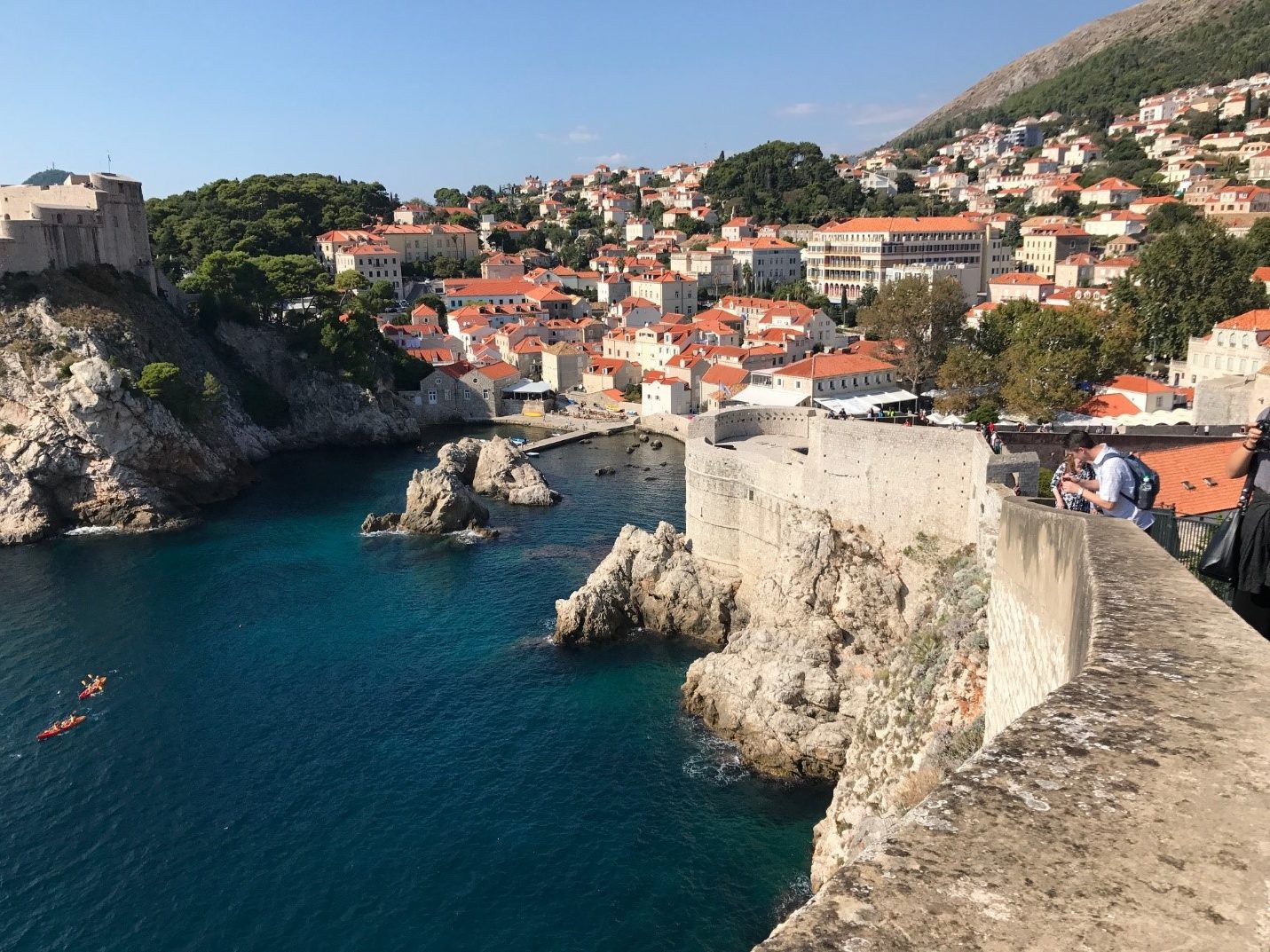
We invite you to travel with Bettina Bazzini-Lapin, Scientific Client Specialist, who was awarded a Promega Travel Award for sales performance and used her award to travel to Croatia and Italy. In this blog, she describes her travels.
Croatia is an Eastern European country that sits on the Adriatic Sea directly across from Italy. It has more than one thousand islands, and a third of the country is covered by forest. It is known for its beautiful Dalmatian coast line. One of the main sites for travelers to visit is the coastal city of Dubrovnik, known as the Pearl of the Adriatic. This is where my adventure began. Continue reading “Promega Travel Award Blog: An Excursion to Croatia”
Every year around the beginning of December, a magical transformation begins in Promega offices in Madison and around the world. In Madison, even as our own Promega cookie elf is busily baking the last of her Holiday treats, employees are donning their own elf hats and bedecking our halls and cubes with their own form of Holiday magic.
Different teams put different spins on their decorating; from an all-out coordinated effort, to individualized decorations that reflect the personality of the decorator . It is fun to see how different areas get into the Holiday spirit. Continue reading “Deck the Halls…and Cubes…and Desks”
Working at a manufacturing company like Promega means quite a few people here spend their days obsessing (rightly so) over things like bulk production, product finishing and quality assurance. As the holiday season approaches, however, many Promega Madison employees also begin obsessing (rightly so) over some extremely important manufacturing going on in Elaine York’s Wisconsin kitchen.
Elaine is married to Chuck York, Vice President of Manufacturing Operations at Promega. Each Christmas, she bakes thousands (yes, thousand with an “s”) of made-from-scratch Christmas cookies of every variety, artfully arranged on around 50 platters, which Chuck then brings to work to share with his lucky coworkers.
This blog post is contributed by guest blogger Diana Clark, Benefits Manager, Promega Corporation
November is National Family Caregivers Month, first proclaimed by President Clinton in 1997, the proclamation has been renewed by every U.S. President since. When President Obama proclaimed this designation in 2012, he commented, “The unselfish devotion of family caregivers affirms the importance of respecting the dignity of life in all stages and underscores the importance of the family unit.”
Hearing these words, I felt even prouder to be a part of the Promega family. You see, we are already in the process of rolling out Caregiver Leave for 2018. Caregiver Leave will provide Promega employees with an additional three weeks of paid time off annually to care for a sick parent, spouse or child, or to welcome a new child into their family via birth, adoption or foster placement. Continue reading “Honoring Caregivers”
XWe use cookies and similar technologies to make our website work, run analytics, improve our website, and show you personalized content and advertising. Some of these cookies are essential for our website to work. For others, we won’t set them unless you accept them. To learn more about our approach to Privacy we invite you to Read More
By clicking “Accept All”, you consent to the use of ALL the cookies. However you may visit Cookie Settings to provide a controlled consent.
We use cookies and similar technologies to make our website work, run analytics, improve our website, and show you personalized content and advertising. Some of these cookies are essential for our website to work. For others, we won’t set them unless you accept them. To find out more about cookies and how to manage cookies, read our Cookie Policy.
If you are located in the EEA, the United Kingdom, or Switzerland, you can change your settings at any time by clicking Manage Cookie Consent in the footer of our website.
Necessary cookies are absolutely essential for the website to function properly. These cookies ensure basic functionalities and security features of the website, anonymously.
Cookie
Duration
Description
cookielawinfo-checbox-analytics
11 months
This cookie is set by GDPR Cookie Consent plugin. The cookie is used to store the user consent for the cookies in the category "Analytics".
cookielawinfo-checbox-functional
11 months
The cookie is set by GDPR cookie consent to record the user consent for the cookies in the category "Functional".
cookielawinfo-checbox-others
11 months
This cookie is set by GDPR Cookie Consent plugin. The cookie is used to store the user consent for the cookies in the category "Other.
cookielawinfo-checkbox-advertisement
1 year
The cookie is set by GDPR cookie consent to record the user consent for the cookies in the category "Advertisement".
cookielawinfo-checkbox-necessary
11 months
This cookie is set by GDPR Cookie Consent plugin. The cookies is used to store the user consent for the cookies in the category "Necessary".
cookielawinfo-checkbox-performance
11 months
This cookie is set by GDPR Cookie Consent plugin. The cookie is used to store the user consent for the cookies in the category "Performance".
gdpr_status
6 months 2 days
This cookie is set by the provider Media.net. This cookie is used to check the status whether the user has accepted the cookie consent box. It also helps in not showing the cookie consent box upon re-entry to the website.
lang
This cookie is used to store the language preferences of a user to serve up content in that stored language the next time user visit the website.
viewed_cookie_policy
11 months
The cookie is set by the GDPR Cookie Consent plugin and is used to store whether or not user has consented to the use of cookies. It does not store any personal data.
Analytical cookies are used to understand how visitors interact with the website. These cookies help provide information on metrics the number of visitors, bounce rate, traffic source, etc.
Cookie
Duration
Description
SC_ANALYTICS_GLOBAL_COOKIE
10 years
This cookie is associated with Sitecore content and personalization. This cookie is used to identify the repeat visit from a single user. Sitecore will send a persistent session cookie to the web client.
vuid
2 years
This domain of this cookie is owned by Vimeo. This cookie is used by vimeo to collect tracking information. It sets a unique ID to embed videos to the website.
WMF-Last-Access
1 month 18 hours 24 minutes
This cookie is used to calculate unique devices accessing the website.
_ga
2 years
This cookie is installed by Google Analytics. The cookie is used to calculate visitor, session, campaign data and keep track of site usage for the site's analytics report. The cookies store information anonymously and assign a randomly generated number to identify unique visitors.
_gid
1 day
This cookie is installed by Google Analytics. The cookie is used to store information of how visitors use a website and helps in creating an analytics report of how the website is doing. The data collected including the number visitors, the source where they have come from, and the pages visted in an anonymous form.
Advertisement cookies are used to provide visitors with relevant ads and marketing campaigns. These cookies track visitors across websites and collect information to provide customized ads.
Cookie
Duration
Description
IDE
1 year 24 days
Used by Google DoubleClick and stores information about how the user uses the website and any other advertisement before visiting the website. This is used to present users with ads that are relevant to them according to the user profile.
test_cookie
15 minutes
This cookie is set by doubleclick.net. The purpose of the cookie is to determine if the user's browser supports cookies.
VISITOR_INFO1_LIVE
5 months 27 days
This cookie is set by Youtube. Used to track the information of the embedded YouTube videos on a website.
Performance cookies are used to understand and analyze the key performance indexes of the website which helps in delivering a better user experience for the visitors.
Cookie
Duration
Description
YSC
session
This cookies is set by Youtube and is used to track the views of embedded videos.
_gat_UA-62336821-1
1 minute
This is a pattern type cookie set by Google Analytics, where the pattern element on the name contains the unique identity number of the account or website it relates to. It appears to be a variation of the _gat cookie which is used to limit the amount of data recorded by Google on high traffic volume websites.

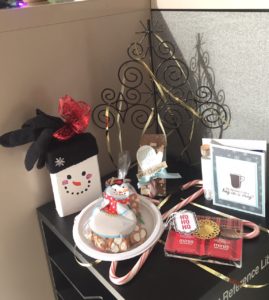 Every year around the beginning of December, a magical transformation begins in Promega offices in Madison and around the world. In Madison, even as our own Promega cookie elf is busily baking the last of her Holiday treats, employees are donning their own elf hats and bedecking our halls and cubes with their own form of Holiday magic.