Studying Episodic Memory through Food-Caching Behavior in Birds

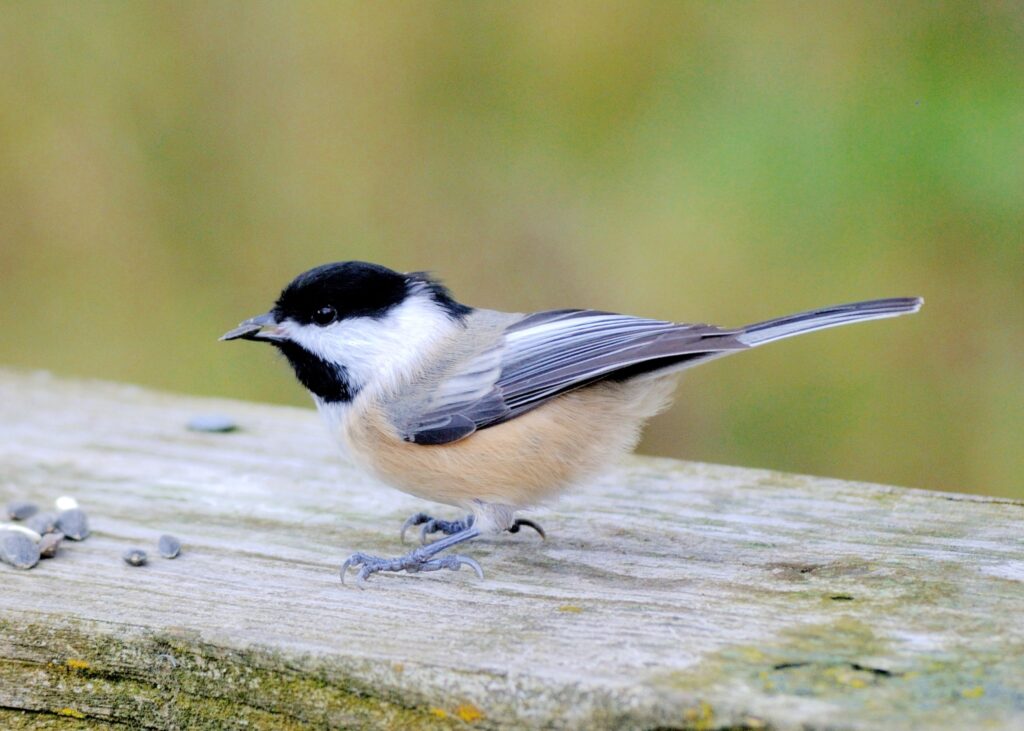
A black-capped chickadee nibbles on a seed
A black-capped chickadee nibbles on a seed.

Your ability to navigate space and time is anchored in your memory, particularly episodic memory, which catalogues the experiences you have in a given location. This type of memory is shaped by complex neural networks firing within your hippocampus. So how exactly do we store memories of the hundreds of things that happen to us in a day, especially when they unfold in the same settings?

There are theories as to how we form single-shot, or “episodic”, memories, many of which center around the activity of place cells, which light up when you are in a specific environment. The idea here is that, with every event that happens in a place, these cells would shift and fire in novel patterns. Scientists at the Zuckerman Mind Brain Behavior Institute at Columbia University questioned this—while it is known that place cell activity can certainly be affected by experiences, they wondered whether there could be an alternative explanation for episodic recall that wouldn’t require the constant remapping of one’s core memory of a place.

Continue reading “Studying Episodic Memory through Food-Caching Behavior in Birds”

AI in the Research Lab: Where We Are, and Where We’re Going

This guest blog post is written by Poncho Meisenheimer, Vice President of Research and Development.

Poncho Meisenheimer is the Vice President of Research and Development at Promega Corporation.

I got into an argument with ChatGPT this morning.

That’s not unusual. I argue with ChatGPT a lot. In fact, that’s usually my goal.

As a scientist and a leader, it’s important to pressure-test my ideas. I need to account for biases, identify limitations, and strengthen weak points. Large language models like ChatGPT have given me a powerful tool in my pocket to become a better version of myself.

The advent of generative artificial intelligence has changed our world. We can’t keep doing things the way we did even only a year ago.

Promega is embracing AI. Every department is finding groundbreaking and responsible ways to deepen their impact using our ChatGPT enterprise license. As the Vice President of Research and Development, I have been working with our scientists to think beyond simple queries and imagine new horizons we can explore with these tools. 

Make no mistake: I don’t think that ChatGPT and other AI tools can, will or should replace human scientists. Instead, they will empower all scientists to ask more ambitious questions and uncover new answers. They will upend our current paradigm about what science is and how it operates, and will help us build an even deeper understanding of the world around us.

Continue reading “AI in the Research Lab: Where We Are, and Where We’re Going”

A Silent Killer: Tracking the Spread of Xylella fastidiosa 

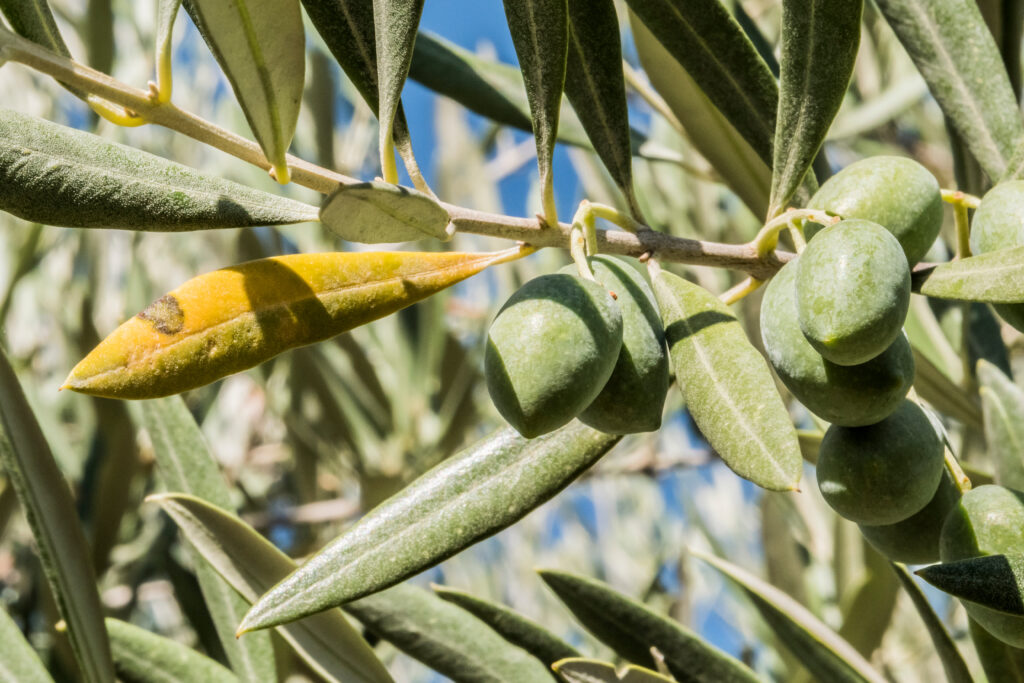
Olive tree infected with X. fastidiosa

Thought to have arrived in Italy on a plant imported from Costa Rica in 2008, the plant pathogen Xylella fastidiosa was first detected there in 2013. Its subsequent unchecked spread resulted in the loss of millions of olive trees across Southern Apulia, a region in Italy responsible for the production of roughly 12% of the world’s olive oil (5). The pathogen moved swiftly and, to date, a total of 20 million olive trees have been infected across Europe.  

Continue reading “A Silent Killer: Tracking the Spread of Xylella fastidiosa “

Discovering Cyclic Peptides with a “One-Pot” Synthesis and Screening Method

In the evolving landscape of drug discovery, cyclic peptides represent an exciting opportunity. These compounds offer a unique balance of size and specificity that positions them to bridge the gap between small molecule drugs and larger biologics like antibodies.

However, most cyclic peptides demonstrate low oral bioavailability: they are digested in the stomach before they can enter the bloodstream, or they’re not absorbed into the bloodstream by the gastrointestinal tract and can have little therapeutic effect (1). Biologics face a similar challenge and are administered intravenously rather than with a more convenient pill form.

A 384 well plate next to a collection of pills of different sizes and shapes.


To address the challenge of low oral bioavailability of cyclic peptides, a team from the Ecole Polytechnique Fédérale de Lausanne in Switzerland developed a “one-pot” method to synthesize a diverse library of cyclic peptides, which they then screened for stability, activity and permeability (1). Their method, which was published December 2023 in Nature Chemical Biology, streamlined the process of identifying and optimizing cyclic peptides and marked a substantial improvement from their earlier studies, where the developed cyclic peptides exhibited almost no oral bioavailability (%F). Using this new method, the team successfully developed a cyclic peptide with 18%F oral bioavailability in rats.

This blog covers the details of this study as well as a brief background on cyclic peptides.

Continue reading “Discovering Cyclic Peptides with a “One-Pot” Synthesis and Screening Method”

Will Artificial Intelligence (AI) Transform the Future of Life Science Research?

Artificial intelligence (AI) is not a new technological development. The idea of intelligent machines has been popular for several centuries. The term “artificial intelligence” was coined by John McCarthy for a workshop at Dartmouth College in 1955 (1), and this workshop is considered the birthplace of AI research. Modern AI owes much of its existence to an earlier paper by Alan Turing (2), in which he proposed the famous Turing Test to determine whether a machine could exhibit intelligent behavior equivalent to—or indistinguishable from—that of a human.

The explosive growth in all things AI over the past few years has evoked strong reactions from the general public. At one end of the spectrum, some people fear AI and refuse to use it—even though they may have unwittingly been using a form of AI in their work for years. At the other extreme, advocates embrace all aspects of AI, regardless of potential ethical implications. Finding a middle ground is not always easy, but it’s the best path forward to take advantage of the improvements in efficiency that AI can bring, while still being cautious about widespread adoption. It’s worth noting that AI is a broad, general term that covers a wide range of technologies (see sidebar).

AI personified looking at a dna double helix against an abstract cosmic background
Image generated with Adobe Firefly v.2.

For life science researchers, AI has the potential to address many common challenges; a previous post on this blog discussed how AI can help develop a research proposal. AI can help with everyday tasks like literature searches, lab notebook management, and data analysis. It is already making strides on a larger scale in applications for lab automation, drug discovery and personalized medicine (reviewed in 3–5). Significant medical breakthroughs have resulted from AI-powered research, such as the discovery of novel antibiotic classes (6) and assessment of atherosclerotic plaques (7). A few examples of AI-driven tools and platforms covering various aspects of life science research are listed here.

Continue reading “Will Artificial Intelligence (AI) Transform the Future of Life Science Research?”

Designing Science: A Behind-the-Scenes Look at Our Recent Journal Cover Art

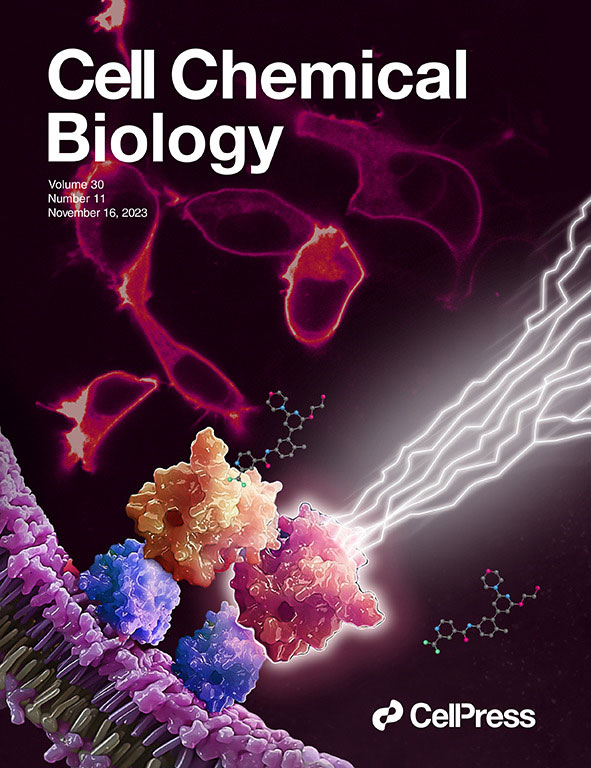
A 3D illustration showing RAF inhibitor LXH254 engages BRAF or CRAF protomers (orange), but spares ARAF (red). Unoccupied ARAF is competent to trigger downstream mitogenic signaling, which is demonstrated with lightning bolts. Red cells in the background are fluorescently labeled RAS proteins, expressed in live cells. The Cell Chemical Biology cover type superimposes the image.
Image adapted from original artwork by iSO-FORM LLC.

We made the cover! Of Cell Chemical Biology, that is.

This July, Cell Chemical Biology editors accepted a study from Promega scientists and invited the research team to submit cover art for the issue. The study in question details a BRET-based method to quantify drug-target occupancy within RAF-KRAS complexes in live cells. Promega scientists Matt Robers and Jim Vasta collaborated with one of our talented designers, Michael Stormberg, to craft an image that accurately represents the science in a dynamic and engaging way.

You can check out the paper and cover art in the November 16 issue of Cell Chemical Biology.

I spoke with Michael Stormberg to learn more about the creative process that went into creating this cover art and how he worked with the research team and other collaborators.

Continue reading “Designing Science: A Behind-the-Scenes Look at Our Recent Journal Cover Art”

Reviewing the Importance of circRNA

In recent years following the COVID-19 pandemic, RNA has gained attention for its successes and potential use in vaccines and therapeutics. One avenue of interest in RNA research is a non-coding class of RNA first identified almost 50 years ago, circular RNA (circRNA).

In 1976, Sanger et al. first identified circRNA in plant viroids, and later additions to the field found them in mice, humans, nematodes, and other groups. Unlike linear RNA, circRNA are covalently closed loops that don’t have a 5′ cap or 3′ polyadenylated tail. Following its discovery, researchers thought circRNA was the product of a rare splicing event caused by an error in mRNA formation leading to low interest in researching the subject (1).

In the early 2010s, following the development of high throughput RNA sequencing technology, Salzman et al. determined that circRNAs were not a result of misplicing, but a stable, conserved, and widely sourced form of RNA with biological importance. Since noncoding RNA makes up the majority of the transcriptome it’s an incredibly important field of study. We now recognize circRNAs for their potential as disease biomarkers and importance in researching human disease (2).

Continue reading “Reviewing the Importance of circRNA”

Insects and Science: Optimizing Work with Sf9 Insect Cells

Insects are a keystone species in the animal kingdom, often providing invaluable benefits to terrestrial ecosystems and useful services to mankind. While many of them are seen as pests (think mosquitos), others are important for pollination, waste management, and even scientific research.

Insect biotechnology, or the use of insect-derived molecules and cells to develop products, is applied in a diverse set of scientific fields including agricultural, industrial, and medical biotechnology. Insect cells have been central to many scientific advances, being utilized in recombinant protein, baculovirus, and vaccine and viral pesticide production, among other applications (5).

Therefore, as the use of insect cells becomes more widespread, understanding how they are produced, their research applications, and the scientific products that can be used with them is crucial to fostering further scientific advancements.

Primary Cell Cultures and Cell Lines

Cell culture - Cell lines - Insect Cells

In general, experimentation with individual cells, rather than full animal models, is advantageous due to improved reproducibility, decreased space requirements, less ethical concerns, and a reduction in expense. This makes primary cell cultures and cell lines essential contributors to basic scientific research.

Continue reading “Insects and Science: Optimizing Work with Sf9 Insect Cells”

Have No Fear, qPCR Is Here: How qPCR can help identify food contamination

Foodborne disease affects almost 1 in 10 people around the world annually, and continuously presents a serious public health issue (9).

Food Contamination-Strawberries-Blueberries-Magnifying glass
Food Contamination is common and can be seen in a variety of forms and food products.

More than 200 diseases have evolved from consuming food contaminated by bacteria, viruses, parasites, and chemical substances, resulting in extensive increases in global disease and mortality rates (9). With this, foodborne pathogens cause a major strain on health-care systems; as these diseases induce a variety of different illnesses characterized by a multitude of symptoms including gastrointestinal, neurological, gynecological, and immunological (9,2).

But why is food contamination increasing?

New challenges, in addition to established food contamination hazards, only serve to compound and increase food contamination risks. Food is vulnerable to contamination at any point between farm and table—during production, processing, delivery, or preparation. Here are a few possible causes of contamination at each point in the chain (2):

  • Production: Infected animal biproducts, acquired toxins from predation and consumption of other sick animals, or pollutants of water, soil, and/or air.
  • Processing: Contaminated water for cleaning or ice. Germs on animals or on the production line.
  • Delivery: Bacterial growth due to uncontrolled temperatures or unclean mode of transport.
  • Preparation: Raw food contamination, cross-contamination, unclean work environments, or sick people near food.

Further emerging challenges include, more complex food movement, a consequence of changes in production and supply of imported food and international trade. This generates more contamination opportunities and transports infected products to other countries and consumers. Conjointly, changes in consumer preferences, and emerging bacteria, toxins, and antimicrobial resistance evolve, and are constantly changing the game for food contamination (1,9).

Hence, versatile tests that can identify foodborne illnesses in a rapid, versatile, and reliable way, are top priority.

Continue reading “Have No Fear, qPCR Is Here: How qPCR can help identify food contamination”

It Is Not Just You—Burnout Is Real

“I just feel burned out.” I heard those words recently from my college junior. For him, the spring semester is barreling to a close and he is feeling tired, unmotivated and unproductive. He isn’t alone; most of us have said (or thought) those words at some point in our lives. We use the words when we are feeling tired, stressed or overwhelmed at work (or school), but burnout is more than just an emotional response to workload or other job-related challenges. Burnout can quickly cascade into more physical symptoms and take a toll on both our personal and professional lives.

Continue reading “It Is Not Just You—Burnout Is Real”