Looking Back: Seeing the Science of My Childhood

Gene silencingScience is all around usโ€” in everything we touch, smell, taste and see. It is in the flowers in our gardens, the molecules of pollen and oils that give those flowers scent, the crystals of sodium chloride that gives our food flavor and the way light is bent and changed to give our world color. There is science in the way we look like our great-great grandmother, and science in the way we are so different from each other. As the granddaughter of a forester and a botanist and the daughter of a science teacher, there has been science in my life for as long as I can remember. Recently my parents moved to a retirement home, and as I spent time helping them downsize, I took pictures of some of the โ€˜scienceโ€™ that surrounded my as I grew up.

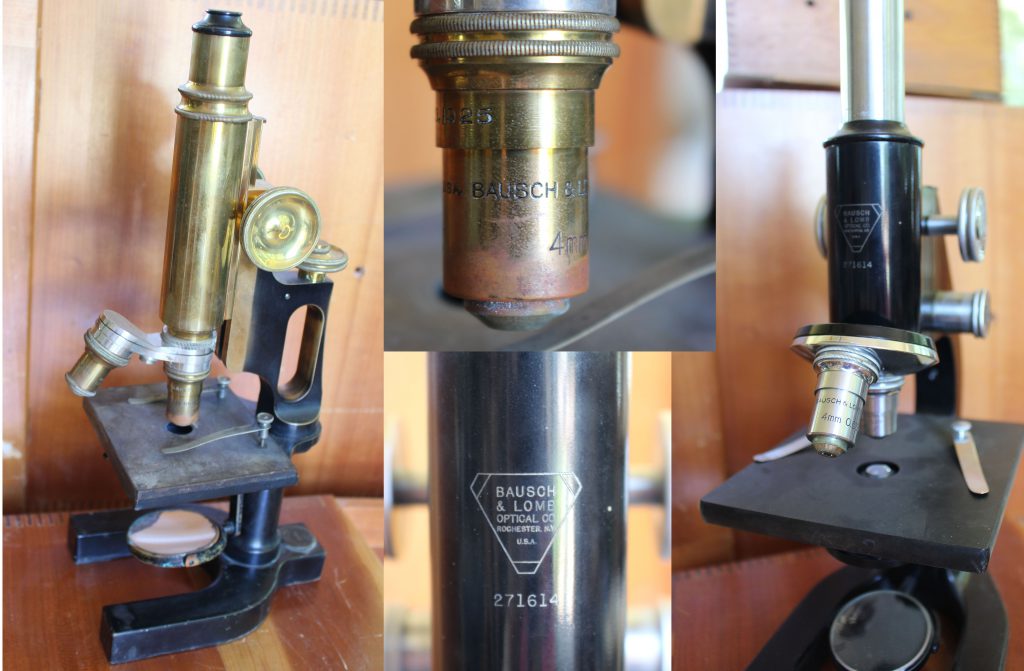
To start, there is โ€œold brassyโ€, the first microscope I ever used. This microscope, and itโ€™s slightly more modern cousin held places of honor on shelves in my fatherโ€™s den.microscopes

Held in wooden boxes next to the microscopesย were test tubes containing all sorts of mysterious things, including samples gathered by my grandfather while he was a forester in Louisiana. Continue reading “Looking Back: Seeing the Science of My Childhood”
A Day In the Life: Mikael Arnfelt, Promega Sales Manager, Sweden

*Today, June 6, is Swedish National Day โ€“ a fitting day to highlight this Promega employee.

Promega sales representatives worldwide find themselves on the road on a regular basisโ€”it is, after all, part of the job description. Traveling many miles to visit customers, theyโ€™re fortunate to enjoy a steady change of scenery and a variety of daily tasks.

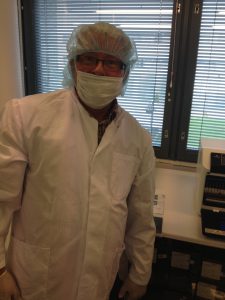
Mikael at a Finnish police lab where he was servicing a Maxwell instrument.

For Mikael Arnfelt, Sales Manager of Promegaโ€™s Sweden branch, travel obligations are sometimes taken to a higher level. Thatโ€™s why we wanted to share his adventures for our โ€œDay In the Lifeโ€ series; though as Mikael is quick to point out, there’s really no such thing as a โ€œtypical day,โ€ at least not in his life!

Mikaelโ€™s experiences begin to make sense once you learn more about his position with Promega. โ€œWe are a small branch, so we each need to take on multiple roles,โ€ he explains. โ€œIn the beginning I was the only sales rep for Sweden, so until last year I took care of southern Sweden and all of Finland/Estonia, together with our distributors there.โ€ He and his few colleagues are also responsible for many different product groupsโ€”Mikaelโ€™s include Detection Instruments, Cellular Analysis, and Applied Markets. โ€œI am also the back-up for order taking,โ€ he says. โ€œI currently cover this seven days a month, and during vacation periods, so my colleague can work on various administrative tasks, and even take some vacation himself.โ€ Continue reading “A Day In the Life: Mikael Arnfelt, Promega Sales Manager, Sweden”

Awakened Consciousness in Review: Revisiting What We Learned

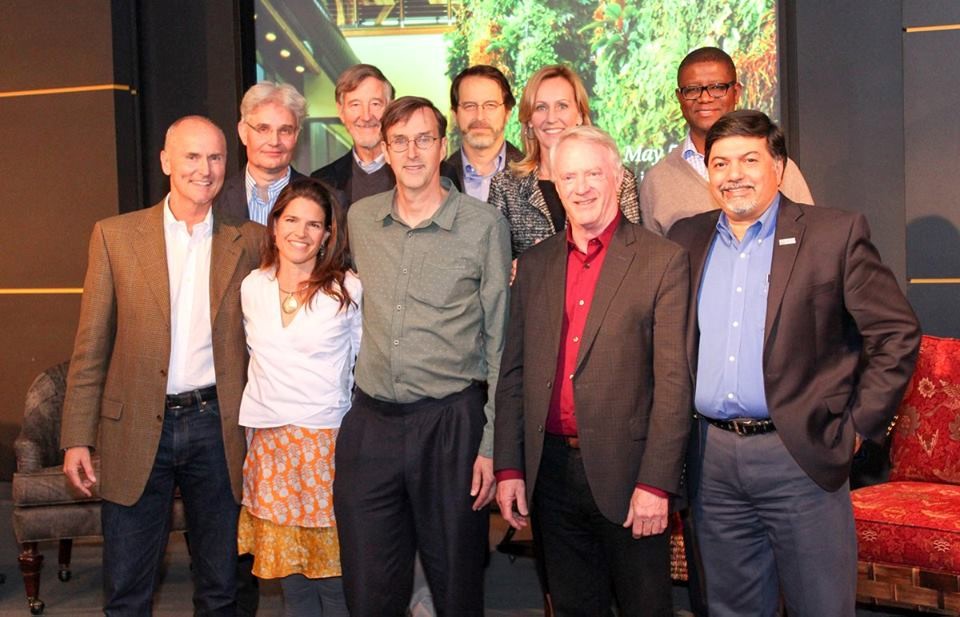
FORUM PRESENTERS Front row l-to-r: Chip Conley, Malynn Utzinger, John Roulac, Bill Linton, Raj Sisodia; Back row l-to-r: Steve Paulson, Mike Mears, Tim Weitzel, Betsy Myers, Martin Kalungu-Banda
FORUM PRESENTERS
Front row l-to-r: Chip Conley, Malynn Utzinger, John Roulac, Bill Linton, Raj Sisodia; Back row l-to-r: Steve Paulson, Mike Mears, Tim Weitzel, Betsy Myers, Martin Kalungu-Banda

Co-coordinated and co-hosted by the BioPharmaceutical Technology Center Institute (BTC Institute) and Promega Corporation, the International Forum on Consciousness โ€“ Awakened Consciousness and the Evolution of Business, was held on May 5โ€“6, 2016.

The Forum is designed to bring together people from diverse perspectives and professions to facilitate public dialogue regarding complex and challenging issues.  This year, our intent was to respond to voices of wisdom and action that call for a shift in the consciousness of organizations that affect the lives of so many and planet Earth.  Key among the questions we asked: How does the self-actualized business become a model and advocate for change?

Our sense is that those who joined us left both more knowledgeable and inspired.  Comments from participants illustrate the importance of offering this opportunity, as well as deep appreciation for our presentersโ€™ experience and insights:

audience

Diverse perspective relatable to many โ€“ excellentโ€ฆ overall, engaging, fascinating, action orientedโ€ฆ

Thank you so much for the wonderful program.  The diversity of speakers, viewpoints and topic was really enjoyable and provided great room for thought.  It was truly impressive.  Wonderful & kudos to the organizers and all the work and thought to create this program.

panel

An amazing experience, potentially life changing (weโ€™ll seeโ€ฆ).  Really top notch, felt like a series of TED talks, but with the added benefit of in-person interaction and a cohesiveness of topics.

Sound interesting?  There are several ways you can learn more about the Forum and get a meaningful taste of what these attendees are describing:

If youโ€™re not on our mailing list and would like to be, just let me know (karin.borgh@btci.org) โ€“ hopefully, weโ€™ll be offering a program of interest to you in the days ahead!

Exploring the Land of the Silver Fern: South Island of New Zealandโ€”Part I

In 2014, Promega created a special incentive to reward field science consultants who help the scientific community take advantage of ourย on-site stocking program. The winners had to meet ambitious criteria to receive 2 round-trip tickets to anywhere in the world, a week of paid vacation and spending money. Our four winners from 2014 will share photos and stories about their journeys in a semi-regular Friday feature on the Promega Connections Blog.

Todayโ€™s travelogue is Part I of the adventures of Sarah Theos, a client support consultant, who used herย award to travel to New Zealand.

Introduction

We went to New Zealand the first two weeks in December and were surprised that there was hardly anyone there. We had long stretches of the road entirely to ourselves and felt like we were the only ones around on many of the hikes. It was a magical feeling to take in the gorgeous scenery without another soul for miles. We, of course, purchased a book that told us about all of the โ€œoff the beaten pathโ€ hikes and sights that we must do and tried to check them all off the list! The locals were also extremely friendly and eager to chat. If we did come across any locals on the trails, they always stopped to talk and were eager to hear about where we were from and how we like the island so far. It was the beginning of summer so the days were long with the sun rising before 6am and setting around 10pm. We had plenty of daylight hours to explore.

Day 1: Christchurch

Starting in Washington, DC, we traveled over 29 hours door to door to get to Christchurch, NZ. Since we arrived around 7am, we decided to fight off the jetlag and go out to explore the city. I wasnโ€™t quite sure what to expect in Christchurch, knowing that it suffered two devastating back to back earthquakes in 2010 and 2011. My first impression was that there were a lot of gravel parking lots everywhere and boarded up high rises. It looked like a ghost town. We checked into our hotel (built after the earthquakes) and took a walk down to the City Centre. The once beautiful cathedral sat in ruins, surrounded by large buildings in various states of decay. It was a sad sight to see. We then walked further down the street to the botanical gardens. The gardens are beautiful and we spent quite a while admiring the stunning Rose Garden. After exploring the gardens, we decided to drive up to the gondola to explore the city from a different angle.

The gondola takes you up to the top of Port Hills, about 500 meters above sea level. At the top you can see a 360 degree view from the Pacific Ocean and Christchurch to the Southern Alps and the surrounding Canterbury plains. We hiked to the top of Cavendish Bluff to take in the beauty. After the gondola ride, we decided to drive a little ways up the Banks Peninsula to Governorโ€™s Bay where we found a cute little pub. Exhaustion set in around 5pm so we decided to head to a grocery store to stock up on snacks and water in preparation for our drive to the wild, west coast the next day. We passed out around 8pm. Continue reading “Exploring the Land of the Silver Fern: South Island of New Zealandโ€”Part I”

Vitamin D: Power in Cancer Prevention?

This and vitamin D should get your attention.

Have you ever noticed that after a good long day outdoors, maybe hiking, at the beach or even working in the yard, you feel really strong and healthy, maybe even more relaxed than after an indoor session in front of the telly or computer? Maybe a February trip to someplace sunny like Mexico or the Canary Islands has given you renewed zest for your normal tasks?

While rest and a change of scenery is never a bad thing, time outdoors and in the sunshine might have gained for you something more than rest and relaxation. If it included a little UVB irradiation, your time outdoors may have increased your serum vitamin D level. And though itโ€™s been presumed for years, we now have proof that higher serum vitamin D3 levels correlate with a decreased incidence of certain cancers. Continue reading “Vitamin D: Power in Cancer Prevention?”

In the Moment with Promega Software Designer, Dave Romanin

26062334-portrait-WEBWhen Dave Romanin came to work for Promega he was fresh out of school with a degree in bacteriology. His plan was to work for a year in manufacturing and then go back to graduate school. But in the end, he didnโ€™t go. There was no incentive, he explains, for him to spend five years in graduate school making little to no money. He didnโ€™t want to write grants or run his own lab, and he enjoyed what he was doing.
Twentyโ€four years later, Dave is still here. Heโ€™s moved around a bit, first manufacturing, then dispensing, kit packaging and then on to software development with Lou Mezei. Their first software project was a quality control software to capture data from the scales weighing bottles to ensure they were filled correctly. His experience in manufacturing helped him understand what the program needed to do and helped him define the specifications for the software for the programmer. He has been designing software for the last 10 years, and has worked on projects for everyone from marketing to manufacturing.

He describes his job, in part, as a game of cat and mouse. Dave spends hours testing the software, trying to find the weaknesses the developer didnโ€™t anticipateโ€”in essence, trying to break it. When he finds something that throws the software off or causes it to crash, he and the programmer decide on the next steps. Sometimes it is an easy fix, and sometimes they have to decide if it is worth what it would take to fix it. Would a user be likely to ever do what Dave did? Continue reading “In the Moment with Promega Software Designer, Dave Romanin”

Inflammasome Research: A Tool to Aid Progress

Inflammasomes: A Few Basics

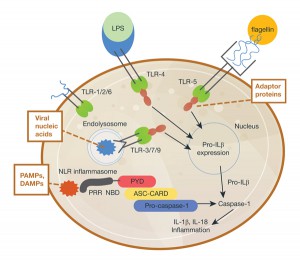
Inflammasomes are protein complexes composed of immune system receptors and sensor molecules. These complexes can respond to both infectious organisms and molecules derived from host proteins. When activated, a series of receptors and molecules signal via either pathogen-associate molecular patterns (PAMPs) induced by microbial pathogens, or danger-associated molecular patterns (DAMPs) induced as a result of endogenous stressors; the common next step in signaling is through pattern recognition receptors (PRR).

Inflammasome diagram.
Innate immune response in inflammation; a basic diagram.

Inflammasome activation is integral to the host immune response in mice and humans (1). The activation results in signaling that activates the caspase-1 scaffold, causing release of immune mediators such as interleukins IL-1ฮฒ and IL-18. So, whether inflammation is host tissue- or pathogen-induced, inflammasome activation results in a cascade of receptor signaling and mediator release, of which caspase-1 is a critical component.

Continue reading “Inflammasome Research: A Tool to Aid Progress”

There and Back Again: Part IV (South Island, New Zealand)

In 2014, Promega created a special incentive to reward field science consultants who help the scientific community take advantage of ourย on-site stocking program. The winners had to meet ambitious criteria to receive 2 round-trip tickets to anywhere in the world, a week of paid vacation and spending money. Our four winners from 2014 will share photos and stories about their journeys in a semi-regular Friday feature on the Promega Connections Blog.

Todayโ€™s travelogue is Part IV and the final installment of the adventures of Mica Zaragoza, a senior client rep in Chicago, IL, who used his award to travel to Australia and New Zealand.

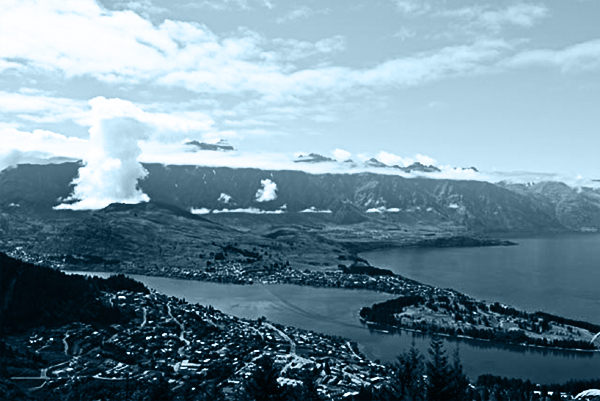
26061846-Helix-Travel---Image-1-WEBQueenstown, New Zealandย 

Walking out of our room into the open air, Queenstown instantly provided a lasting impression.ย  Nestled along Lake Wakatipu, watched over by the Remarkable Mountains, the city feels like Aspen on steroidsโ€”itโ€™s no wonder thereโ€™s such an international pull for young travelers and skiers.

We jumped right into exploring with a gondola ride. This photo is my best attempt at capturing Queenstown from high above. Continue reading “There and Back Again: Part IV (South Island, New Zealand)”

To Meditate Perchance to Dream

First the disclosure: this blog is of course about Me.

But itโ€™s also about You. And yours. Because as you know, weโ€™ve become a culture that does not sleep.

Why donโ€™t we sleep? I like to think that it isย an evolutionary adaptation; not sleeping, after all, allows us more time forย Facebook.

Or Etsy for you makers. Or Amazon for you shoppers. And letโ€™s not forget our middle, high school and college students. Do they even have classrooms anymore, or are lectures all online (onย screens)?

One tired pony. By Rachel C from Scotland (Flickr) [CC BY 2.0 , via Wikimedia Commons
Honestly, theย evolutionary adaptation idea comes from how we live and work today.ย And no, this is not another rant/lecture on the color of light emitted by whatever non-cathode ray tubes are in our phones or tablet-like devices.

Itโ€™s just that just working in our very busy online/wired world, jumping from web page to project management software, to big-screens in meetings has us adapted to being ย on:ย capital “O” capital “N”.

This multi-multitasking has grown (for me) a new type of neurons that areย not happy unless they are gleaning new information from a screen, all the time. And these neurons donโ€™t stop working when the screen is gone; no, they continue seeking and trying to process. For me, if thereโ€™s no screen to look at, the neurons ping-pong around behind my eyeballs, looking and searching, as if to say, โ€œInput missing! Input missing!โ€

The result can be hours in bed sans sleep; it seems the racket these neurons make keeps all the other neurons up. Continue reading “To Meditate Perchance to Dream”

Congenital Cytomegalovirus: The Most Common Congenital Infection That You Have Never Heard Of

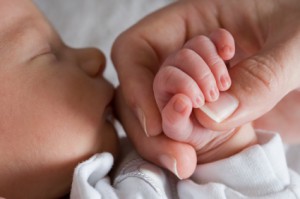
infant

Down Syndrome. Fetal alcohol syndrome. Spina bifida. Most people have heard of these well know congenital conditions, and know at least in a general sense that they have profound and lasting effects on the children born with them as well as their families. Unfortunately, people are much less aware of a congenital infection that is more common that any of these and affects more infants than all three of the conditions listed above. In fact, this congenital infection causes more cases of congenital disease than all of the 29 conditions currently screened for in most American states combined (1; 2), and yet it is not widely known by the general public. Cytomegalovirus, or CMV, is the most common congenital viral infection in developed countries (3; 4), and the leading cause of congenital sensorineural hearing loss and psychomotor retardation (1).

Continue reading “Congenital Cytomegalovirus: The Most Common Congenital Infection That You Have Never Heard Of”