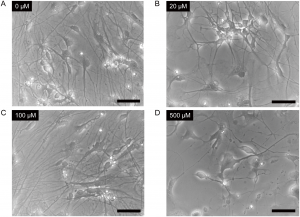
Cells were treated with 0μM (Panel A), 20μM (Panel B), 100μM (Panel C) or 500μM (Panel D) ketamine for 24 hours. Scale bar = 50μm. From Ito, H., Uchida, T. and Makita, K. (2015) Ketamine causes mitochondrial dysfunction in human induced pluripotent stem cell-derived neurons. PLOS ONE 10, e0128445.
doi:10.1371/journal.pone.0128445.g002
Cell Biology
Designer Bacteria Detect Cancer
 Every day scientists apply creative ideas to solve real-world problems. Every so often a paper comes up that highlights the creativity and elegance of this process in a powerful way. The paper “Programmable probiotics for detection of cancer in urine”, published May 27 in Science Translational Medicine, provides one great example of the application of scientific creativity to develop potential new ways for early detection of cancer.
The paper describes use of an engineered strain of E.coli to detect liver tumors in mice. The authors (Danino et al) developed a potential diagnostic assay that uses a simple oral delivery method and provides a readout from urine, all of which is made possible by some seriously complex and elegant science. Continue reading “Designer Bacteria Detect Cancer”
Explorations into the Body of Consciousness: Highlights from Dr. Charles Raison’s talk from the International Forum on Consciousness

The following blog highlights the presentation from Dr. Charles Raison at the International Forum on Consciousness, Conscious Evolution: The Awakening, co-hosted by the BTC Institute and Promega Corporation, May 7–8, 2015.
The Forum is designed to bring together people from diverse perspectives and professions to facilitate public dialogue regarding complex and challenging issues. This year, our intent was to respond to voices of wisdom and action that call for us to shift our consciousness up a notch.
Our goals included building on the lessons of past and present in order to grow further into new systems, new ways of being that may better allow us to foster a long-term, sustainable relationship with the biosphere and the ever-evolving cosmos.
A full house of 325+ attendees, we were guided by eight outstanding presenters, all of whose talks and panel discussions may be viewed via links from our website (http://www.btci.org/consciousness/). Our first speaker, Dr. Charles Raison, who recently joined the faculty of the University of Wisconsin , effectively set the stage for the Forum, piquing interest for the talks and discussions that followed, as well as the many related conversations that continue to flow.
A few highlights from his talk:
- Science strives for objectivity but every scientist has a personal motivation regarding the work they’ve come to do.
- Quoting John Muir, “When we try to pick out anything by itself we find it hitched to everything else in the universe.” Looking at consciousness this way is interesting – not mystical, but actually scientific.
Targeting MYC: The Need to Study Protein:Protein Interactions in Cells
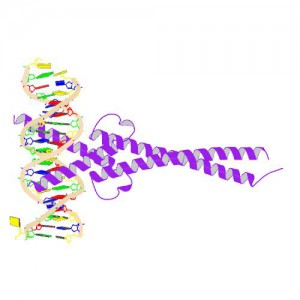
In 1982, picked up because of its homology to chicken virus genes that could transform cells, MYC became one of the first human genes identified that could drive cellular transformation (1,2). Since that time countless laboratories have prodded and poked the human MYC gene, the MYC protein, their homologs in other animal models, and their transforming viral counterparts.
MYC is a transcription factor and forms heterodimers with a required protein partner, MAX, before binding to the E box sequences of DNA regulatory regions (3). MYC regulates gene expression of many targets through interactions with a host of proteins, often referred to as the MYC Interactome (2). In fact, MYC is estimated to bind 10–15% of the genome, and it regulates the expression of genes that are transcribed by by each of the three RNA polymerases (2).
MYC plays a central role in regulating cell growth, proliferation, apoptosis, differentiation and transformation, acting as a central integrator of cellular signals. MYC is tightly regulated at multiple levels from gene expression to protein stability. Dysregulation (usually upregulation) of the amount and stability of Myc protein is observed in many human cancers. Even in cancers in which MYC is not directly involved in transforming cells, its normal expression is often required to support the extracellular matrix and/or vascularization necessary for tumor growth and formation (4).
Because MYC is such a central player cancer pathology, it is an attractive target for cancer therapeutics (2) .
Continue reading “Targeting MYC: The Need to Study Protein:Protein Interactions in Cells”Choosing Primary and Control Reporters for Dual-Luciferase Assays
Dual-Reporter Assays give scientists the ability to simultaneously measure two reporter enzymes within a single sample. In dual assays, the activity of an experimental reporter is correlated with the effect of specific experimental conditions, while the activity of a control reporter relays the baseline response, providing an essential internal control that reduces variability caused by differences in cell viability or transfection efficiency. The Nano-Glo® Dual-Luciferase® Reporter (NanoDLR™) Assay provides a choice of two sensitive reporters (firefly and NanoLuc luciferases) for use in dual-assay format. Both reporters give state-of-the-art functionality, raising the question “Which luciferase should be the primary reporter and which should be the control?”
This infographic outlines the various NanoDLR dual-reporter assay choices and the situations where you would choose one format over another. Continue reading “Choosing Primary and Control Reporters for Dual-Luciferase Assays”
Removing Cancer’s Cloak of Invisibility
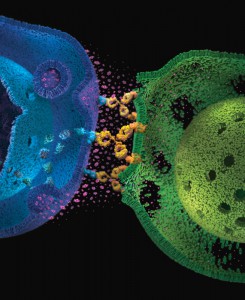
But in reality it was hard to make this work. Because, as scientists discovered recently, cancer outsmarts the immune system by wearing a kind of “invisibility cloak”. Cancer is able to fool the immune system from recognizing that it is the enemy and in effect keeps the immune system from destroying it.
In a breakthrough discovery scientists have found a way around this treachery.
The breakthrough is in therapies called ‘checkpoint inhibitors’. Checkpoint inhibitors block the mechanisms that allow some tumor cells to evade the immune system. The drugs ensure that cancer cells are no longer be shielded from the immune system defenses, but are instead recognized as “foreign”. Continue reading “Removing Cancer’s Cloak of Invisibility”
Avoid False Hits During Compound Screening for Drug Discovery

One goal of drug discovery and research programs is to reduce false hits as early as possible in the process. Follow-up on false hits is costly in terms of time and resources, and the longer the false hits remain in the drug development pipeline, the more costly they are. So methods that can easily reduce the number of false hits during compound screening early in the discovery process are particularly sought after.
Reporter assays have proven to be invaluable tools for elucidating the mechanisms of action of small molecules or other agents on signaling pathways within cells, and the luciferase reporter assay has become a standard research tool in the biological research laboratory.
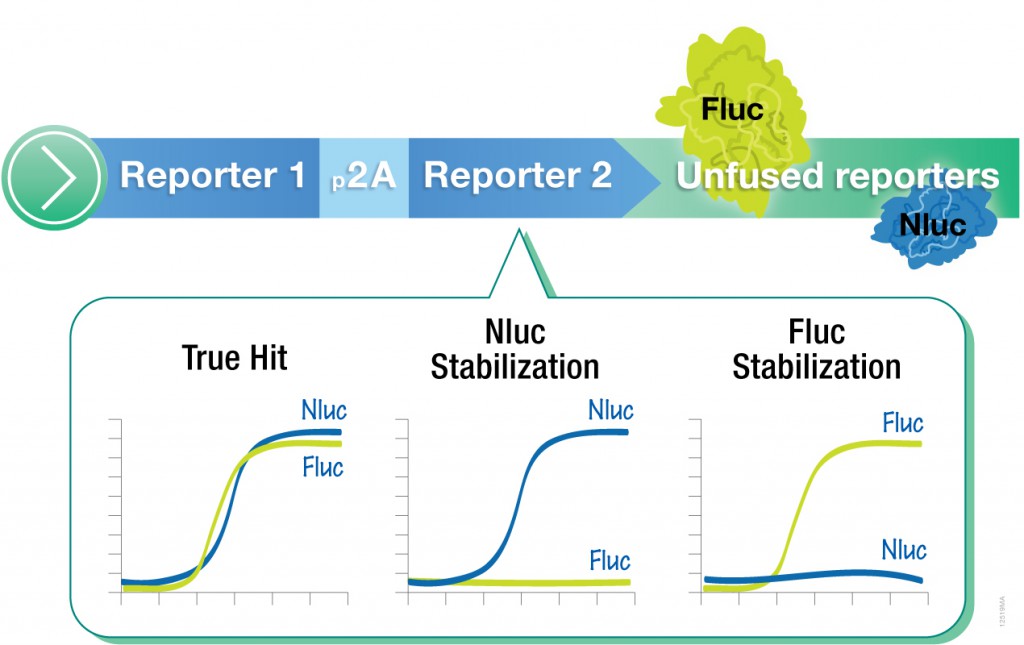
However, one caveat of using standard luciferase-based reporter assays for larger-scale compound screening efforts is the frequency of false hits that result from direct interaction of compounds with the luciferase reporter. This issue can be mitigated with a “coincidence reporter” system where two independent reporter proteins are produced from a single transcript. In this type of assay, a bicistronic transcript is stoichiometrically translated into two nonhomologous reporters by means of a 2A “ribosomal skipping” sequence. Since it is unlikely that compounds will interact with two distinct types of reporter, “coincident” responses will indicate on-target activity. Such a coincident reporter system provides an important control against costly false hits early in drug discovery research programs.
A paper published online in ACS Chem Biol in February describes the first successful application of the firefly/NanoLuc luciferase coincidence reporter system to identify new pathways that up-regulate PARK2 expression.
Immune Checkpoint Inhibitors: Has Cancer Met its Match?

Dr. Drew M. Pardoll, Johns Hopkins University School of Medicine in Baltimore, in his 2012 review, “The blockade of immune checkpoints in cancer immunotherapy” published in Nature Reviews Cancer (1) writes:
“The myriad of genetic and epigenetic alterations that are characteristic of all cancers provide a diverse set of antigens that the immune system can use to distinguish tumour cells from their normal counterparts.”
Tumors have antigens, so we should be able to address/attack these antigens with our immune system, right?
Various immune mediators as therapeutic agents against cancer have entered and mostly flopped in clinical trials over the past 30 or more years. As a graduate student in the 1980s I remember IL-2 and interferon raising many hopes. More recently, drugs against chronic myeloid leukemia and CLL have shown early promise. However, so far cancer cells have mostly won against these therapies. Yet recent news points to some exciting new therapeutic agents, that over the past 15 years or so, and in and out of clinical trials, are getting a leg up in the cancer battle. These drugs are immune checkpoint inhibitors.
Continue reading “Immune Checkpoint Inhibitors: Has Cancer Met its Match?”Uncovering Protein Autoinhibition Using NanoBRET™ Technology
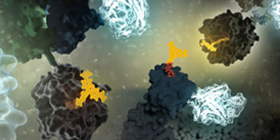
In a study published in Proceedings of the National Academy of Sciences USA article, Wang et al. used the principle of the Promega NanoBRET™ assay to understand how ERK1/2 phosphorylation of Rabin8, a guanine nucleotide exchange factor, influenced its configuration and subsequent activation of Rab8, a protein that regulates exocytosis.
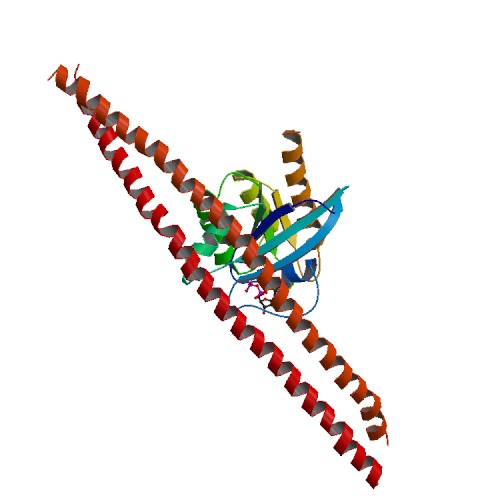
Rab8 is a member of the Rab family of small GTPases and an important regulator of membrane trafficking from the trans Golgi network and recycling endosomes to the plasma membrane. Wang et al. were interested in learning how the guanine nucleotide exchange factor (GEF) Rabin8, a known activator of Rab8, was itself activated to better understand how Rab8 and exocytosis were regulated in the cell. First, they confirmed if the consensus extracellular-signal-regulated kinases ERK1/2 phosphorylation motif uncovered in Rabin8 resulted in phosphorylation of Rabin8. Both in vitro analysis and cell-based assays confirmed that ERK1/2 phosphorylated Rabin8. Next, the GEF activity of Rabin8 was assessed to determine if ERK1/2 phosphorylation activated the GEF. Researchers confirmed activation of Rabin8 GEF in vitro.
Continue reading “Uncovering Protein Autoinhibition Using NanoBRET™ Technology”Neuroscience Explains Harry Potter’s Appeal
 Curling up with a good book is one of life’s greatest pleasures, whether you’re reading on a tropical beach while on vacation or nestled into your favorite chair at home. As your eyes skim over the words, your mind conjures up images of the events unfolding on the page. Books can take us to fantastic places, real and imaginary, that we will never visit in our lifetime. And while there is some pleasure to be gained from nonfictional books, my favorite books all seem to fall in the realm of fiction. I am not alone. The science fiction and fantasy genre of literature continues to be one of the most popular. Why do so many readers find these types of books so enticing and engaging?
It all comes down to science, specifically neuroscience.
Continue reading “Neuroscience Explains Harry Potter’s Appeal”