Choosing the Best Luciferase Vector for Your Experiment—Now Made Easier with the Vector Selector

4621CAGenetic reporters are used as indicators to study gene expression and cellular events coupled to gene expression. They are widely used in pharmaceutical and biomedical research and also in molecular biology and biochemistry. Typically, a reporter gene is cloned with a DNA sequence of interest into an expression vector that is then transferred into cells. Following transfer, the cells are assayed for the presence of the reporter by directly measuring the reporter protein itself or the enzymatic activity of the reporter protein. A good reporter gene can be identified easily and measured quantitatively when it is expressed (in the organism or cells of interest).

Bioluminescent reporters are ideal for these types of studies because they have a number of important features including:
• Measurements that are almost instantaneous
• Exceptional sensitivity
• A wide dynamic range
• Typically no endogenous activity in host cells to interfere with quantitation

However, one factor that is critical for the success of a bioluminescent reporter assay is the vector.

At Promega we offer several different luciferases as reporters, and the genes for those luciferases are available in a variety of vectors. The vectors may vary in the promoters used or the presence or absence of sequences for rapid degradation. Often seemingly small changes in the vector can make a big difference in the suitability of the vector for a given experimental system. Do you need a reporter with a short half-life to detect rapid changes in gene expression? Are you studying a specifically localized protein? Do you wish to perform a transient or stable transfection?

To make finding the best reporter vector for your experimental system easy, we have developed the Luciferase Reporter Vector Selector. Using this online tool, you can narrow the choices of available vectors by promoter type, application (in vivo imaging, cancer pathway analysis, etc), availability of selectable marker, and type of luciferase.

So, as you design your luciferase reporter experiment, keep in mind this handy tool to help you choose the best luciferase vector for your needs.

2 Ways to Save Your Single Reporter Data

Reporter assays using a single reporter, be it from a stable cell line or transient transfection, can benefit from normalization. Obviously, we are not talking about adding a second control reporter but normalizing to the number of live or dead cells in the well.  Two cell health assays, CellTiter-Fluor™ Cell Viability Assay and CellTox™ Green Cytotoxicity Assay, are ideally suited for multiplexing with reporter assays. 

Continue reading “2 Ways to Save Your Single Reporter Data”

Insights into the Function of P7C3 Compounds in Neuroprotection

The multiple Lombardi trophies won by Pittsburgh Steelers.  Image used under Wikimedia Creative Commons, and attributed to daveynin.
The multiple Lombardi trophies won by Pittsburgh Steelers. Image used under Wikimedia Creative Commons, and attributed to daveynin.

It is fall and the season for American football. For this football fan, watching the game is a bit less enjoyable than it used to be, as more and more information is available about the serious and permanent brain injuries suffered by football players.

In the introduction to a recent paper in the journal Cell, “P7C3 Neuroprotective Chemicals Function by Activating the Rate-Limiting Enzyme in NAD Salvage”, not a word about American football is mentioned.

However, the paper begins, “No substantive therapeutics are available for the treatment of almost any form of disease entailing nerve death” (1). The authors list a range of neurodegenerative disorders such as Huntington’s, Alzheimers and Parkinson’s diseases, as well as ALS  or Lou Gherig’s disease. They also note that there are currently no effective treatments for trauma to the brain or peripheral nervous system.

The authors note that a chemical treatment that could interfere with nerve cell death would have a “transformative impact in modern medicine”. Continue reading “Insights into the Function of P7C3 Compounds in Neuroprotection”

Genome Editing and Reporter Technologies Enable Endogenous Pathway High-Throughput Assays

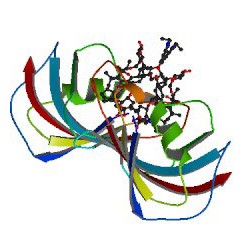
ImageSource=RCSB PDB; StructureID=1qpf; DOI=http://dx.doi.org/10.2210/pdb1qpf/pdb;


This article review was written by guest author, Amy Landreman, in the Cellular Analysis and Proteomics Group at Promega.

Charcot-Marie Tooth (CMT) disease is one of the most common inherited neurological disorders affecting approximately 2.8 million people worldwide. The most common form of CMT, CMT Type 1A, is caused by a 1.5Mb genomic duplication on Chr17 that results in trisomy of the critical myelin gene Peripheral Myelin Protein 22 (Pmp22). The extra copy of Pmp22 results in excessive PMP22 protein causing the neurophathy associated with CMT type 1A. Although there is no way to remove the extra copy of the gene, even subtle decreases in Pmp22 expression have shown promise against this inherited neuropathy in laboratory models.

In a recent paper, Inglese et al. 2014, describe an interesting new approach used to identify compounds that effectively decrease Pmp22 expression using a novel gene editing strategy and reporter-based screen. Their challenge was to create an assay that accurately represented endogenous Pmp22 expression including both transcriptional and post-transcriptional regulatory mechanisms, while maintaining the sensitivity required to detect subtle changes in expression in a loss of signal assay in a format compatible with microtiter 1536-well quantitative high-throughput screening (qHTS). Continue reading “Genome Editing and Reporter Technologies Enable Endogenous Pathway High-Throughput Assays”

Detecting Inhibition of Protein Interactions in vivo

Protein Interactions with NanoBRET

In a paper published in the September 2014 issue of ACS Medicinal Chemistry Letters, researchers from GlaxoSmithKline in the UK and Germany report on the discovery, binding mode and structure:activity relationship of a potent BRPF1 (bromodomain and PHD finger containing protein family) inhibitor. This paper came to our attention as it is one of the first publications to apply Promega NanoBRET technology in an vivo assay that reversibly measures the interaction of protein partners. The technology enabled the identification of a novel inhibitor compound that disrupts the chromatin binding of this relatively unstudied class of bromodomain proteins.

What exactly are bromodomains and why do they matter?
Bromodomains are regions (~100 amino acids) within chromatin regulator proteins that recognize and “read” acetylated lysine residues on histones. These acetylated lysines act as docking stations for regulatory protein complexes via binding of the bromodomain region. Because of their role in chromatin binding and gene regulation, bromodomains have attracted interest as potential targets for anti-cancer treatments. Although some bromodomain-containing proteins (e.g., those in the bromodomain and extraterminal domain (BET) subfamily) are well characterized and have been identified as potential therapeutic targets, others are less well understood.

Continue reading “Detecting Inhibition of Protein Interactions in vivo”

Improving Cancer Drug Screening with 3D Cell Culture

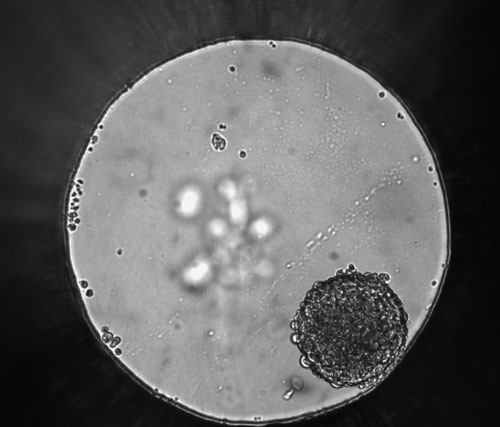
Differential contrast image of HCT116 colon cancer spheroid grown in a 96-well hanging-drop platform after seeding with 800 cells. Copyright Promega Corporation.
Tissue culture using primary or cultured cell lines has long been a mainstay of testing compounds for inhibiting cell growth or promoting apoptosis during screening for cancer drugs. However, the standard culture conditions result in monolayers of cells, dividing and growing across the bottom of a well, plate or flask in a single layer. The drawback of this technique is that organisms do not come in monolayers; a three-dimensional (3D) spheroid is closer to the in vivo state, especially if the spheroids are made up of more than one cell type like tumors in multicellular organisms. Even more beneficial would be using 3D cultured cells in high-throughput screening to facilitate compound profiling for target effectiveness and cytotoxicity. In a recent PLOS ONE article, researchers used normal and breast cancer cells both in monoculture and coculture to test a set of compounds and found results differed between 2D and 3D cultured cells. Continue reading “Improving Cancer Drug Screening with 3D Cell Culture”

To inject or not inject?

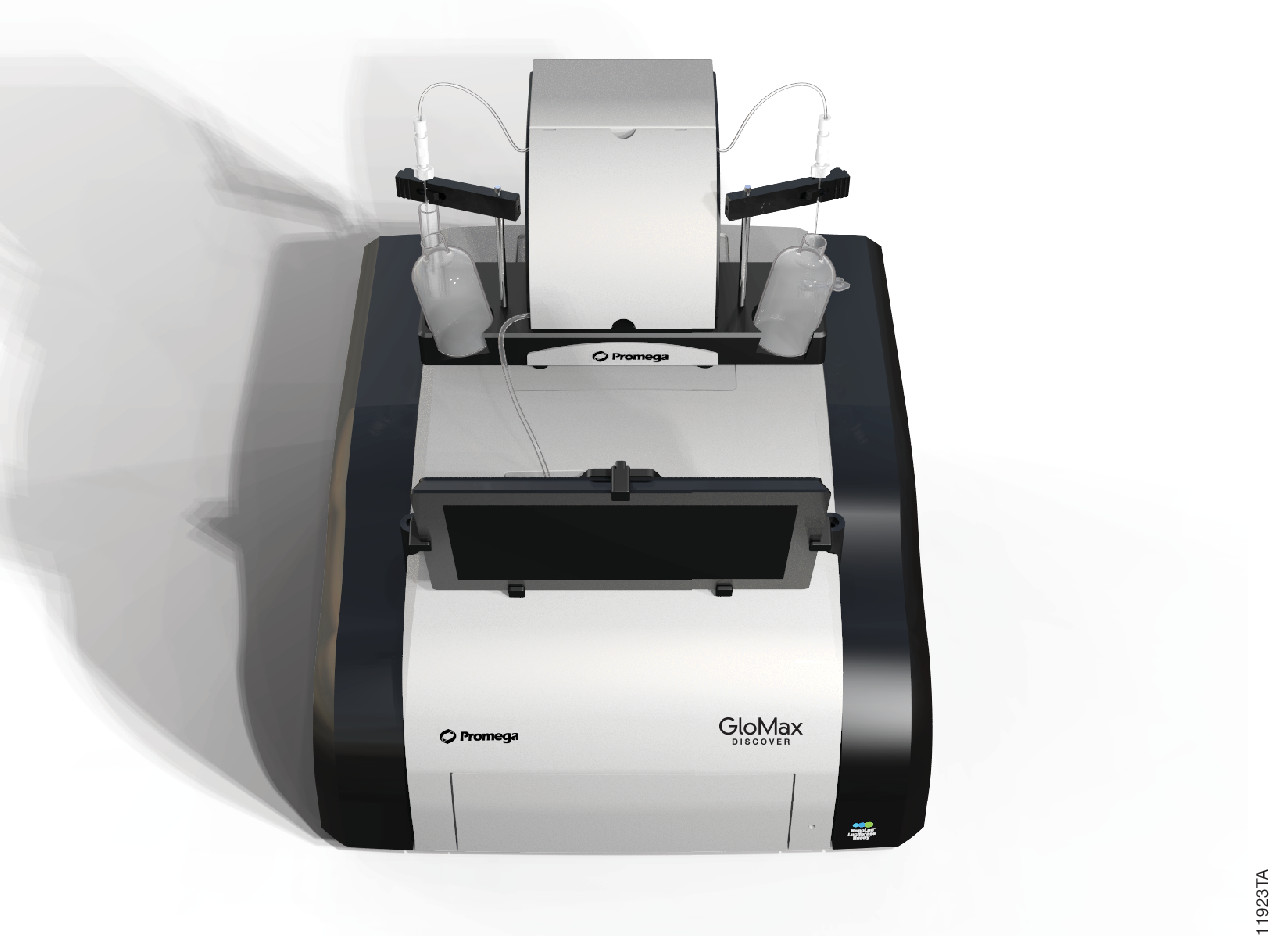
GloMax® Discover Multimode Reader with injectors.

Luciferase assays are useful tools for studying a wide range of biological questions. They can be performed easily by adding a reagent that provides components necessary to generate a luminescent signal directly to cells or a cell lysate. However, once this reagent has been added, how long you wait to measure the signal becomes a key consideration in generating consistent data. Dependent on which luciferase assay you use, you may need a luminometer that can use injectors to deliver the assay reagents. The reason for this is simple, but can be confusing to new users.

Let’s start by discussing two types of luciferase assays: “flash” vs. “glow”. Continue reading “To inject or not inject?”

Because Timing Is Everything….

Camp Indian Trails Morning Flag CeremonyTiming is everything! I learned that the hard way just two weeks ago when I took my son to scout camp and thought I would try to capture the traditional American flag ceremony for posterity. I set up my camera for a panoramic shot and scanned the crowd.  Feeling very pleased with myself, I got home that evening ready to show my family the great camera skills I had honed over the Summer months. To my horror, I noticed that half of the scout troop was saluting the flag while the other half were standing to attention! I had got the timing horribly wrong (although the picture is still fun to look at in a strange sort of way).

Timing is everything in science as well.  As a technical services scientist at Promega I have sung the ‘timing’ tune to many a biologist. No more so than in the study of apoptosis where Caspases activate each other in a choreographed cascade of molecular triggers that all have their place and time in a domino sequence of enzymatic cleavage events. I frequently talk to researchers about that ‘sweet spot’ of activity when any given Caspase is busily cleaving a peptide moiety off of the next Caspase in the sequence. Finding that sweet spot is anything but trivial and often requires a considerable amount of patience during the optimization phase of experimentation.

Promega has developed a comprehensive suite of systems (see here) designed to help get the timing right for the cell and compound combinations you might be working with.  The end result is that you have experiments that are timed so as to give you reliable information about what is really happening in your cells.

Shedding Light on Protein:Protein Interactions with NanoBRET™ Technique

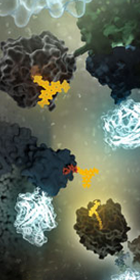
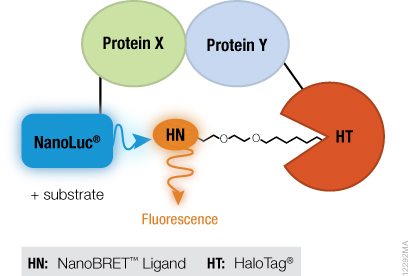
NanoBRET™ TechnologyIf you are trying to investigate protein:protein interactions inside cells, you know how important physiologically relevant results are. If you overload your cells with fusion constructs, your protein interactions may not actually reflect what is going on in the cell, and if your BRET energy donor and acceptor do not have sufficiently separated spectra, you can pick up a fair amount of noise in your experiment. Using the new superbright NanoLuc® Luciferase, and the HaloTag® Technology, we have developed a sensitive BRET system to help you take a better look specific protein interactions that interest you. Promega research scientist, Danette Daniels, describes the system in the Chalk Talk below:

Screening for Antiviral Compounds under Level 4 Containment Conditions

Working with bacteria and viruses that cause life-threatening diseases with no currently available treatment options takes guts. Most scientists are familiar with the routine requirements of good aseptic technique, are highly aware of laboratory safety requirements, and are more than familiar with autoclaves and sterilization issues, but if we make a mistake the consequences are usually only lost time or a spoiled experiment—not a lost life.

Scientists working with highly virulent organisms deal with a whole other level of risk that requires adherence to the strictest of safety regulations, and these containment regulations can sometimes place constraints on the type of experiment that can be performed with dangerous pathogens. A paper published in the April 2014 issue of Assay and Drug Development Technologies brought this to my attention and reminded me of the serious issues some scientists face on a daily basis as they research ways to combat infectious diseases.

Continue reading “Screening for Antiviral Compounds under Level 4 Containment Conditions”