Each summer, nearly every department at Promega welcomes interns onto their teams. In only three months, these interns make critical contributions to the business and leave with valuable experiences to complement their education.
Four interns shared thoughts on their time at Promega, and how their accomplishments connect to their educational journeys.
Brady Anderson, Scientific Applications Intern, shares his work applying PCR tools to agricultural testing.
Eva Eckel, Environmental Health & Safety (EH&S) Intern, connects three different rotations to her coursework in environmental science.
Ethan Hazra, Process Engineer Co-Op, recalls the rewarding challenge of repairing equipment in an environmental control room.
Ashley Leighton, Corporate Hospitality Intern, describes how she helped her team improve their metrics analysis.
Brady Anderson, Scientific Applications Intern
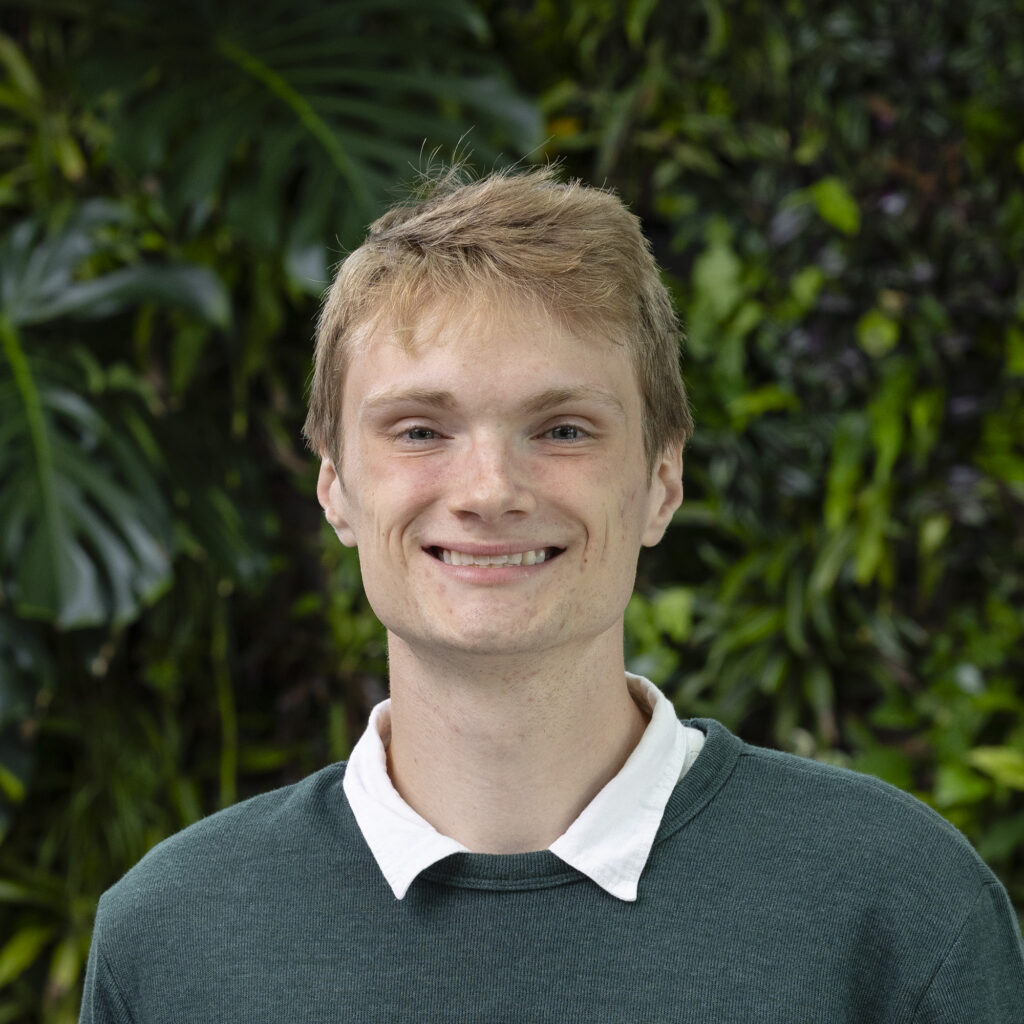
As the Scientific Applications intern, I developed a protocol for detecting live bacteria on inoculated seeds using Promega’s Viability PCR Reagent System. The project brought my research experience full circle, as I began my undergraduate research career studying plant organisms. Our goal was to use the vPCR kit to provide agricultural companies with evidence confirming that their inoculations were coating seeds with live bacteria. We also tested vPCR’s compatibility with Oxford Nanopore Sequencing, finding that samples treated with the vPCR Reagent System were detectable in a flow cell. These results may have implications for laboratories using Promega’s vPCR kit that wish to sequence their samples.
The project came with its ups and downs, but I enjoyed every part of it. Our greatest challenge was producing high enough DNA yields in our samples. Because we were developing the protocol from scratch, we naturally faced considerable trial and error while optimizing it. Another challenge was that I had been using a dead sample during the first few experiments. Although initially disappointing, I was able to reframe our results and show that the reagent could potentially provide evidence for the opposite of what it was designed to detect. These challenges reinforced the idea that in science, there are no bad results, only opportunities to learn something unexpected.
My long-term goal is to attend medical school and become a physician. As medicine continues to evolve, so too does the relationship between clinical practice and scientific discovery. After spending one semester in a research lab in the UW-Madison Department of Botany and four semesters in the Department of Medicine, Division of Diabetes, Endocrinology, and Metabolism, I wanted to expand my research into a field previously unknown to me. The Scientific Applications position stood because of its quick turnaround on projects and the confidence the team placed in their interns to develop independence throughout the summer.
Heading into medical school, I am now a much more autonomous and free-thinking researcher. I am no longer anxious about the idea of launching independent research projects or creating experimental designs. My summer at Promega helped me grow from someone with an innate curiosity about the intricacies of biology and biochemistry into someone confident enough to use that curiosity to design experiments, navigate unexpected results, and produce meaningful findings.
Eva Eckel, Environmental Health & Safety Intern
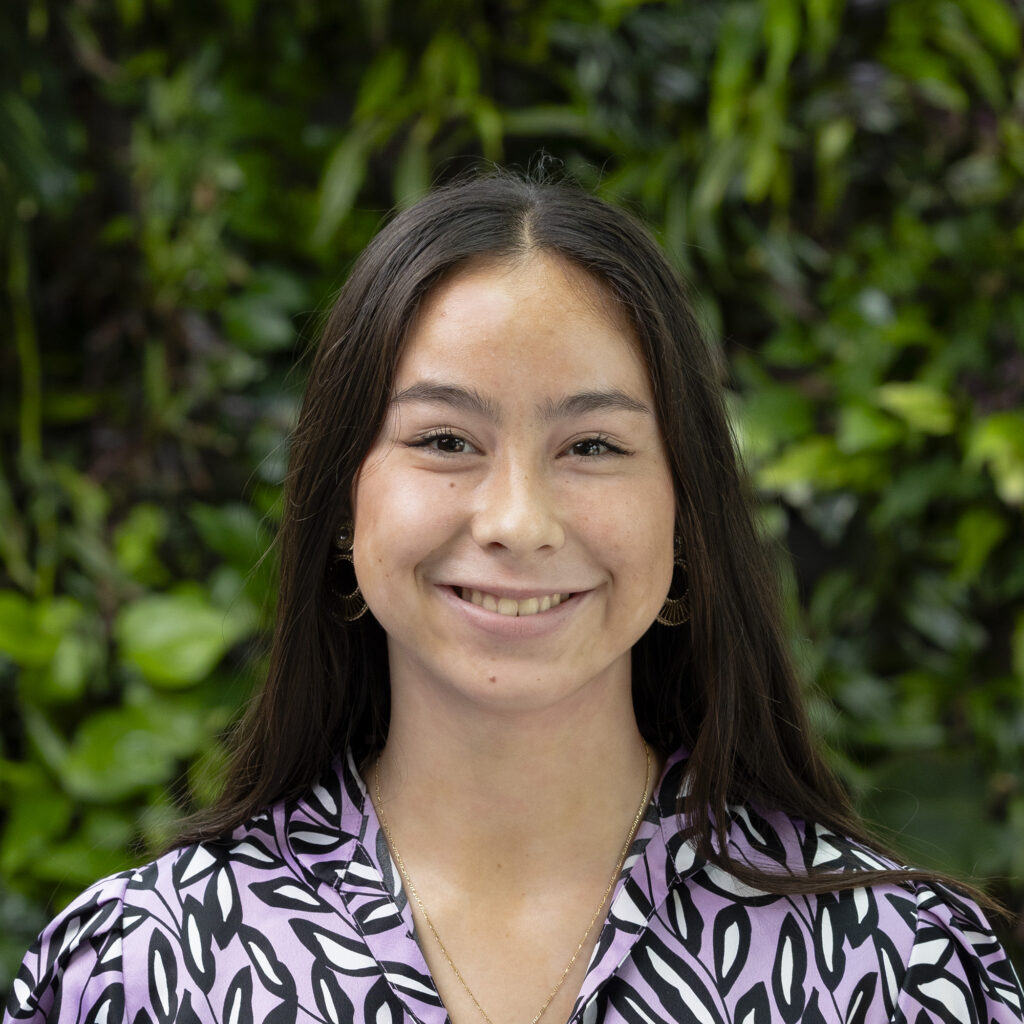
This summer, I had the opportunity to work as an Environmental Health & Safety Intern at Promega, rotating through three sectors: Occupational Safety, Product Stewardship, and Environmental Compliance and Chemistry.
In Occupational Safety, I created a Workplace Safety Sign Generator that reduced sign creation time, helped build the campus-wide AED tracker, and supported safety audits & emergency drills across the Promega facilities.
My Product Stewardship rotation focused on SDS (Safety Data Sheet) documentation and compliance. During this rotation I helped update SDS language for international regulations, responded to specialized SDS requests for individual products, and created a consolidation analysis that reduced Promega’s component SDS count from approximately 20k to 10k, which could reduce the company’s SDS documentation burden and maintenance costs.
Regarding my Environmental Compliance & Chemistry rotation, I supported ISO 14001/EMS initiatives, participated in hazardous waste accumulation inspections and gas sensor calibration, created a spill team analysis, and contributed to process hazard analyses.
These projects aligned directly with my environmental science coursework. I applied project management skills from my classes to real workplace scenarios and used my environmental policy knowledge on ISO 14001 and EMS projects. Additionally, my soil science knowledge contributed to my understanding of environmental contamination and pollution prevention.
My biggest surprise came early: I initially thought Occupational Safety was mainly about safety hazards and regulations. I quickly learned it is fundamentally about building relationships and communicating with employees. Shadowing incident investigations and safety drills highlighted how effective safety depends on effective communication and trust which are skills that extend beyond technical compliance.
This internship taught me that Environmental Health & Safety is not just about following regulations; it is about understanding people and impacts. My time at Promega has given me a stronger set of technical skills, deeper environmental knowledge, and a clearer vision of how to contribute meaningfully to the workplace and environmental health in my future career. Overall, this internship solidified my commitment to pursuing environmental science professionally and I look forward to using my education and experience in my future career.
Ethan Hazra, Process Engineer Co-Op
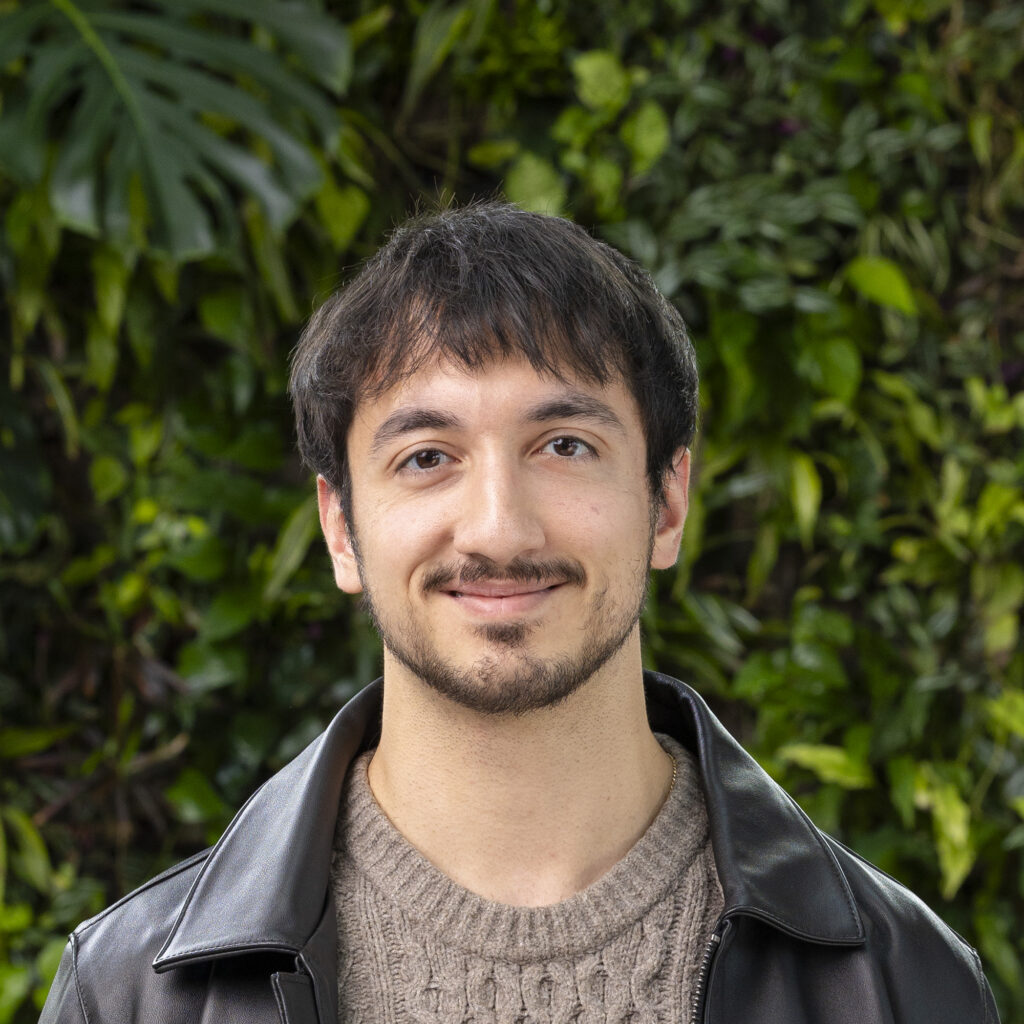
Over the past 8 months, I have had the privilege and the opportunity to work as a Process Engineering Co-op supporting bulk production processes at Promega’s Feynman Center. As a process engineering co-op, I have been responsible for the identification, diagnosis, and resolution of issues on bulk manufacturing equipment on both the tank-mixing and lyophilization systems.
During my time, I worked on a variety of projects across the building with a diverse group of teams. One of my most complicated projects involved arranging the welding of metal outlet valve supports onto a mix tank in a clean room (ECR). Hot work and ECR regulations don’t mix well, and working with both was especially challenging for an immobile, plastic tank. I had to jump through many hoops by ensuring that monitoring systems were temporarily shut down, that welding equipment was cleaned correctly, and that the finished welds were polished and sanitary, but doing so kept production running and reduced downtime and expenses.
Completing these projects required me to draw on my learning from school, particularly for problem-solving skills. Though many of the devices and situations I have worked with during my time at Promega have differed from typical textbook material, the core thinking strategies have remained the same. Whether it’s calculating the viscous drag on an exam or figuring out hot work permits at the Feynman Center, process engineering has taught me to reason through tasks and get help when I need it. There were many applications of these problem-solving skills that I wasn’t expecting, too. Communicating with vendors on equipment orders, writing technical documentation, and troubleshooting coding bugs on automated processes all demonstrated to me the value of my classroom education and showed me when and where to make use of my reasoning skills.
As I head back to class this fall, there is a lot I’ll take away from my time at Promega. The connections I’ve made and the hands-on industrial experience I’ve gained will no doubt reframe the way I see my education and allow me to extract even more value from my classes. Additionally, the opportunity to work at Promega has reinforced my passion for engineering of all kinds, especially when it lets me work with others. I’m very grateful to have been able to contribute to the work done at Promega and am very excited for what’s next.
Ashley Leighton, Corporate Hospitality Intern
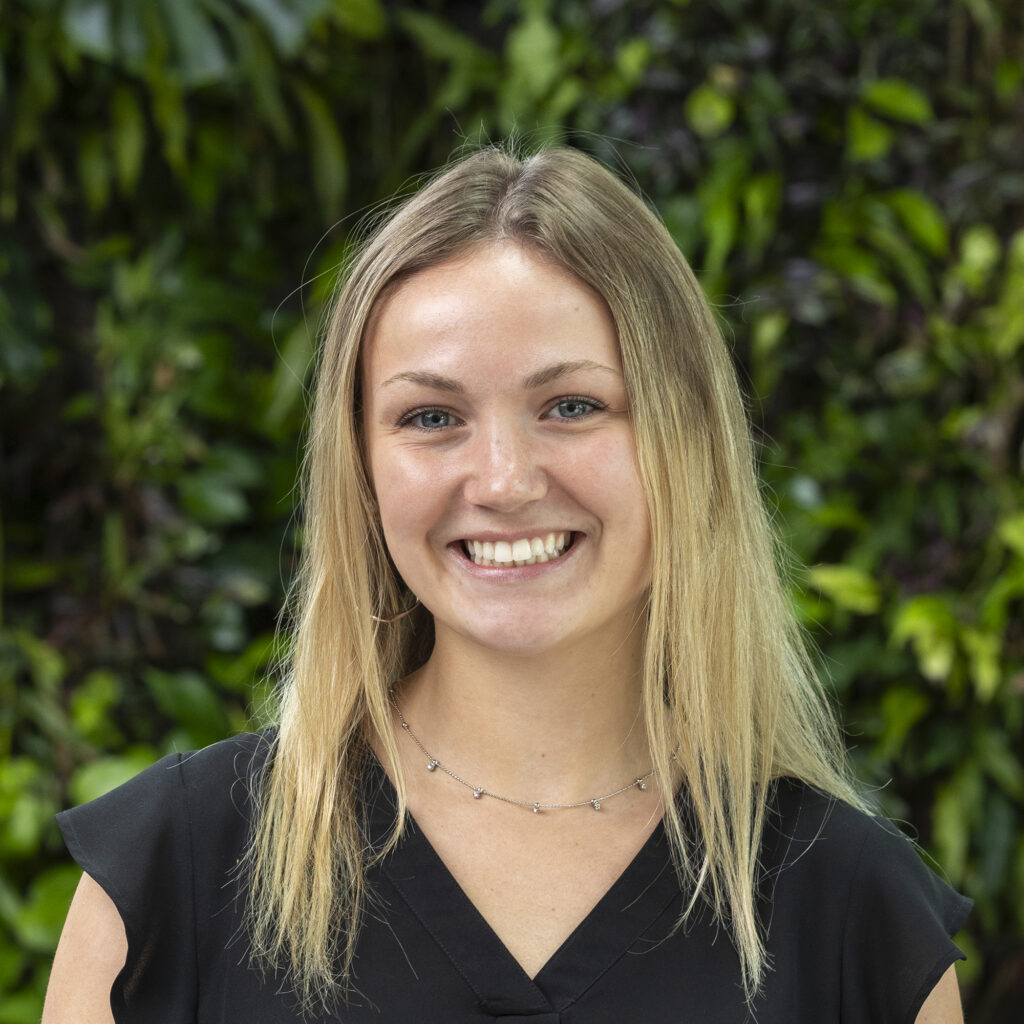
This summer, I had the opportunity to work as a Corporate Hospitality Intern at Promega. My main project focused on improving reports within Lodgical, the software used by the Guest House team. Several of the reports contained inaccurate or difficult-to-read information, which meant the team often had to export data and manually reorganize it before it could be useful.
Throughout my internship, I analyzed these reports, identified trends and gaps, and created proposals for how they could be improved. One of the biggest issues I worked on was an incorrect unit count that was affecting occupancy percentages throughout the system. By researching the source of the problem and creating clear documentation for the Lodgical vendor, I was able to help get the issue corrected and permanently implemented within the software. I also redesigned other reports to remove unnecessary information and make important trends easier to recognize at a glance. Those improvements are continuing through the implementation process and will help give the Guest House team clearer and more consistent information moving forward.
My internship is connected closely with my Consumer Behavior & Marketplace Studies coursework at UW-Madison. Although much of my project involved data, I learned that improving a report is also about understanding the person who is using it. Thinking about what information the team needed helped me create solutions that were accurate and practical.
One of the biggest learning opportunities for me was realizing how important documentation and communication are when trying to create change. The team was already aware that some of the reporting issues existed, but clearly showing what was wrong, why it mattered and how it could be improved helped me move the process forward. My project showed me that identifying a problem is only one part of problem solving, and that being able to communicate a solution is just as important.
I will take stronger analytical, problem-solving and communication skills with me from this experience. Most importantly, I learned how small improvements behind the scenes can make everyday work easier and give a team greater confidence in the information they use.
Interested in interning at Promega? Keep an eye on our Careers page for Summer 2025 internship opportunities!



Latest posts by Promega (see all)
- Where Science Meets Art: 30 Years of the Promega Art Showcase - October 8, 2026
- Internships at Promega: What Did You Learn? - September 1, 2026
- Under Pressure: The Nuclear Choreography upon Replicative Stress - August 11, 2026