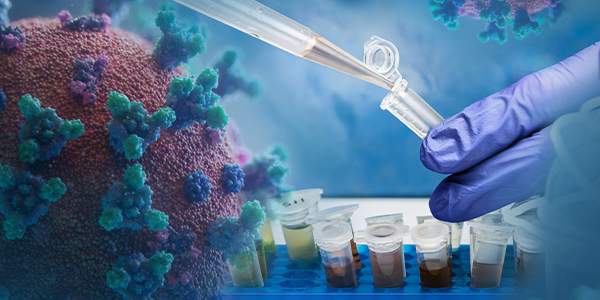
Globally, there have been over 5 million deaths attributed to COVID-19 since the start of the pandemic. Throughout the ongoing battle against SARS-CoV-2, researchers have been studying the viral lineage and the variants that are emerging as the virus evolves over time. The more opportunities that the virus has to replicate (i.e., the more people it infects), the greater the likelihood that a new variant will emerge.
This short video from the World Health Organization explains how viral variants develop.
The US Centers for Disease Control and Prevention (CDC) classify SARS-CoV-2 variants into four groups: Variants Being Monitored (VBM), Variants of Interest (VOI), Variants of Concern (VOC) and Variants of High Consequence (VOHC). So far, no variants in the US have been identified as VOHC or VOI. Currently, the most common variant in the US is the Delta variant (which includes the B.1.617.2 and AY viral lineages), and it is classified as a VOC.
The Delta variant originated in India and spread rapidly across the UK before making its way into the US (1). Current vaccines, including mRNA and adenoviral vector vaccines, have demonstrated effectiveness against the Delta variant. However, it is a VOC because it is more than twice as contagious as previous variants, and some studies have shown that it is associated with more severe symptoms.
A recent study (2) provides one explanation for the higher infectivity of the Delta variant, using an approach based on virus-like particles (VLPs). The research team was led by Dr. Jennifer Doudna, 2020 Nobel Prize winner for her work on CRISPR-Cas9 gene editing, and Dr. Melanie Ott, director of the Gladstone Institute of Virology at the University of California–Berkeley.
This blog is part two of a four-part series on grant writing inspired by resources published by the National Institutes of Health (NIH) and others.
Your quest for composing and submitting the perfect grant proposal is well underway. You have found your niche and designed your research accordingly. However, you must tread carefully—you will soon have to endure the next trial: planning your budget.
It is important in any grant application to effectively outline and clarify your budget needs. Any poorly considered aspects of your budget may not reflect well on the overall viability of your proposal, so make sure you provide your reviewers with an accurate description of what resources you will need to accomplish your research goals.
Find your Sweet Spot
A budget that is significantly over or under what would otherwise be reasonable to achieve your goals can undermine reviewers’ confidence in your proposal, as it may seem to them that you don’t fully understand the scope of your research. With your budget proposal, you need to find the range that is just right for you—not too big, and not too small. You will be asked to outline the things that you need to fulfill the aims that you put forth. You should request the money to purchase what you need and provide good justification for your expenses, especially big-ticket items like expensive equipment, as well as personnel.
Be sure that you carefully review the Funding Opportunity Announcement (FOA) for applicable criteria that you will need to follow in building and planning your budget. There may be limits on the types of expenses you can request, spending caps and overall funding limits. Reviewers will not only determine whether your budget is reasonable, but whether it complies with governing cost principles and other requirements unique to the award for which you are applying.
Take the time to identify those budget items that are necessary to your work and those that are not. As you build out your Specific Aims and design your experiments, your needs will become clear. Make sure that in the process of doing so you seek opportunities to offset cost. Gauge the support that you’ll get from your institution, including resources and funding capacity. You may be able to share equipment, resources and space with other investigators. You should also be prepared for some less obvious expenses like instrument warranty and maintenance costs. If you do need to ask for a high-budget item, be certain that it is a necessity, justify the purchase appropriately, and explain how not having it could impact your project.
Before you ask for money in your application, make sure that what you’re asking for is essential. You should also provide details on the resources that are already available to you. Reviewers will determine whether the costs defined are reasonable given the research aims and methods laid out in your proposal.
It is important to understand the difference between direct costs and indirect costs. Direct costs are those expenses that come from your research: salaries, travel, equipment and supplies. You’ll also be requesting facilities and administrative (F&A) costs, or indirect costs. Examples of indirect costs include payroll, departmental administration and student services, among others. F&A costs are determined by applying your organization’s negotiated rate to your direct cost base.
The total costs requested in your budget will be allowable direct costs and allowable F&A costs. While you will only need to itemize your direct costs, it is important to understand how both are defined and calculated so you can build a realistic budget with all the key elements accounted for.
Your budget deserves careful consideration. The review committee will want to see a budget that strikes the right balance between sensibility and necessity. Take the time to parse out your wants versus your needs and account for all the moving pieces. Your review committee is more likely to approve an application that puts forth a thoughtfully prepared and well-studied budget proposal, which will bring you that much closer to the funding you need.
For resources including tips on the job search, interviews, conferences and professional development, visit the Professional Skills and Development section of our Student Resource Center.
Wastewater-based epidemiology (WBE), or sewershed surveillance, is the analysis of wastewater to identify the presence of biologicals or chemicals for the purpose of monitoring public health. In the past, WBE has been used to detect the presence of pharmaceutical or industrial waste, drugs and viruses. Now, it is seen as a valuable tool to monitor COVID-19 outbreaks.
This blog is part one of a four-part series on grant writing inspired by resources published by the National Institutes of Health (NIH) and others.
Like so many ambitious scientists before, you are setting out on the most perilous of quests―writing a grant proposal. Between your grant and the promise of riches untold lie a series of important tasks that you must complete to win the funding you need. We begin with the pièce de résistance of any grant proposal: your research.
Your research is the highlight of your application. It is important to summarize your research well and describe how it will make an impact in your field. You must create a focused hypothesis that can be tested through well-developed aims and experiments, and explain to your review committee where you fit into the larger context of your area of study. Your research is the whole point of your proposal, so it’s important to make it count.
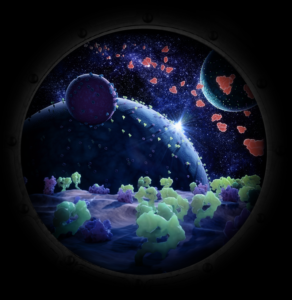
November 8th is National STEM/STEAM Day. For 11 years, the University of Wisconsin-Madison Cool Science Image Contest has celebrated and embraced the art of science. The contest illuminates art in the STEM/STEAM field as students, faculty, and staff submit images and videos that capture science or nature and leave a lasting impression of beauty or wonder.
This year’s 2021 submissions were created with point-and-shoot digital cameras, cutting-edge microscopes, and both backyard and mountaintop telescopes. Contestants captured the art of science from the massive to the minute. Winning entries showcased animals and plants, the invisibly small structures all around us, and stars and nebulae resting lightyears away from Earth.
Can pre-digestion with trypsin improve mass spec analysis?
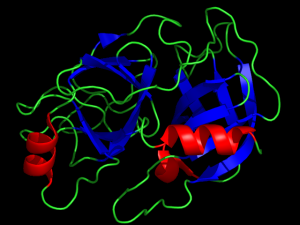
The trypsin protease cleaves proteins on the carboxyterminus of Arginine (Arg) and Lysine (Lys). This cleavage reaction leaves a positive charge on the C-terminus of the resulting peptide, which enhances mass spectrometry analysis (1,2). Because of this advantage, trypsin has become the most commonly used protease for mass spectrometry analysis. Other proteases which cleave differently from trypsin, yielding complementary data are also used in mass spec analysis: these include Asp-N and Glu-C , which cleave acidic residues, and chymotrypsin which cleaves at aromatic residues. The broad spectrum protease, proteinase K is also used for some proteomic analyses. In a recent study, Dau and colleagues investigated whether sequential digestion with trypsin followed by the complementary proteases could improve protein digests for mass spectrometry analysis.
Severe acute respiratory syndrome (SARS) is a viral respiratory disease caused by a SARS-associated coronavirus. The most recent version, SARS-CoV-2 was first detected in China in the winter of 2019 and is responsible for the current COVID-19 (coronavirus disease 2019) global pandemic. This virus and its variants have resulted in over 200 million infections and more than 4 million fatalities world-wide. To combat this deadly outbreak the global research community has responded with remarkable swiftness with the development of several vaccines and drug therapies, all produced in record time. In addition to vaccines and drug therapies, diagnostic kits and research reagents continue to roll out to track infections and to help find additional therapies.
This peer-reviewed paper published in Nature Scientific Reports by Alves and colleagues demonstrates how a new assay can be used to discover novel inhibitors that block the binding of SARS-CoV-2 to the human ACE2 receptor as well as study how mutations in the SARS-CoV-2 Spike protein alter its apparent affinity towards human ACE2. The paper also details studies where the assay is used to detect the presence of neutralizing antibodies from both COVID-19 positive samples as well as samples from vaccinated individuals.
Pumpkins have historically been a sure sign of the Halloween season in the United States. Although they are most used for Halloween, there are many ways to use pumpkins after those spooky October days.
Every year in America, more than 1 billion pounds of pumpkin gets tossed in the trash and wasted. Instead of leaving them to rot in the landfill, try one of these ways to get more use out of your pumpkin after this year’s Halloween!
Hopefully, after reading this list, you are able to revel in the fact that a pumpkin is not just for Halloween. Not only can this help you save money, save time, and cook delicious dishes, but it also takes a much more eco-friendly approach instead of wasting food or creating garbage.
A graduate student believes he has mastered the art of “the assay”. No need to run duplicates, he knows exactly which one will get him the answers he needs right away.
To challenge this, his PI proposes an exercise. He asks of the graduate student, “What happens when you treat cells with doxorubicin?”
The graduate student raises his cells, treats them accordingly, and decides to run a cell viability assay to determine their fate. He returns to the PI with the final verdict: his cells are dead.
The PI takes a look at the data and asks the graduate student to repeat the experiment with an additional assay for cytotoxicity―but the cytotoxicity assay shows that the cell membranes are intact, which only puzzles the graduate student. The PI asks him to run a third assay for apoptosis, and when the student does so, it becomes clear that the cells are dying.
The PI uses this opportunity to make his point: “Now do you see why I ask for more than one assay?”
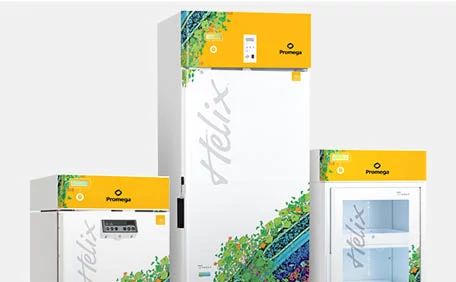
The Helix on-site stocking program has been a resource for scientists for many years. With customized onsite stocking, inventory management and automated billing, losing precious time to a missing reagent is a thing of the past.
To better understand the impact of Helix on our customers’ research, we spoke to Chris Thompson of Pro-GeneX, a clinical laboratory in Atlanta, GA. “Using the Helix system has been a game changer from the first day we got it,” Chris said. “It was simple to set up and use from the start and has never let us down. We routinely show it off to visitors to our lab because we are so impressed with it. I only wish all my reagents used a system like this. From an inventory perspective it is the best invention in our lab!”
XWe use cookies and similar technologies to make our website work, run analytics, improve our website, and show you personalized content and advertising. Some of these cookies are essential for our website to work. For others, we won’t set them unless you accept them. To learn more about our approach to Privacy we invite you to Read More
By clicking “Accept All”, you consent to the use of ALL the cookies. However you may visit Cookie Settings to provide a controlled consent.
We use cookies and similar technologies to make our website work, run analytics, improve our website, and show you personalized content and advertising. Some of these cookies are essential for our website to work. For others, we won’t set them unless you accept them. To find out more about cookies and how to manage cookies, read our Cookie Policy.
If you are located in the EEA, the United Kingdom, or Switzerland, you can change your settings at any time by clicking Manage Cookie Consent in the footer of our website.
Necessary cookies are absolutely essential for the website to function properly. These cookies ensure basic functionalities and security features of the website, anonymously.
Cookie
Duration
Description
cookielawinfo-checbox-analytics
11 months
This cookie is set by GDPR Cookie Consent plugin. The cookie is used to store the user consent for the cookies in the category "Analytics".
cookielawinfo-checbox-functional
11 months
The cookie is set by GDPR cookie consent to record the user consent for the cookies in the category "Functional".
cookielawinfo-checbox-others
11 months
This cookie is set by GDPR Cookie Consent plugin. The cookie is used to store the user consent for the cookies in the category "Other.
cookielawinfo-checkbox-advertisement
1 year
The cookie is set by GDPR cookie consent to record the user consent for the cookies in the category "Advertisement".
cookielawinfo-checkbox-necessary
11 months
This cookie is set by GDPR Cookie Consent plugin. The cookies is used to store the user consent for the cookies in the category "Necessary".
cookielawinfo-checkbox-performance
11 months
This cookie is set by GDPR Cookie Consent plugin. The cookie is used to store the user consent for the cookies in the category "Performance".
gdpr_status
6 months 2 days
This cookie is set by the provider Media.net. This cookie is used to check the status whether the user has accepted the cookie consent box. It also helps in not showing the cookie consent box upon re-entry to the website.
lang
This cookie is used to store the language preferences of a user to serve up content in that stored language the next time user visit the website.
viewed_cookie_policy
11 months
The cookie is set by the GDPR Cookie Consent plugin and is used to store whether or not user has consented to the use of cookies. It does not store any personal data.
Analytical cookies are used to understand how visitors interact with the website. These cookies help provide information on metrics the number of visitors, bounce rate, traffic source, etc.
Cookie
Duration
Description
SC_ANALYTICS_GLOBAL_COOKIE
10 years
This cookie is associated with Sitecore content and personalization. This cookie is used to identify the repeat visit from a single user. Sitecore will send a persistent session cookie to the web client.
vuid
2 years
This domain of this cookie is owned by Vimeo. This cookie is used by vimeo to collect tracking information. It sets a unique ID to embed videos to the website.
WMF-Last-Access
1 month 18 hours 24 minutes
This cookie is used to calculate unique devices accessing the website.
_ga
2 years
This cookie is installed by Google Analytics. The cookie is used to calculate visitor, session, campaign data and keep track of site usage for the site's analytics report. The cookies store information anonymously and assign a randomly generated number to identify unique visitors.
_gid
1 day
This cookie is installed by Google Analytics. The cookie is used to store information of how visitors use a website and helps in creating an analytics report of how the website is doing. The data collected including the number visitors, the source where they have come from, and the pages visted in an anonymous form.
Advertisement cookies are used to provide visitors with relevant ads and marketing campaigns. These cookies track visitors across websites and collect information to provide customized ads.
Cookie
Duration
Description
IDE
1 year 24 days
Used by Google DoubleClick and stores information about how the user uses the website and any other advertisement before visiting the website. This is used to present users with ads that are relevant to them according to the user profile.
test_cookie
15 minutes
This cookie is set by doubleclick.net. The purpose of the cookie is to determine if the user's browser supports cookies.
VISITOR_INFO1_LIVE
5 months 27 days
This cookie is set by Youtube. Used to track the information of the embedded YouTube videos on a website.
Performance cookies are used to understand and analyze the key performance indexes of the website which helps in delivering a better user experience for the visitors.
Cookie
Duration
Description
YSC
session
This cookies is set by Youtube and is used to track the views of embedded videos.
_gat_UA-62336821-1
1 minute
This is a pattern type cookie set by Google Analytics, where the pattern element on the name contains the unique identity number of the account or website it relates to. It appears to be a variation of the _gat cookie which is used to limit the amount of data recorded by Google on high traffic volume websites.