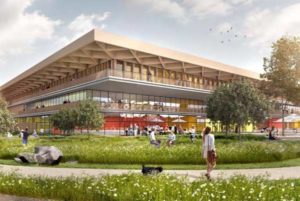
As Promega grows globally and locally here at headquarters, the construction of new and expanding facilities are considered with great care to ensure a commitment to sustainability. Between April and November of 2019, the parking ramp located near the Feynman Center received a massive upgrade with long-term impacts on the company’s sustainability goals.
Last year, on Promega’s 40th anniversary, we received a generous gift from a friend in the industry: Eppendorf. That gift was an exchange program. The teenage child of any Promega employee was given the opportunity to visit an Eppendorf family in another country, and in return host the Eppendorf family’s child in their home. The goal was for both children to experience another culture and build a relationship with each other.
In 2019, 11 Promega children bid good-bye to their parents,
hopped on a plane, and flew to Germany. There they would stay for three weeks with
a family they’ve never met. For all involved, it proved to be a valuable and
positive learning opportunity. Here are a few takeaways from their experience:
This summer, I had the opportunity to go to the Marine
Biological Laboratory (MBL) in Woods Hole, Massachusetts. MBL was founded in
1888 as an institution that focuses on research and education. Woods Hole is
located on Cape Cod and has rich biodiversity that is the focus of the resident
researchers and the many others that travel there each summer. It was here that
new model organisms were discovered, allowing significant advancement in
various fields. For example, squid have large axons that allowed researchers to
expand our knowledge of neurons.
Over 500 scientists from over 300 institutions in over 30
countries come to MBL each year as trainees1. There are 19 advanced
research training courses for pre-and post-doctoral scientists in development, reproduction,
cell physiology, microbiology, infectious disease, neuroscience, and microscopy.
Faculty that teach the courses are leaders in their respective fields. In
addition, MBL has a neuro-physiology fellowship program through the Grass
Foundation that allows early-stage researchers to come to MBL for 14 weeks to
do research.
There are as many different
cancers as there are people with cancer. Unlike infectious diseases, which are
caused by pathogens that are foreign to our bodies (bacteria, viruses, parasites),
cancer cells arise from our body—our own cells gone rogue. Because cancer is a
dysfunction of a person’s normal cells, every cancer reflects the genetic
differences that mark us as individuals. Add to that environmental influences like
diet, tobacco use, the microbiome and even occupation, and the likelihood of
finding a “single” pharmaceutical cure for cancer becomes virtually impossible.
But, while looking for a single cure for all cancers may not be a fruitful activity, defining a best practice for understanding the genetic and protein biomarkers of individual tumors is proving worthwhile.
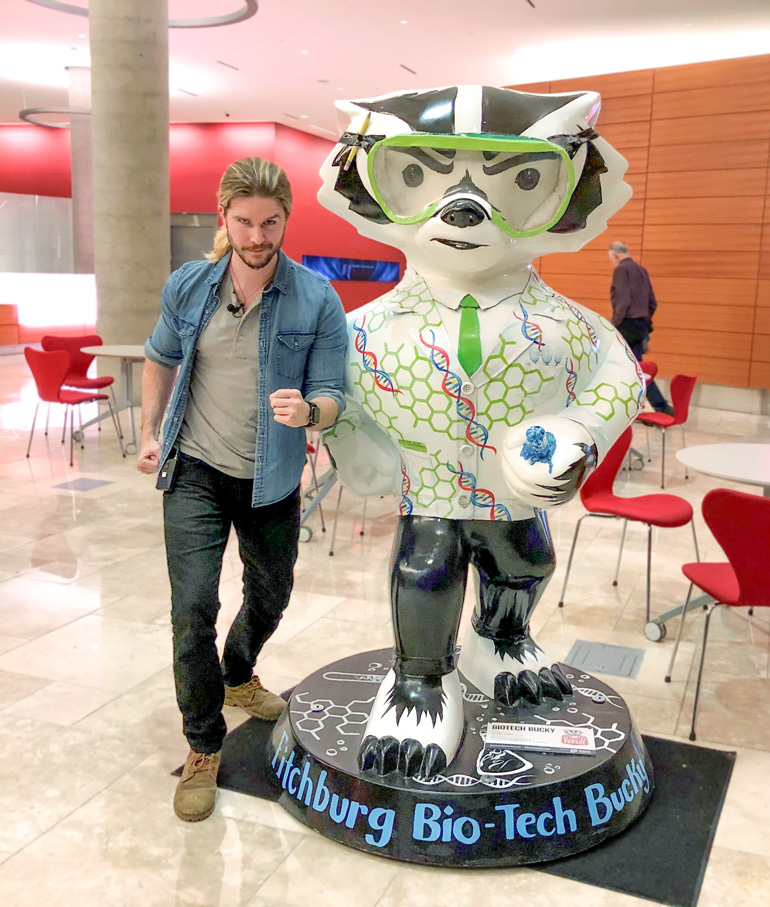
Kyle Hill poses heroically with Biotech Bucky at the Wisconsin Science Festival / Photo courtesy of WARF
With another major Star Wars film about to hit the theaters this year, sci-fi enthusiasts are abuzz with excitement to watch epic lightsaber battles and hyperspace travel. But are these sci-fi concepts more grounded in science or fiction? That is what science communicator Kyle Hill aims to explore.
A Wisconsin native, Hill graduated from Marquette University with degrees in engineering and science communication. Now he resides in Los Angeles, where he built a career writing and talking about the intersection of science and pop culture through his video series, Because Science.
This past weekend at the Wisconsin Science Festival, hundreds of fans gathered to hear Hill share his ideas on how the sci-fi concepts in the Star Wars movies aren’t that far off from actual science.
This past weekend was the 9th Annual Wisconsin Science Festival, and we at Promega were excited to join in the celebration of science throughout the state. We participated in the Discovery Expo on Thursday and Friday, where dozens of demonstrations and exhibits were scattered throughout the Wisconsin Institute for Discovery building. Thousands of children on field trips filled the halls, eager to poke and prod at strange and exciting new things.
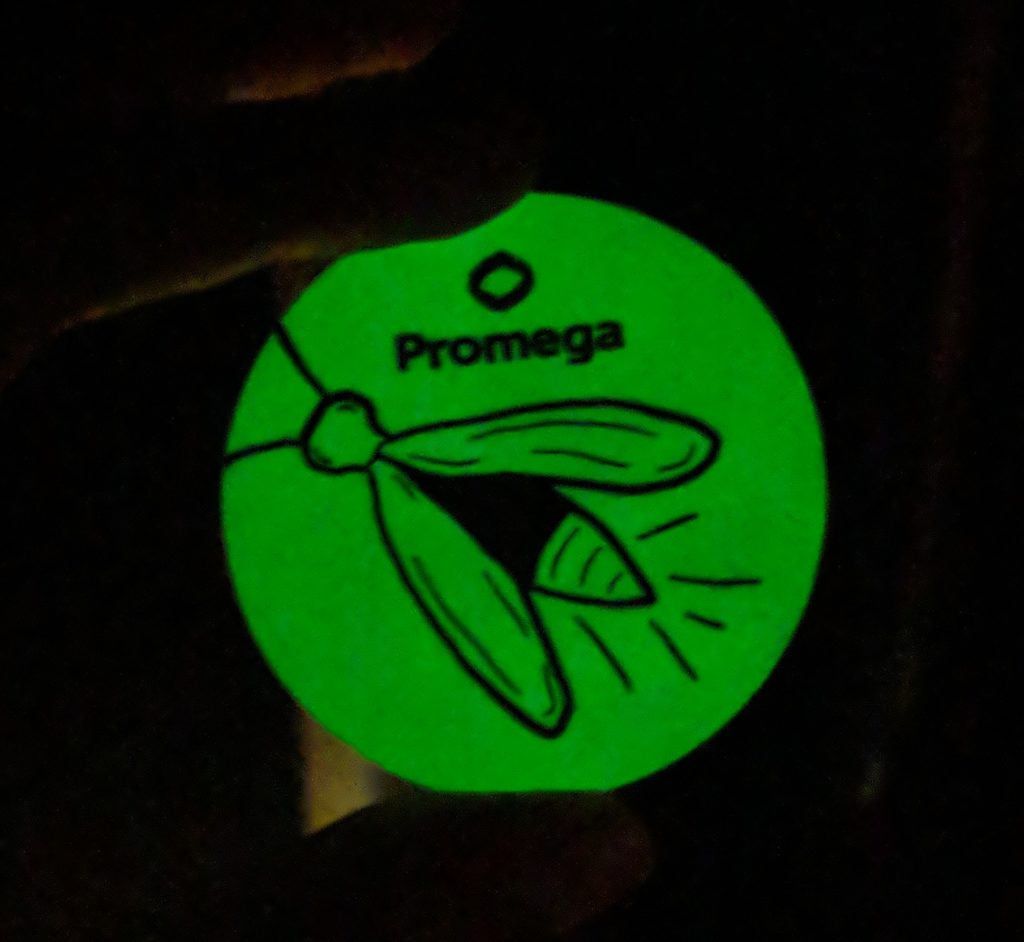
At our table, we talked about the science of bioluminescence. With 3D-printed firefly luciferase models in hand, we showed the glow of recombinant luciferase to the incoming children and explained to them how scientists could use bioluminescence like a tiny “flashlight” to look inside of cells and watch what’s happening. Our learners received a nice little reward for their attentiveness in the form of glow-in-the-dark firefly stickers.
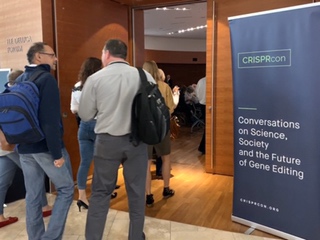
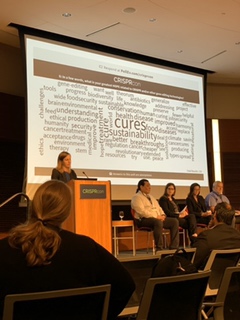
Walking in to the first session at CRISPRcon Midwest.
Last week, a diverse group of stakeholders attended CRISPRcon Midwest, hosted by the Keystone Policy Center and the University of Wisconsin–Madison. The goal of the day-long conference was to emphasize the importance and value of gene editing technology, and how it must be communicated deliberately between scientists, the public, policymakers, and other stakeholders.
Julie Shapiro, Senior Policy Director of Keystone Policy Center, acted as Emcee for the event. Given the diverse group of attendees, she mentioned in her opening remarks that the event organizers were “seeking conversation, not consensus” and emphasized the “power of respectful dialogue.” A slide overhead showcased the ground rules for the day, which included statements such as “dare to listen, dare to share, and dare to disagree.”
Word cloud generated from live polling results at CRISPRcon Midwest.
CRISPRcon aimed to included voices beyond those represented by keynote speakers and panelists, so they incorporated live polling through an online app to keep the audience engaged and an active participant in the conversations throughout the day. From the opening remarks, it was clear that this conference would not just deliver on its promise of thoughtful conversation about the science, but build further understanding about the societal impacts of a rapidly advancing technology.
There is nothing like a bit of recognition to energize your efforts, right? Promega was recently awarded the 2019 Distinguished Performer: Sustainability award, as one of the Deloitte Wisconsin 75 awardees.
This award is not so much a feather in our cap, as fuel for our sustainability fire both in Madison, and globally. Here are a few details on the award and why Promega was chosen.
In the fall of 1989, a small group of forensic scientists, law enforcement officials and representatives from Promega Corporation gathered in Madison, Wisconsin, for the very first International Symposium on Human Identification (ISHI). At the time, DNA typing was in its infancy and had not yet been validated as a forensic method. The available technology consisted of two methods: detection of restriction fragment length polymorphisms (RFLPs) and variable number of tandem repeats (VNTRs). Promega had developed products based on both analytical methods, which essentially provide a DNA “fingerprint” or profile for each individual tested.
Among the attendees at that first symposium was Tom Callaghan, then a graduate student. That experience made a significant impact on his career path. Last week, at ISHI 30, he presented a session on rapid DNA testing. Dr. Callaghan currently serves as a Senior Biometric Scientist for the FBI. In 1999, he was instrumental in launching the FBI’s Combined DNA Index System (CODIS) and in 2003, he became the first CODIS Unit Chief.
Joe Willie Smith’s instrumental art installation is a collaborative experience of sound and color.
Joe Willie Smith has always been a creator. As a young child growing up in Milwaukee, his mother encouraged him to make art and find beauty in the everyday. Following years of work in printing and graphic design (including posters for Gil-Scott Heron and Chaka Khan), Smith began channeling his inspiration and creativity into building playable “sonic sculptures” out of found objects. “They’re not all considered instruments…sometimes I just make soundscapes out of them,” Smith says.
As the artist-in-residence for the Promega Fall Art Showcase, Smith set out to create a sonic sculpture from collected items from the Promega campus. He planned to perform on the instrument at the opening of the Art Show, but his creative process led to something much more—a collaborative experience in sound and color.
XWe use cookies and similar technologies to make our website work, run analytics, improve our website, and show you personalized content and advertising. Some of these cookies are essential for our website to work. For others, we won’t set them unless you accept them. To learn more about our approach to Privacy we invite you to Read More
By clicking “Accept All”, you consent to the use of ALL the cookies. However you may visit Cookie Settings to provide a controlled consent.
We use cookies and similar technologies to make our website work, run analytics, improve our website, and show you personalized content and advertising. Some of these cookies are essential for our website to work. For others, we won’t set them unless you accept them. To find out more about cookies and how to manage cookies, read our Cookie Policy.
If you are located in the EEA, the United Kingdom, or Switzerland, you can change your settings at any time by clicking Manage Cookie Consent in the footer of our website.
Necessary cookies are absolutely essential for the website to function properly. These cookies ensure basic functionalities and security features of the website, anonymously.
Cookie
Duration
Description
cookielawinfo-checbox-analytics
11 months
This cookie is set by GDPR Cookie Consent plugin. The cookie is used to store the user consent for the cookies in the category "Analytics".
cookielawinfo-checbox-functional
11 months
The cookie is set by GDPR cookie consent to record the user consent for the cookies in the category "Functional".
cookielawinfo-checbox-others
11 months
This cookie is set by GDPR Cookie Consent plugin. The cookie is used to store the user consent for the cookies in the category "Other.
cookielawinfo-checkbox-advertisement
1 year
The cookie is set by GDPR cookie consent to record the user consent for the cookies in the category "Advertisement".
cookielawinfo-checkbox-necessary
11 months
This cookie is set by GDPR Cookie Consent plugin. The cookies is used to store the user consent for the cookies in the category "Necessary".
cookielawinfo-checkbox-performance
11 months
This cookie is set by GDPR Cookie Consent plugin. The cookie is used to store the user consent for the cookies in the category "Performance".
gdpr_status
6 months 2 days
This cookie is set by the provider Media.net. This cookie is used to check the status whether the user has accepted the cookie consent box. It also helps in not showing the cookie consent box upon re-entry to the website.
lang
This cookie is used to store the language preferences of a user to serve up content in that stored language the next time user visit the website.
viewed_cookie_policy
11 months
The cookie is set by the GDPR Cookie Consent plugin and is used to store whether or not user has consented to the use of cookies. It does not store any personal data.
Analytical cookies are used to understand how visitors interact with the website. These cookies help provide information on metrics the number of visitors, bounce rate, traffic source, etc.
Cookie
Duration
Description
SC_ANALYTICS_GLOBAL_COOKIE
10 years
This cookie is associated with Sitecore content and personalization. This cookie is used to identify the repeat visit from a single user. Sitecore will send a persistent session cookie to the web client.
vuid
2 years
This domain of this cookie is owned by Vimeo. This cookie is used by vimeo to collect tracking information. It sets a unique ID to embed videos to the website.
WMF-Last-Access
1 month 18 hours 24 minutes
This cookie is used to calculate unique devices accessing the website.
_ga
2 years
This cookie is installed by Google Analytics. The cookie is used to calculate visitor, session, campaign data and keep track of site usage for the site's analytics report. The cookies store information anonymously and assign a randomly generated number to identify unique visitors.
_gid
1 day
This cookie is installed by Google Analytics. The cookie is used to store information of how visitors use a website and helps in creating an analytics report of how the website is doing. The data collected including the number visitors, the source where they have come from, and the pages visted in an anonymous form.
Advertisement cookies are used to provide visitors with relevant ads and marketing campaigns. These cookies track visitors across websites and collect information to provide customized ads.
Cookie
Duration
Description
IDE
1 year 24 days
Used by Google DoubleClick and stores information about how the user uses the website and any other advertisement before visiting the website. This is used to present users with ads that are relevant to them according to the user profile.
test_cookie
15 minutes
This cookie is set by doubleclick.net. The purpose of the cookie is to determine if the user's browser supports cookies.
VISITOR_INFO1_LIVE
5 months 27 days
This cookie is set by Youtube. Used to track the information of the embedded YouTube videos on a website.
Performance cookies are used to understand and analyze the key performance indexes of the website which helps in delivering a better user experience for the visitors.
Cookie
Duration
Description
YSC
session
This cookies is set by Youtube and is used to track the views of embedded videos.
_gat_UA-62336821-1
1 minute
This is a pattern type cookie set by Google Analytics, where the pattern element on the name contains the unique identity number of the account or website it relates to. It appears to be a variation of the _gat cookie which is used to limit the amount of data recorded by Google on high traffic volume websites.