iGEM Malaga: Recycling Waste Olive Oil into Paint for Kids

Today’s blog was written in collaboration with Melissa Martin, a global marketing intern with Promega. She is a senior at the University of Wisconsin-Madison where she is double majoring in zoology and life sciences communication, with a certificate in environmental studies.
In the best circumstances, leftover cooking oil ends up in a recycling center and is eventually burned as a biofuel. But it is also frequently dumped down kitchen drains where it proceeds to pollute sewage, water treatment facilities, and waterways.

Is there a more valuable and less harmful way to use up waste cooking oil? A group of students at the University of Málaga thinks they have a solution that will also make science more approachable and exciting for children.

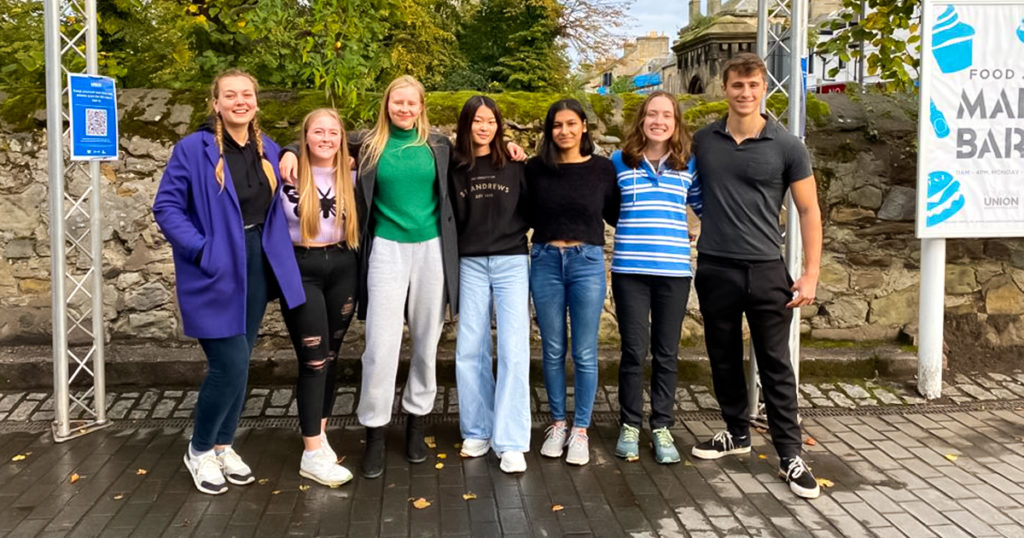
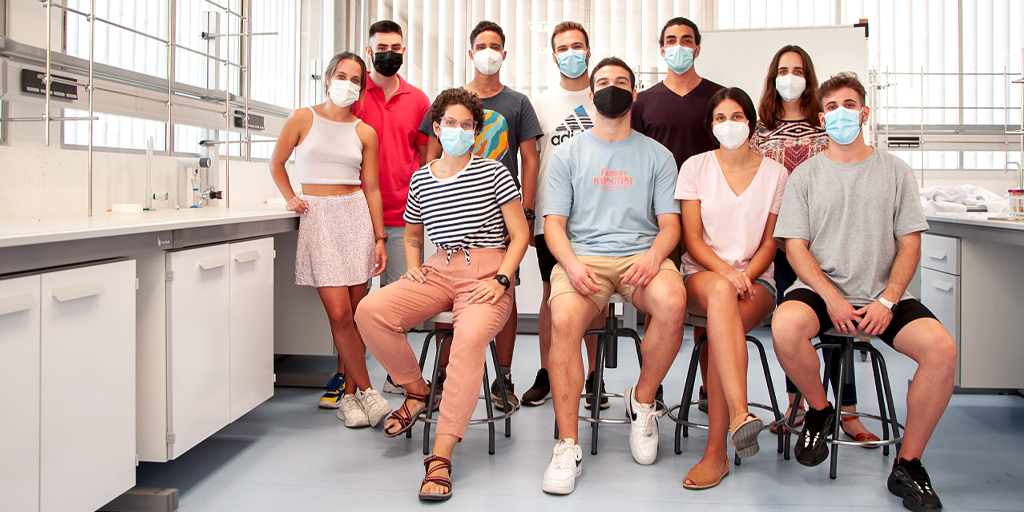
Picture of UMA_MALAGA team in their lab where they are working on a project to recycle waste olive oil
The UMA_MALAGA team. Front row, left to right: Natalia Cardoso, Fran Antequera, Isa Antequera, and Alex Jiménez. Back row, left to right: Maria Rodríguez, Alvaro Jiménez, Juan Herrera, Alex Rojo, Dani Díaz, and Christina Viúdez.
Continue reading “iGEM Malaga: Recycling Waste Olive Oil into Paint for Kids”

Greening the Lab: Tips from Lab Manager’s Green Lab Digital Summit

Today’s guest blog was written in collaboration with Melissa Martin, a former global marketing intern with Promega. She is a senior at the University of Wisconsin-Madison where she is double majoring in zoology and life sciences communication, with a certificate in environmental studies.

Infographic illustrating the places where simple actions can be taken to help build greener labs: greening the lab

Schools, businesses and organizations across the globe are increasingly implementing sustainable practices within their workspaces. From large-scale projects like installing solar arrays to behind-the-scenes initiatives like composting cafeteria food waste, “going green” is a reality of the modern workplace.

But one workspace otherwise known for being cutting edge and innovative is still struggling to implement the practices and culture of sustainability.

In her role as a teaching lab coordinator at the Johns Hopkins Institute for Nanobiotechnology (INTB), Christine Duke noticed a contrast between campus-wide sustainability initiatives and research labs:

“There is something missing here. Why aren’t we doing anything in the labs?”

Continue reading “Greening the Lab: Tips from Lab Manager’s Green Lab Digital Summit”

Mentally Preparing for My Return to the Lab: A Grad Student’s Perspective

Today’s guest blog is written by Sophie Mancha, a global marketing intern with Promega this summer. She will be starting her 4th year as a PhD candidate in the Biomedical Engineering Department at the University of Wisconsin-Madison, studying pancreatic cancer.

Graduate students are used to working. Not only during regular work hours but also well into the night to finish readings or work on data analysis. Ripping graduate students away from their research as they desperately try to produce useful data may be as hard as finding toilet paper during the first few months of the SARS-CoV-2 outbreak. However, across the world graduate students saw their research come to a screeching halt. The pandemic took over and everyone suddenly went into quarantine.

I clearly remember my first virtual lab meeting. We all frantically tried figuring out what video-conferencing platform to use and how to share our screens. We kept repeating “stay calm” as we naively thought this would only last a couple of weeks. As the months went by, I began to panic. I realized I had finished analyzing the last remaining data I had left and was no longer being “productive”. This quickly spiraled into thoughts that I may never earn my PhD.

Continue reading “Mentally Preparing for My Return to the Lab: A Grad Student’s Perspective”

Reaching Out for Lab Research Experience

Today’s guest blog is written by Melissa Martin, a global marketing intern with Promega this summer. She will be a senior this fall at the University of Wisconsin-Madison where she is double majoring in zoology and life sciences communication, with a certificate in environmental studies.

Congrats! You are attending a university and pursuing a challenging, yet rewarding, undergraduate science degree. Getting to this moment probably included lots of late nights spent studying or worrying while applying to your dream college. However, now that you are here you will find that classes provide a lot of information. You can even take your education one step further by getting hands-on experience in a research lab.

Working in a lab is not only about making your resume look good. It offers a real-world experience that directly enhances your learning experience and can even guide your future. For example, your experiences in the lab can teach you basic skills (pipetting, determining concentrations, performing titrations, etc.) that will be useful in a variety of science professions.

Continue reading “Reaching Out for Lab Research Experience”

Immune Checkpoint Bioassays Strengthen Cancer Research in the Development of New Therapies

This post was written by guest blogger, Nicole Werner, Product Management Support at Promega GmbH.

“You have cancer.” – a statement that fundamentally changes life in a second. After the first shock, the insight often arises: “If only I had stopped smoking sooner!”

Lung cancer, while not the leading cause of death worldwide, is the leading preventable cause of death in developed countries. According to the WHO, eight million people die each year as a result of smoking, including one million as a result of passive smoking [1]. Currently, 80% of those affected die within the next 13 months after diagnosis [1]. New therapeutic approaches, such as treatment with immune checkpoint inhibitors, bring hope.

Promega supports research in this area with the high-precision tools needed to develop this new form of therapy.

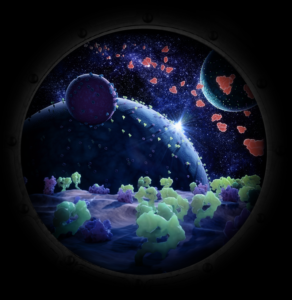
Artistic 3D rendering  of Immune checkpoint signaling. Immune checkpoint bioassays enable researcher to characterize  therapeutic antibodies trageting these pathways.
Continue reading “Immune Checkpoint Bioassays Strengthen Cancer Research in the Development of New Therapies”

RIPK1: Promising Drug Target of Chronic Inflammatory Diseases

Today’s post is written by Michael Curtin, Senior Product Manager, Reporters and Signaling.

Inflammation is a defense mechanism that the body employs in which the immune system recognizes and removes harmful and foreign stimuli and begins the healing process. Inflammation can be either acute or chronic. Chronic inflammation is also referred to as slow, long-term inflammation and can last for prolonged periods (several months to years); chronic inflammation is caused by immune dysregulation. This typically takes the form of the body’s inability to resolve inflammation resulting from overproduction of inflammatory cytokines and chemokines, as well as danger-associated molecular patterns (DAMPs) released from dying cells (2). Tumor Necrosis Factor (TNF) is the primary cytokine involved in many common inflammatory diseases and is where many therapies targeting inflammation are focused.

Signaling of kinases like RIPK1 can be studied using the NanoBRET target engagement assays

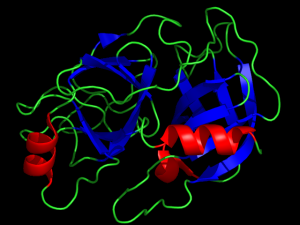
Recent research that RIP kinases (RIPK1 and RIPK3) are important regulators of innate immunity via their key roles in cell death signaling during cellular stress and following exposure to inflammatory and infectious stimuli. RIPK1 has an important scaffolding role in pro-inflammatory signaling where it interacts with TRADD, TRAF1 TRAF2, and TRAF3 and TRADD can act as an adaptor protein to recruit RIPK1 to the TNFR1 complex in a TNF-dependent process. RIPK1 plays a kinase activity-dependent role in both apoptotic and necroptotic cell death. A review article by Speir et al. (1) discusses the role of RIP kinases in chronic inflammation and the potential of RIPK1 inhibitors as a new therapeutic approach for the treatment of chronic inflammation. RIPK1 or Receptor Interacting Protein Kinase 1 is a serine/threonine kinase that was originally identified as interacting with the cytoplasmic domain of FAS. Promega offers several reagents that make studying RIPK1 easier- these include our RIPK1 Kinase Enzyme Systems which includes RIPK1 (Human, recombinant; amino acids 1-327), myelin basic protein (MBP) substrate, reaction buffer, MnCl2, and DTT and is optimized for use with our ADP-Glo Kinase Assay.

Continue reading “RIPK1: Promising Drug Target of Chronic Inflammatory Diseases”

Overcoming Challenges to Detect Apoptosis in 3D Cell Structures

This blog is written by guest author, Maggie Bach, Sr. Product Manager, Promega Corporation.

Researchers are increasingly relying on cells grown in three-dimensional (3D) structures to help answer their research questions. Monolayer, or 2D cell culture, was the go-to cell culture method for the past century. Now, the need to better represent in vivo conditions is driving the adoption of 3D cell culture models. Cells grown in 3D structures better mimic tissue-like structures, better exhibit differentiated cellular functions, and better predict in vivo responses to drug treatment.

Switching to 3D cell culture models comes with challenges. Methods to interrogate these models need to be adaptable and reliable for the many types of 3D models. Some of the most popular 3D models include spheroids grown in ultra-low attachment plates, and cells grown in an extracellular matrix, such as Matrigel® from Corning. Even more complex models include medium flow over the cells in microfluidic or organ-on-a-chip devices. Will an assay originally developed for cells grown in monolayer perform consistently with various 3D models? How is measuring a cellular marker different when cells are grown in 3D models compared to monolayer growth?

Close up of cells in 3D culture apparatus. 3D Cell Structures Provide Challenges for Measuring Markers of Cellular Activitiy
3D Cell Structures Provide Challenges for Measuring Markers of Cellular Activitiy
Continue reading “Overcoming Challenges to Detect Apoptosis in 3D Cell Structures”

Bringing Cutting Edge Technologies to Academic Researchers Through the Academic Access Program

This post was written by guest blogger Iain Ronald, Director Academic/Government Market Segment at Promega.

My back story is similar to most of you reading this blog, high school education, undergraduate degree then onto a postgraduate degree. However, over 25 years ago during my undergraduate study, I was fortunate enough to work in the lab of Professor Ray Waters studying DNA damage in S. cerevisiae as a model organism and at the time PCR was cutting-edge technology and the PCR license was in full effect. However, there was one company that was fighting the good fight to democratize PCR for the good of the scientific community, Promega.

I became enamored with Promega then, and the next steps in my career were taken with a view to working at this company who, for all intents and purposes, seemed to really care about the progression of science beyond self-aggrandizement.

Now that I am working at Promega in a position where I can bring benefit to our academic community, I have pondered what I can do to equal the disruptive attitude I observed in this company all those years ago when they were fighting the then “big tech” for the enablement of the scientific community. 

Reporter bioassays are one of hte many offerings of the academic access program.
Continue reading “Bringing Cutting Edge Technologies to Academic Researchers Through the Academic Access Program”

How Promega Helped Our Lab Scale Up Drug Discovery for Bloodborne Pathogens

This blog was written by Sebastien Smick, Research Technician in Dr. Jacquin Niles’ laboratory at Massachusetts Institute of Technology (MIT)

Our lab is heavily focused on the basic biology and drug discovery of the human bloodborne pathogen Plasmodium falciparum, which causes malaria. We use the CRISPR/Cas9 system, paired with a TetR protein fused to a native translational repressor alongside a Renilla luciferase reporter gene, to conditionally knock down genes of interest to create modified parasites. We can then test all kinds of compounds as potential drug scaffolds against these gene-edited parasites. Our most recent endeavor, one made possible by Promega, is a medium-low throughput robotic screening pipeline which compares conditionally-activated or-repressed parasites against our dose-response drug libraries in a 384-well format. This process has been developed over the past few years and is a major upgrade for our lab in terms of data production. Our researchers are working very hard to generate new modified parasites to test. Our robots and plate readers rarely get a day’s rest!

Continue reading “How Promega Helped Our Lab Scale Up Drug Discovery for Bloodborne Pathogens”

Drug Repurposing Screens: Redeploying Old Dogs for New Tricks

This blog was written by guest author, Amy Landreman, PhD.

Drug repurposing, identifying new uses for approved or investigational drugs, is an attractive strategy when looking for new disease treatments. Because the compounds have already gone through some level of pre-clinical optimization and safety testing, this approach can reduce risk, reduce cost, and speed up the timeline for further drug development. An additional benefit of this approach is that it can result in new biological insights or a better understanding of disease mechanisms since these compounds usually already have some level of mechanistic characterization. Indeed, there are now a number of compound collections openly available specifically for the purpose of facilitating drug repurposing efforts. For example, the ReFRAME (Repurposing, Focused Rescue, and Accelerated Medchem) library is a collection of 12,000 compounds developed by Scripps Research Center and has been screened to identify novel candidate therapeutics for Cryptosporidium infection (1). The Broad Institute also offers a drug repurposing hub that contains an annotated collection of over 7,000 compounds.

Drug repurposing libraries, although often smaller than novel compound small molecule libraries, are designed for implementation into high-throughput screening workflows in order to efficiently triage compounds for the desired result. Effective compound screens require assays that can be scaled to 384 or 1536-well microplate formats and implemented in batch or continuous processing workflows. The firefly luciferase reaction has been leveraged to create many assays that are well-suited to these types of high-throughput screening approaches. In particular, the generation of “Glow” assays that have stable luminescent signals and homogenous assay design is a good fit. The signal stability allows for multi-plate processing and because the reagent is added directly to cells in culture, pre-processing steps are eliminated allowing for automated workflows. Assay reagents such as the CellTiter-Glo® Cell Viability Assay and the ADP-Glo™ Kinase Assay are commonly used in screening efforts including those done with repurposing libraries.  In addition, there are several firefly luciferase reporter assay reagents such as Steady-Glo® and Bright-Glo™ Luciferase Assays that have been optimized for high-throughput detection of firefly luciferase activity making them well-suited to repurposing screens.

Continue reading “Drug Repurposing Screens: Redeploying Old Dogs for New Tricks”