The Power of Vulnerability

Today’s blog is written by Malynn Utzinger, Director of Integrative Practices, and Tim Weitzel, ESI Architect.

If we want to reignite innovation and passion, we must rehumanize work.

-Silicon Valley CEO of Several Start-ups

If we want to rehumanize work, we need to be more human in the workplace.

-Promega’s ESI Bootcamp

Vulnerability is the birthplace of intimacy, trust connection, creativity, innovation. For leaders, it is the birthplace of trusted influence. But it is not permission to overshare.

-Brené Brown

Myths of Vulnerability

It’s important that we start off by making a few things about vulnerability crystal clear:  being vulnerable is not about over-sharing, being emotional—or worse, gushy. It is not about sacrificing necessary boundaries or letting go of all discernment when speaking. Vulnerability, as we intend it, is about being real with others. It is about being clear and honest enough within yourself that you can use courage and clarity to state a need or a perspective. Quite the opposite of requiring tears or grand displays of emotion, vulnerability can be expressed with utter command of one’s emotions, so that the clarity and authenticity of the message is what remains.

Vulnerability is also knowing that you cannot know everything or do your work perfectly or even to your full satisfaction sometimes, and it is having this same understanding and acceptance for others. It is being able to speak to that honestly so that we can build sustainable bridges between ourselves and others. We call this speaking our truths–with discernment.

Finally, vulnerability is knowing that while we must give our best efforts where and whenever we can, we must also know what we can’t control.  In most cases, what we cannot control is outcomes.  Therefore, vulnerability is embracing the uncertainty in how things will go in our relationships and in our work if we risk emotional exposure.  We cannot always know how others will hear what we share, but we can learn to take that risk and speak in service to a common goal.  For example, we might decide to share that the reason we are being so obsessive or insistent on a process is because of a past failure (perceived or real) that we still carry with us.  Even though we cannot control what others will think of our story, we trust that the sharing may help them share a need of their own or to hear our own need differently, so that we can all work together.  This is true in every relationship of our lives, where we learn to share something true for the sake of allowing another human being to know us as we are. 

Continue reading “The Power of Vulnerability”
Reflections: King’s College London iGEM 2020, Renervate and Future Prospects

Today’s guest blog about the 2020 virtual iGEM Giant Jamboree is written by Abigail Conner, Co-Team Leader of iGEM King’s College London (KCL).

In October 2019, I returned to London from Boston feeling elated after an unforgettable week at the Giant Jamboree. My team, Capacity, had just won a Silver Medal. I had the privilege of presenting in front of the judges about our work. The Giant Jamboree presented me with a vision of where Synthetic Biology will take us and its potential to radically transform our society for the better. Words cannot describe the deep sense of pride I felt to be a part of this community. For the first time, I felt truly empowered as a young scientist and was hugely inspired by the brilliance of my peers. As a result, I was beyond happy to assume the role of Team Leader of KCL’s 2020 team.

Almost immediately after touching down in the United Kingdom, I began to plan our project. Throughout the recruitment process and setting up applications, Stephanie Avraamides—the Head of Human Practices in Capacity—joined me in leading the team. As Co-Team Leaders, we would establish Renervate, a team of 19 undergraduate students from various STEM backgrounds, from Nutrition to Biomedical Engineering. Although we were fortunate to have met up in person several times before March, the onset of the COVID-19 pandemic scattered us across the world. Our team members represent sixteen different countries, meaning we had to navigate a range of time zones when working virtually. Despite this, we adapted to the virtual setting and worked tirelessly to develop Renervate. Come November, we would be rewarded for our endurance and commitment. I am thrilled to say that Renervate won a Gold Medal, Best Therapeutics Project, and nominations for Best Model and Best Supporting Entrepreneurship at last year’s Virtual Giant Jamboree.

Continue reading “Reflections: King’s College London iGEM 2020, Renervate and Future Prospects”

Technical Manuals: A New Look

This blog post was cowritten by Sara Klink and Kari Kenefick.

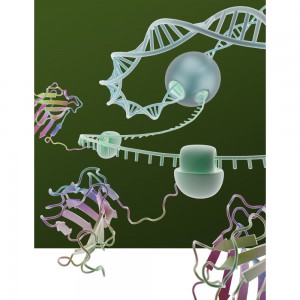
Promega technical manuals have a new look! But never fear, our manuals still contain the protocol instructions for correctly using Promega products and include data, product and component storage information that you need to be successful at the bench. The cover art on our manuals now incorporates the use of imagery created by David Goodsell, which you can also find on our product boxes and at www.promega.com. The new cover image is being applied as we create new technical manuals or revise existing documents. Below are the old (left) and new (right) covers to compare:

Continue reading “Technical Manuals: A New Look”

Promega Biotech Ibérica Earns Recognition for Contributions to the COVID-19 Pandemic Response in Spain

Small- and medium-sized companies are critical to the Spanish economy. During 2020 the COVID-19 pandemic made business difficult for many of these companies, yet they have demonstrated strength and resourcefulness and have led the pandemic recovery in Spain in many ways. Recently, Promega Biotech Ibérica was recognized with a Madrid Community SME (small- and medium-sized business) Award along with 15 other companies. The awards were presented by Manuel Giménez, Minister of Economy, Employment and Competitiveness of the Madrid Region, Andres Navarro delegate director of La Razón, and Francisco Marhuenda, director of La Razón. As part of the award, Promega Biotech Ibérica General Manager, Gijs Jochems, was interviewed about the award and Promega’s work in the region.

Gijs Jochems, General Manager of Promega Biotech Ibérica accepts the Madrid Community SME Award.

According to Gijs Jochems, General Manager of Promega Biotech Ibérica, while Promega Corporation is an American multinational company, it remains privately held, which offers a great deal of flexibility to the subsidiaries to adapt to local needs. It also allows the company to place increased emphasis on employee well-being (critical during the pandemic), reinvest profits in research and development, and work to mitigate the impact of company activities on the environment. All these business practices reflect a long-term vision of sustainable business growth.

Continue reading “Promega Biotech Ibérica Earns Recognition for Contributions to the COVID-19 Pandemic Response in Spain”

Three Pillars of ESI Mastery: Part Three

A Future Vision that Shapes Today’s Behavior

Today’s blog is written by Malynn Utzinger, Director of Integrative Practices, and Tim Weitzel, ESI Architect.

In one of our earliest blogs, we shared one of our favorite parables about a stonecutter. it went as follows:

In medieval times, a traveler happens upon a stonemason and asks him, “What are you doing?” The stonemason says wearily, “I spend long, hard days cutting and laying stone.” Further down the traveler encounters a second stonemason and asks him the same question, “What are you doing?” This stonemason, more energetically, replies. “I’m building a wall. I am blessed to have work that allows me to support my family so well.” Again, walking on, the traveler encounters a third stonemason doing the same work as the previous two; yet this stonemason is beaming with life. When the traveler asks what he is doing, he spreads his arm wide and exclaims, “I am building a cathedral that will uplift countless lives for centuries to come!”

ESI Mastery Part Three

The last pillar of Emotional and Social Intelligence (ESI) Mastery that we explore in this three-part series is the importance of identifying a vision or writing a future story. This vision or story shapes how we behave so that we can live into it.

In short, stories drive our lives. However, too often, the wrong story causes us to become stuck in a version of reality that cuts us off from giving and receiving the best of ourselves and of life.

Continue reading “Three Pillars of ESI Mastery: Part Three”

Advancing Understanding of Hypoxic Gene Regulation Using Reporter Genes: Celebrating the Work of Dr. Gregg L. Semenza

This post is written by guest blogger, Amy Landreman, PhD, Sr. Product Manager at Promega Corporation.

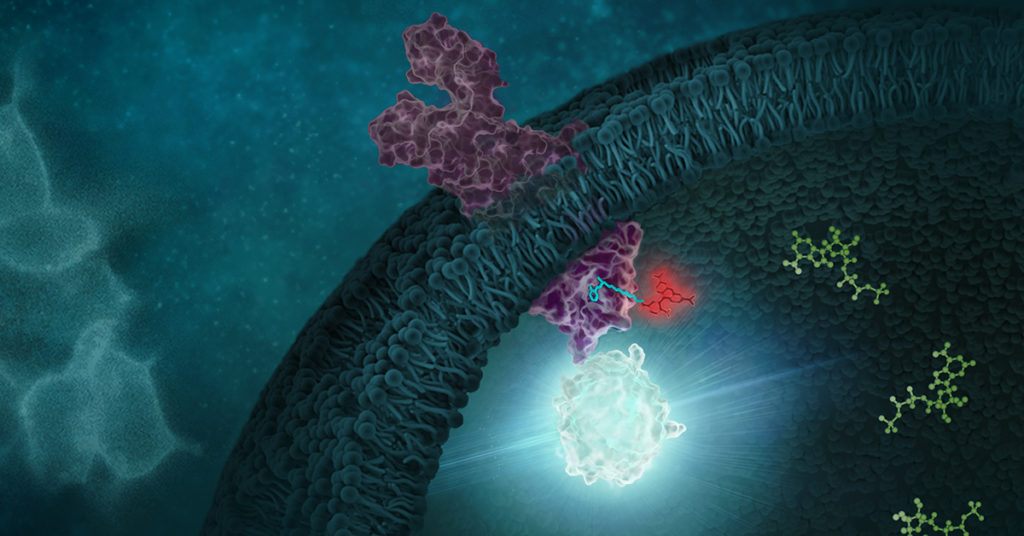
Oxygen is necessary for animal life. It’s essential for cellular respiration and the production of energy (ATP) we require to survive. Given the need for oxygen, it isn’t surprising that our bodies have evolved ways to sense and adapt to decreased oxygen conditions (hypoxia). We can increase the production of new blood vessels by producing vascular endothelial growth factor (VEGF) or increase red blood cell (RBC) production by increasing the levels of eythropoietin (EPO), the hormone that plays a key role in the production of RBCs. But how does our body sense low oxygen, increase EPO levels, and kick our RBC production into gear? Nobel laureate Gregg L. Semenza has been honored for his contributions to our understanding of this process, and his research demonstrates the value of reporter genes and bioluminescence for studying gene regulation.

Reporter genes and bioluminescence are important tools for studying gene regulation
Continue reading “Advancing Understanding of Hypoxic Gene Regulation Using Reporter Genes: Celebrating the Work of Dr. Gregg L. Semenza”

Exploring the Virtual iGEM Giant Jamboree with iGEM Concordia

Today’s guest blog about the 2020 virtual iGEM Giant Jamboree is written by Lancia Lefebvre, Team Leader of iGEM Concordia.

AstroBio database for differential gene expression

After a year of full-time work, I joined our team of 16 undergraduate students to live-stream the virtual iGEM Giant Jamboree from the isolation of our respective apartments. Together in a separate zoom call and Facebook chat, we fired off messages as awards were announced. ‘OMG Toulouse won best poster! Did you see Aachen’s project?’ Then came the Software Track award, our track, and boom! “Concordia-Montreal are the Software Track Winners for iGEM Giant Jamboree 2020!”

Firework and heart emojis exploded in our chat and on my zoom call, mouths gaped in shock and pride. Our AstroBio database for differential gene expression in microgravity conditions had won! Innumerable lines of code; hours of consultation with NASA bioinformaticians, bioethicists and coding pros; detailed graphic design; and most of all passionate teamwork had brought us this distinction. A gold medal and an inclusion nomination soon followed. This nomination we hold close to our heart as we continuously collaborate on a safe, warm and welcoming team structure. Supporting each other and working together are core iGEM values, which lead to collaborative and stronger solutions to world problems through the application of synthetic biology solutions.

Continue reading “Exploring the Virtual iGEM Giant Jamboree with iGEM Concordia”

Three Pillars of ESI Mastery: Part Two

Today’s blog is written by Malynn Utzinger, Director of Integrative Practices, and Tim Weitzel, ESI Architect.

Last month we wrote about the first of three pillars of ESI Self-Mastery: Recognizing and Owning What You Already Have/Are/Do. In this blog, we offer some thoughts on the second pillar: continuously growing our ESI knowledge and skill.

Continue reading “Three Pillars of ESI Mastery: Part Two”

Biotechnology Teaching Online: A New Way to Look at Scientific Notebooks

This post is written by guest blogger, Peter Kritsch MS, Adjunct Instructor BTC Institute.

When I was in the middle of my junior year in high school, my family moved. We had lived in the first state for 12 years. I had gone to school there since kindergarten. Although it wasn’t a small district, I knew everybody and, for better or worse, everybody knew me. Often the first reaction I get when I tell people when we moved is that it must have been hard to move so close to graduation. The reality is . . . it really wasn’t. In fact, it was quite liberating. See, I didn’t have to live up to anybody else’s expectations of who I was based on some shared experience in 2nd grade. I had the opportunity to be who I wanted to be, to try new things without feeling like I couldn’t because that wasn’t who I was supposed to be. 

As long as I refrained from beginning too many sentences with “Well at my old school . . . “ people had to accept me for who I was in that moment, not for who they perceived me to be for the previous 12 years. Now, the new activities were not radically different. I still played baseball and still geeked out taking AP science classes, but I picked up new activities like golf, playing basketball with my friends, and even joined the yearbook. I know . . . “radically different.”  The point is that the new situation allowed me to try something new without worrying about what had always been. 

Peter teaches about biofuels in his virtual classroom.

The pandemic has forced a lot of us to move our classrooms online. In a short period of time, everything changed about how education was done. Our prior teaching experience, including the experience I had with doing blended learning (ooops . . . “back at my old school”), was helpful to a point.  But we quickly found out that being completely virtual was different. And as science teachers, how do you do more than just teach concepts when online? How do you help students to continue engaging in the crucial parts of science – observing, questioning, designing, analyzing, and communicating?

Continue reading “Biotechnology Teaching Online: A New Way to Look at Scientific Notebooks”