Travelogue Galapagos Part I: Realizing a Lifelong Dream

In 2014, Promega created a special incentive to reward field science consultants who help the scientific community take advantage of our on-site stocking program. The winners had to meet ambitious criteria to receive 2 round-trip tickets to anywhere in the world, a week of paid vacation and spending money. Our four winners will share photos and stories about their journeys on the Promega Connections Blog.

Today’s travelogue is Part I of the adventures of Amy Parman, a regional sales manager, who used her award to travel to Ecuador and the Galapagos Islands.32178451-dec-12-image-1-600x400-web

Day 1: Seattle to Miami – Today we tied up a few last minute details, tested the satellite phones, checked that Grandma and Grandpa had all the info and resources they needed for anything that should arise while we were inaccessible (the manual we left was slightly thicker than War and Peace, and way less interesting), loaded up the car, put on the out-of-office alerts, kissed the kiddos good-bye and headed to SeaTac for a red-eye flight to Miami. We’re off!

Day 2: Miami to Guayaquil, Ecuador – Today (Was it day? After a red-eye, who knows?) we arrived in Miami in the very wee hours. We snagged a quick breakfast and a hotel right in the Miami airport which rents rooms for the day, which was our first experience with an hourly hotel—ahem! Our nine hour layover included lunch, mani/pedis and a much needed nap. We boarded our flight to Guayaquil and made full use of some particularly goofy-looking, newly-purchased neck pillows. My husband created a little excitement as we boarded the plane—he couldn’t find his passport as the flight attendant was readying the flight doors for departure. Our local seatmates and two flight attendants helped to find it quickly as it had slipped between the window seat and the floor. Phew! The flight was smooth as a wet seal and we arrived in Guayaquil to find the Hilton shuttle waiting for us. We checked into our room and grabbed some midnight sangria and flautas while we listened to an awesome Ecuadorian jazz band in the hotel bar. This trip is off to a fabulous start! Continue reading “Travelogue Galapagos Part I: Realizing a Lifelong Dream”

The Art of Eating: Embrace the Nap

Celebrating Thanksgiving Copyright: rawpixel / 123RF Stock Photo

In the United States, Thanksgiving Day originated as an opportunity to give thanks for blessing of the harvest and to toast to a plentiful harvest the next year. Fitting with its origins, the modern Thanksgiving holiday is centered on food. Although we are grateful for this day of eating, why does it have to make us so sleepy?

L-tryptophan, commonly known as just tryptophan, is an amino acid found in many of the foods typically found at a Thanksgiving feast. You’ve probably heard one of your relatives cite it as the reason they fell asleep during the football game. Tryptophan is essential for the normal growth in infants and to balance nitrogen levels in adults. It is mostly found in proteins like turkey, chicken, dairy products and brown rice. Once the amino acid is consumed, the body converts it to 5-hydroxy-tryptophan (5-HTP), which is then turned into serotonin. Serotonin is the biochemical messenger that is associated with naps.

But tryptophan can’t do it alone. Tryptophan is not an essential amino acid, and it has to compete to get to the brain. Most of the time it gets kicked out of the way by other essential amino acids also traveling to the brain. So, why does it zip up to the brain on Thanksgiving? Carbohydrates. Continue reading “The Art of Eating: Embrace the Nap”

Research Teams Demonstrate Bivalent Binding of a Novel Bromodomain Protein Inhibitor

13305818-cr-da-nanoluc-application_ligund

Today’s blog is written by guest blogger Kristin Huwiler from our Cellular Analysis and Proteomics Group.

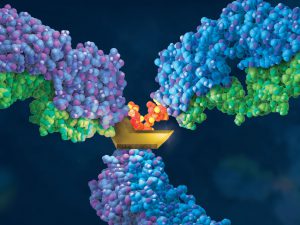
Two research collaborations, one in Europe and a second in the US, have just published in Nature Chemical Biology (1,2) on the identification of BET inhibitors (bi-BETs) that bind via a bivalent mechanism to both bromodomains of BRD4. These bivalent chemical inhibitors exhibit high cellular potency and affinity relative to their monovalent predecessors. By developing high-affinity ligands that engage both bromodomains simultaneously within BRD4, the authors illustrate a concept that may be applicable in the development of selective, potent ligands for other multi-domain proteins. Here we review the work presented in the Waring et al. paper using the Promega NanoBRET™ Technologies to characterize the mechanism of action of their bivalent probe.

The bromodomain and extraterminal (BET) sub-family are some of the most studied bromodomain-containing proteins (3). The BET subfamily of proteins contain two separate bromodomains. BRD4 is one well studied member of the BET sub-family. Several small molecule inhibitors that target BRD4 have been developed as potential therapeutics for various cancers with promising initial studies, but to date are all monovalent, binding each bromodomain of the BET family members separately (2).

Continue reading “Research Teams Demonstrate Bivalent Binding of a Novel Bromodomain Protein Inhibitor”

Improved Method for the Rapid Analysis of Monoclonal Antibodies Using IdeS

ides_ab

Therapeutic monoclonal antibodies (MAbs) are inherently heterogeneous due to a wide range of both enzymatic and chemical modifications, such as oxidation, deamidation and glycosylation which may occur during expression, purification or storage. For identification and functional evaluation of these modifications, stability studies
are typically performed by employing stress conditions such as exposure to chemical oxidizers, elevated pH and temperature.

To characterize MAbs, a variety of analytical techniques are chosen, such as size exclusion chromatography and ion exchange chromatography. However, due to the large size of the intact MAbs, these methods lack structural resolution. Often, the chromatographic peaks resolved by SEC and IEC methods are collected and further analyzed by peptide mapping to obtain more detailed information. Peptide mapping, in which antibodies are cleaved into small peptides through protease digestion followed by LC–MS/MS analysis, is generally the method of choice for detection and quantitation of site-specific modifications. However sample preparation and lengthy chromatographic separation make peptide mapping impractical for the analysis of large numbers of samples. In contrast to peptide mapping analysis, the middle-down approach offers the advantage of high-throughput and specificity for antibody characterization.

Limited proteolysis of IgG molecules by the IdeS enzyme has been introduced for antibody characterization due to its high cleavage specificity and simple digestion procedure.

Continue reading “Improved Method for the Rapid Analysis of Monoclonal Antibodies Using IdeS”

How’s That for Wellness?

Copyright: pavel1964 / 123RF Stock Photo

Whether you’re a seasoned runner or just trying to find a fun activity to do with a coworker, a 5K run/walk can be a fun event for all.  Promega recently hosted its 7th annual 5K run/walk and had more than 155 participants at the Madison, WI,  location.  The event was a fun activity for everyone to get out, get active and be social. The event also helped raise over 160 pounds of food and over $115 in cash that was donated to the Second Harvest Food Bank.

As a nation, we have become more focused on our health and wellness than ever before. Nearly everyone is trying to drink more water, be more mindful of what they eat, and it’s hard to look around the room without finding someone wearing a fitness tracker to keep track of their daily steps.  Health and wellness has also become increasingly popular in the workplace. According to Health Fitness Revolution, the top benefits of a Workplace Wellness Program are as follow:

  • Fun
  • Improved Productivity
  • Happiness
  • Sense of Community
  • Lower Healthcare Costs
  • Sense of Accomplishment
  • Improved Physical Fitness
  • Weight Loss
  • Less Stress
  • Healthier Habits

At Promega our focus on wellness as an organization is no different. We recognize that being active and taking care of your health, and your family’s health, has an impact beyond how you feel.  Because of that, we have a wellness or fitness center in each of our facilities to make staying active and fit more convenient. We also believe that wellbeing extends beyond physical health and have a campus that features native gardens with walking paths and dedicated meditative spaces to encourage total wellness. Promega strives to be a leader in health & wellness initiatives that enable our employees to become the best version of themselves. We don’t do this for a potential monetary return on the investment, but because we truly believe that by becoming the best version of yourself, our employees also become the most fulfilled.


Exploring the Land of the Silver Fern—Part II

In 2014, Promega created a special incentive to reward field science consultants who help the scientific community take advantage of our on-site stocking program. The winners had to meet ambitious criteria to receive 2 round-trip tickets to anywhere in the world, a week of paid vacation and spending money. Our four winners from 2014 will share photos and stories about their journeys in a semi-regular Friday feature on the Promega Connections Blog.

Today’s travelogue is Part II of the adventures of Sarah Theos, a client support consultant, who used her award to travel to New Zealand. You can read Part I here.

Day 7: Queenstown to Te Anau

My husband surprised me that morning by booking a massage appointment at the spa to soothe my aching muscles. It was a rainy morning and we had a long drive ahead of us to the town of Te Anau, the stopover town on the way to the Fiordland National Park and Milford Sound.  We also saw that we had lucked out on our itinerary as it was supposed to be a beautiful day in Milford the next day (a place that gets over 300 days of rain each year).  Therefore, we didn’t mind one more day of rain if it meant the next day would be amazing.  We drove through the Canterbury plains, passing tons of sheep and dairy farms along the way.  We also found it interesting that they farm deer in NZ.  We drove past a lot of deer farms.  When we arrived in Te Anau, we grabbed some food and went to the local grocery store to stock up on snacks and more wine.  New Zealand has a booming wine industry and we thought that it was worth sampling as many wines as we could.  The day was gray and cold but we decided to walk along Lake Te Anau anyway.  It is a beautiful, massive lake but we didn’t see very much of the surrounding mountains because of the fog.  We stopped briefly at the bird sanctuary to see the Kaka, the Crested Grebe, and other beautiful birds.  That evening, we had the most amazing 5 star dinner at the Redcliff Café and loved it so much that we booked a table there for the next evening!  Since we were getting up super early the next day to drive to Milford, we went to bed early.

Day 8:  Drive through the Fiordland to Milford Soundnew-zealand1a

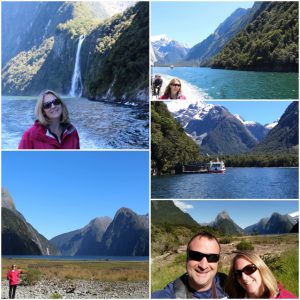
This had to be my most favorite day of the entire trip.  Not only was the weather amazing, the entire drive to and from Milford Sound was mind blowing.  The New Zealanders call Milford the 8th Natural Wonder of the World and it is easy to see why.  It is in a remote part of the island and 99% of the Fiordland will never see a human.  The Fiordland has waterfalls aplenty, sweeping, colorful landscapes with millions of gorgeous lupin flowers and gigantic, snow covered mountains.  It truly feels as though you have entered another world.  We left early so we would avoid the dreaded crowds and tour buses that clog the two lane road from 10am-4pm. We stopped constantly as the views just kept getting better and better around every twist and turn.  One notable stop was The Chasm.  The Chasm is where the raging Cleddau River has worn a path straight through the mountain so it virtually disappears into the rock.  There are many massive, perfectly round pothole formations in the limestone where pebbles have worn their way through the rocks.  We were the only two people there at that time of the morning.  It felt majestic just to stand there and listen to the tremendous sound of the powerful river disappearing into the mountain and reappearing on the other side. Continue reading “Exploring the Land of the Silver Fern—Part II”

Protein:DNA Interactions—High-Throughput Analysis

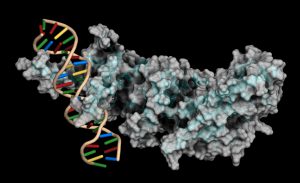
Protein-DNA interactions are fundamental processes in gene regulation in a living cells. These interactions affect a wide variety of cellular processes including DNA replication, repair, and recombination. In vivo methods such as chromatin immunoprecipitation (1) and in vitro electrophoretic mobility shift assays (2) have been used for several years in the characterization of protein-DNA interactions. However, these methods lack the throughput required for answering genome-wide questions and do not measure absolute binding affinities. To address these issues a recent publication (3) presented a high-throughput micro fluidic platform for Quantitative Protein Interaction with DNA (QPID). QPID is an microfluidic-based assay that cam perform up to 4096 parallel measurements on a single device.

The basic elements of each experiment includes oligonucleotides that were synthesized and hybridized to a Cy5-labeled primer and extended using Klenow. All transcription factors that were evaluated contained a 3’HIS and 5’ cMyc tag and were expressed in rabbit reticulocyte coupled transcription and translation reaction (TNT® Coupled Reticulocyte Lysate). Expressed proteins are loaded onto to the QIPD device and immobilized. In the DNA binding assay the fluorescent DNA oligonucleotides are incubated with the immobilized transcription factors and fluorescent images taken. To validate this concept the binding of four different transcription factor complexes to 32 oligonucleotides at 32 different concentrations was characterized in a single experiment. In a second application, the binding of ATF1 and ATF3 to 128 different DNA sequences at different concentrations were analyzed on a single device.

Literature Cited

  1. Ren, B. et al. (2007) Genome-wide mapping of in vivo protein-DNA binding proteins. Science 316, 1497–502.
  2. Garner, M.M. (1981) A gel electrophoresis method for quantifying the binding of proteins to specific DNA regions. Nuc. Acids. Res. 9, 3047-60.
  3. Glick,Y et al. (2016) Integrated microfluidic approach for quantitative high throughput measurements of transcription factor binding affinities. Nuc. Acid Res. 44, e51.

Catching a Child Abuser in Five Days

ishi_27jpg

Next week, forensic analysts from all over the world will gather in Minneapolis for the 27th  International Symposium on Human Identification (ISHI). So today, we’d like to share one story from a forensics lab that highlights the importance of collaboration, knowledge-sharing and technology development–since that is what ISHI is all about. 

Crimes against children are especially heinous, and it is vitally important that the offenders are removed from the streets as soon as possible. In today’s blog, Sarah Chenoweth from the Anne Arundel County Crime Lab in Maryland describes a sexual assault case that was solved in just five days. Key to this speed were the collaboration between lab staff and state police, and the ability to quickly and reliably amplify DNA profiles from low-DNA samples. Thanks to the efforts of the investigators involved, parents in Maryland, and possibly nationwide, can sleep a little easier.

On Friday, February 5th, the Anne Arundel County Crime Lab was notified of a sex offense involving a 7-year-old victim. With our efficient DNA workflow, including use of the Fusion amplification kit with our 3500 Genetic Analyzer, we were able to identify the perpetrator in only five days. Continue reading “Catching a Child Abuser in Five Days”

Optimization of Alternative Proteases for Bottom-Up Proteomics

Alternate Proteases Cover

Bottom-up proteomics focuses on the analysis of protein mixtures after enzymatic digestion of the proteins into peptides. The resulting complex mixture of peptides is analyzed by reverse-phase liquid chromatography (RP-LC) coupled to tandem mass spectrometry (MS/MS). Identification of peptides and subsequently proteins is completed by matching peptide fragment ion spectra to theoretical spectra generated from protein databases.

Trypsin has become the gold standard for protein digestion to peptides for shotgun proteomics. Trypsin is a serine protease. It cleaves proteins into peptides with an average size of 700-1500 daltons, which is in the ideal range for MS (1). It is highly specific, cutting at the carboxyl side of arginine and lysine residues. The C-terminal arginine and lysine peptides are charged, making them detectable by MS. Trypsin is highly active and tolerant of many additives.

Even with these technical features, the use of trypsin in bottom-up proteomics may impose certain limits in the ability to grasp the full proteome, Tightly-folded proteins can resist trypsin digestion. Post-translational modifications (PTMs) present a different challenge for trypsin because glycans often limit trypsin access to cleavage sites, and acetylation makes lysine and arginine residues resistant to trypsin digestion.

Are you looking for proteases to use in your research?
Explore our portfolio of proteases today.

To overcome these problems, the proteomics community has begun to explore alternative proteases to complement trypsin. However, protocols, as well as expected results generated when using these alternative proteases have not been systematically documented.

In a recent reference (2), optimized protocols for six alternative proteases that have already shown promise in their applicability in proteomics, namely chymotrypsin, Lys-C, Lys-N, Asp-N, Glu-C and Arg-C have been created.

Data describe the appropriate MS data analysis methods and the anticipated results in the case of the analysis of a single protein (BSA) and a more complex cellular lysate (Escherichia coli). The digestion protocol presented here is convenient and robust and can be completed in approximately in 2 days.


Try a sample of high-efficiency Trypsin Platinum today!

Visit our website for more on Trypsin Platinum, Mass Spectrometry Grade, with enhanced proteolytic efficiency and superior autoproteolytic resistance.


Reference

  1. Laskay, U. et al. (2013) Proteome Digestion Specificity Analysis for the Rational Design of Extended Bottom-up and middle-down proteomics experiments. J of Proteome Res. 12, 5558–69.
  2. Giansanti, P. et. al. (2016) Six alternative protease for mass spectrometry based proteomics beyond trypsin. Nat. Protocols 11, 993–6

Related Posts

Calling All Red Sharpies—A Lighthearted Commentary on Lab Supply Shortages

Every lab has it—that one thing that is always in short supply no matter how many you order. What is your lab’s “red sharpie”?

eh_July2016_800px

If you like this cartoon, there are more like it in our Cartoon Lab.