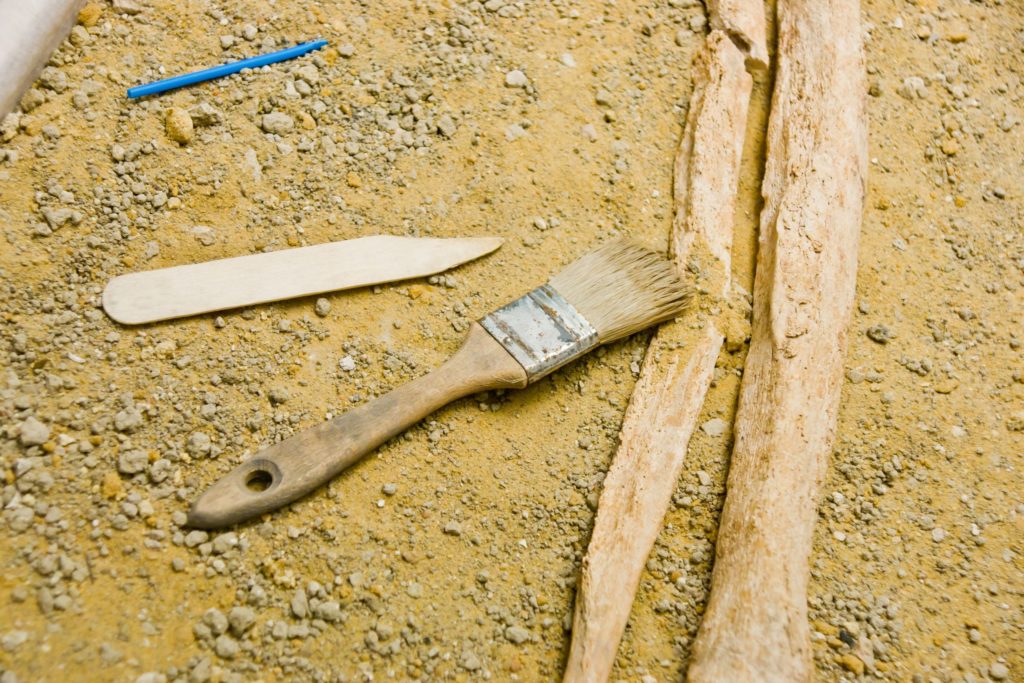
Denisovans are one of the most elusive branches of the human family tree. Scientists first identified them in 2010, when DNA from a tiny finger bone found in Denisova Cave in Siberia revealed a previously unknown group of ancient humans. Since then, researchers have confirmed only a handful of fossils outside Siberia as Denisovan—two jaws, a rib and a skull.
However, genetic evidence suggests Denisovans traveled widely. People in Southeast Asia and Oceania still carry Denisovan DNA. What was missing was fossil evidence from the region in between: southwestern China. Now, a new study published in Nature could fill that gap.
Analyzing Fossils from Bianfu Cave
A team led by Dr. Qiaomei Fu at the Chinese Academy of Sciences studied Bianfu Cave in Yunnan Province, where excavations had recovered some 60,000 bone fragments.
To determine whether any of these fragments came from Denisovans, the team tried to recover ancient DNA from the bones. When that failed, the researchers turned to proteins—specifically collagen peptides, which can survive much longer than DNA.
The team first screened the bones manually based on size, thickness and surface features, and picked 22 candidates. They then used a technique called ZooMS (zooarchaeology by mass spectrometry) to read the pattern of collagen peptides in each fragment. (The proteins were digested using Trypsin and Elastase from Promega.) Five of the specimens showed markers typical of the genus Homo.
Protein Sequencing Confirms Denisovan Bones
Deeper protein sequencing narrowed the identification further. At position 996 of the collagen α-2(I) chain, Denisovans have lysine where Neanderthals and modern humans have arginine. All five Bianfu Cave specimens carried the Denisovan version, which is consistent with all other Denisovans analyzed so far.
The protein analysis confirmed three Denisovan bones: two skull fragments and part of a forearm bone called the radius. It also confirmed that two teeth found during excavation were Denisovan. All five specimens date to roughly 167,000–134,000 years ago.
That makes Bianfu Cave the richest Denisovan site outside Denisova Cave itself. It also adds fossil evidence from a part of Asia where such evidence had been missing.
The First Discovery of a Denisovan Forearm
The discovery of the radius bone was especially significant because it is the first Denisovan radius ever identified. The radial tuberosity, a bump where the biceps tendon attaches, is probably oriented toward the inside of the arm, as in Neanderthals. The large radial head also resembles that of Neanderthals. But the bone’s overall shape and neck cross-section look more like those of modern humans.
These traits relate to how the arm bears loads and how efficiently the biceps work. The authors suggest this mix of features reflects distinct biomechanical demands, and perhaps distinct behaviors, in Denisovans.
Future Denisovan Research
This study reveals the first fossil evidence of Denisovans in southwestern China. It helps connect Denisovan fossils found farther north with the Denisovan DNA found in people in Southeast Asia and Oceania. The study also demonstrates that ancient proteins can identify human fossils even when no DNA survives.
However, open questions remain. Without DNA, researchers cannot yet say how these Denisovans relate to the groups that contributed to modern human genomes. The team also hopes more protein screening will uncover additional long bones. Each new specimen adds to the picture of how Denisovans looked, moved and adapted. With new proteomics technology, even a pile of unremarkable bone fragments can hide a fossil that redraws the map.
Reference: Rao, H. et al. (2026) Ancient proteins identify various Denisovan remains from Southwest China. Nature. https://doi.org/10.1038/s41586-026-10976-9
Learn more about our solutions for Mass Spectrometry

Latest posts by Johanna Lee (see all)
- Ancient Proteins Reveal Mysterious Human Relatives in Southwestern China - October 22, 2026
- A New Human Neuron Model for Tau-Targeted Drug Screening - August 27, 2026
- The Hidden Switch That Controls Lysosome Function - June 11, 2026
