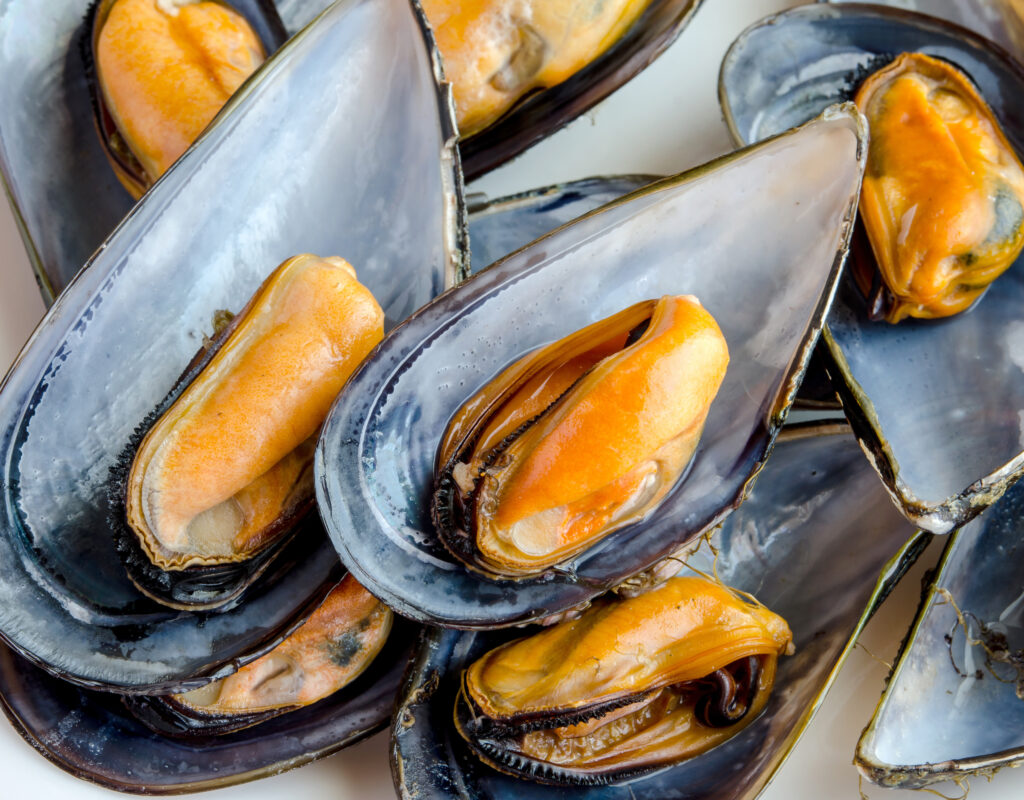
Fresh mussels might be a delicacy in many parts of the world, but a new study from Italy suggests they could also be carriers of something much less appetizing: infectious viruses and antibiotic resistance genes (ARGs). Published in Food and Environmental Virology, Venuti et al. (2025) investigated 60 mussel batches originating from the Campania (Southern Italy), Lazio and Puglia regions—and what they found raises important questions about food safety and environmental monitoring.
The Viral Threat
Mussels, like other bivalves, are filter feeders that accumulate microorganisms from their surrounding waters. In this study, researchers screened for several human enteric viruses commonly associated with gastrointestinal illness, including norovirus genogroups I and II (HuNoV GI/GII), rotavirus (RV) and astrovirus (HAstV).
The results:
- HuNoV GI was detected in 77% of samples
- RV in 60%
- HuNoV GII in 40%
- HAstV in 25%
Although all samples tested negative for hepatitis A and E, more than half contained two or more enteric virus—and 20% contained four different viruses—indicating widespread contamination. Additional testing was done as well for respiratory viruses, including SARS-CoV-2, respiratory syncytial virus and influenza A, with all samples testing negative.
So, what does this mean in terms of public health concerns, especially in communities that consume raw or lightly cooked bivalve molluscan shellfish (BMS) like mussels?
Can These Viruses Make People Sick?
Detecting viral genetic material is one thing; determining whether it has infectious potential is another. To estimate viral infectivity, the researchers used a capsid-integrity RT-qPCR assay with PMAxx™, a dye that selectively binds exposed viral genomes. While traditional cell culture remains the gold standard for assessing infectivity, this method provided supporting evidence that some of the viruses detected in the mussels had intact capsids—an indicator of potential infectiousness.
New Indicators for an Old Problem
Current regulations for shellfish safety focus primarily on bacterial contamination, especially E. coli. However, E. coli levels often fail to reflect viral risk. To explore better indicators, the study also measured concentrations of somatic coliphages and crAssphage—bacteriophages tied to human fecal pollution.
These viral markers were found in 88% and 50% of samples, respectively, and showed strong correlations with several of the detected enteric viruses. While crAssphage and coliphages didn’t correlate as strongly with HuNoV GI—the most prevalent virus—they did align with rotavirus, astrovirus and HuNoV GII levels. These findings suggest potential value in incorporating viral indicators into shellfish monitoring protocols, especially in regions vulnerable to sewage contamination.
But Wait, There’s More: Antibiotic Resistance Genes
In addition to virological testing, the study assessed mussel samples for the presence of ARGs. Specifically, genes associated with resistance to beta-lactams (blaCTX-M), quinolones (qnrB) and chloramphenicol (cat1) were detected. The team analyzed both total microbial DNA and bacteriophage-associated DNA, revealing that ARGs are present not just in bacteria, but also within the viral particles that could facilitate horizontal gene transfer.
The DNA extraction for these analyses was performed using the Maxwell® RSC Instrument with the Maxwell RSC Pure Food GMO and authentication kit, which enabled nucleic acid extraction from complex mussel tissue—an essential step for both viral and ARG detection. The use of an automated system also supported consistency across sample types.
Note that although this instrument and kit are intended for food safety research applications like this one, they are not approved for medical or diagnostic use.
Why This Matters
The combination of enteric viruses, ARGs and emerging viral indicators in mussels paints a concerning picture. Bivalves are sentinels of environmental contamination and potential vectors of illness, particularly in regions where they’re consumed raw. This study reinforces the need for:
- Ongoing environmental and foodborne pathogen surveillance
- Improved viral detection tools and surrogate indicators
- Continued research into ARG transmission pathways
Conclusion
This study presents compelling evidence that mussels can carry viruses that may be infectious, as well as ARGs, highlighting their role as bioindicators of environmental health risks. By combining molecular virology with surveillance of antimicrobial resistance, the research points to the need for integrated monitoring approaches that go beyond conventional bacterial indicators to better protect public health.
Reference
- Venuti, I., Cuevas-Ferrando, E., Falcó, I., Girón-Guzmán, I., Ceruso, M., Pepe, T., & Sánchez, G. (2025). Presence of Potentially Infectious Human Enteric Viruses and Antibiotic Resistance Genes in Mussels from the Campania Region, Italy: Implications for Consumer’s Safety. Food and Environmental Virology, 17, Article 28. https://doi.org/10.1007/s12560-025-09635-5