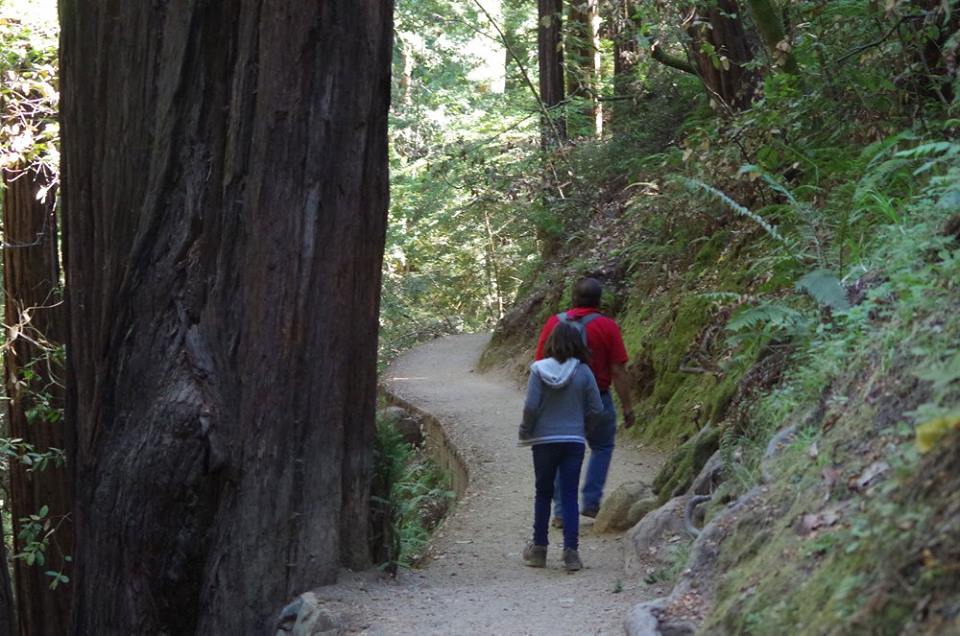
Hiking the Hillside Trail in Muir Woods National Monument
This land is your land, this land is my land From California to the New York Island From the Redwood Forest, to the Gulf stream waters This land was made for you and me
–Woodie Guthrie
When my daughter was in preschool, she learned the lyrics to Woodie Guthrie’s folk song This Land Is Your Land. After one summer vacation, while she played in the Gulf stream waters off the coast of Florida, she asked, “Can we go see the Redwood Forest now?”
I had never seen the Redwood Forest, and my daughter’s request piqued my curiosity. I thought about my own childhood, when I had accompanied my older sister on a botany class project to collect plants and how curious I was about the plants and where they grew and what their names meant. Suddenly I wanted to see the Redwoods, and the Giant Sequoias.
It took a few years, but we managed to design a vacation trip that satisfied my daughter’s request to see the Redwood Forest and my growing curiosity, and I am so glad we did.
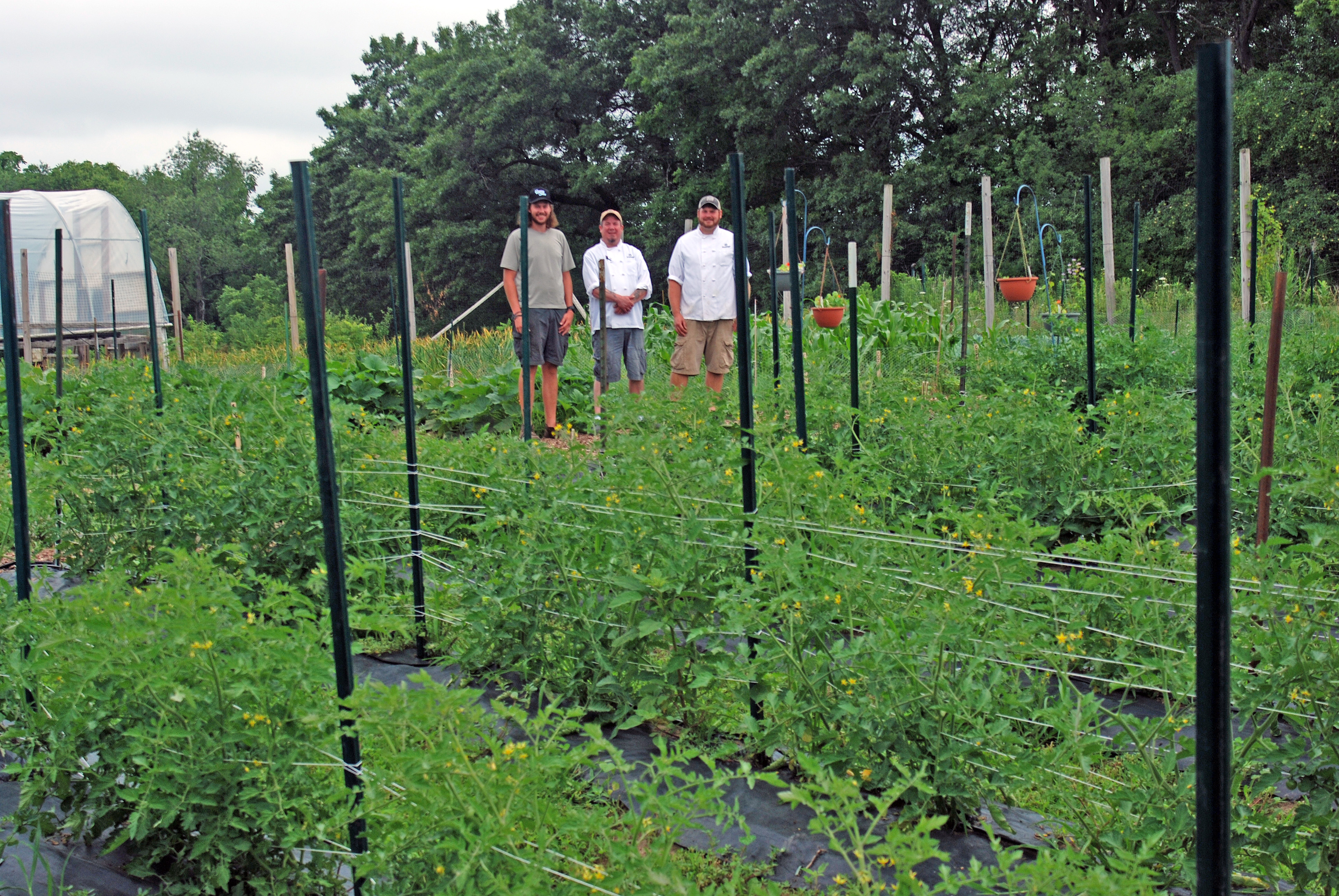
In the Promega garden. (L to R): Logan Morrow, gardener; Nate Herndon, Promega Senior Culinary Manager; Mike Daugherty, Promega Line Cook and Gardener
First we eat, then we do everything else.–MFK Fisher
Swatting away mosquitoes one July morning in the garden on the Promega Madison, WI, campus, Senior Culinary Manager Nate Herndon leans down and pulls back the leaves of a squash plant, revealing the bright yellow flowers that in a couple of hours will highlight a seasonal special on the lunch menu at one of the company’s cafeterias: green onion-cream cheese stuffed fried squash blossoms served on a grilled jerk pork tostada with black beans and cilantro sauce. Herndon explains that dishes made from scratch with high-quality, locally sourced (and sometimes unexpected) ingredients are the rule at Promega Madison kitchens, where it’s not uncommon to find entrees like house made ramp garganelli with oyster mushrooms and asparagus, braised beef ragu with house made buckwheat parpadelle pasta and baby kale, or fried perch tacos.
Food is an extension, a daily demonstration, of our overall commitment to sustainability, the community and employees
Science has been an important part of my life for a long time. One of my motivations for being a scientist was helping others. As scientists, there are many ways that we make a difference. For example, doing research that reveals information about basic biological processes can provide insight into how a disease might wreak havoc, and in turn facilitate drug design and effective disease treatments. I can say from experience that it’s especially rewarding to go beyond the impact of science to assist someone in the community face to face.
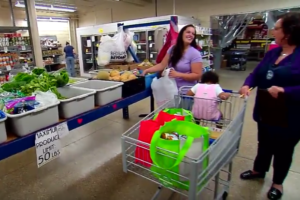
A St. Vincent de Paul Food Pantry host helps a client to shop for food.
Just over 5 years ago, I started volunteering at the St. Vincent de Paul Madison Food Pantry, the largest in Dane County, Wisconsin, which serves an average of about 400 families per week1. The pantry uses a customer-choice model in which clients are allotted points to shop for food, allowing them to make selections that preserve their dignity and ethnic diversity. The food pantry has a small staff, so volunteers are vital to keep things running. I serve as a “host” to clients and assist them to shop around the pantry for the items that they need. It has been such a positive experience for me. In the grand scheme of things, I’m not changing the world, but I’m helping others get essential items to make ends meet for their family. Tough times can happen to anyone, and it takes a great deal of courage to ask for help. My goal is to make the experience for clients as positive as possible by being cheerful, courteous and respectful during their time at the pantry. If helping others can make one individual forget even for a moment that they have fallen on hard times, then I call that a win!
A desire to make a difference in the community through volunteerism is one of the characteristics that I really like about working at Promega. At a recent company meeting, employees were asked to share how they serve the community. Activities ranged from assisting those with disabilities to participate in athletic activities to taking care of shelter animals to starting a non-profit for children in need. There were many more! Employees are helping others in their local communities and even those across the globe from where they live. It was so inspiring to hear about my colleagues’ experiences of serving others.
Promega has a mechanism for employees to apply for time off to volunteer through the Promega in Action program.
Promega has become the first major forensic manufacturer to achieve third party certification of the published ISO 18385 standard to minimize the risk of human DNA contamination in products used to collect, store and analyze biological material for forensic purposes.
On February 2, 2016, ISO 18385:2016 was published as the first international standard specific to the forensic manufacturing community. Since the standard was published, companies have begun to self-declare that they comply with the ISO standard. Some companies have gone a step further and reached out to Certification Bodies to provide an unbiased and independent assessment their compliance to ISO18385 through a third-party audit.
When consumers see an ‘ISO 18385 Forensic Grade’ labeled product, it should inspire confidence that the product was produced in accordance with a minimum set of criteria common to all manufacturers.
A recent paper in PLOS One demonstrated real-time cytotoxicity profiling of approximately 10,000 chemical compounds in the Tox21 compound library, using two Promega assays, RealTime-Glo™ MT Cell Viability Assay and CellTox™ Green Cytotoxicity Assay. This is exciting to me, a science writer working at Promega; exciting because it’s tricky figuring out how to write about the utility of our products without sounding like an evangelist.
I don’t know about you, but I tend to shut out evangelists and their messages.
Instead of me telling you about real-time viability and cytotoxicity assays from Promega, here is an example of their use in Tox21 chemical compound library research.
There has been a lot of effort recently to perform whole genome sequencing, for humans and other species. The results yield new frontiers of data analysis that offer a lot of promise for groundbreaking scientific discoveries.
One objective of human genome sequencing has been to identify sources of disease and new therapeutic targets. This movement has opened the door to create personalized medicine for cancer, whereby the genetic makeup of an individual’s tumors can be used to determine the most effective drug intervention to administer.
Interest in studying the characteristics unique to individual cells seems obvious when considering the function of healthy cells versus tumor cells, or brain cells compared to heart cells. What has surprised scientists is the realization that two cells in the same tissue can be more different from each other, genetically, than from a cell in another organ.
For example, a small number of brain cells with a specific mutation can lead to some forms of epilepsy while healthy people may also carry cells with these mutations, but too few to cause disease. The lineage of a cell, where it came from and what events shaped its development, ultimately determines what diseases can exist.
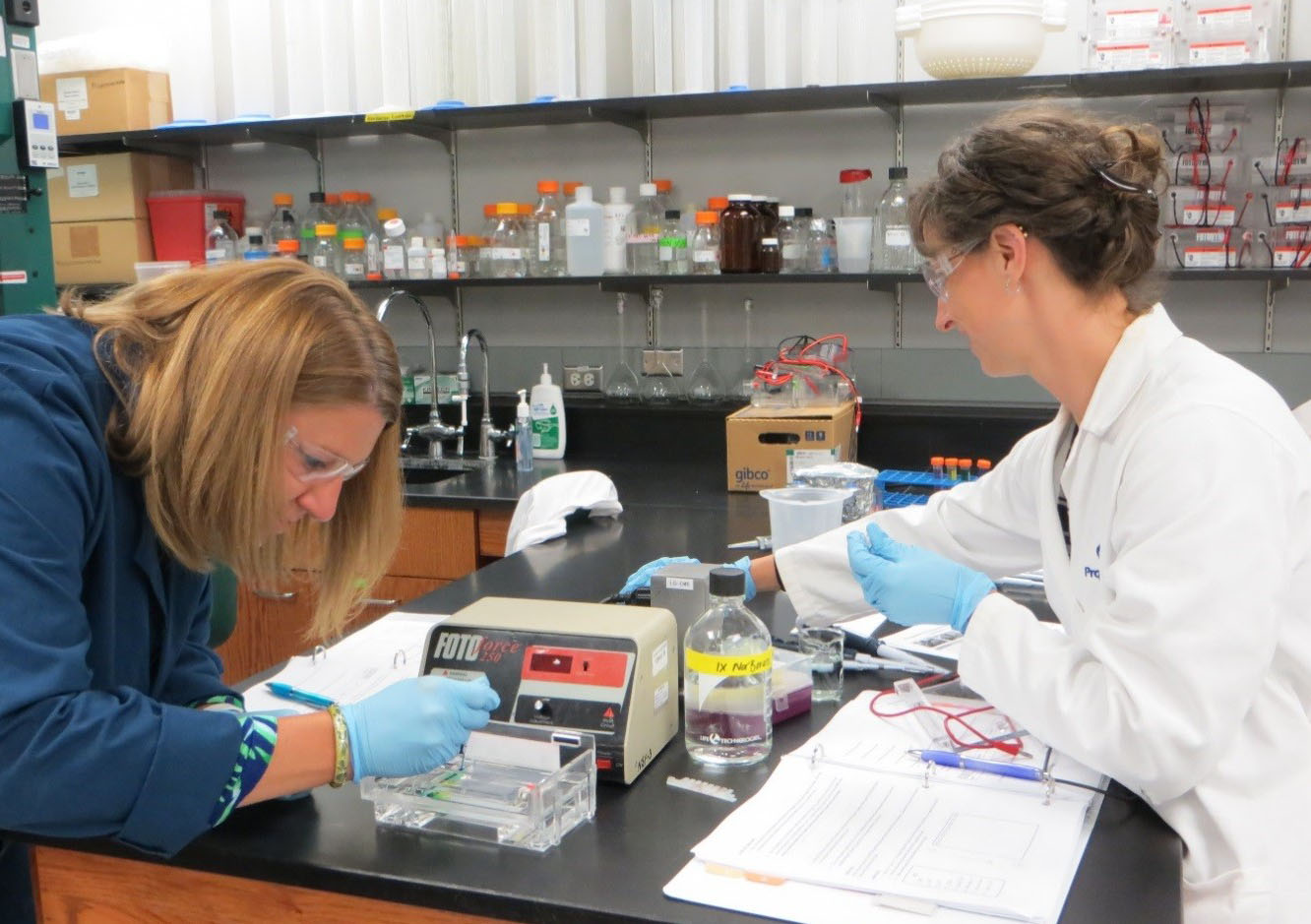
Megan Wagner (left) and Katie Aliota, science teachers from Cardinal Heights Upper Middle School in Sun Prairie, WI; load an agarose gel with colored dyes.
Today’s blog is jointly written by guest blogger Peter Kritsch, Biotechnology and Biology Teacher at Oregon High School and contributor Barbara Bielec. K-12 Program Director at the BTC Institute.
The BTC Institute has offered two graduate-level courses for high school teachers for many summers. Biotechnology: The Basics and Biotechnology: Beyond the Basics have become very popular and are also drawing the interest of middle school teachers. So, this June we piloted a new 3-day course designed specifically for them. Representing different schools and districts, eight teachers learned how to extract DNA from strawberries, pour and run agarose gels, identify a taste gene, and received information on lots of resources to use with their students.
Through the BTC Institute’s Biotechnology Teacher Academy, these courses are offered at no cost and $300-$500 stipends are available. A main Academy goal is to provide high quality professional development opportunities that prioritize content that participants can smoothly incorporate into their classrooms. Our commitment to stipends is generously supported by the Wisconsin Space Grant Consortium (WSGC), Promega Corporation, Madison College and the BTC Institute. (All three courses are offered for graduate credits from Edgewood College, and Viterbo University also offers credits for the two geared to high school teachers.)
The importance of this approach is affirmed by Sherry Jacobsen (Kromrey Middle School in Middleton, WI):
This [course] is such a gift to teachers! Many times we aren’t treated as professionals so it was nice to be treated as a professional without a high personal cost. I love how the course is so practical. Many courses are only in theory and no application. I can take so many useful ideas with me.
Biotechnology is making its way into the middle school classroom. With access to the BTC Institute’s Equipment Loan Program, teachers can check out micropipettes, gel boxes & power supplies, an ultraviolet light box and other equipment for up to two weeks. Course participant Amy Reimer (Core Knowledge Middle School in Verona, WI), has already taken advantage of this program and noted that it was “great to review procedures” through the course and plans to borrow equipment again this coming year. Continue reading “A Successful Launch for Biotechnology: The Basics for Middle School Teachers”
“In Georgia, the legend says That you must close your windows At night to keep it out of the house The glass is tinged with green, even so As tendrils crawl over the fields…” —James Dickey (1)
I grew up in Georgia, where on a hot, humid summer day you could almost hear the hiss of growing vegetation, especially the Kudzu as it climbed over fence posts and encroached upon the roadside, the king of invasive species. In Florida you worry about the alligators along the roadside if you have a flat tire; in Georgia, beware the Kudzu.
Invasive species, animal and plant, are an issue in all ecosytems. Imported from distant (and not-so-distant) areas both by accident and misguided intent, invasive species are species that have escaped the checks and balances of natural competitors and predators that existed in their native habitats. This lack of predation and competition enables them to outcompete and overrun other species.
Kudzu may be one of the most recognized invasive species in the United States, but it’s probably not the worst. The zebra mussel is an aquatic animal that has invaded our waterways in Wisconsin. Oak savannahs and prairie ecosystems in the Midwest United States are threatened by many invasive plant species like garlic mustard and blister parsnip. The USDA maintains an extensive invasive species list so.
Recently a FaceBook friend of mine (who is not a scientist) shared a video from WIRED Science where the concept of CRISPR is explained at 5 Levels of Difficulty— for a 7 year old, a teenager, a college student, a grad student and a CRISPR expert.
First it was pretty amazing to me that my non-scientist friends are interested enough in learning about CRISPR to share this type of information—perhaps showing just how popular and exciting the method has become. People outside the scientific field are hearing a lot about it, and are curious to know more.
This video does a great job of explaining the technique for all its intended audiences. It also is a nice illustration of how to share information in an easily understandable format. Even with the 7 year old and 14 year old, the information is shared in a conversational way, with everyone involved contributing to sharing information about CRISPR.
On May 16, 2017, the U.S House of Representatives and the U.S. Senate passed the Rapid DNA Act of 2017 (H.R.510 and S.139, respectively). The bill was sponsored by Senator Orrin Hatch (R-UT) and Representative James Sensenbrenner (R-Wis) and enjoyed bipartisan support, ending up with seven Republican and five Democratic cosponsors in the Senate, and seventeen Republican and seven Democratic cosponsors in the House. The bill was passed by unanimous consent voice votes in both chambers.
So what is the Rapid DNA Act of 2017 all about?
Simply put, the act will expand the use of rapid DNA technology in law enforcement departments by creating a way for them to use the results they get by connecting them to the FBIs Combined DNA Index System (CODIS). Still curious? Read on and you will learn much more about what the Rapid DNA Act of 2017 does and doesn’t do.
XWe use cookies and similar technologies to make our website work, run analytics, improve our website, and show you personalized content and advertising. Some of these cookies are essential for our website to work. For others, we won’t set them unless you accept them. To learn more about our approach to Privacy we invite you to Read More
By clicking “Accept All”, you consent to the use of ALL the cookies. However you may visit Cookie Settings to provide a controlled consent.
We use cookies and similar technologies to make our website work, run analytics, improve our website, and show you personalized content and advertising. Some of these cookies are essential for our website to work. For others, we won’t set them unless you accept them. To find out more about cookies and how to manage cookies, read our Cookie Policy.
If you are located in the EEA, the United Kingdom, or Switzerland, you can change your settings at any time by clicking Manage Cookie Consent in the footer of our website.
Necessary cookies are absolutely essential for the website to function properly. These cookies ensure basic functionalities and security features of the website, anonymously.
Cookie
Duration
Description
cookielawinfo-checbox-analytics
11 months
This cookie is set by GDPR Cookie Consent plugin. The cookie is used to store the user consent for the cookies in the category "Analytics".
cookielawinfo-checbox-functional
11 months
The cookie is set by GDPR cookie consent to record the user consent for the cookies in the category "Functional".
cookielawinfo-checbox-others
11 months
This cookie is set by GDPR Cookie Consent plugin. The cookie is used to store the user consent for the cookies in the category "Other.
cookielawinfo-checkbox-advertisement
1 year
The cookie is set by GDPR cookie consent to record the user consent for the cookies in the category "Advertisement".
cookielawinfo-checkbox-necessary
11 months
This cookie is set by GDPR Cookie Consent plugin. The cookies is used to store the user consent for the cookies in the category "Necessary".
cookielawinfo-checkbox-performance
11 months
This cookie is set by GDPR Cookie Consent plugin. The cookie is used to store the user consent for the cookies in the category "Performance".
gdpr_status
6 months 2 days
This cookie is set by the provider Media.net. This cookie is used to check the status whether the user has accepted the cookie consent box. It also helps in not showing the cookie consent box upon re-entry to the website.
lang
This cookie is used to store the language preferences of a user to serve up content in that stored language the next time user visit the website.
viewed_cookie_policy
11 months
The cookie is set by the GDPR Cookie Consent plugin and is used to store whether or not user has consented to the use of cookies. It does not store any personal data.
Analytical cookies are used to understand how visitors interact with the website. These cookies help provide information on metrics the number of visitors, bounce rate, traffic source, etc.
Cookie
Duration
Description
SC_ANALYTICS_GLOBAL_COOKIE
10 years
This cookie is associated with Sitecore content and personalization. This cookie is used to identify the repeat visit from a single user. Sitecore will send a persistent session cookie to the web client.
vuid
2 years
This domain of this cookie is owned by Vimeo. This cookie is used by vimeo to collect tracking information. It sets a unique ID to embed videos to the website.
WMF-Last-Access
1 month 18 hours 24 minutes
This cookie is used to calculate unique devices accessing the website.
_ga
2 years
This cookie is installed by Google Analytics. The cookie is used to calculate visitor, session, campaign data and keep track of site usage for the site's analytics report. The cookies store information anonymously and assign a randomly generated number to identify unique visitors.
_gid
1 day
This cookie is installed by Google Analytics. The cookie is used to store information of how visitors use a website and helps in creating an analytics report of how the website is doing. The data collected including the number visitors, the source where they have come from, and the pages visted in an anonymous form.
Advertisement cookies are used to provide visitors with relevant ads and marketing campaigns. These cookies track visitors across websites and collect information to provide customized ads.
Cookie
Duration
Description
IDE
1 year 24 days
Used by Google DoubleClick and stores information about how the user uses the website and any other advertisement before visiting the website. This is used to present users with ads that are relevant to them according to the user profile.
test_cookie
15 minutes
This cookie is set by doubleclick.net. The purpose of the cookie is to determine if the user's browser supports cookies.
VISITOR_INFO1_LIVE
5 months 27 days
This cookie is set by Youtube. Used to track the information of the embedded YouTube videos on a website.
Performance cookies are used to understand and analyze the key performance indexes of the website which helps in delivering a better user experience for the visitors.
Cookie
Duration
Description
YSC
session
This cookies is set by Youtube and is used to track the views of embedded videos.
_gat_UA-62336821-1
1 minute
This is a pattern type cookie set by Google Analytics, where the pattern element on the name contains the unique identity number of the account or website it relates to. It appears to be a variation of the _gat cookie which is used to limit the amount of data recorded by Google on high traffic volume websites.
 Promega has become the first major forensic manufacturer to achieve third party certification of the published ISO 18385 standard to minimize the risk of human DNA contamination in products used to collect, store and analyze biological material for forensic purposes.