Rapid COVID-19 Testing, International Collaboration, and a Family Favor

When the COVID-19 pandemic descended on New York in March 2020, Christopher Mason, PhD, knew he was in a unique position to contribute. The Mason Lab specializes in sequencing and computational methods in functional genomics โ€“ valuable expertise for addressing an emerging infectious disease. Within days, Chris and his team were helping to analyze patient data, as well as developing new tests and detection methods for the SARS-CoV-2 virus.
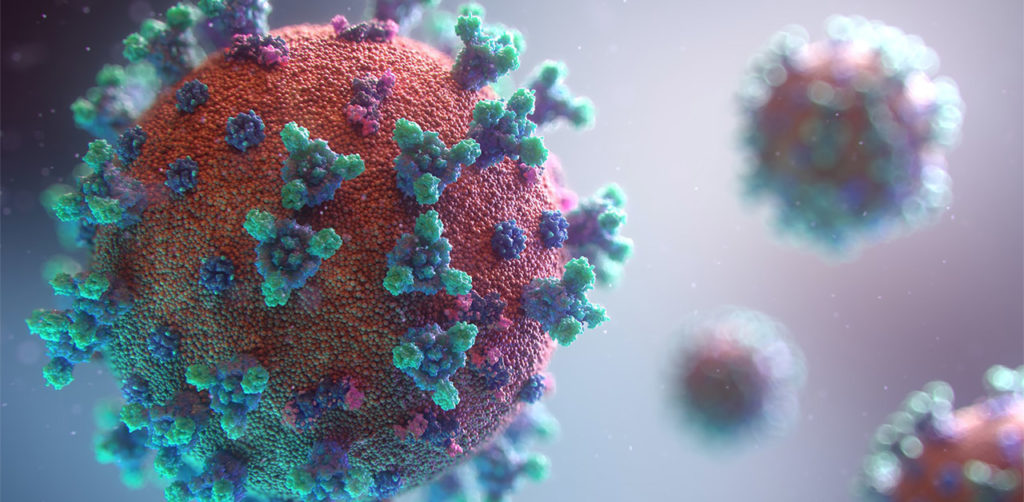
3d model of coronavirus covid-19

The Mason Lab developed protocols for a simple COVID-19 detection test that requires less time and equipment than common PCR methods. Their subsequent article detailing these methods quickly gained widespread attention, and Chris found himself fielding an endless stream of questions and requests.

During the frenzy, Chris received a call from his older brother. Cory Mason is the mayor of Racine, Wisconsin, the brothersโ€™ hometown.

โ€œHe said he saw me tweeting about our new test,โ€ Chris says. โ€œThen he asked me, โ€˜What if we set it up here in Wisconsin?โ€™โ€™

Continue reading “Rapid COVID-19 Testing, International Collaboration, and a Family Favor”

Screen Media in the Time of COVID-19: Should You Be Reading this Blog?

Screen Media. Cell phones. Social media accounts. If you are a parent, you have probably discussed rules of engagement with your children about these things. All of our modern social media platforms are designed to keep us engaged with them by showing us the latest post, the next video or the people now online. Work emails give us notifications when something arrives in our Inbox. Business software platforms like Microsoft Teams send us notifications whenever someone comments in a conversation we have ever been part of. There are many siren signals pulling us toward our screens.

Enter COVID-19, the flu-like illness caused by the SARS-CoV-2 virus that has already claimed the lives of 210,000 people in the United States, and leaving countless others permanently affected by other long-term health consequences. Spread by aerosol, COVID-19 is most dangerous in places where lots of people congregate in a small area, particularly if they are talking to each other. Consequently, office buildings are empty as many of us work or go to school remotely.

Before COVID-19, if I had a day full of meetings at work, I was running from conference room to conference room, two miles, uphill, in the snow between buildings. Now, a day full of meetings means sitting in front of a computer monitor, trying to figure out how I will get any kind of break between calls. The average number of steps recorded by my pedometer has decreased markedly since March when our remote work started.

Technology has been an incredible blessing during this pandemicโ€”allowing us to continue to work and stay connected with friends and family. Technology is the only way that some people can connect with loved ones in long-term care facilities. It allows students to continue learning through remote classrooms and chats.

But what has been the effect of the increased time spent on screens during this pandemic?

Continue reading “Screen Media in the Time of COVID-19: Should You Be Reading this Blog?”

Maximize Your Time in the Lab: Improve Experimental Reproducibility with Thaw-and-Use Cells

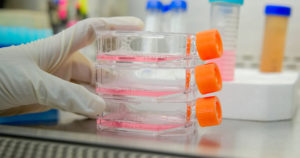
Many cell biology researchers can name their departmentโ€™s  or institutionsโ€™s โ€œcell culture wizardโ€โ€”the technician with 20+ years of experience whose cell cultures are always free from contamination, exhibit reliable doubling rates and show no phenotype or genotype weirdness. Cell culture takes skill and experience. Primary cell culture can be even more difficult still, and many research and pharmaceutical applications require primary cells.

Yet, among the many causes of failure to replicate study results, variability in cell culture stands out (1). Add to the normal challenges of cell culture a pandemic that shut down cell culture facilities and still limits when and how often researchers can monitor their cell culture lines, and the problem of cell culture variability is magnified further.

Treating Cells as Reagents

A good way to reduce variability in cell-based studies is to use the thaw-and-use frozen stock approach. This involves freezing a large batch of โ€œstockโ€ cells, then performing quality control tests to ensure they respond appropriately to treatment. Then whenever you need to perform an assay, just thaw another vial of cells from that batch and begin your assayโ€”just like an assay reagent! This approach eliminates the need to grow your cells to a specific stage, which could take days and introduce more variability.

Continue reading “Maximize Your Time in the Lab: Improve Experimental Reproducibility with Thaw-and-Use Cells”

The Impact of Positive Self-Talk: A Next-Level Story

Today’s blog is written by Malynn Utzinger, Director of Integrative Practices, and Tim Weitzel, ESI Architect.

Last month in this series, we posed to you that the most important decision youโ€™ll ever make is the one about how to respond to the circumstances of your life โ€“ the story you tell yourself when the rough patches of life show up. Because of our brainsโ€™ wiring, we tend to spin self-defensive and blaming stories as a first line of defense until we learn to pause, check in with ourselves, and cultivate a narrative of more generative possibilities.
This month, we promised you a next-level story that shows the outer impact that happened when one person changed his self-talk.

Continue reading “The Impact of Positive Self-Talk: A Next-Level Story”

How A Change in Immune Cell Metabolism Contributes to Severe COVID-19

Illustration of energy metablism in cell.

There is still a lot we donโ€™t know about COVID-19 and the virus, SARS-CoV-2, that caused the pandemic and changed the way we live. But there are two things we do know about the disease: 1) Patients with diabetes and high blood glucose levels are more likely to develop severe COVID-19 symptoms with higher mortality.  2) Patients that experience an uncontrolled inflammatory response, called the cytokine storm, also develop more severe COVID-19 symptoms. The fact that both high glucose levels and an exaggerated immune response drive severe disease suggests that the two may be linked. But how? The answer may lie in the metabolism of immune cells in the lungs of COVID-19 patients, according to a recent study published in Cell Metabolism.

Continue reading “How A Change in Immune Cell Metabolism Contributes to Severe COVID-19”

Identifying the Ancestor of a Domesticated Animal Using Whole-Genome Sequencing

What animal can be found around the globe that outnumbers humans three to one? Gallus gallus domesticus, the humble chicken. The human appetite for eggs and lean meat drive demand for this feathered bird, resulting in a poultry population of over 20 billion.

Controversy over the origin of the domestic chicken (when, where and which species) have lead some researchers to look for that information in the genomes of contemporary chicken breeds and wild jungle fowl, the candidates from which chickens were derived. By sequencing over 600 genomes from Asian domestic poultry as well as 160 genomes from all four wild jungle fowl species and the five red jungle fowl subspecies, Wang et al. wanted to understand and identify the relationships and relatedness among these species and derive where domesticated chickens first arose.

Continue reading “Identifying the Ancestor of a Domesticated Animal Using Whole-Genome Sequencing”

XpressAmp™ Direct Amplification: Simplified and Accelerated Time to qPCR Results

As the SARSโ€CoVโ€2 pandemic continues to rage across the United States and around the globe, the demand for COVIDโ€19 testing is increasing. The vast majority of the COVID-19 assays use RTโ€qPCR to detect the viral RNA in patient samples such as nasopharyngeal swabs, which are collected and stored in viral or universal transport media (VTM/UTM). The general workflow for these COVIDโ€19 assays can be broken down as follows:

  1. Collect and store patient samples
  2. Ship samples to testing laboratory
  3. Extract RNA from samples
  4. Amplify and analyze samples

While many companies who manufacture the products that are used in these steps have been able to adapt and significantly increase their production capacities, there are still gaps between the supply of these products and the global test demand. Both the sample collection and storage step and the RNA extraction/purification step have a tendency to bottleneck and experience supply constraints. One way to address these bottlenecks and expand production capacity for these inโ€demand products is to evaluate the viability of skipping a step in the workflow, without hindering the ability to detect viral RNA from samples.

Continue reading “XpressAmp™ Direct Amplification: Simplified and Accelerated Time to qPCR Results”

More muscle from eggs? Proteo-lipid complex may help prevent age-associated loss of muscle-mass

In older people, low muscle mass is strongly associated with reduced functional capacity and an increased risk of disability. Myostatin is a negative regulator of muscle growth and has become an important target for pharmaceutical companies designing therapeutics to address age-associated muscle loss.

Anti-myostatin drugs increase muscle size and strength in preclinical studies. Fortetropin is a proteo-lipid complex made from fertilized egg yolk and shows anti-myostatin activity. When Fortetropin is provided as a supplement, lowered circulating myostatin levels are observed both in rodents and in young men. Fortetropin in combination with resistance exercise also lowers myostatin and increased lean body mass.

Continue reading “More muscle from eggs? Proteo-lipid complex may help prevent age-associated loss of muscle-mass”

Answers to the Most Common Questions from โ€œBattling the Novel Coronavirusโ€ Online Event

This post was written by guest blogger, Nitin Kapoor, from our Promega India branch office.

The COVID-19 crisis has led to substantial worldwide efforts to develop drug treatments and vaccines effective against SARS-CoV-2.  Termed a novel Coronavirus, SARS-CoV-2 belongs to the same family as that of SARS (severe acute respiratory syndrome) and MERS (Middle East respiratory syndrome) viruses that were responsible for epidemics in 2003 and 2012 respectively (Lu et al. 2020)

Continue reading “Answers to the Most Common Questions from โ€œBattling the Novel Coronavirusโ€ Online Event”

Capillary Electrophoresis On Your Benchtop

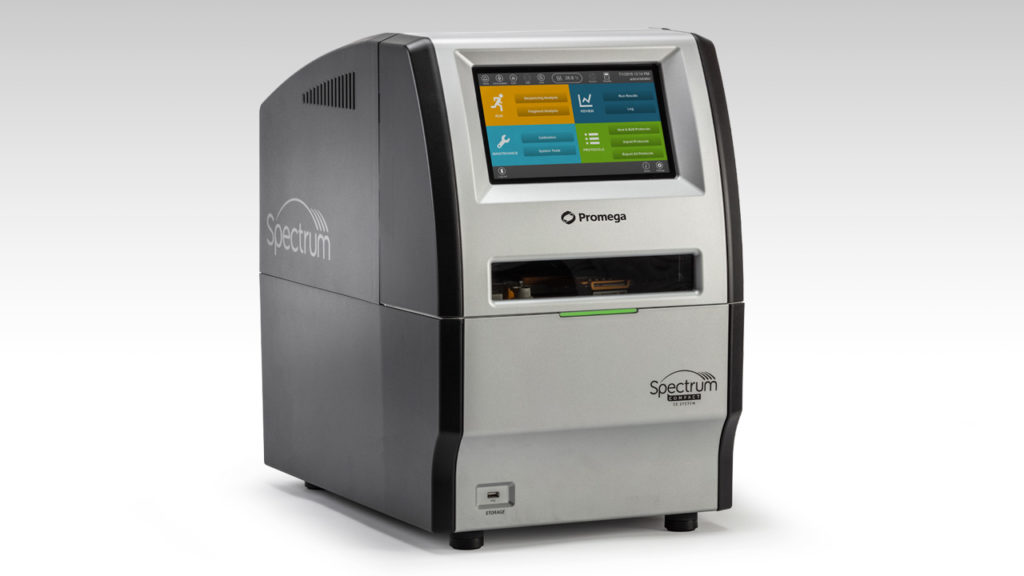
Spectrum Compact CE System

Hereโ€™s the good news: The Spectrum Compact CE System is now available from Promega. 

Hereโ€™s the better news: Labs of all sizes now have the opportunity to perform Sanger sequencing and fragment analysis with a personal, benchtop instrument. 

There is no bad news. 

Continue reading “Capillary Electrophoresis On Your Benchtop”