Reflections on Virtual Conference Life: Can You Hear Me?

Today’s guest blog is written by Research Scientist Danette Daniels, PhD.

Virtual Conference Presentation

One of my favorite things about being a scientist is attending conferences. They are an opportunity to connect with the broader community, share ideas, talk about the future, and get inspired. After a conference I would return to my lab feeling so energized and excited, being motivated to push the research forward and work on the next stories we could share.

In March of this year, I remember my shock of watching the conferences slowly getting canceled one by one. First, it was everything in March and April, then May, then through to August.  I was in denial at the time, thinking this would be temporary and that we would all be back together in person in a few months. Then it became quite clear this would not be the case and events were transitioning to a virtual format.

Virtual! I was so skeptical. How could you connect with anyone at a virtual conference? How are people going to ask questions after a talk? How will it be to give a talk basically to your computer, not knowing who is listening, or more importantly for me, not being able to read the audience? I was not looking forward to it, but the alternative, no conferences at all, I thought was worse.

Continue reading “Reflections on Virtual Conference Life: Can You Hear Me?”


3 Tips for Preserving Muscle and Joint Health at Work

Today’s guest blog was written by Claire Checovich, Exercise & Ergonomics Specialist in the Promega Wellness Center.

The human body is amazing โ€“ it can climb towering cliffs, run hundreds of miles, and move many times its own weight.

It can also be annoying โ€“ how many of us have been injured just by sleeping or sitting in a funny position?

Weโ€™ve almost certainly all experienced the latter, whether weโ€™re hunched over books and papers or staring at a computer for hours on end. Thatโ€™s where ergonomics and biomechanics comes in.

Continue reading “3 Tips for Preserving Muscle and Joint Health at Work”

Young Scientist Discovers Potential Anti-SARS-CoV-2 Drug Molecule

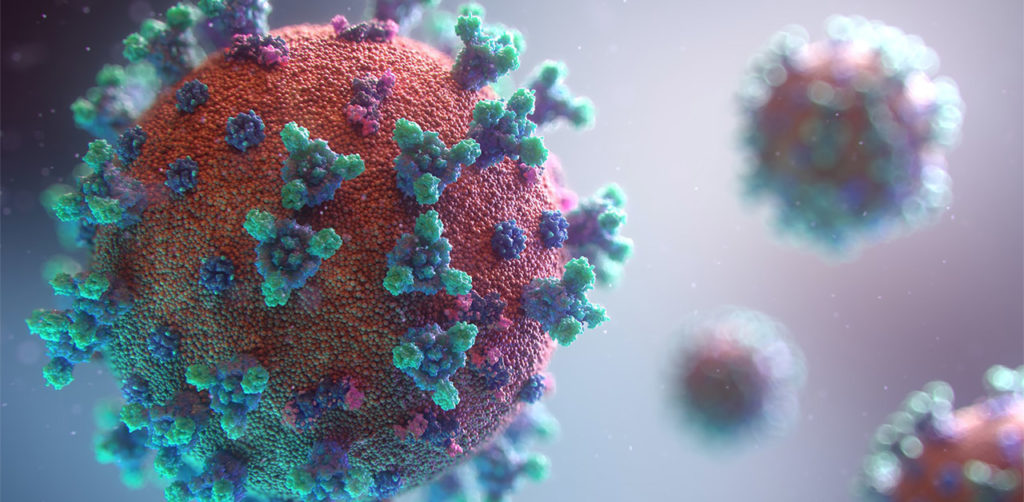
14-year-old Anika Chebrolu spent the early months of the COVID-19 pandemic identifying a potential anti-SARS-CoV-2 drug candidate. Originally, she was screening potential anti-influenza treatments, but as she watched COVID-19 case numbers rising around the world, she pivoted to focus instead on the SARS-CoV-2 virus. Several months later, Anika not only discovered a strong candidate for further testing, but she earned the title of 2020 Top Young Scientist in a competition sponsored by 3M.

3d model of coronavirus SARS-CoV-2
Continue reading “Young Scientist Discovers Potential Anti-SARS-CoV-2 Drug Molecule”

Three Pillars of ESI Mastery: Part One

“If You Only Knew Who You Were…”

Today’s blog is written by Malynn Utzinger, Director of Integrative Practices, and Tim Weitzel, ESI Architect.

We are a little nervous writing about Emotional & Social Intelligence (ESI) โ€œmastery.โ€ This makes it sound like we think it is possible to become perfect at emotional and social intelligence when our actual position on the matter is more about progress than perfection. 

Weโ€™re reminded of a quote from a wise teacher. Upon turning 90 he was asked, โ€œWhatโ€™s one of the most important lessons you have learned in your 90 years?โ€ He replied, โ€œThat we are all a mixed bag.โ€ 

No one is perfect. We all have strengths and we all have areas to grow, and we all always will. But the progress we make and its impact on our lives is so worth the effort.

Continue reading “Three Pillars of ESI Mastery: Part One”

Just What Is an RLU (Relative Light Unit)?

This post was contributed by guest blogger, Scott Messenger, Technical Support Scientist 2 at Promega Corporation.

Itโ€™s always an exciting time in the lab when you find a new assay to answer an important research question. Once you get your hands on the assay, it is always good to confirm it will work for your experimental setup. Repeating the control experiment shown in the technical manual is a great way to test the assay in your hands.

After running that first experiment of your assay, it looks pretty good. The trends of control and treatment are consistent. Time to get on with the experiments…but waitโ€”the RLUs (Relative Light Units) are two orders of magnitude lower than the example data! I canโ€™t show this data to my colleagues; it doesnโ€™t match. What did I do wrong?

Relative Light Units, Measuring, Luminescence

This is a concern that we in Technical Services hear frequently. The concern is real, and I had this same thought when doing some of my first experiments using luminescence. When a question like this comes in, a Technical Service Scientist will make sure the experiment was performed as we described, and in most cases it is. We then start talking about RLUs (Relative Light Units).

Continue reading “Just What Is an RLU (Relative Light Unit)?”

Increasing Testing Efficiency with Multiplexed Detection of SARS-CoV-2 and Influenza A and B

In the Northern hemisphere, the cold and flu season is about to start. Most years that means people schedule flu shots, dust off chicken soup recipes and stock up on tissues. If they start to feel sick, they stay home for a day or two, drink hot tea, eat warm soup andโ€”for the most partโ€” go on with their lives. 

This is not, however, most years. This year the world is battling a pandemic virus, SARS-CoV-2. Symptoms of COVID-19, the disease caused by this virus, mirror those of the flu and common cold, and that overlap in symptoms is going to make life more complicated. Most years, a mild cough or minor body aches wouldnโ€™t even warrant a call to the doctor. This year these, and other undiagnosed cold- and flu-like symptoms, wonโ€™t be easily ignored. They could mean kids have to stay home from school, and adults have to self-quarantine from work, for up to 2 weeks. In years past people might have been comfortable treating their symptoms at home, this year people will want answers: Is it the flu? Or is it COVID-19?

Continue reading “Increasing Testing Efficiency with Multiplexed Detection of SARS-CoV-2 and Influenza A and B”

How Does Human Papillomavirus (HPV) Infection Drive the Progression of Cervical Cancer?

Cervical cancer is a major health problem for women, and it is currently the fourth most common cancer in women globally (1). A worldwide analysis of cancer estimates from the Global Cancer Observatory 2018 database showed that cervical cancer disproportionally affects lower-resource countries, on the basis of their Human Development Index; it was the leading cause of cancer-related death in women in many African countries (1).

Global cervical cancer incidence 2018
Estimated cervical cancer global incidence rates from the GLOBOCAN 2018 database; image generated using IARC (http://go.iarc.fr/today).

Infection by human papillomavirus (HPV), a double-stranded DNA virus, is the leading cause of cervical cancer. Many types of HPV have been identified, and at least 14 high-risk HPV types are cancer-causing, according to a World Health Organization (WHO) fact sheet. Of these types, HPV-16 and HPV-18 are responsible for 70% of cervical cancers and pre-cancerous cervical lesions. HPV infection is sexually transmitted, most commonly by skin-to-skin genital contact. Although the majority of HPV infections are benign and resolve within a year or two, persistent infection in women, together with other risk factors, can lead to the development of cervical cancer [reviewed in (2)].

Continue reading “How Does Human Papillomavirus (HPV) Infection Drive the Progression of Cervical Cancer?”

New Bioluminescent Sensor Can Detect Multiple Antibodies in a Single Drop of Blood

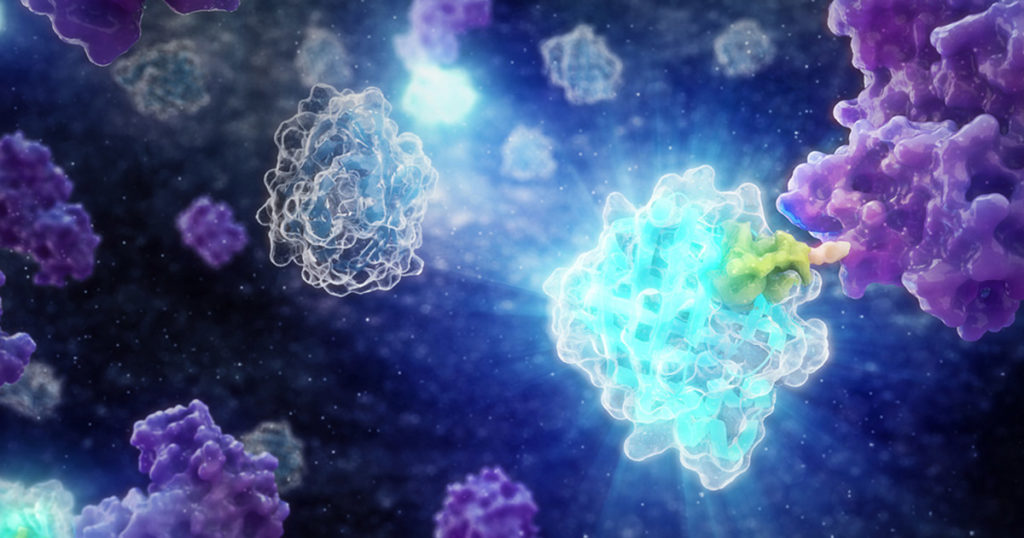
nanoluc invivo imaging

Antibody tests are often used to determine whether individuals have been exposed to certain bacteria or viruses. For most existing antibody tests, the process goes something like this: A vial of blood is drawn from the individual, the vial is sent to a lab, then a trained technicians performs the antibody test and sends back the results. The current process is less than ideal for a few reasons. For one, blood draws are invasive and can be painful. Also, getting results could take days, due to the time required to deliver and process the sample. Lastly, costs can be high, since the need for trained professionals and specialized instruments in laboratory settings adds to the cost of each test.

What if all you needed to do for an antibody test was apply a single drop of blood onto a thin piece of film, and you would get results on the spot within five minutes? Scientists have recently developed an antibody test based on bioluminescent technology that could make this a reality. They describe their findings in a recent study published in ACS Sensors.

Continue reading “New Bioluminescent Sensor Can Detect Multiple Antibodies in a Single Drop of Blood”

iGEM in a Pandemic: Reflecting on Human Practices

Today’s blog is written by the University of Copenhagen iGEM Team.


The International Genetically Engineered Machine (iGEM) competition has 257 teams of students competing this year. Despite all of the unique difficulties weโ€™re all facing in 2020, the University of Copenhagen is competing once again. This yearโ€™s project involves a unique approach to Chronic Inflammatory Diseases (CIDs).

Continue reading “iGEM in a Pandemic: Reflecting on Human Practices”

A Closer Look at C. difficile Biology with Luminescent Tagging

Clostridium difficile is a bacterium that infects around half a million people per year in the United States. The infection causes symptoms ranging from diarrhea to severe colitis, and itโ€™s one of the most common infections contracted while staying in the hospital. As the global incidence of C. diff infection has risen over the past decade, so has the pressure to develop novel therapeutic strategies. This requires a thorough exploration of all aspects of C. difficile biology.

Two recent papers published by researchers at the University of Leiden have shed light on C. difficile physiology using HiBiT protein tagging. The HiBiT system allows detection of proteins in live cells using an 11 amino acid tag. The HiBiT tag binds to the complementary LgBiT polypeptide to reconstitute the luminescent NanoBiTยฎ enzyme. The resulting luminescence is proportional to the amount of HiBiT-tagged protein that is present.

Continue reading “A Closer Look at C. difficile Biology with Luminescent Tagging”