With Thanksgiving just around the corner, kitchens across the country will soon be alive with the sights, smells and sounds of cooking. But what if we dove deeper into those recipe books and looked beyond the instructions? You might find you’re more than just a cook; you’re quite the chemist!
Inspired by the popular show Lessons in Chemistry, an adaptation of Bonnie Garmus’s bestselling novel, cooking is presented as applied science, encouraging viewers to think critically about their cooking and the chemical reactions that create the flavors and textures they love. In this blog, we’ll explore the chemistry behind Thanksgiving cooking, revealing how different techniques bring out the best in each dish.
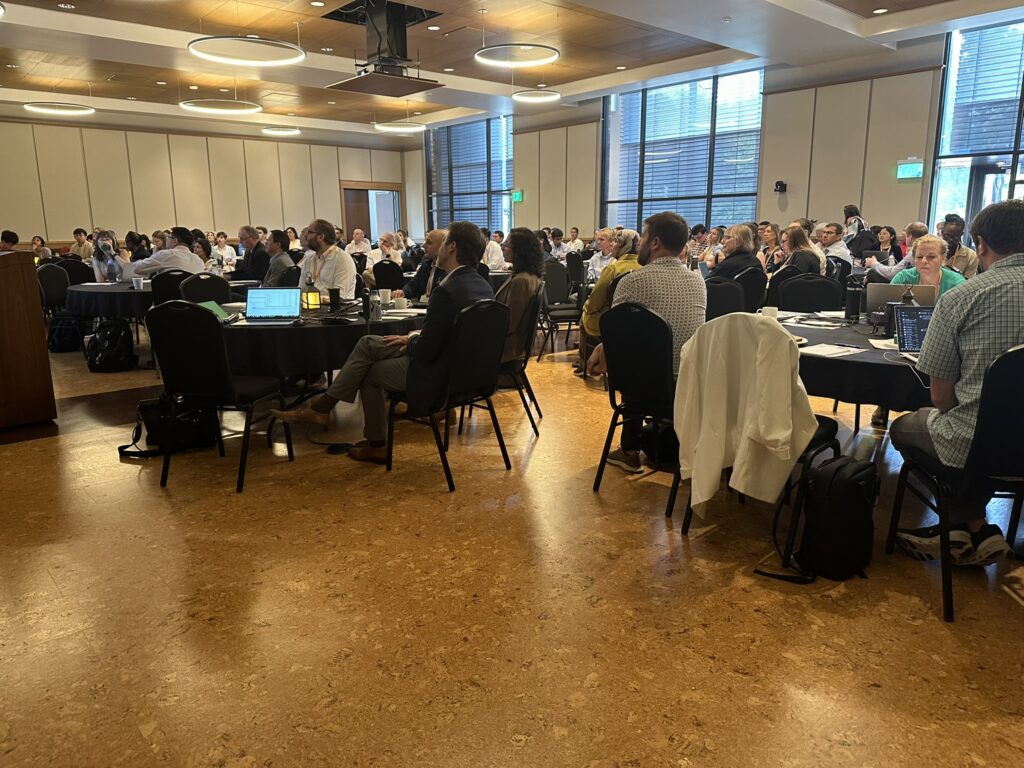
The third annual Targeted Protein Degradation (TPD) Symposium just wrapped up last month. It was kicked off with Poncho Meisenheimer, VP of Research and Development at Promega, likening the gathering of researchers to “kids in a biology candy store.” This playful analogy captured the vibrant energy and sense of exploration among the attendees, who convened to delve into the future possibilities of proximity-induced degradation. Poncho left attendees with three key questions to consider throughout the symposium:
How can we focus on quantitative measures of cellular events in relevant models?
How do we generate results that serve both human and AI models?
How do we best embrace the excitement of discovery?
Nearly 150 participants from both industry and academia attended the two-day symposium. It was held on September 11th and 12th at Promega’s R&D hub, the Kornberg Center, in Madison, Wisconsin. The event, now in its third year, provided a familiar environment where collaborations flourished, and many attendees rekindled connections forged through previous interactions or partnerships in the field.
In June, Promega proudly announced the ten winners of the 2024 Promega iGEM Grant. These extraordinary teams have been hard at work preparing for the iGEM Grand Jamboree, which will take place from October 23-26, 2024, in Paris, France. We interviewed a handful of this year’s grant recipients to learn more about their projects and journeys they’ve taken to reach this exciting milestone. Below are stories from four of the winning teams.
There is no shortage of stories about great scientific collaborations that have taken root as the result of an excited conversation between two scientists over sandwiches and beer at a bar or a deli. One of the most famous examples of such a conversation was that between Herbert Boyer and Stanley Cohen when they attended a conference on bacterial plasmids in 1972—that very conversation led to the formation of the biotechnology field as the two scientists worked together to clone specific regions of DNA (1).
“Over hot pastrami and corned beef sandwiches, Herbert Boyer and Stanley Cohen opened the door to genetic engineering and laid the foundations for gene therapy and the biotechnology industry.”
Steven Johnson, author of Where Do Good Ideas Come From, credits the English coffee house as being crucial to the spread of the enlightenment movement in the 17th and 18th centuries (2). He argues that coffee houses provide a space where ideas can come together and form networks. In fact, he defines the concept of “idea” not as a single entity—a grand thought that poofs into existence upon hard work—but at its simplest level, a new idea is a new network of neurons firing in sync with each other.
Johnson further argues that the development of great new ideas not only requires a space for ideas to bump into each other, connect and form a network, but also that great ideas are rarely the product of a single “Eureka” moment. Rather, they are slowly developing, churning hunches that have very long incubation periods (2).
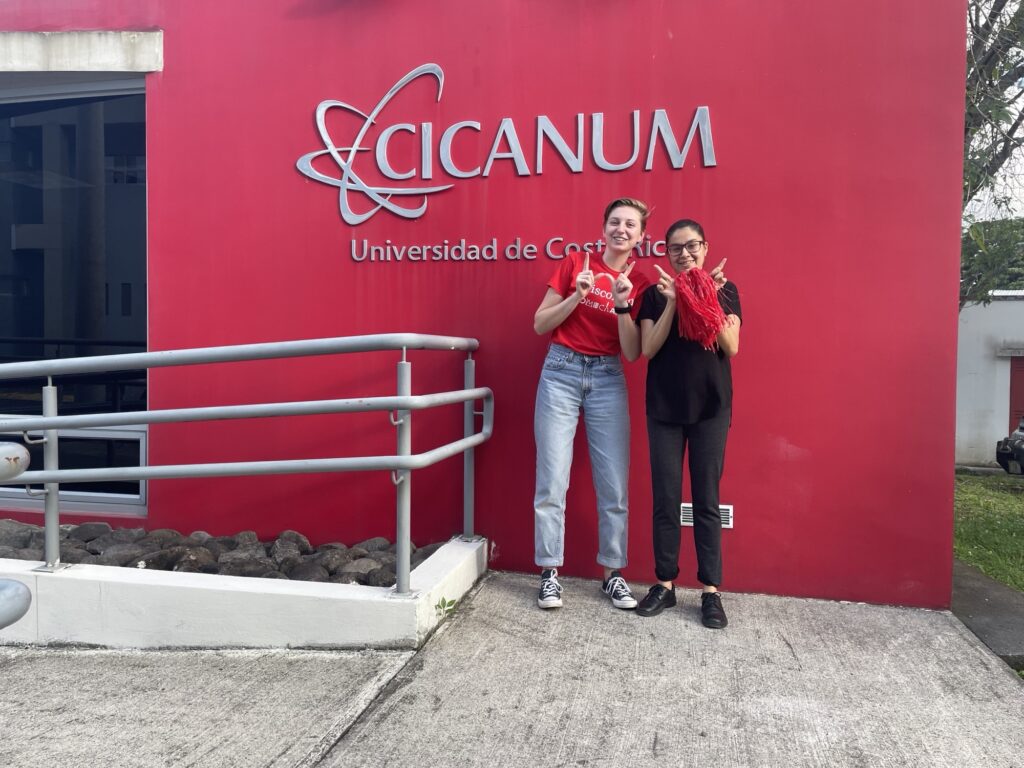
UW-Madison student Sophia Speece (left) spent the summer in Costa Rica for the “Artist in the Science Lab” internship hosted by alum Dr. Mariela Porras Chaverri (right)
My name is Sophia Speece. I am a junior at the University of Wisconsin-Madison studying Biomedical Engineering and Music Performance. As you can imagine, there is not a lot of overlap between these two passions of mine.
This past summer I was given the unique opportunity to combine these two areas. I applied and was accepted for the “Artist in the Science Lab” internship abroad in Costa Rica!
Paraj Mandrekar began his career at Promega in 1998 in the Genetic Identity Research and Development program. In 2001, he was a consultant at the World Trade Center to help meet the urgent need to identify victims of the 9/11 attacks. Two products, one of them being our DNA IQ™ System, that Paraj and others used for automating forensic DNA purification at the time were featured in the R&D 100 Award in 2002.
As he progressed through the successive ranks in R&D, Paraj took on more responsibility for the research, design, and development of novel chemistry. A significant high point in his career was being promoted to Senior R&D Scientist 1 in 2010. At that point, he was working on both forensic and non-forensic chemistries with paramagnetic particles. Promega’s non-forensic kit (AS1290) was launched with a new chemistry in March 2010, and a few months later, he got a new version of the Maxwell forensic sample kit (AS1240) out the door.
Research studies and novel discoveries continually reshape our understanding of the natural world, often refining—and sometimes contesting—prevailing scientific theories. While this influx of new information is important for expanding knowledge, it can also give rise to myths and misconceptions stemming from biases, media misrepresentations and overgeneralizations. In this blog, we’ll explore misconceptions that blur the lines between fact and fiction, some scientific myths that just won’t go die and theories that scientists can’t stop debating.
Humans Only Use 10% of Their Brain
This myth, frequently perpetuated through movies like Lucy with Scarlett Johansson and Limitless with Bradely Cooper, has ambiguous roots. Some attribute this pseudoscience to Albert Einstein, despite no recorded record of such a claim, while others associate it with a misinterpretation of William James and his “Reserve Energy Theory” (8).
Microblogging is a form of blogging characterized by a shortened format and frequent posting schedule. Instead of personal websites, microblogs reside on social media platforms or apps, making them accessible to interact with and post on smartphones. Microblogs focus on interacting with audiences directly. With the ability to reply to or repost content, microblogging is more conversational and collaborative with audiences than long-form writing.
After its founding in 2006, Twitter (recently renamed “X” by its new owner) quickly became the face of microblogging platforms. Users publish content to the platform in posts of 280 characters that can include images, gifs, videos, and what the platform is most known for: hashtags. Hashtags enable users to search the platform by topic to connect with or follow other users who are writing about those topics. Users can also interact with each other by liking or retweeting tweets, which posts them to their own account. The open forum discussion style makes it possible for individuals to share their stories, offering first-hand accounts of breaking news and fueling political movements such as the Women’s March and Black Lives Matter.
On June 15, 2023, we announced the winners of the 2023 Promega iGEM grant. Sixty-five teams submitted applications prior to the deadline with projects ranging from creating a biosensor to detect water pollution to solving limitations for CAR-T therapy in solid tumors. The teams are asking tough questions and providing thoughtful answers as they work to tackle global problems with synthetic biology solutions. Unfortunately, we could only award nine grants. Below are summaries of the problems this year’s Promega grant winners are addressing.
UCSC iGEM
A night heron hunts on Pinto Lake, California.
The UCSC iGEM team from the University of California–Santa Cruz is seeking a solution to mitigate the harmful algal blooms caused by Microcystisaeruginosa in Pinto Lake, which is located in the center of a disadvantaged community and is a water source for crop irrigation. By engineering an organism to produce microcystin degrading enzymes found in certain Sphingopyxis bacteria, the goal is to reduce microcystin toxin levels in the water. The project involves isolating the genes of interest, testing their efficacy in E. coli, evaluating enzyme production and product degradation, and ultimately transforming all three genes into a single organism. The approach of in-situ enzyme production offers a potential solution without introducing modified organisms into the environment, as the enzymes naturally degrade over time.
IISc-Bengaluru
Endometriosis is a condition that affects roughly 190 million (10%) women of reproductive age worldwide. Currently, there is no treatment for endometriosis except surgery and hormonal therapy, and both approaches have limitations. The IISc-Bengaluru team at the Indian Institute of Science, Bengaluru, India, received 2023 Promega iGEM grant support to investigate the inflammatory nature of endometriosis by targeting IL-8 (interleukin-8) a cytokine. Research by other groups has snow that targeting IL-8 can reduce endometriotic tissue. This team will be attempting to create an mRNA vaccine to introduce mRNA for antibody against IL-8 into affected tissue. The team is devising a new delivery mechanism using aptides to maximize the delivery of the vaccine to the affected tissues.
The Biotechnology Youth Apprenticeship Program hosted by the BTC Institute gives high school students an opportunity to gain hands-on experience in a research lab. Students can work as paid apprentices for either one or two years while also attending weekly training sessions at the BioPharmaceutical Technology Center. Through this program, students can graduate high school with robust knowledge of lab safety and fundamental techniques, as well as a strong understanding of the soft skills required to succeed in science, from reading peer-reviewed literature to delivering a research presentation.
Many of these students will grow up to pursue careers in science, from academic research labs to the biotechnology industry. Some of them have returned to Fitchburg to work at Promega, the primary corporate sponsor of BTC Institute. As these scientists progress in their careers, the skills they developed in the Youth Apprenticeship Program continue to support their work every day.
XWe use cookies and similar technologies to make our website work, run analytics, improve our website, and show you personalized content and advertising. Some of these cookies are essential for our website to work. For others, we won’t set them unless you accept them. To learn more about our approach to Privacy we invite you to Read More
By clicking “Accept All”, you consent to the use of ALL the cookies. However you may visit Cookie Settings to provide a controlled consent.
We use cookies and similar technologies to make our website work, run analytics, improve our website, and show you personalized content and advertising. Some of these cookies are essential for our website to work. For others, we won’t set them unless you accept them. To find out more about cookies and how to manage cookies, read our Cookie Policy.
If you are located in the EEA, the United Kingdom, or Switzerland, you can change your settings at any time by clicking Manage Cookie Consent in the footer of our website.
Necessary cookies are absolutely essential for the website to function properly. These cookies ensure basic functionalities and security features of the website, anonymously.
Cookie
Duration
Description
cookielawinfo-checbox-analytics
11 months
This cookie is set by GDPR Cookie Consent plugin. The cookie is used to store the user consent for the cookies in the category "Analytics".
cookielawinfo-checbox-functional
11 months
The cookie is set by GDPR cookie consent to record the user consent for the cookies in the category "Functional".
cookielawinfo-checbox-others
11 months
This cookie is set by GDPR Cookie Consent plugin. The cookie is used to store the user consent for the cookies in the category "Other.
cookielawinfo-checkbox-advertisement
1 year
The cookie is set by GDPR cookie consent to record the user consent for the cookies in the category "Advertisement".
cookielawinfo-checkbox-necessary
11 months
This cookie is set by GDPR Cookie Consent plugin. The cookies is used to store the user consent for the cookies in the category "Necessary".
cookielawinfo-checkbox-performance
11 months
This cookie is set by GDPR Cookie Consent plugin. The cookie is used to store the user consent for the cookies in the category "Performance".
gdpr_status
6 months 2 days
This cookie is set by the provider Media.net. This cookie is used to check the status whether the user has accepted the cookie consent box. It also helps in not showing the cookie consent box upon re-entry to the website.
lang
This cookie is used to store the language preferences of a user to serve up content in that stored language the next time user visit the website.
viewed_cookie_policy
11 months
The cookie is set by the GDPR Cookie Consent plugin and is used to store whether or not user has consented to the use of cookies. It does not store any personal data.
Analytical cookies are used to understand how visitors interact with the website. These cookies help provide information on metrics the number of visitors, bounce rate, traffic source, etc.
Cookie
Duration
Description
SC_ANALYTICS_GLOBAL_COOKIE
10 years
This cookie is associated with Sitecore content and personalization. This cookie is used to identify the repeat visit from a single user. Sitecore will send a persistent session cookie to the web client.
vuid
2 years
This domain of this cookie is owned by Vimeo. This cookie is used by vimeo to collect tracking information. It sets a unique ID to embed videos to the website.
WMF-Last-Access
1 month 18 hours 24 minutes
This cookie is used to calculate unique devices accessing the website.
_ga
2 years
This cookie is installed by Google Analytics. The cookie is used to calculate visitor, session, campaign data and keep track of site usage for the site's analytics report. The cookies store information anonymously and assign a randomly generated number to identify unique visitors.
_gid
1 day
This cookie is installed by Google Analytics. The cookie is used to store information of how visitors use a website and helps in creating an analytics report of how the website is doing. The data collected including the number visitors, the source where they have come from, and the pages visted in an anonymous form.
Advertisement cookies are used to provide visitors with relevant ads and marketing campaigns. These cookies track visitors across websites and collect information to provide customized ads.
Cookie
Duration
Description
IDE
1 year 24 days
Used by Google DoubleClick and stores information about how the user uses the website and any other advertisement before visiting the website. This is used to present users with ads that are relevant to them according to the user profile.
test_cookie
15 minutes
This cookie is set by doubleclick.net. The purpose of the cookie is to determine if the user's browser supports cookies.
VISITOR_INFO1_LIVE
5 months 27 days
This cookie is set by Youtube. Used to track the information of the embedded YouTube videos on a website.
Performance cookies are used to understand and analyze the key performance indexes of the website which helps in delivering a better user experience for the visitors.
Cookie
Duration
Description
YSC
session
This cookies is set by Youtube and is used to track the views of embedded videos.
_gat_UA-62336821-1
1 minute
This is a pattern type cookie set by Google Analytics, where the pattern element on the name contains the unique identity number of the account or website it relates to. It appears to be a variation of the _gat cookie which is used to limit the amount of data recorded by Google on high traffic volume websites.