Loss of smell (olfaction) is a commonly reported symptom of COVID-19 infection. Recently, Bilinska, et al. set out to better understand the underlying mechanisms for loss of smell resulting from SARS-CoV-2 infection. In their research, they used in situ hybridization to investigate the expression of TMPRSS2, a SARS-CoV-2 viral entry protein in olfactory epithelium tissues of mice.

RNA polymerase unwinds DNA strands for transcription.
Transcription is the production of RNA from a DNA sequence. It’s a necessary life process in most cells. Transcription performed in vitro is also a valuable technique for research applications—from gene expression studies to the development of RNA virus vaccines.
During transcription, the DNA sequence is read by RNA polymerase to produce a complimentary, antiparallel RNA strand. This RNA strand is called a primary transcript, often referred to as an RNA transcript. In vitro transcription is a convenient method for generating RNA in a controlled environment outside of a cell.
In vitro transcription offers flexibility when choosing a DNA template, with a few requirements. The template must be purified, linear, and include a double stranded promoter region. Acceptable template types are plasmids or cloning vectors, PCR products, synthetic oligos (oligonucleotides), and cDNA (complimentary DNA).
In vitro transcription is used for production of large amounts of RNA transcripts for use in many applications including gene expression studies, RNA interference studies (RNAi), generation of guide RNA (gRNA) for use in CRISPR, creation of RNA standards for quantification of results in reverse-transcription quantitative PCR (RT-qPCR), studies of RNA structure and function, labeling of RNA probes for blotting and hybridization or for RNA:protein interaction studies, and preparation of specific cDNA libraries, just to name a few!
In vitro transcription can also be applied in general virology to study the effects of an RNA virus on a cell or an organism, and in development and production of RNA therapeutics and RNA virus vaccines. The large quantity of viral RNA produced through in vitro transcription can be used as inoculation material for viral infection studies. Viral mRNA transcripts, typically coding for a disease-specific antigen, can be quickly created through in vitro transcription, and used in the production of vaccines and therapeutics.
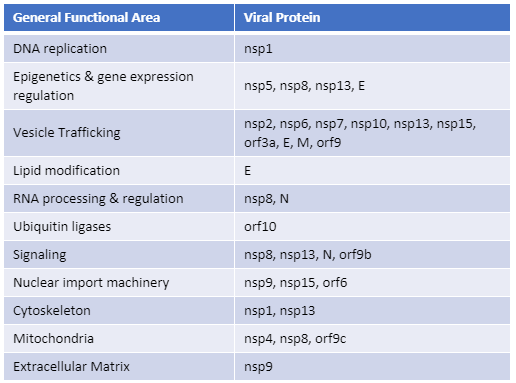
Recently, Gordon et al. published an atlas of protein:protein interactions of all proposed SARS-CoV-2 proteins expressed individually in HEK 293 cells (Table 1). The study tagged each of the viral proteins with an epitope tag and performed a pull-down of the expressed protein followed by trypsin digestion and mass spec analysis, a process referred to as affinity purification–mass spec analysis. The group identified 332 human proteins interacting with 27 SARS-CoV-2 proteins.
The interactions identified in the HEK 293 cells helped Appelberg et al. analyze interactions over time in SARS-CoV-2-infected Huh7 cells. Gordon et al. used the PPI data to identify FDA-approved drugs, drugs in clinical trials, and pre-clinical compounds that bound to the identified human proteins and labs in New York and Paris tested some of these drugs for antiviral effects.
Table 1. The general functional area of human proteins identified to interact with individually expressed SARS-CoV-2 proteins as reported by Gordon, et al. (1). The SARS-CoV-2 proteins are classified as non-structural proteins (nsp#), structural proteins (E, M, and N) and accessory proteins (orf#).
Today’s blog is written by guest blogger, Sameer Moorji, Director, Applied Markets.
Even as countries are now gradually starting to reopen after lockdown, the COVID-19 pandemic is far from over. Researchers around the world continue to find new ways to monitor, prevent and treat the disease. One new way of monitoring COVID-19 outbreaks relies on a somewhat unexpected source: sewage water.
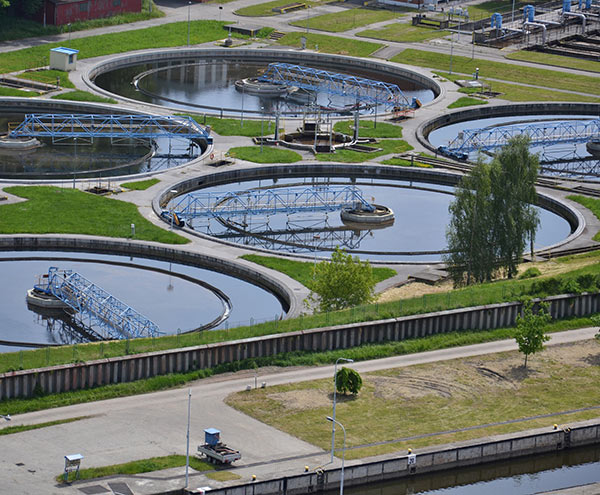
In March 2020, researchers at the KWR Water Research Institute found the presence of SARS CoV-2 RNA in wastewater samples collected near Schiphol airport in Amsterdam and several other sites in Netherlands. The result came within a week after the first case of COVID-19 in the country was confirmed. This study opened the door to the possibility of using wastewater-based epidemiology to determine population-wide infections of COVID-19.
What is Wastewater-based epidemiology?
Wastewater based epidemiology (WBE), or sewershed surveillance, is an approach using analysis of wastewater to identify presence of biologicals or chemicals relevant for public health monitoring. WBE is not new, as wastewater has previously been used to detect the presence of pharmaceutical or industrial waste, drug entities (including opioid abuse), viruses and potential emergence of super bugs. In fact, several countries have been successful in containing Polio and Hepatitis A outbreaks within their geographic locations.
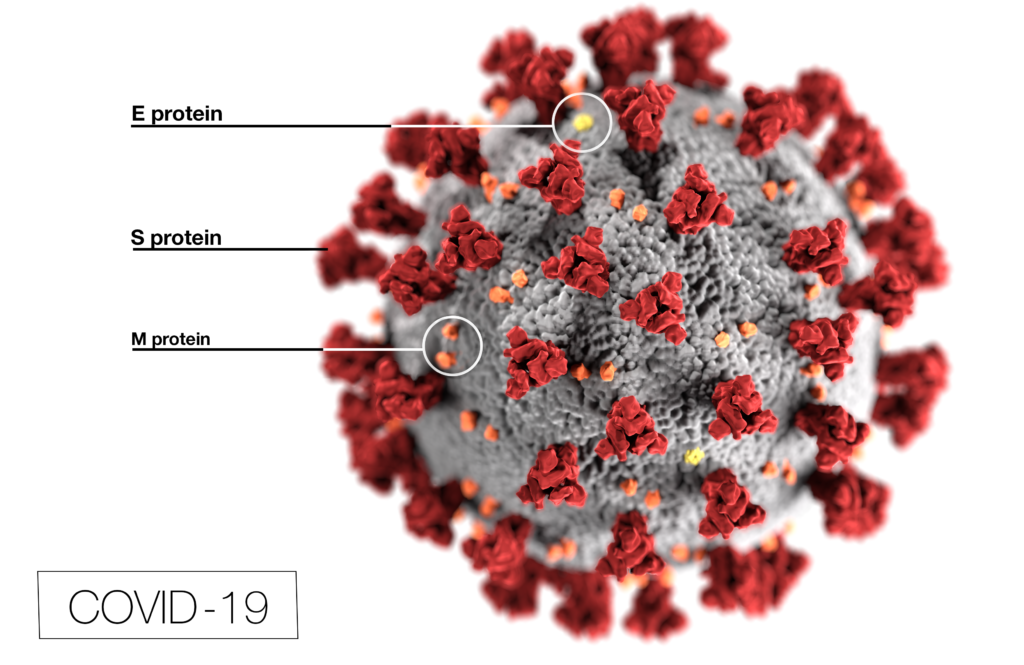
Coronavirus (CoV) researchers are working quickly to understand the entry of SARS-CoV-2 into cells. The Spike or S proteins on the surface of a CoV is trimer. The monomer is composed of an S1 and S2 domain. The division of S1 and S2 happens in the virus producing cell through a furin cleavage site between the two domains. The trimer binds to cell surface proteins. In the case of the SARS-CoV, the receptor is angiotensin converting enzyme 2. (ACE2). The MERS-CoV utilizes the cell-surface dipeptidyl peptidase IV protein. SARS-CoV-2 uses ACE2 as well. Internalized S protein goes though a second cleavage by a host cell protease, near the S1/S2 cleavage site called S2′, which leads to a drastic change in conformation thought to facilitate membrane fusion and entry of the virus into the cell (1).
CDC / Alissa Eckert, MS; Dan Higgins, MAMS
Rather than work directly with the virus, researchers have chosen to make pseudotyped viral particles. Pseudotyped viral particles contain the envelope proteins of a well-known parent virus (e.g., vesicular stomatitis virus) with the native host cell binding protein (e.g., glycoprotein G) exchanged for the host cell binding protein (S protein) of the virus under investigation. The pseudotyped viral particle typically carries a reporter plasmid, most commonly firefly luciferase (FLuc), with the necessary genetic elements to be packaged in the particle.
To create the pseudotyped viral particle, plasmids or RNA alone are transfected into cells and the pseudotyped viruses work their way through the endoplasmic reticulum and golgi to bud from the cells into the culture medium. The pseudoviruses are used to study the process of viral entry via the exchanged protein from the virus of interest. Entry is monitored through assay of the reporter. The reporter could be a luciferase or a fluorescent protein.
A protein first purified and sold by Promega almost four decades ago has emerged as a crucial tool in many COVID-19 testing workflows. RNasin® Ribonuclease Inhibitor was first released in 1982, only four years after the company was started. At that time, the entire Promega catalog fit on a single sheet of 8.5 × 11” paper, and RNasin was one of the first products to draw widespread attention to Promega. Today, the demand for this foundational product has skyrocketed as it supports labs responding to the COVID-19 pandemic.
What is RNasin® Ribonuclease Inhibitor?
RNA is notoriously vulnerable to contamination by RNases. These enzymes degrade RNA by breaking the phosphodiester bonds forming the backbone of the molecule. To say that RNases are everywhere is barely an exaggeration – almost every known organism produces some form of RNase, and they’re commonly found in all kinds of biological samples. They’re easily introduced into experimental systems, since even human skin secretes a form of RNase. Once they’re present, it’s very hard to get rid of them. Even an autoclave can’t inactivate RNases; the enzymes will refold and retain much of their original activity.
RNasin® Ribonuclease Inhibitor is a protein that has been shown to inhibit many common contaminating RNases, but without disrupting the activity of enzymes like reverse transcriptase that may be essential to an experiment. It works by binding to the RNase enzyme, prevent it from acting on RNA molecules. This is important for ensuring that RNA samples are intact before performing a complex assay.
Glycosylation is the process by which a carbohydrate is covalently attached to target macromolecules, typically proteins. This modification serves various functions including guiding protein folding (1,2), promoting protein stability (2), and participating signaling functions (3).
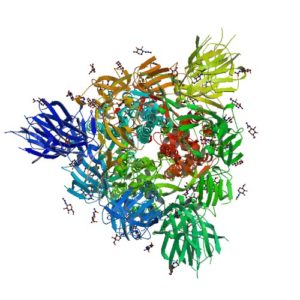
Ribbon Structure of SARS-CoV-2 Spike Protein
SARS-CoV-2 utilizes an extensively glycosylated spike (S) protein that protrudes from the viral surface to bind to angiotensin-converting enzyme 2 (ACE2) to mediate host-cell entry. Vaccine development has been focused on this protein, which is the focus of the humoral immune response. Understanding the glycan structure of the SARS-CoV-2 virus spike (S) protein will be critical in the development of glycoprotine-based vaccine candidates.
As we continue navigating the challenges presented by COVID-19, several research areas are crucial for helping us slow the infection rate and ending the pandemic. Advanced testing methods, such as antibody testing, help us understand and predict how the virus will spread, which can inform policy decisions. Effective therapeutics will influence clinical outcomes for individual patients, and several drugs are already being tested or administered. However, an effective vaccine against the SARS-CoV-2 virus is perhaps the most important tool we can use to protect individuals and populations from COVID-19.
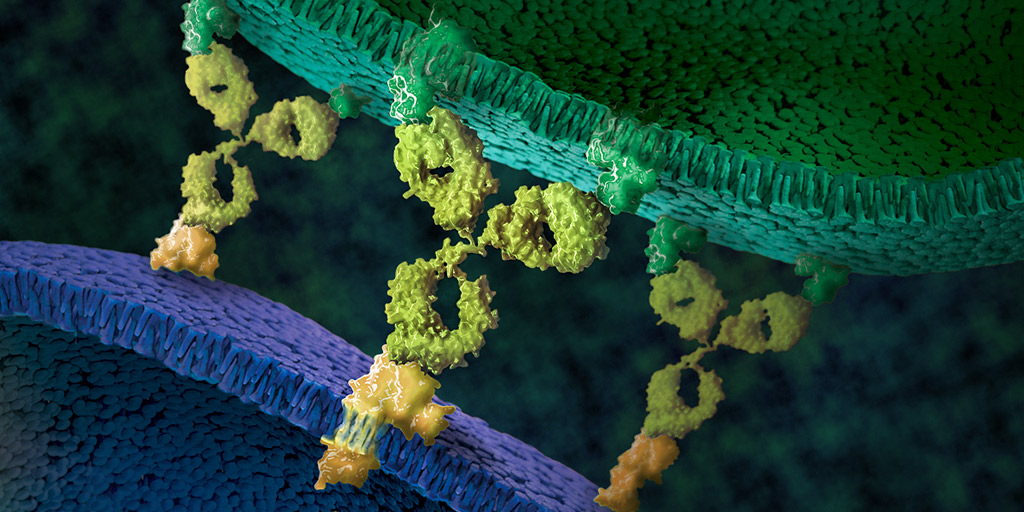
Over 90 vaccines against the SARS-CoV-2 virus are currently in development around the world. While there are many different types of vaccines, the overall goal is to create long-lasting protective immunity by stimulating the production of specific antibodies. As these vaccine candidates are further characterized, monitoring ADCC activity can provide important insights into their potential efficacy.
Here in the US, as around the world, we’re beginning to come out of COVID-19 hiding, whether mandated or voluntary. We are slowly starting to leave the confines of home and “safer at home” orders. Many of us are donning masks and venturing out as needed, still under social distancing considerations.
We’re looking forward to a time when social distancing won’t be necessary, when we can see our relatives and friends, and give them a hug without concern for their safety or ours.
When will that time come? Many believe that it won’t be completely safe until there is an effective vaccine to protect us from SARS-CoV-2.
How does a vaccine protect us? Effective vaccines cause our immune system to produce antibodies that are specific for SARS-CoV-2, so that if we come into contact with the virus, it will be neutralized, preventing infection.
At this time, many questions remain about whether SARS-CoV-2 virus causes production of antibodies. And if antibodies are produced, are they protective?
In some exciting news this week, scientists studying SARS-CoV-2 have shown that neutralizing antibodies to this virus are made in humans. Here’s a look at their work.
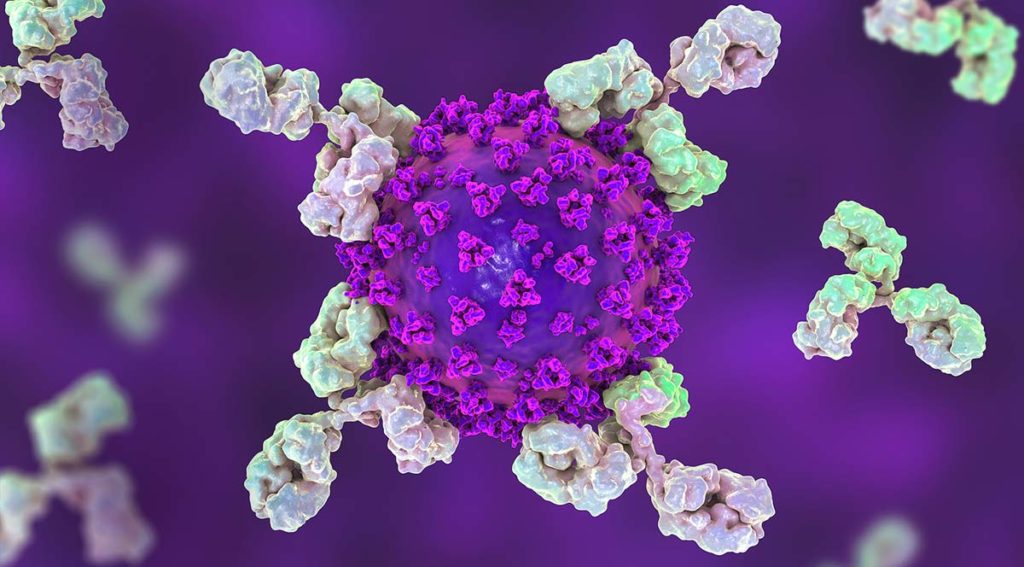
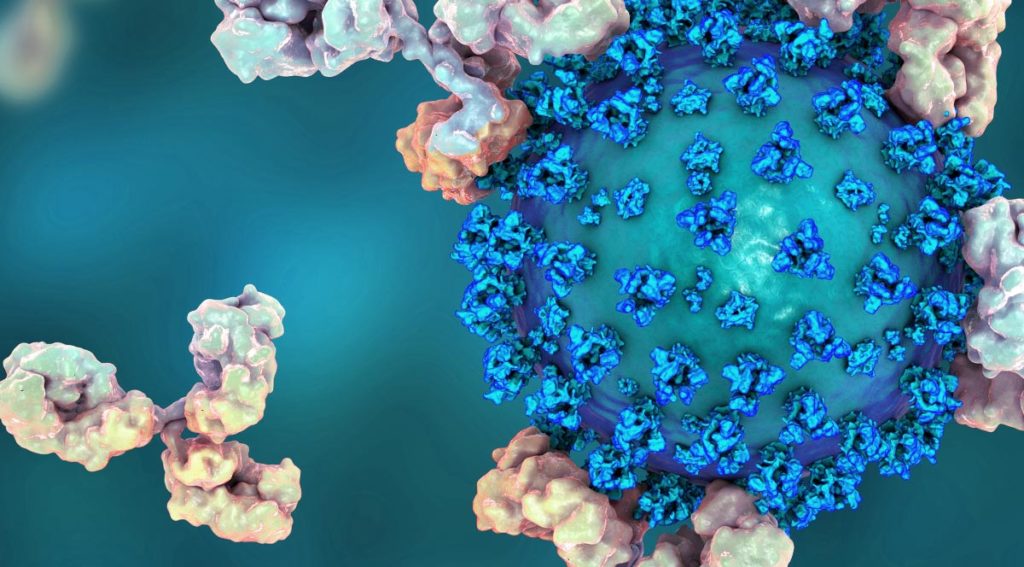
As the SARS-CoV-2 coronavirus continues to spread throughout the world, the race is on to produce antivirals and vaccines to treat and prevent COVID-19. One potential treatment is the use of human monoclonal antibodies, which are antibodies engineered to target and block specific antigens. A recent study by Wang, C. and colleagues published in Nature Communications showed that human monoclonal antibodies can be used to block SARS-CoV-2 from infecting cells.
XWe use cookies and similar technologies to make our website work, run analytics, improve our website, and show you personalized content and advertising. Some of these cookies are essential for our website to work. For others, we won’t set them unless you accept them. To learn more about our approach to Privacy we invite you to Read More
By clicking “Accept All”, you consent to the use of ALL the cookies. However you may visit Cookie Settings to provide a controlled consent.
We use cookies and similar technologies to make our website work, run analytics, improve our website, and show you personalized content and advertising. Some of these cookies are essential for our website to work. For others, we won’t set them unless you accept them. To find out more about cookies and how to manage cookies, read our Cookie Policy.
If you are located in the EEA, the United Kingdom, or Switzerland, you can change your settings at any time by clicking Manage Cookie Consent in the footer of our website.
Necessary cookies are absolutely essential for the website to function properly. These cookies ensure basic functionalities and security features of the website, anonymously.
Cookie
Duration
Description
cookielawinfo-checbox-analytics
11 months
This cookie is set by GDPR Cookie Consent plugin. The cookie is used to store the user consent for the cookies in the category "Analytics".
cookielawinfo-checbox-functional
11 months
The cookie is set by GDPR cookie consent to record the user consent for the cookies in the category "Functional".
cookielawinfo-checbox-others
11 months
This cookie is set by GDPR Cookie Consent plugin. The cookie is used to store the user consent for the cookies in the category "Other.
cookielawinfo-checkbox-advertisement
1 year
The cookie is set by GDPR cookie consent to record the user consent for the cookies in the category "Advertisement".
cookielawinfo-checkbox-necessary
11 months
This cookie is set by GDPR Cookie Consent plugin. The cookies is used to store the user consent for the cookies in the category "Necessary".
cookielawinfo-checkbox-performance
11 months
This cookie is set by GDPR Cookie Consent plugin. The cookie is used to store the user consent for the cookies in the category "Performance".
gdpr_status
6 months 2 days
This cookie is set by the provider Media.net. This cookie is used to check the status whether the user has accepted the cookie consent box. It also helps in not showing the cookie consent box upon re-entry to the website.
lang
This cookie is used to store the language preferences of a user to serve up content in that stored language the next time user visit the website.
viewed_cookie_policy
11 months
The cookie is set by the GDPR Cookie Consent plugin and is used to store whether or not user has consented to the use of cookies. It does not store any personal data.
Analytical cookies are used to understand how visitors interact with the website. These cookies help provide information on metrics the number of visitors, bounce rate, traffic source, etc.
Cookie
Duration
Description
SC_ANALYTICS_GLOBAL_COOKIE
10 years
This cookie is associated with Sitecore content and personalization. This cookie is used to identify the repeat visit from a single user. Sitecore will send a persistent session cookie to the web client.
vuid
2 years
This domain of this cookie is owned by Vimeo. This cookie is used by vimeo to collect tracking information. It sets a unique ID to embed videos to the website.
WMF-Last-Access
1 month 18 hours 24 minutes
This cookie is used to calculate unique devices accessing the website.
_ga
2 years
This cookie is installed by Google Analytics. The cookie is used to calculate visitor, session, campaign data and keep track of site usage for the site's analytics report. The cookies store information anonymously and assign a randomly generated number to identify unique visitors.
_gid
1 day
This cookie is installed by Google Analytics. The cookie is used to store information of how visitors use a website and helps in creating an analytics report of how the website is doing. The data collected including the number visitors, the source where they have come from, and the pages visted in an anonymous form.
Advertisement cookies are used to provide visitors with relevant ads and marketing campaigns. These cookies track visitors across websites and collect information to provide customized ads.
Cookie
Duration
Description
IDE
1 year 24 days
Used by Google DoubleClick and stores information about how the user uses the website and any other advertisement before visiting the website. This is used to present users with ads that are relevant to them according to the user profile.
test_cookie
15 minutes
This cookie is set by doubleclick.net. The purpose of the cookie is to determine if the user's browser supports cookies.
VISITOR_INFO1_LIVE
5 months 27 days
This cookie is set by Youtube. Used to track the information of the embedded YouTube videos on a website.
Performance cookies are used to understand and analyze the key performance indexes of the website which helps in delivering a better user experience for the visitors.
Cookie
Duration
Description
YSC
session
This cookies is set by Youtube and is used to track the views of embedded videos.
_gat_UA-62336821-1
1 minute
This is a pattern type cookie set by Google Analytics, where the pattern element on the name contains the unique identity number of the account or website it relates to. It appears to be a variation of the _gat cookie which is used to limit the amount of data recorded by Google on high traffic volume websites.