Do you remember what it was that first inspired in you your life’s passion for science? Was it collecting bugs, frogs or other creatures as a child? Or maybe that first chemistry set—the one that had your mother hovering behind you with a fire extinguisher. Perhaps it was a parent or teacher that first sparked something in you that never dimmed. Whatever, or whoever, it was that first kindled your interest in science, no doubt there have been times when you wished that someone would offer you some advice on how to navigate through the modern, rapidly changing world of science.
On this past Saturday, I took a trip to my local library on a quest to get just exactly that. To be specific, I was going to check out a copy of Edward O. Wilson’s Letters to a Young Scientist (1). Although I haven’t had time to read more that the first chapter, the advice that he offers at the end of that chapter struck me as good advice to any young (or not so young) person:
It is quite simple: put passion ahead of training. Feel out in any way you can what you most want to do in science, or technology, or some other science-related profession. Obey that passion as long as it lasts.
Wilson is speaking specifically to young scientists, but it seems to me that this main point is more universal than that: It applies to the not-so-young scientist and the nonscientist as well.
I am really looking forward to reading the rest of the book, but for today I am challenging myself as well as all of you to “obey the passion”. Even if you can only do it for one day, put aside the demands of career or school, find that passion that started you on your journey in science and follow it!
Reference
- Wilson, E.O. (2013) Letters to a Young Scientist. Liveright Publishing, New York.

 We all know that a healthy lifestyle (diet high in whole foods and low in fat, moderate exercise, managing stress and good social support) is good for us. In fact I will go so far as to say that it isn’t even news that these things help our health and well-being. What is news, or at least newly published, is that these changes may also have a positive effect on telomerase activity and telomere length (1).
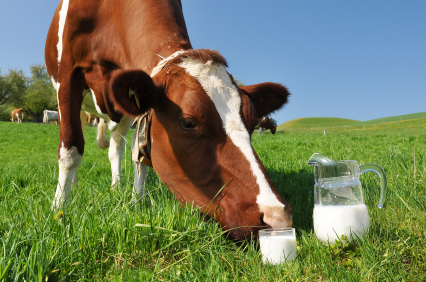 The ability for adults to digest the milk sugar, lactose, is often referred to as lactase persistence (LP), describing the continued (persistent) production of lactase into adulthood. LP is an autosomal dominant trait that is most often associated with a T allele situated 13,910 base pairs (–13,910*T allele) upstream of the lactase gene, LCT. Archaeogenetic data indicates that pre- and early Neolithic populations were largely LP-negative, and that the frequency of the LP phenotype rose dramatically in Europe around 8,000 years ago, coinciding with the Neolithic transition from a hunter-gather to an agricultural-based lifestyle (1) and the appearance of domesticated dairying animals. Today roughly 35% of adults are lactose persistent. The frequency varies dramatically by geographic region, from a high prevalence in Europe (89–90%) and to a relatively low prevalence in the eastern Mediterranean (15%)(1). The spread of lactase persistence is an often cited example of gene-culture co-evolution. You can’t separate the history of domestic dairying and the evolution of lactase persistence, but scientists are still trying to understand how these two worked together.
  Microorganisms; they are the most abundant form of life. They are all around us, silent, unseen and undetected. The number of ‘species’ of archaea and bacteria climbs every year and is predicted to rise well past one million (1). Despite their abundance, we know very little about all but a small fraction of these diverse cellular life forms because we are unable to cultivate most in a laboratory setting. In fact, 88% of all our microbial isolates belong to just four bacterial phyla (Proteobacteria, Firmicutes, Actinobacteria and Bacterioidetes; 2). The remaining branches of the microbial phylogenetic tree range from underrepresented to virtually unknown and are collectively referred to as “microbial dark matter”.

 “Why? Why? Why?” Anyone who has been around small children has experienced the monotonous, often aggravating, seemingly endless barrage of the “W” word. Why does soap make bubbles? Why do feathers float and acorns fall to the ground? Why are baths important? Why are those flowers purple? Why can’t I be purple? Why do tigers have stripes and leopards have spots and lions don’t have anything (majestic manes not withstanding)? Why can rocks bounce (skip) off water? Why didn’t my rock bounce? Why does the plant in the window bend toward the light? Why are my eyes blue and my brother’s eyes brown?